Pioneer’s Palace
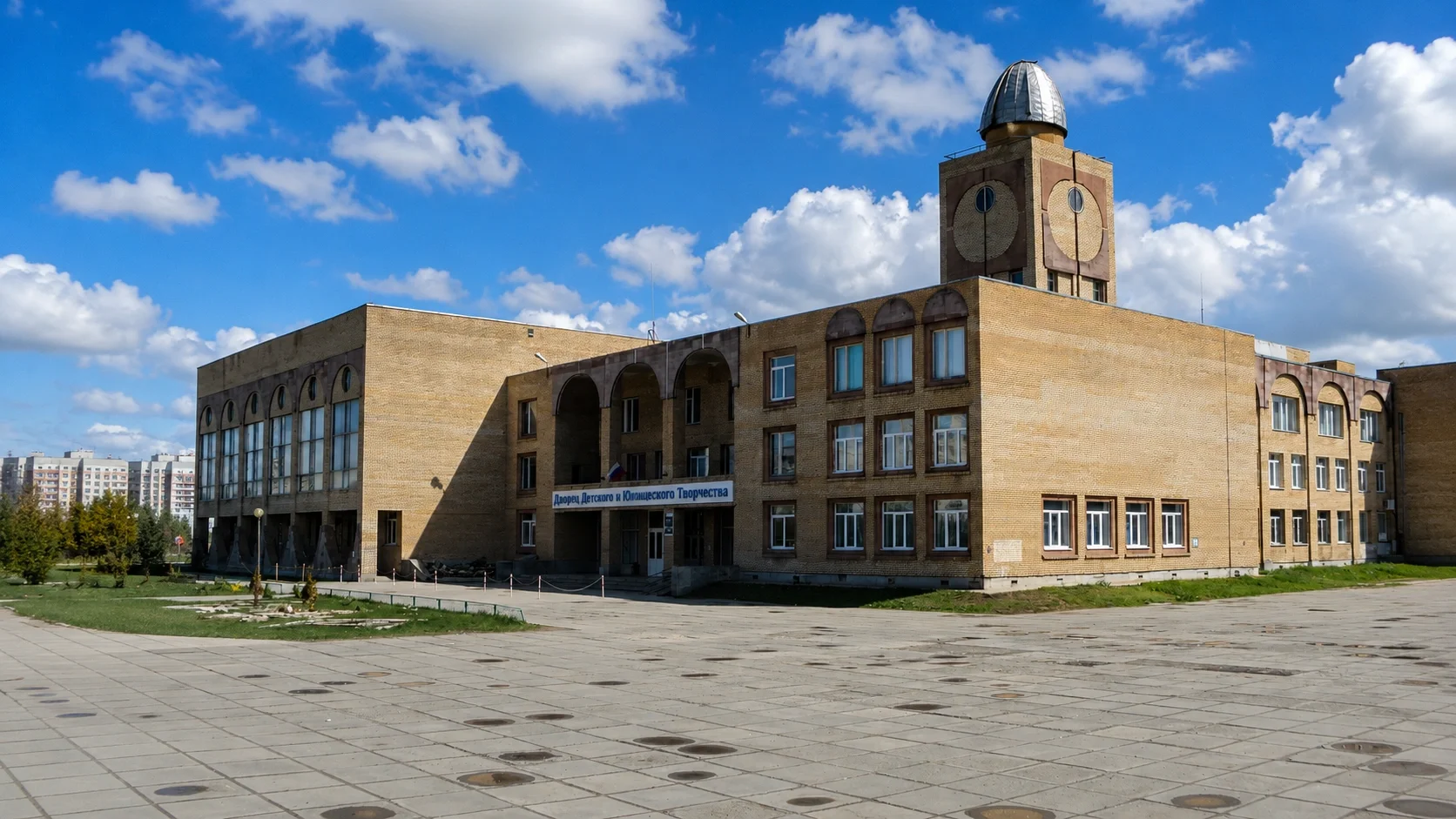
Pioneers Palace, Tolyatti
From the 1920s onward the Soviet state built a national system of extracurriculum youth centers (dom pionerov, later dvorets pionerov) as part of its vneshkol’noe vospitanie (out-of-school upbringing) strategy. These Palaces were intended to mold the “New Soviet Person”, instilling collectivist and communist values through work and hobbies. Teachers at the Pioneer Palaces organized free voluntary hobby clubs (kruzhki) in music, art, science, and especially technical or labor-oriented skills. Official materials note that Palace programs “were designed to cultivate children’s interests in labor, knowledge, creative abilities, professional orientation, and amateur talents”. A key pedagogical rule was “Having learned it yourself, now teach your comrade” – reflecting the ideal that older or more advanced pioneers would pass skills on to others. In practice the Palaces fused ideological education (patriotism, socialist labor) with popular culture: students produced wall newspapers, participated in patriotic festivals, and earned pioneer badges by fulfilling work projects. In short, the Palaces functioned as “multi-profile extracurricular institutions” whose goal was to form disciplined, creative Soviet youths ready for communist society.
Institutional Hierarchy
Not all Pioneer centers were equal. In major cities there were grand “Palaces” (dvorets), often dubbed “All-Union” or “City” palaces, and in smaller towns more modest “Houses” (dom pionerov). For example, Moscow’s flagship Palace (opened 1936 at Vorobyovy Gory) was explicitly promoted as “the leading extramural children’s institution of the capital”. In Leningrad the former Anichkov Palace was nationalized as the Zhdanov Palace of Pioneers, one of the USSR’s best-known palaces. Kyiv similarly received a monumental new Palace: in 1965 the Kiev Palace of Pioneers and Schoolchildren (Ostrovskiy Palace) – a 12,000 m² facility with labs, studios and theaters – was opened as “the heart of out-of-school education” in the republic. By contrast, most provincial cities had single or small multi-functional Houses of Pioneers attached to schools or local educational departments. In total over 3,500 Pioneer Houses/Palaces existed by 1971, reflecting a hierarchy of major All-Union centers in Moscow/Leningrad/Kyiv and thousands of local centers nationwide. (For example, the Nizhniy Novgorod/Sormovo Pioneer House, founded 1934, was simply renamed “Center for Children’s Creativity” after 1992.)
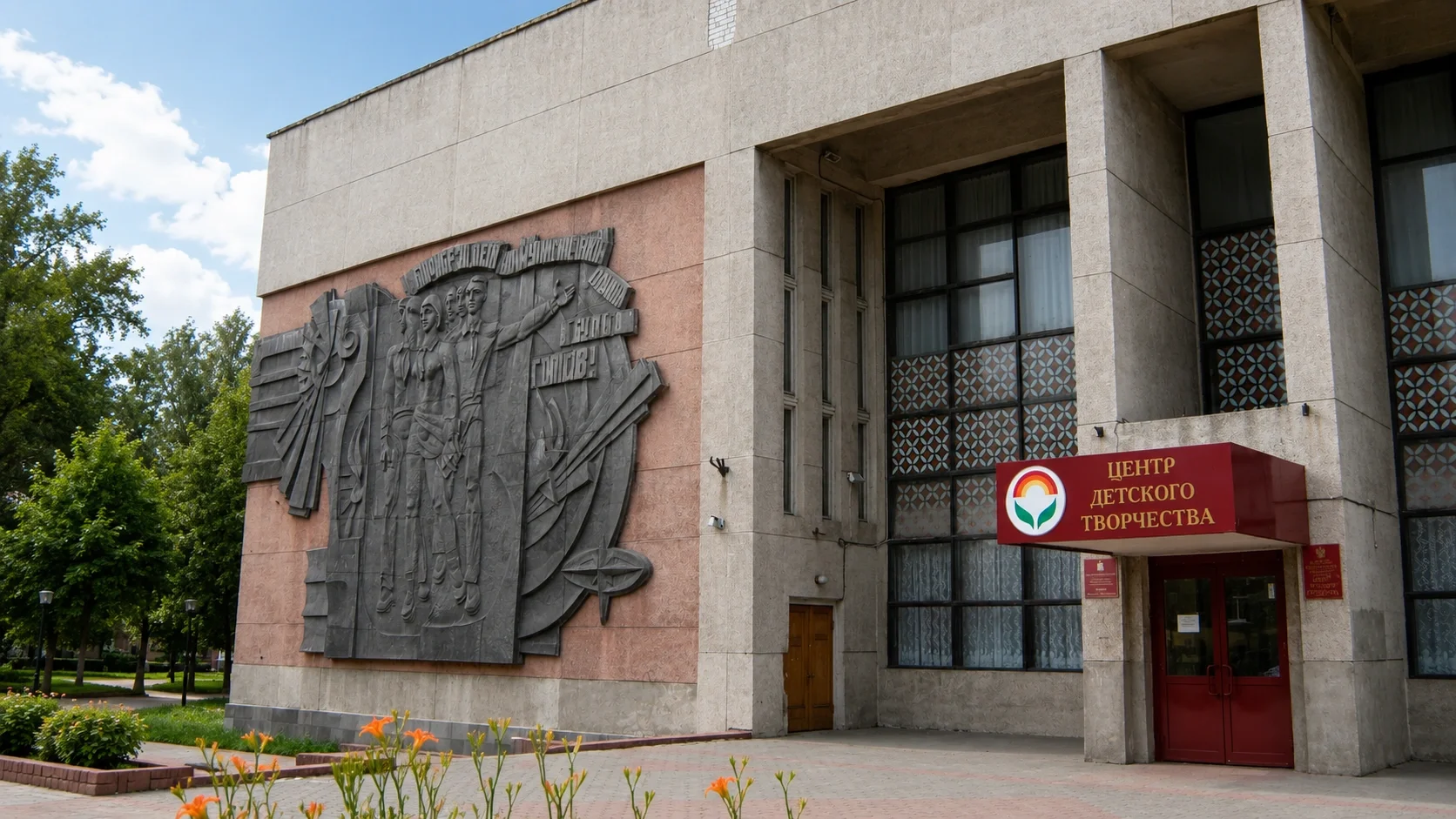
Pioneers’ Palace, Sormovo
Chess Infrastructure
Chess was a flagship hobby in the Palaces, feeding the renowned Soviet chess school. Each Pioneer Palace ran chess kruzhki led by coaches or senior pioneers. Many champions trace their origins to these centers. For instance, Garry Kasparov “began regular chess” at the Baku Palace of Pioneers at age seven, under master Oleg Privorotsky. In Moscow, Vasily Smyslov – future World Champion – studied in the Young Pioneers’ stadium chess class that emerged around 1935. Mikhail Botvinnik himself cultivated talent at the Palaces: Mark Taimanov recalls becoming “Botvinnik’s pupil in 1939, at the Pioneers’ Palace”. These centers held regular tournaments and simultaneous exhibitions (for example, a famous 1974 “Pioneer Palaces” team tournament featured master-level games). The Kruzhok system emphasized self-improvement and peer teaching: as one Soviet educator put it, teachers fostered “collectivist skills” and followed the rule “learned it yourself – teach a comrade”. In short, the Pioneer Palaces formed an official talent pipeline for chess, giving gifted children access to strong coaches and an intensive group-study atmosphere – a cornerstone of the Soviet School of Chess.
Architectural Evolution
The physical form of Pioneer Palaces changed dramatically over time. In the 1920s–50s most Palaces simply re-used old mansions and palaces nationalized after 1917. For example, the first Kharkov Palace of Pioneers was opened in 1935 in the former Assembly of Nobility, and St. Petersburg’s Anichkov Palace became the Zhdanov Pioneer Palace. Newly built Palaces of the 1930s–50s often imitated Imperial Baroque or Neoclassical styles. After Stalin’s death, however, modern architecture took hold. By the early 1960s purpose-built, Soviet Modernist “Palaces” appeared on new sites. The Moscow Palace (1959–1963) and Kyiv Palace (opened 1965) exemplified this shift. The Kyiv Palace – designed by Eduard Bilsky and Abraham Miletsky – was explicitly conceived as “a space maximally adapted to the needs of children”. Its Brutalist design features expansive terraces and colorful mosaic murals (by Ada Rybachuk and Volodymyr Melnichenko) integrated into the natural landscape of the Dnipro riverbank. In short, early Pioneer Palaces tended to occupy or replicate grand aristocratic buildings, whereas later ones became large, modern youth centers – Soviet “masterpieces” combining public sculpture and functional performance spaces.
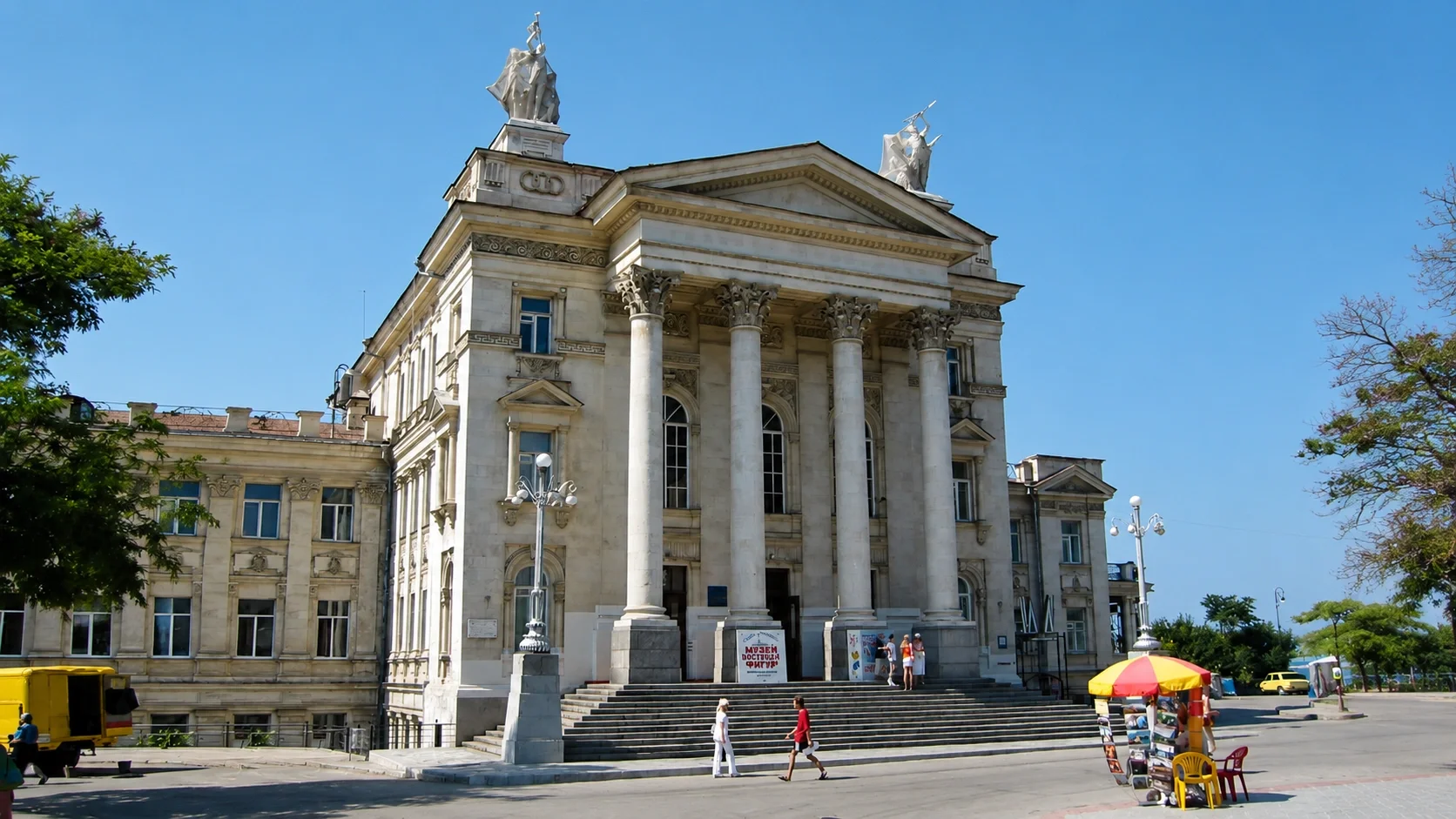
Pioneers’ Palace, Sevastopol
Post-1991 Transition
With the USSR’s collapse in 1991, Pioneer Palaces lost their ideological role and majority state funding. Most were simply renamed and repurposed as generic youth or creative centers. For example, the Ostrovsky Pioneer Palace in Kyiv was retitled the “Kyiv Palace of Children and Youth” in 1991. In Russia and other republics many houses became “Centers for Children’s (or Youth) Creativity” under new management (the Nizhniy Novgorod/Sormovo House was so renamed in 1992). However, state support was uneven. Many Palaces remain active as municipal youth centers, now charging fees. Others fell into disuse. Notoriously, a few larger halls were sold or leased commercially – as one account dryly notes, “in the Russian Federation some became strip clubs or casinos”. Still more simply closed or were abandoned in the 1990s. Overall the legacy of the Pioneer Palaces is mixed: some have been fully de-Sovietized and continue serving children under new names, while others stand as neglected relics or have been absorbed into private ventures.
