Vladimir Simagin
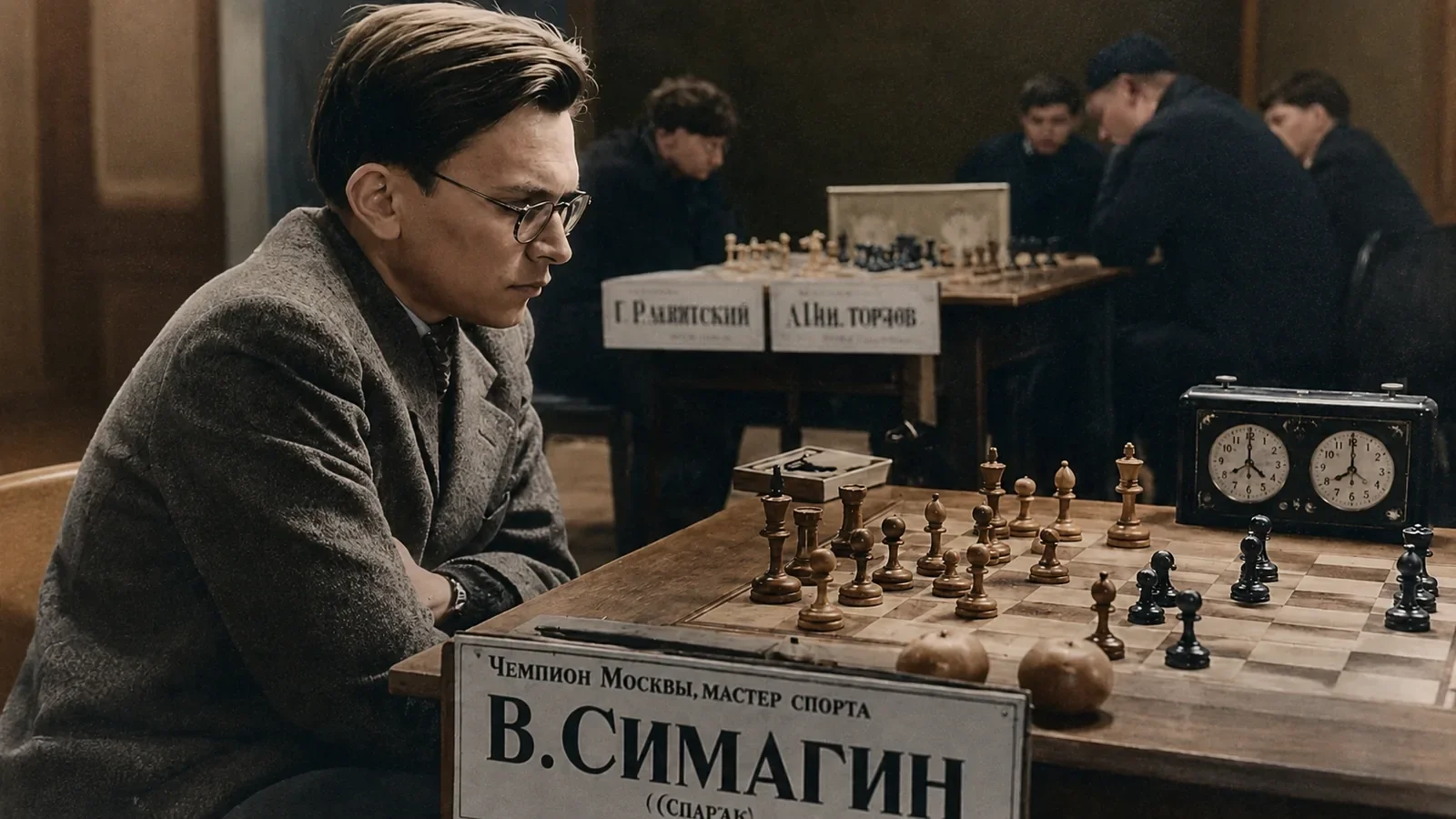
Vladimir Pavlovich Simagin belongs to that difficult category of Soviet chess figure: too strong, too original, and too influential to be treated as a footnote, yet never quite crowned by the kind of public triumph that secures permanent fame. Born in Moscow on June 21, 1919, and dead at only forty-nine in Kislovodsk on September 25, 1968, Simagin lived almost exactly inside the mature age of Soviet chess culture: the Moscow schools, the postwar championship machine, the great world-title laboratories, the Central Chess Club, and the correspondence scene where analysis could be carried deeper than over-the-board time allowed.
Simagin’s reputation rests on four connected achievements. He was a formidable Moscow master and later grandmaster. He was one of the most imaginative Soviet opening experimenters of his generation. He was a trainer and analyst trusted by players such as Alexander Kotov and Vasily Smyslov. He was also a writer, editor, and correspondence champion whose work helped turn Soviet chess knowledge into a shared intellectual culture.
Early Life and the Moscow Chess School
Simagin began his chess development in Moscow, the city that produced a remarkable concentration of Soviet chess talent. Russian accounts place his early formation in the youth chess environment associated with the city’s Palace of Pioneers and related Moscow training institutions. By 1939, he had already appeared in the adult Moscow Championship, where his victory over the veteran Boris Verlinsky drew attention in the Soviet chess press.
His career, like those of many Soviet players born around the time of the First World War and the Russian Revolution, was disrupted by the Second World War. Active high-level chess life in the Soviet Union did continue in some forms, especially in Moscow, yet the war interrupted normal development, tournament travel, and the institutional rhythm through which masters usually matured. Simagin returned seriously to chess in 1944 and quickly rose into the master class.
The postwar Moscow scene was brutal as a testing ground. It included future world champions, Candidates-level players, theoreticians, trainers, and hardened masters who could punish any inaccuracy. Simagin did not emerge from this environment as a smooth technician in the Smyslov mold or a universal strategic grinder in the Botvinnik mold. His individuality was sharper. Soviet contemporaries repeatedly noticed the originality of his ideas, his readiness to sacrifice material, and his insistence that a game should demonstrate a coherent chess conception.
Moscow Champion and Soviet Championship Contender
Simagin’s first major public arrival came through the Moscow Championship. He won the 1947 title after a playoff, later shared first place in 1956 with Tigran Petrosian before losing the additional match, and won the championship outright again in 1959. For that reason, some sources call him a three-time Moscow champion, while some Russian summaries count him as a two-time champion when the shared 1956 result is treated separately. The distinction is important for precision, although either count places him among the major figures of Moscow chess in the 1940s and 1950s.
He also became a regular participant in the Soviet championship cycle. The USSR Championship was one of the strongest recurring tournaments in the world, often stronger than many international events outside the Soviet Union. Simagin’s repeated presence in that system should be understood as an achievement in itself. He had to compete against players such as Bronstein, Averbakh, Petrosian, Spassky, Korchnoi, Geller, Taimanov, Tolush, and others, often with limited international exposure available to those outside the highest political and competitive priority list.
His FIDE career reached formal recognition later than his strength and influence might suggest. He received the International Master title in 1950, the year FIDE introduced it, and the Grandmaster title is commonly listed as being awarded in 1962. He also earned the International Master title in correspondence chess in 1965.
Simagin’s strongest international results came late. At Sarajevo 1963, he shared second place behind Lajos Portisch, alongside Borislav Ivkov, Wolfgang Uhlmann, and Svetozar Gligorić. He later shared first at the 1967 Chigorin Memorial in Sochi. Russian Chess Federation accounts also emphasize strong late results at Zinnowitz 1965, Sochi 1967, and the 1968 Rubinstein Memorial.
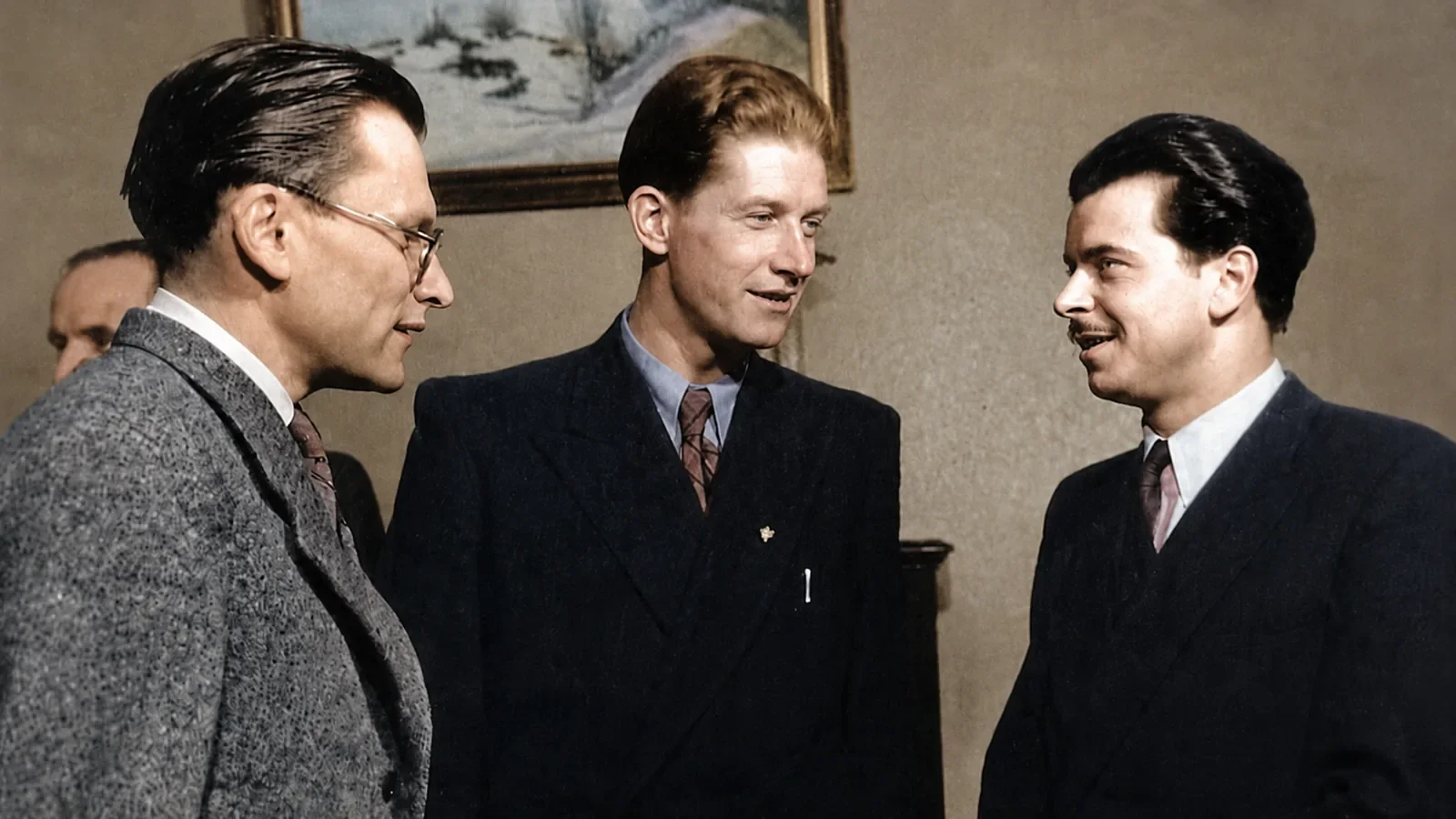
Left to right: Simagin, Averbakh, Benko
Playing Style: Logic, Risk, and Beauty
Simagin’s chess was not reckless, although it could look reckless. His sacrifices were usually rooted in long-term piece activity, color-complex control, king vulnerability, and the transformation of static weaknesses into tactical targets. This is why later writers often describe him as a creative player rather than merely an attacking player. The distinction is essential. Simagin was attracted to positions where the normal hierarchy of chess values became unstable: a bishop could be superior to a rook, a pawn structure could justify an exchange sacrifice, and a temporary initiative could become a durable strategic asset.
The Russian Chess Federation preserves Simagin’s own description of his chess ideal: he wanted to play consistently, prove the correctness of his ideas, and crown a logically conducted game with a beautiful combination. That statement captures his personality better than a list of tournament results. For Simagin, beauty was not decorative. It was the visible form of a sound idea.
Mikhail Botvinnik, rarely extravagant in praise, remembered Simagin as a player of decisive character and original talent. That judgment is especially revealing because Botvinnik valued analytical discipline, objective proof, and seriousness of method. To impress Botvinnik as an original talent meant that Simagin’s imagination carried weight.
Mark Dvoretsky later treated Simagin’s games as serious study material, and US Chess notes that Dvoretsky cited Simagin in his own writings. This is one of the clearest signs of Simagin’s deeper legacy. He was not remembered only for a handful of spectacular wins. His games became examples that later trainers could use to teach calculation, positional transformation, and the disciplined use of initiative.
Opening Contributions
Simagin’s theoretical work is one of the main reasons his name survives in modern chess literature. He contributed to several dynamic systems in the Sicilian, Grünfeld, Neo-Grünfeld, Nimzo-Indian, and King’s Indian complexes. Chessgames summarizes his theoretical reputation by noting contributions to the Neo-Grünfeld and Sicilian Defenses, with some lines named after him.
In the Sicilian, he is associated with Accelerated Dragon ideas and with systems that sought active piece play without allowing White an easy strategic grip. In the King’s Indian Defense, the Fianchetto line with early ...Nc6 and ...Bg4 is widely known as the Simagin Variation. Modern opening references still preserve his name in that structure.
His name also appears in Grünfeld and Nimzo-Indian theory. These associations reveal a pattern: Simagin gravitated toward openings where Black accepted structural tension in exchange for activity and long-term pressure. He was especially comfortable in positions where a move might look strange at first sight, then reveal its logic several moves later.
This helps explain why Max Euwe reportedly recognized Simagin through his games and opening ideas when he was introduced to the Moscow masters. The story, preserved in the Russian Chess Federation's accounts, is revealing even when treated as anecdotal. Simagin’s chess identity was not anonymous. His games carried a recognizable theoretical signature.
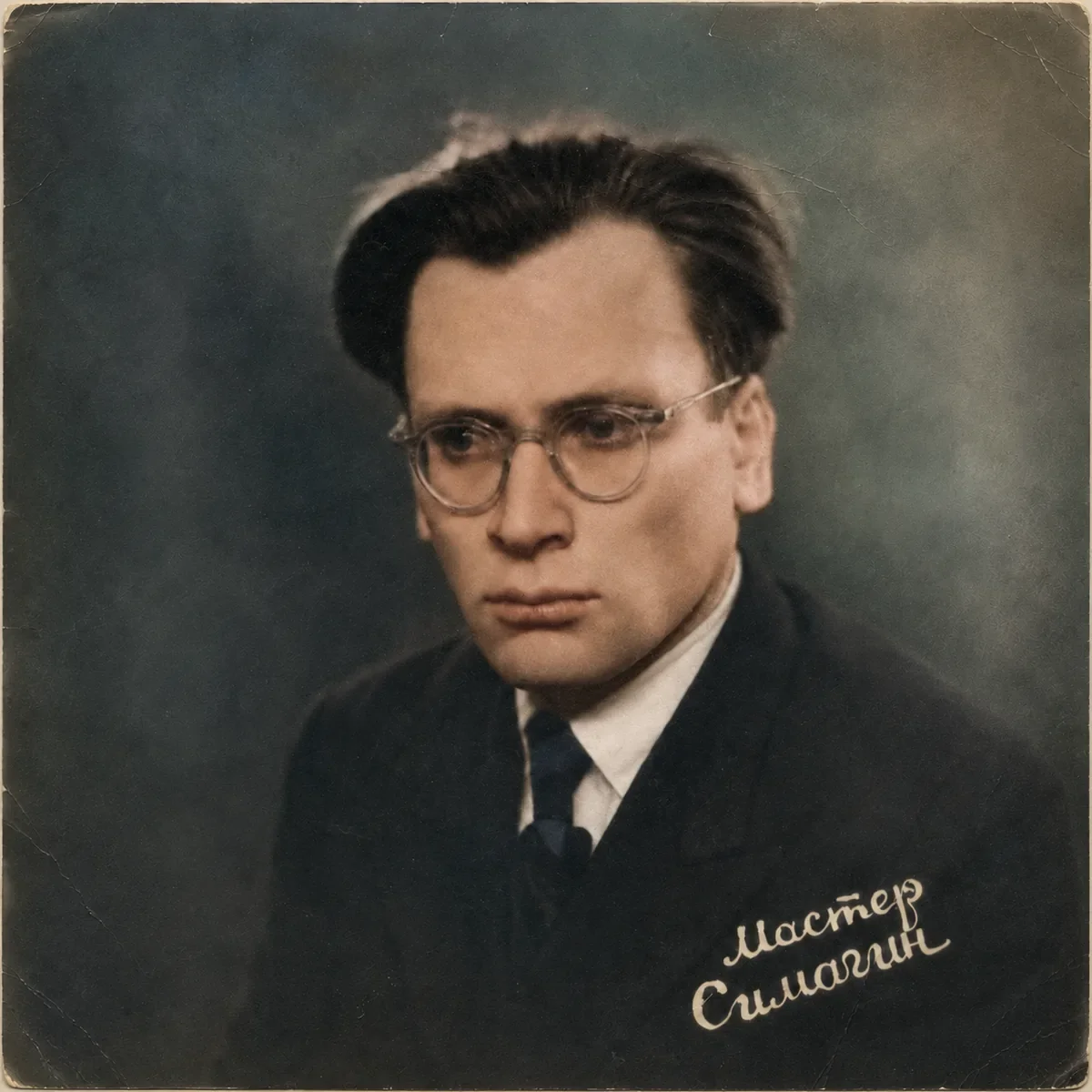
Vladimir Simagin (Владимир Симагин)
Soviet Chess Master (Советский шахматный мастер)
Trainer, Second, and Hidden Architect
Simagin’s influence on Soviet chess cannot be measured only by his own tournament record. He worked as a trainer and second for Alexander Kotov and Vasily Smyslov, including Smyslov’s world championship years. US Chess identifies him as an important theorist and trainer who worked with Smyslov, Kotov, and the young Mark Dvoretsky.
That role placed Simagin inside one of the most important structures of Soviet chess: the analytical collective. Soviet elite preparation relied on trainers who could research openings, examine adjournments, test strategic plans, and prepare a player psychologically for specific opponents. Simagin’s imagination made him valuable in exactly this setting. He could locate resources that more conventional analysts might dismiss.
His connection with Smyslov is especially significant. Smyslov became World Champion in 1957 after defeating Botvinnik, and Simagin is often mentioned as part of the team that supported Smyslov’s rise. The great irony is that Simagin’s own fame was partially absorbed into another player’s triumph. He helped sharpen the weapons of a world champion while remaining outside the public mythology of the title itself.
Correspondence Chess and the Search for Depth
Simagin’s turn toward correspondence chess was not a retreat from serious competition. It was an extension of his analytical temperament. Correspondence play allowed him to pursue the depth that over-the-board tournament conditions often limited. He won the 6th USSR Correspondence Championship from 1963 to 1964 and later finished runner-up in the 7th. Russian accounts state that he credited correspondence chess with helping him improve his over-the-board play.
This is a crucial part of his intellectual profile. Simagin was drawn to investigation. He did not treat openings as memorized sequences; he treated them as laboratories. Correspondence chess gave him time to test hidden resources, refine evaluations, and deepen strategic concepts. That habit fed directly into his reputation as an opening innovator.
Near the end of his life, Simagin was still climbing in correspondence chess. Russian sources note that he was included in the Soviet team for the World Correspondence Team Championship and qualified for the individual World Correspondence Championship final. Had he lived longer, he may have joined the rare group of players with the highest distinction in both over-the-board and correspondence chess.
Writer, Editor, and Chess Journalist
Simagin also deserves attention as a chess writer and editor. His selected games collection, Luchshie Partii, was published by Fizkultura i Sport in Moscow in 1963 under the editorship of M. Beilin. Douglas Griffin describes the book as a fascinating collection containing many striking games, and later English-language interest in Simagin has relied partly on Aidan Woodger’s work through The Chess Player.
US Chess also points to Simagin’s article “Attack with Opposite-Colored Bishops,” originally published in Shakhmaty v SSSR in 1962, as evidence of his analytical and instructional value. This is a revealing subject for Simagin. Opposite-colored bishops are often misunderstood as drawish by casual players, yet attacking players know they can create one-sided mating patterns when queens and rooks remain. Simagin’s interest in such a theme aligns with his broader chess identity: he studied positions in which surface appearances concealed dynamic imbalance.
He also worked in the editorial orbit of the Central Chess Club. Russian sources and US Chess both link him to chess journalism and editorial work. This role placed him at the center of Soviet chess communication, where tournament practice, theoretical discoveries, and instructional literature circulated through magazines, bulletins, and club publications.
Final Years and Death at Kislovodsk
The final phase of Simagin’s life was marked by serious health problems. Russian Chess Federation accounts describe him as a heavy smoker with heart trouble, and state that doctors had warned him about his condition. The tragedy is that this period also produced some of his strongest late chess. In the mid and late 1960s, he remained active, ambitious, and competitive in both over-the-board and correspondence play.
In September 1968, he played in the Kislovodsk tournament. During the event, after a game against his friend Leonid Shamkovich, Simagin became ill and died of a heart attack. He was forty-nine years old.
His death left his reputation unfinished. He had achieved the grandmaster title, won major Moscow and correspondence honors, helped world-class players, and left a body of theoretical work. Yet he died before his full legacy could be consolidated through memoir, teaching, or later international recognition.
Legacy
Simagin’s legacy is best understood through influence rather than celebrity. He was a player’s player, a trainer’s trainer, and an analyst whose ideas entered the bloodstream of Soviet chess. His name survives in opening variations, but that is only the visible remnant. His deeper contribution was methodological. He showed how imagination could be disciplined by analysis, how sacrifice could serve structure, and how beauty could arise from proof.
He also represents the density of Soviet chess culture. The Soviet system produced world champions, but it also produced figures like Simagin: grandmasters whose work strengthened the whole apparatus. They trained champions, edited bulletins, annotated games, developed openings, mentored younger masters, and competed in domestic events of world-class strength. Without such figures, the Soviet chess school would have been far thinner.
Sources and Further Reading
Russian Chess Federation, “Владимир Симагин,” Person of the Day.
Moscow Oblast Chess Federation, “Владимир Симагин.”
US Chess, John Hartmann, “Wednesday Workout: A Blast From The Past,” April 12, 2023.
Douglas Griffin, “Ólafsson-Simagin (Moscow, 1959), with annotations by Simagin,” Soviet Chess History, May 20, 2019.
Chessgames, “The chess games of Vladimir Simagin.”
Vladimir Simagin, Luchshie Partii. Moscow: Fizkultura i Sport, 1963.
Aidan Woodger, ed., Vladimir Simagin. Nottingham: The Chess Player, 2000.
Mihail Marin, Learning Chess with Vladimir Simagin: A Quest for Beauty. Pawn Books, 2022.
