Anatoly Bykhovsky
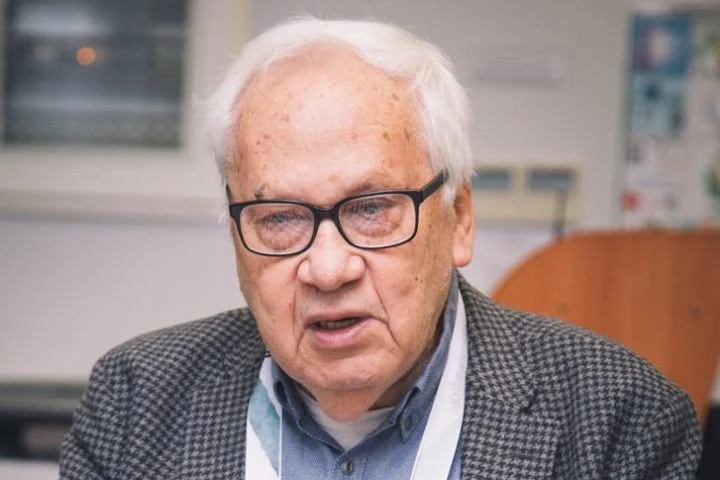
Anatoly Avraamovich Bykhovsky was one of the key institutional architects of late Soviet and early post Soviet chess culture. His personal tournament record was respectable, including a Moscow championship and an appearance in the 1965 USSR Championship, yet his larger historical importance lies elsewhere: he spent a quarter century as senior coach of the Soviet youth team, helped create and shape the most important Soviet youth chess competitions, later chaired the Russian Chess Federation’s Trainers’ Council, served as a senior FIDE trainer and international arbiter, and remained active in elite events into his eighties. In official Russian and FIDE memory, he appears less as a star player than as an organizer, selector, mentor, and stabilizing institutional presence.[1][4][5][6]
The best documented core of his biography is clear. He was born on April 30, 1934, in Izhevsk, moved with his family to Moscow in early childhood, spent wartime years in evacuation in Perm, returned to Moscow in 1944, studied engineering at the Bauman school, worked in a classified research institute connected to the Soviet space sector, and later undertook postgraduate study in psychology at Moscow State University. He became Moscow champion in 1963, entered Soviet youth coaching in 1967, received the title Honored Trainer of the USSR in 1975, became an International Master in 1982 according to FIDE, an International Arbiter in 1993, a FIDE Senior Trainer in 2010, and died after a long illness in August 2025.[1][4][10]
His legacy rests on pedagogy and organization more than on named opening theory. Bykhovsky designed or helped institutionalize competitions such as the Soviet event for young masters, the grandmasters versus young masters Scheveningen match, the match tournament of three national teams, the Pioneers’ Palaces event, and above all the school team competition Belaya Ladya or White Rook. Former pupils and colleagues consistently describe his method as classical, center based, developmental, and designed to build sound foundations. At the same time, the historical record is uneven. Official sources are strong on the outline of his public career, but much weaker on his spouse, children, exact death place, complete publication list, and some secondary claims about his social life and nonparty status. Those points should be handled cautiously.[1][8][9][10][11]
Life and Background
Bykhovsky was born on April 30, 1934, in Izhevsk. Official federation biographies state that his family moved to Moscow three years later, evacuated to Perm after the German invasion, and returned to the capital in 1944. After the family’s return, he entered the Moscow City House of Pioneers on Stopani Street, where his coaches were E. A. Penchko and A. A. Yaroshevsky; his circle there included future major figures such as Alexander Nikitin and Evgeny Vasiukov. These early institutional settings were central to his formation, since he later spent much of his life reproducing this same kind of structured youth environment on an all Union scale.[1]
His family background was unusually prominent by Soviet standards. His father, Abram Isaevich Bykhovsky, was a senior manager in the Soviet armaments industry, director of major defense plants in Izhevsk and Perm, a Hero of Socialist Labour, and later a general major of the engineering artillery service. Anatoly later recalled that his father lived almost entirely for work, while domestic authority belonged largely to his mother; he also mentioned an older sister, Vera. These recollections fit the pattern of a household shaped by wartime industrial mobilization, high administrative responsibility, and prolonged paternal absence from everyday family life.[2][3]
He completed his studies at the Bauman Higher Technical School in 1956 and then worked in a closed research institute connected to the Soviet space industry. A 2014 interview adds that the institute worked closely with Korolev’s organization. In 1965 he entered postgraduate study in psychology at Moscow State University. That combination of engineering, psychology, and elite sport administration helps explain the unusually systematic character of his later coaching and tournament design, even if the surviving sources do not give a full intellectual autobiography. I found no evidence of emigration outside the Soviet Union or Russia. His documented movements were internal: Izhevsk, Moscow, wartime Perm, then Moscow again for the rest of his public career.[1][10]
Bykhovsky died after a long illness in late August 2025. The Russian Chess Federation obituary, published on August 28, announced his death, described him as being in his ninety second year, and gave a Moscow address for the memorial service on September 1. The official notice does not explicitly state the precise place of death, so “Moscow” should be treated as probable rather than fully documented by primary federation evidence alone.[1]
Chess Career and Institutional Roles
As a player, Bykhovsky reached a level that would already have made him notable in most chess cultures. Official Russian federation sources confirm that he became Moscow champion in 1963, earned the Soviet master distinction that same year, and played in the 33rd USSR Championship in Tallinn in 1965, where a fuller interview specifies that he shared tenth through twelfth place with Viktor Korchnoi and Vladimir Simagin. Even without overstatement, those results place him firmly in the upper Soviet master class, which in the 1960s was an exacting competitive milieu.[1][10]
His decisive career turn came in 1967. Soviet sports authorities, concerned that too few top Soviet players were under thirty, created the post of senior coach of the USSR youth team and offered it to Bykhovsky. He held that role for twenty five years, until the dissolution of the Soviet Union. Later official commemorations and interviews describe him as helping prepare three generations of young Soviet talent and credit the youth team he directed with annual world successes. Official sources also attach major names to the environment he shaped, including Anatoly Karpov, Garry Kasparov, and Vladimir Kramnik, though that should be understood as a claim about a system he led, not a claim that he served as each player’s sole or primary personal trainer.[1][5][10]
His formal distinctions followed the trajectory of that institutional role. He became Honored Trainer of the USSR in 1975. The Russian federation credits him with the Order of the Badge of Honour in 1981, while FIDE records list him as International Master in 1982, International Arbiter from 1993 with Category A status, and FIDE Senior Trainer from 2010. FIDE also records him as a member of the Trainers’ Commission for the 2011 to 2014 term. In Soviet and post Soviet chess, this is a rare combination of roles: playing title, state coaching distinction, top arbiter status, and formal standing inside FIDE’s trainer education structure.[1][4][5][6]
After the Soviet collapse, he remained influential inside Russian chess. FIDE’s 2020 tribute dates his chairmanship of the Russian Chess Federation Trainers’ Council to 2003 through 2013, while contemporary Russian federation pieces describe him as the country’s most experienced and respected trainer and note that he continued to head or embody coaching policy for years after 2003. As an arbiter, he served as chief arbiter of the Russian Superfinals in 2013 and 2015, chief arbiter of the 2018 Tal Memorial, and a member of major FIDE appeals bodies, including the 2018 Women’s World Championship and the 2019 World Rapid and Blitz Championship. These appointments show that his authority extended well beyond youth training into the governance of elite chess events.[5][6][7]
His work with individual players is also substantial, though the terminology requires care. Official sources say he “helped” Anatoly Karpov, Garry Kasparov, Vassily Ivanchuk, Boris Gelfand, Alexander Beliavsky, Vladimir Kramnik, and others at various individual world and European championships. That wording suggests seconding, consultation, delegation leadership, and selective analytical support more than continuous one to one coaching. His best documented long term pupil was Alexander Grischuk, who worked with him for about ten years. Russian federation obituaries also name Boris Grachev among his trainees. Separate federation reminiscences show his role as a selector and recommender: he directed attention toward Vladimir Kramnik, recommended Grigory Oparin to Sergei Dolmatov, and, through a substitution recounted by Alexander Nikitin, was part of the chain that led to Nikitin’s crucial early encounter with Kasparov.[1][5][9][13]
Pedagogy, Theory, and Publications
Bykhovsky’s most enduring contribution was pedagogical design at scale. In his own retrospective interview, he described several intertwined projects created to solve a concrete Soviet problem: a shortage of top young players ready to replace the older generation. His answer was not a single school or doctrine. It was an ecosystem. He organized the all Union tournament of young masters, the 1970 Scheveningen style match between seven grandmasters and seven young masters, the later match tournament of the first, second, and youth national teams, and annual training camps in Tsakhkadzor that combined physical training with instruction from figures such as Botvinnik, Karpov, Averbakh, Polugaevsky, and Dvoretsky.[10]
The Belaya Ladya or White Rook school team competition was the best known expression of that philosophy. Bykhovsky repeatedly explained that he wanted a competition that would attract broad public attention and produce a “pyramid” from the school level upward, forcing schools to create rooms, clubs, equipment, and local championships. He insisted on the team format because he believed young players needed team tournaments, a judgment repeated in the title of his 2014 interview. In 2018 he summarized the same idea for school chess teachers in Khanty Mansiysk: Belaya Ladya had to receive its impulse from participating children, not from administrative command from above. That is a remarkably consistent educational philosophy, spread across decades.[8][10]
His pedagogy at the individual level was similarly classical and foundation driven. Grischuk’s retrospective is the clearest testimony: Bykhovsky taught him to play in the center, develop pieces actively, and build his openings around sound classical structures such as 1.e4 e5 and 1.d4 d5. Gelfand adds an important complement. He says Bykhovsky insisted on serious study of the classics at a time when some were already hoping that mechanized preparation alone would produce results. Taken together, these statements present a method that valued structure, healthy development, canonical models, and long term chess culture over novelty seeking for its own sake.[9]
Direct evidence for Bykhovsky as a major independent chess theorist is thinner than the evidence for him as a pedagogue and organizer. No major opening, variation, or strategic concept now bears his name in the way one might speak of Botvinnik, Dvoretsky, or Zaitsev. Still, the public record does show real literary activity. Google Books and publisher metadata confirm that he wrote the epilogue to Igor Zaitsev’s Attacking the Strongpoint in 2020. Search indexed periodical records from 64 show bylined pieces under his name, including a 1977 article on the World Student Championship and a 1994 article on the Children’s Olympiad. Memoir evidence from Gennady Nesis places him among the contributors to the 1985 Malaia Debiutnaia Entsiklopediia or Small Encyclopedia of Chess Openings.[11]
A cautious inference follows from his FIDE Senior Trainer title. The FIDE Trainers’ System Guide states that published manuals, books, or series of articles were a central criterion for awarding that title. Since FIDE awarded Bykhovsky the title in 2010, the organization itself must have recognized a substantive publication record, even though that corpus is not well catalogued on the open web today. This is one of the clearest places where the archival record is visibly thinner than the institutional recognition he received.[4][6]
Style, Reputation, and Legacy
The most reliable descriptions of Bykhovsky’s own chess style come indirectly, through the style he transmitted. Grischuk’s account presents it as center first, piece activity first, sound openings first, and stripped of decorative excess. That should not be flattened into a simplistic label such as “dry.” Soviet contemporaries regarded him as a genuine master, yet later memory overwhelmingly preserved him as a trainer whose competitive values were legible in his pedagogy: classical orientation, developmental logic, and distrust of fashionable shortcuts.[9]
His personal reputation in official and semi official memorial culture is exceptionally consistent. Boris Spassky, on the Russian federation page, is quoted as valuing his intelligence, honesty, and amiability. Kasparov is quoted there as associating Bykhovsky’s name with an entire epoch of Soviet youth chess. Tukmakov describes his appointment in the late 1960s as an ideal choice and credits him with launching the White Rook, the Pioneers’ Palace tournaments, the young masters events, and the grandmasters versus young masters match that shaped later generations. Gelfand stresses a different part of the legacy: Bykhovsky as a humane arbiter who used authority to increase players’ comfort rather than to display power.[1][9]
That combination of traits explains the peculiar shape of his legacy. He was not chiefly remembered for a world championship match, a named variation, or a single school with a brand identity. He was remembered as a selector, counselor, designer of competitions, committee chair, arbiter, and organizer of pathways. Adrian Mikhalchishin’s ChessBase tribute captured this well by describing him as a driving force behind the great Soviet generations while remaining largely in the shadow. The late institutional honors fit that judgment: the Russian federation obituary records him as a laureate of the federation’s Golden Sign, and an official state legal notice shows that he received the Order of Honour in 2024 for his contribution to the development and popularization of chess.[1][12][14]
Record Problems and Historical Uncertainties
The strongest part of the record is institutional. Birth date, main cities of residence, education, Soviet youth team role, state and FIDE titles, and major Russian federation offices are all documented in official federation or FIDE sources. The weakest part is domestic biography. I found no authoritative public federation profile that securely supplies his mother’s full name, marriage date, spouse’s biography, or a full family register. Later secondary compilations and reposted biographies give additional details, but those details are not well anchored in official chess records and should not be repeated as firm fact without further archival confirmation.[1][3]
Several specific discrepancies also remain. FIDE lists his International Master title as 1982, while the English Russian Chess Federation person of the day page gives 1981. Since FIDE is the rating and title authority, 1982 is the safer date, yet the discrepancy itself deserves notice. Likewise, the official obituary gives the date of death and the Moscow memorial address, but not the explicit place of death. Secondary compilations often say Moscow. That is plausible, though not fully established by the primary notice I found.[1][4]
The same caution applies to several colorful claims that circulate in later Russian secondary materials: that he was a famous playboy in youth, close to Moscow’s artistic bohemia, married for the first time at forty five, never joined the CPSU despite long years in the Soviet sports apparatus, and had a precisely identifiable spouse, son, and granddaughter. Some of these claims may be true. Some may even rest on oral testimony. Yet in the public documentary record I reviewed, they remain source thin. For a rigorous biographical profile, the prudent course is to treat them as unverified or lightly verified, not as settled fact.
Notes
Russian Chess Federation, “Anatoliiu Avraamovichu Bykhovskomu ispolniaetsia 90 let,” April 30, 2024; Russian Chess Federation, “Anatoly Bykhovsky,” Person of the Day, April 30, 2026; Russian Chess Federation, “Ushel iz zhizni Anatolii Avraamovich Bykhovskii (1934-2025),” August 28, 2025.
“Bykhovsky Abram Isaevich,” Geroi Strany; “Bykhovskii Abram Isaevich,” Entsiklopediia ‘Permskii krai’.
Eduard Getmanskii, “Bykhovskii Abram Isaevich,” Berkovich-Zametki, April 12, 2017. The article includes recollections attributed to Anatoly Bykhovsky about his father, mother, and sister.
FIDE, “Bykhovsky, Anatoly A,” player profile, accessed May 19, 2026.
International Chess Federation, “A Tribute to Our Seniors,” August 17, 2020.
FIDE Trainers’ Commission, FIDE Trainers’ System Guide; FIDE Executive Board annex on the Trainers’ Commission for 2011 to 2014.
Russian Chess Federation, “Superfinal chempionata Rossii,” 2015 regulations; Russian Chess Federation, “Tal Memorial,” 2018 event page.
Ugra 2018 Women’s World Championship site, “Anatoly Bykhovsky: Junior Chess Is Booming Worldwide,” November 12, 2018.
Russian Chess Federation, “Aleksandr Grishchuk: Anatolii Avraamovich nauchil menia igrat v shakhmaty,” April 30, 2014.
Russian Chess Federation, “Molodym nuzhny komandnye turniry, pozhilym ploshchadka dlia obshcheniia,” May 31, 2014.
Igor Zaitsev et al., Attacking the Strongpoint: The Philosophy of Chess (Milford, CT: Russell Enterprises, 2020), publisher metadata; Gennady Nesis, memoir excerpt on the making of the Small Encyclopedia of Chess Openings; search indexed records for 64 showing bylined pieces by Bykhovsky in 1977 and 1994.
Russian Federation, official legal portal search result for Presidential Decree No. 701 of August 17, 2024, awarding Anatoly Bykhovsky the Order of Honour for contribution to the development and popularization of chess.
Russian Chess Federation, “Viktor Glatman,” Person of the Day; Russian Chess Federation, “Grigorii Oparin,” Person of the Day; Russian Chess Federation, “Ushiol iz zhizni zasluzhennyi trener SSSR Aleksandr Sergeevich Nikitin,” June 5, 2022.
Adrian Mikhalchishin, “Anatoly Bykhovski Turns 90!,” ChessBase, April 30, 2024.
Later secondary compilations summarized by Russian language encyclopedia mirrors and reposted biographies include claims about his social circle, nonparty status, and detailed family life. These claims are widely repeated but not secured by the primary or official chess sources used above.
