Peter Svidler
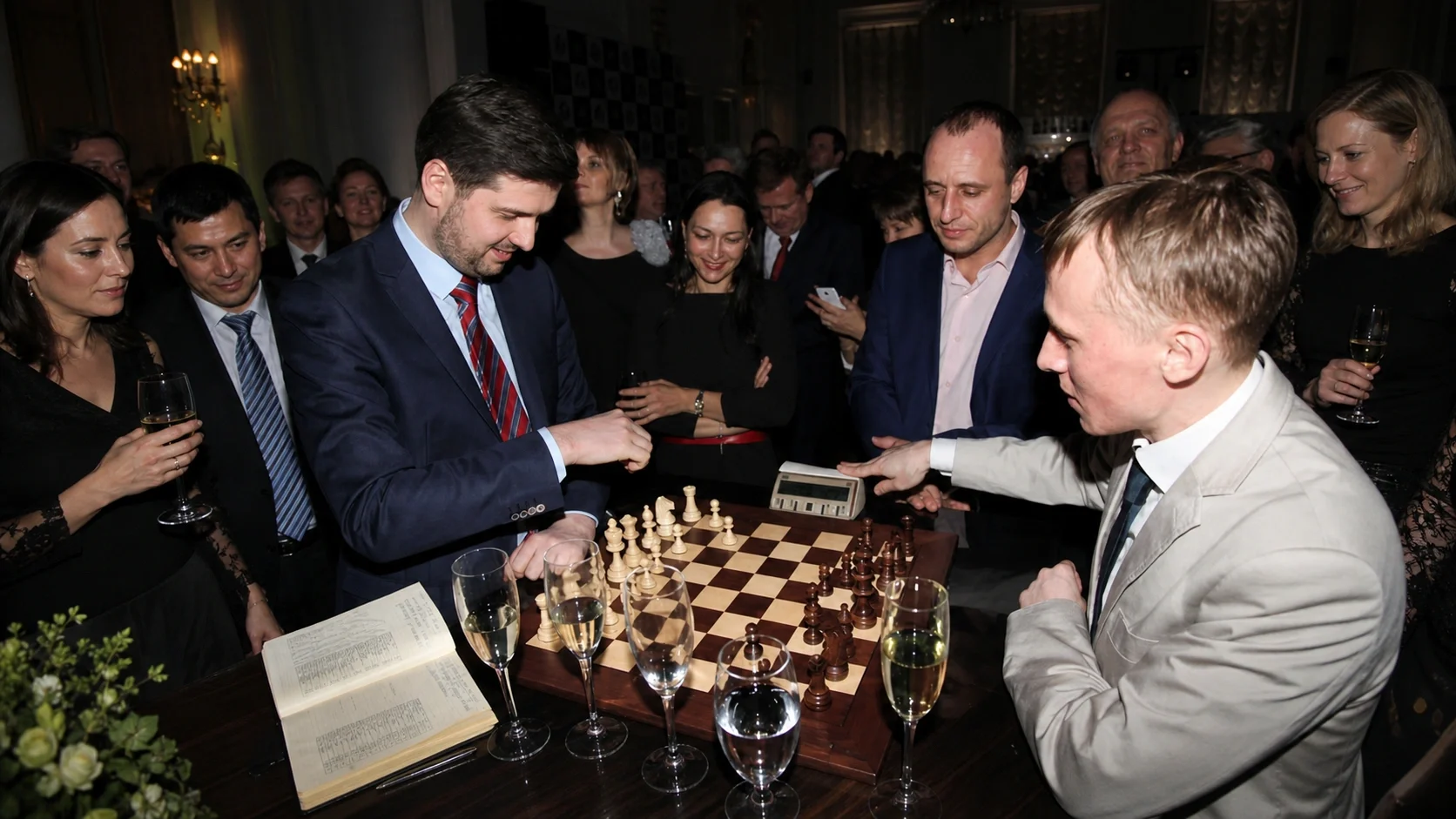
Владимир Барский, CC BY-SA 3.0 <https://creativecommons.org/licenses/by-sa/3.0>, via Wikimedia Commons
Peter Svidler (born June 17, 1976) is a Russian chess grandmaster, eight-time national champion (1994, 1995, 1997, 2003, 2008, 2011, 2013, 2017), and a leading figure of his generation. He rose rapidly in the 1990s – winning the World Under-18 Championship in 1994 and earning the GM title that year – and soon cracked the 2700 rating mark (first achieved in 1998). Svidler’s competitive peak came in the early 2000s: he reached a career-best FIDE rating of 2769 in May 2013 (world #9 at the time) and was ranked as high as world No.4 in January 2004. He was a key member of Russia’s Olympiad teams (1994–2010, 2014), contributing to five gold and two silver team medals. Internationally, he won major events (e.g., Fontys Tilburg 1997 (shared), Dortmund 1998, Biel 2000, Gibraltar), and claimed the 2011 FIDE World Cup. Svidler also competed deep into World Championship cycles (semi-finalist in FIDE 2001, runner-up at FIDE 2005, qualified for the 2007 championship, and reached the 2013 Candidates with a third-place finish). Beyond playing, he is widely known as an English-speaking commentator and analyst; Russian Chess Federation polls rank him among the top three live commentators worldwide. He has co-authored a definitive biography of ex-World Champion Vasily Smyslov and served as second/assistant to champions (e.g., helping Vladimir Kramnik in World Championship matches). An eloquent personality (“the black sheep of chess” in Sergey Shipov’s words), Svidler has influenced modern chess culture through his insights and media presence. In sum, Svidler’s legacy combines a stellar national/international record with a lasting impact as a teacher, commentator, and author.
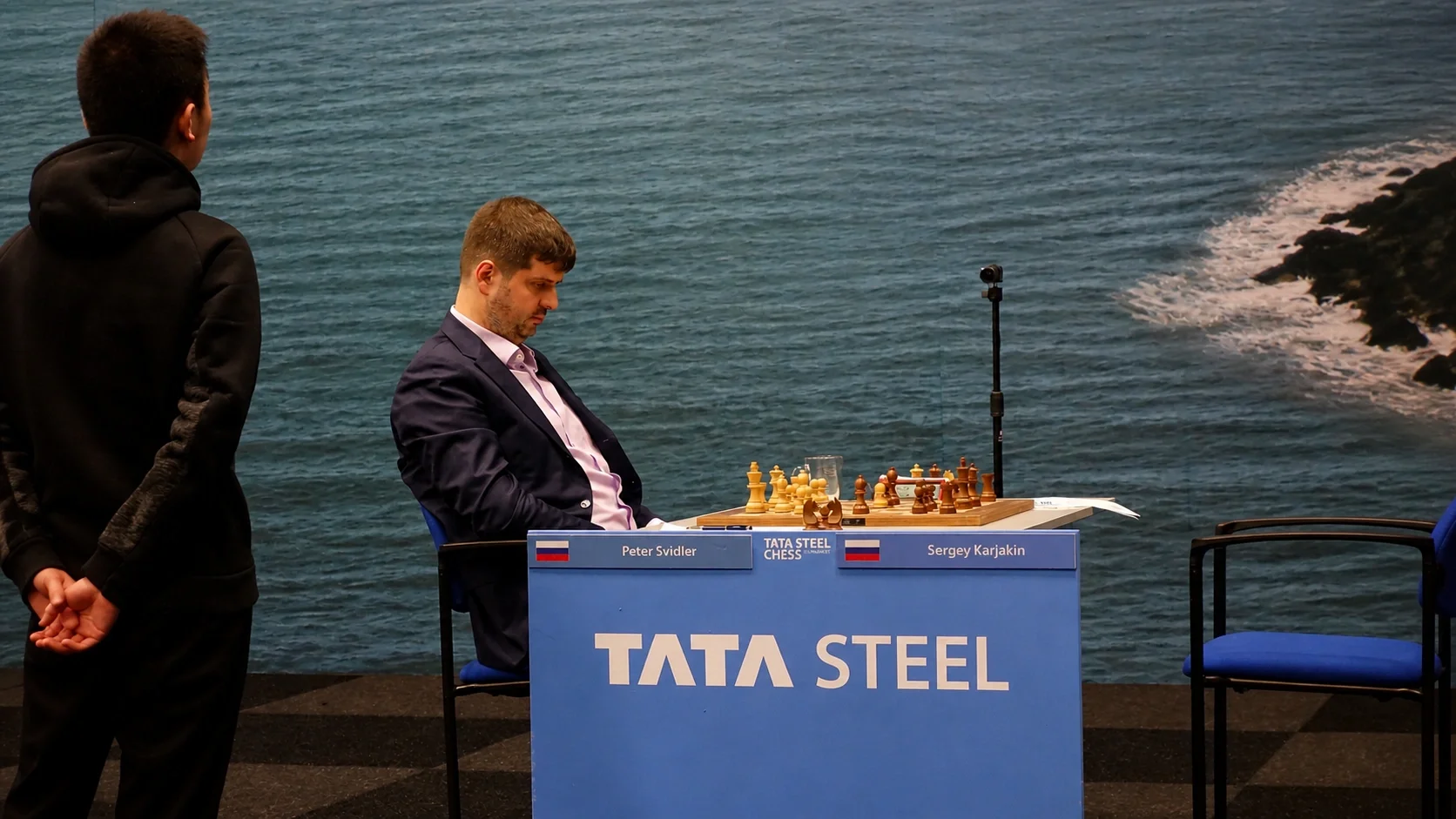
Svidler and Karjakin, TATA Steel. Vysotsky, CC BY-SA 4.0 <https://creativecommons.org/licenses/by-sa/4.0>, via Wikimedia Commons
Early Life and Chess Development
Peter Svidler was born on June 17, 1976, in Leningrad (now St. Petersburg). He learned to play at age six and showed early promise in youth events: for example, he tied for first in the USSR Under-16 Championship (1991) and won the World Under-18 Championship in 1994. Svidler’s formal training included attending the elite Botvinnik–Kasparov and later Dvoretsky–Yusupov chess schools, and he began working with coach IM Andrei Lukin around 1993. He credits Lukin with a “real breakthrough” in his progress. By 1994, Svidler had earned the International Master title (1991) and completed all norms for Grandmaster in the same year he won his first Russian Championship.
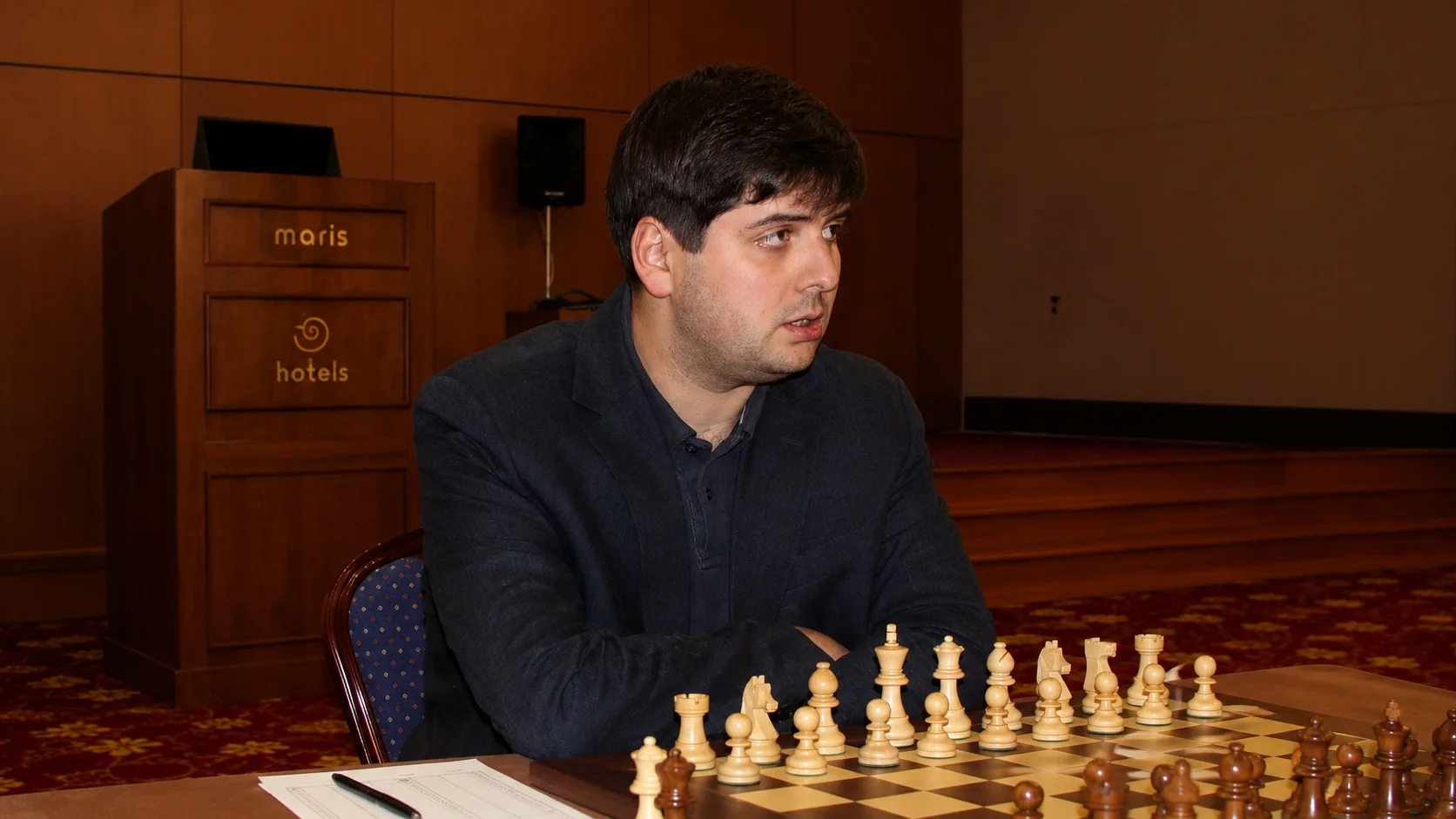
karpidis from Piraeus, Greece, CC BY 2.0 <https://creativecommons.org/licenses/by/2.0>, via Wikimedia Commons
Competitive Career
Russian Championships: Svidler dominated the Russian Championship for over two decades, capturing the title eight times (a record that surpasses even Botvinnik's). His first victory came in 1994 (at age 18); he repeated in 1995 and 1997, then won again in 2003, 2008, 2011, 2013, and 2017. These titles establish him as one of Russia’s most successful national champions.
World and Candidates Cycles: Svidler was a regular in FIDE World Championship events of the 2000s. In the 2001 FIDE Knockout Championship, he reached the semi-finals. In San Luis 2005, he shared second place (with Anand) behind Topalov, which earned him a spot in the 2007 Classical World Championship (where he finished 5th/8). Svidler also qualified for the Candidates Stage on multiple occasions: notably through winning the 2011 World Cup, he placed 3rd in the 2013 Candidates Tournament, and later competed in Candidates events in 2014 and 2016. These results mark him as a perennial contender in world-title cycles, though he did not reach a title match.
Olympiads and Team Events: A stalwart of Russian national teams, Svidler represented Russia in ten Chess Olympiads (1994–2010, 2014). He helped Russia capture five team gold medals and two silvers in these events, also scoring an individual bronze on one board. He contributed to Russia’s victories in the World Team Championship (1997, 2005) and multiple European Team titles. Such consistency in team competitions underscores his role as a reliable top-board performer for two decades.
Other Major Results: In elite round-robin tournaments, Svidler earned notable successes. He shared first at the 1997 Tilburg super tournament (defeating Kasparov in a critical game), won the Dortmund 1998 tournament, and triumphed at Biel 2000. In Swiss events, he won the Gibraltar Open (2011) and Fontys Tilburg (Europe and others). He tied for first at Dortmund (2002), the strong Aeroflot Open, and the Poikovsky Karpov Memorial. In rapid/blitz formats, he also excelled, finishing runner-up at the 2006 World Blitz Championship. Uniquely, Svidler won the FIDE World Fischer Random (Chess960) Championship three times (2003, 2004, 2005), showcasing his adaptability in unconventional chess.
Ratings and Ranking: Svidler entered the FIDE top-100 at age 18, and first exceeded 2700 in 1998. He achieved a career-high rating of 2769 in May 2013, one of the highest in history at the time, and was ranked world No. 4 in January 2004. (As of mid-2026, his rating is around the high 2600s.)
Playing Style and Openings
Svidler’s play is generally dynamic and tactical. He himself describes his style as “a very decent dynamic player” who thrives on initiative, though he admits defenses in passive positions are a weaker point. Commentators praise his sharp tactical vision: he has been called “a wonderful tactician” who has beaten many top players in spectacular fashion. He is known for his enterprising play in chess.
In the opening repertoire, Svidler has employed both 1.e4 and 1.d4 vigorously. As Black, he is a longtime exponent of the Sicilian Defense (especially the Najdorf and Kan variations) and also played the Modern Benoni and King’s Indian in earlier years. With White, he has used flexible systems. He is respected for deep theoretical preparation – for example, he introduced novelties in sharp lines of the Sicilian and Grunfeld in top-level play. (Specific theory lines are beyond scope here.) His endgame technique improved significantly over time, making him a tough opponent in all phases.
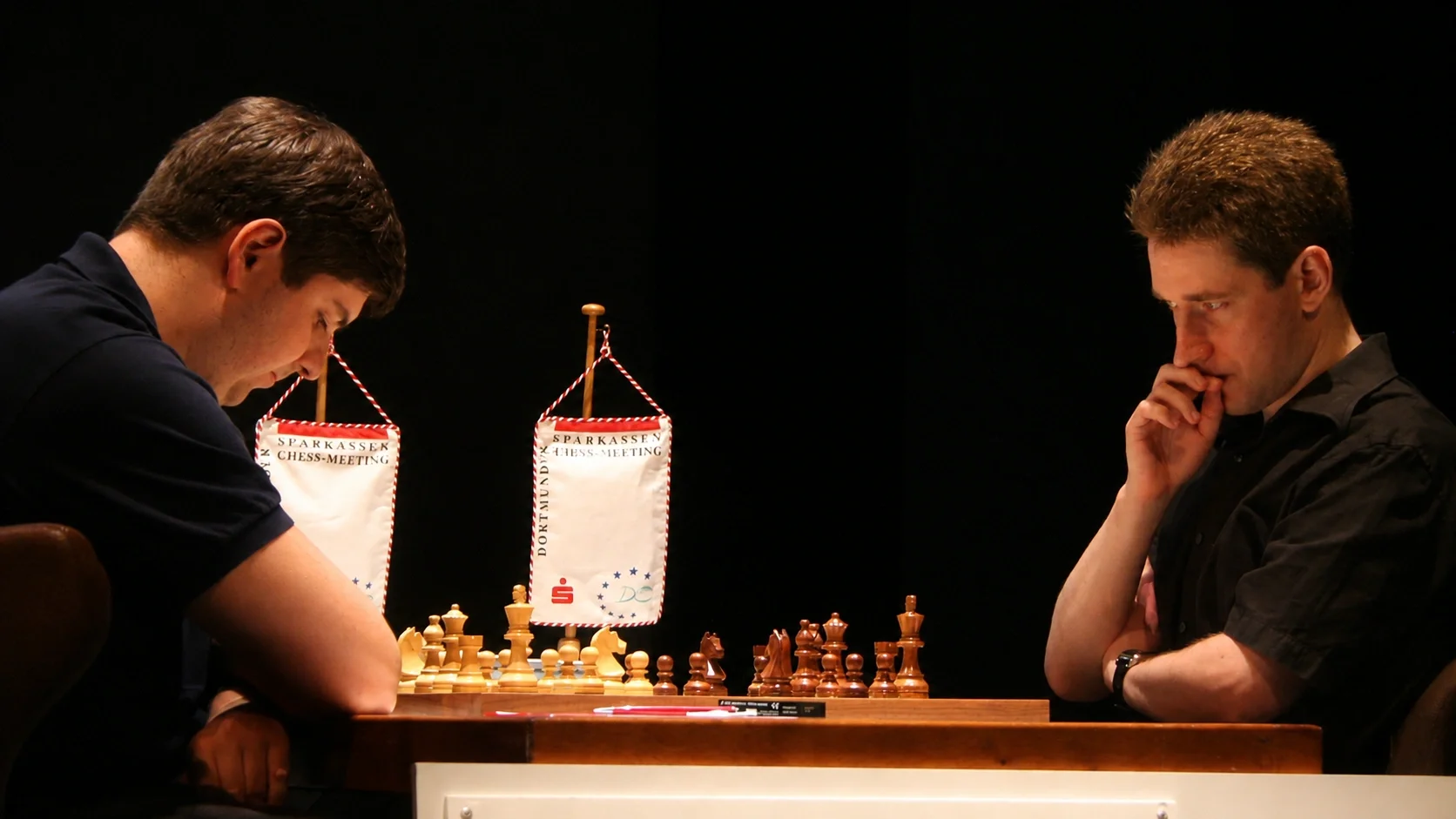
Svidler, Adams, Dortmund, 2006
Roles Beyond Competition
Commentator and Analyst: In recent years, Svidler has become famous for his commentary on major events. He is bilingual (English and Russian) and has been a frequent English-language commentator on sites like Chess24 and FIDE broadcasts. The Russian Chess Federation notes that he is consistently regarded as one of the top three tournament commentators worldwide. His witty, insightful analysis and engaging style have made him a popular figure for online audiences. For example, he often co-hosts live commentary (with other GMs like Jan Gustafsson) for elite tournaments, helping explain games to the public.
Coach/Second: Svidler has also worked as a seconds/assistant for other champions. Notably, he assisted Vladimir Kramnik in the Classical World Championship matches of 2000 and 2004. He helped fellow Russian GM Alexander Grischuk prepare during the 2011 Candidates cycle, among others. These roles underline his deep opening knowledge and analytical skills.
Writer: He has contributed to chess literature. Together with GM Andrew Soltis, Svidler co-authored a definitive biography of former World Champion Vasily Smyslov (the first volume was published in 2022). His well-received work reflects his interest in chess history and scholarship.
Streamer and Public Figure: Svidler maintains an active presence on chess streaming platforms and social media (e.g., occasional streams on Twitch and YouTube). He engages with the chess community through live Q&A sessions and lectures (e.g., on Chessable or online masterclasses). Fans appreciate his humor and broad cultural interests (he is notably a cricket enthusiast and speaks fluent English). In 2022, he joined other top Russian players in signing an open letter protesting the Russian invasion of Ukraine, showing a degree of civic engagement.
Influence, Honors, and Legacy
Svidler’s influence spans Russian and global chess circles. Domestically, his dominance in national championships (eight titles) and Olympiads helped sustain Russia’s chess heritage after the Soviet era. Internationally, he is remembered as one of the last great “universal” GMs who excelled in all time controls and formats. His high-profile commentary and writing have made him one of the most recognizable modern grandmasters beyond just his over-the-board results.
Honors: He earned the title of Grandmaster in 1994 and the title of International Master in 1991. Russia has awarded him the sports title of Honored Master of Sports in recognition of his achievements (a national honor).
Legacy: Many analysts regard Svidler as underachieving relative to his talent, given his tactical prowess, but his career nonetheless stands out for its longevity and consistency. He bridged the generations of Karpov/Anand and Carlsen and beyond. As Sergey Shipov wrote, he is “original in every way,” a cultured and humorous ambassador for the game. His peak results, eight national titles, and continuing prominence in chess media ensure that Peter Svidler will be remembered as one of Russia’s great players and a key figure in 21st-century chess.
