Vasily Smyslov
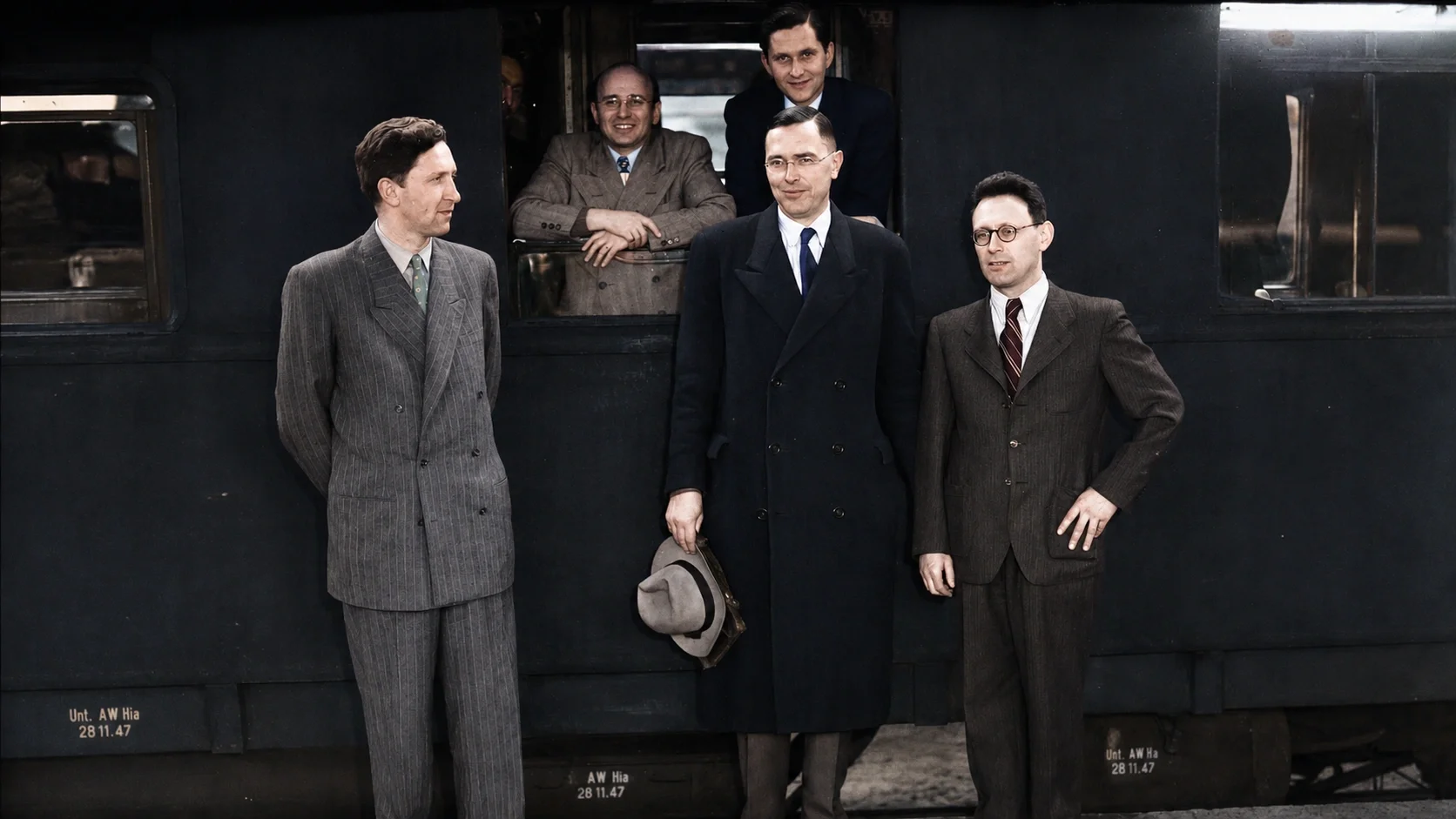
Smyslov, Reshevsky, Euwe, Keres, Botvinnik: Daan Noske / Anefo, CC0, via Wikimedia Commons
To the casual observer, Vasily Smyslov’s reign as world chess champion might appear fleeting—merely a single year on the throne. Yet within that brief tenure and a career spanning decades, Smyslov carved out a legacy that far transcends the calendar. As the seventh World Chess Champion (1957–1958) and a perennial contender who graced the top echelons of the game for over forty years, Smyslov exemplified sustained excellence – he even holds the all-time record of 17 Chess Olympiad medals. A gentle, introspective figure with an almost philosophical approach to the 64 squares, he sought beauty and truth in each move with the earnestness of a man in search of life’s meaning. In an era marked by Cold War rivalries and pragmatic battles of wills, Smyslov emerged as a champion of harmony—both on the board and in his life—melding artistic intuition with rigorous logic. His story unfolds as a rich tapestry of historical triumphs and personal trials, each thread woven with reflective insight and quiet passion.
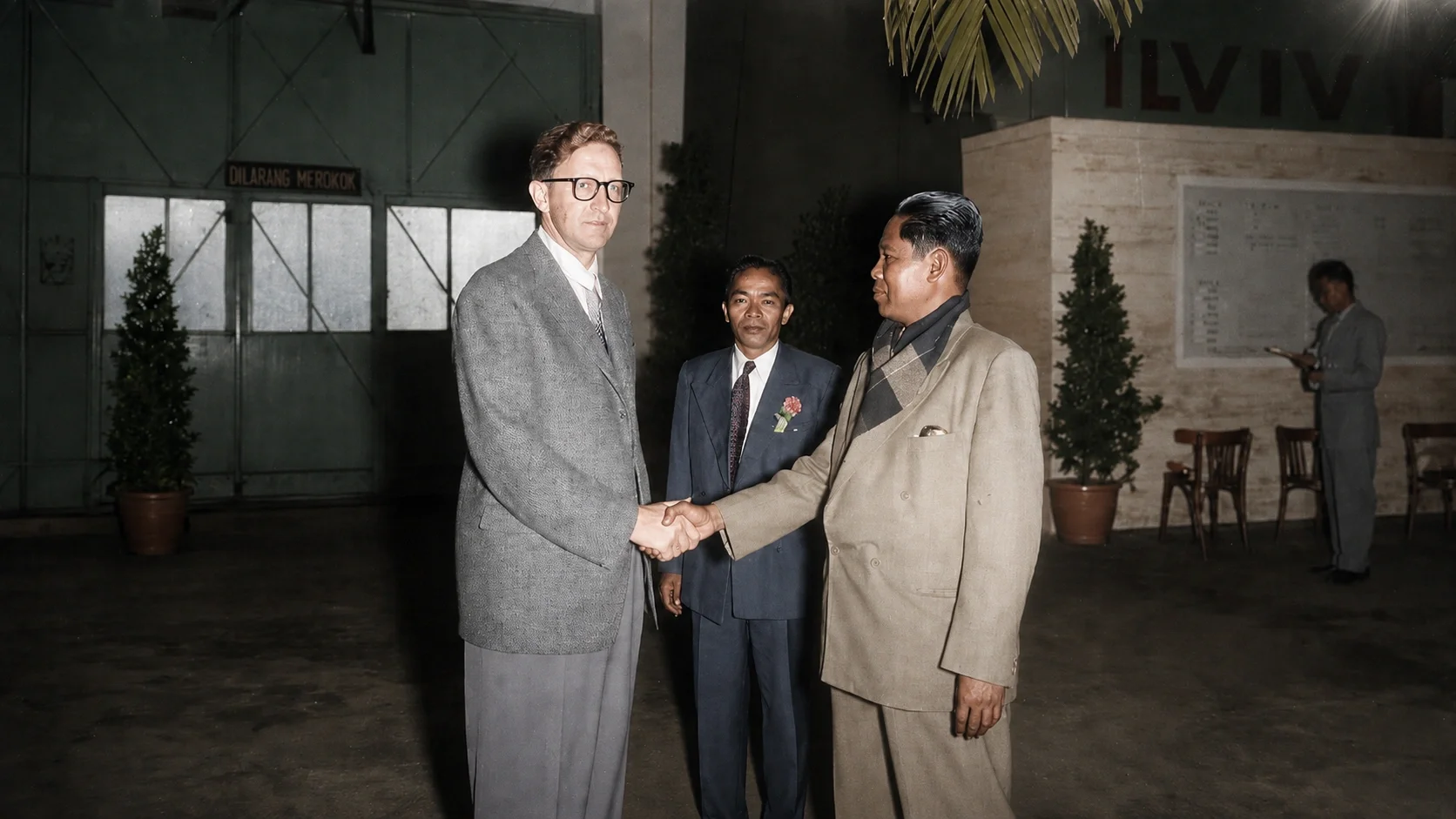
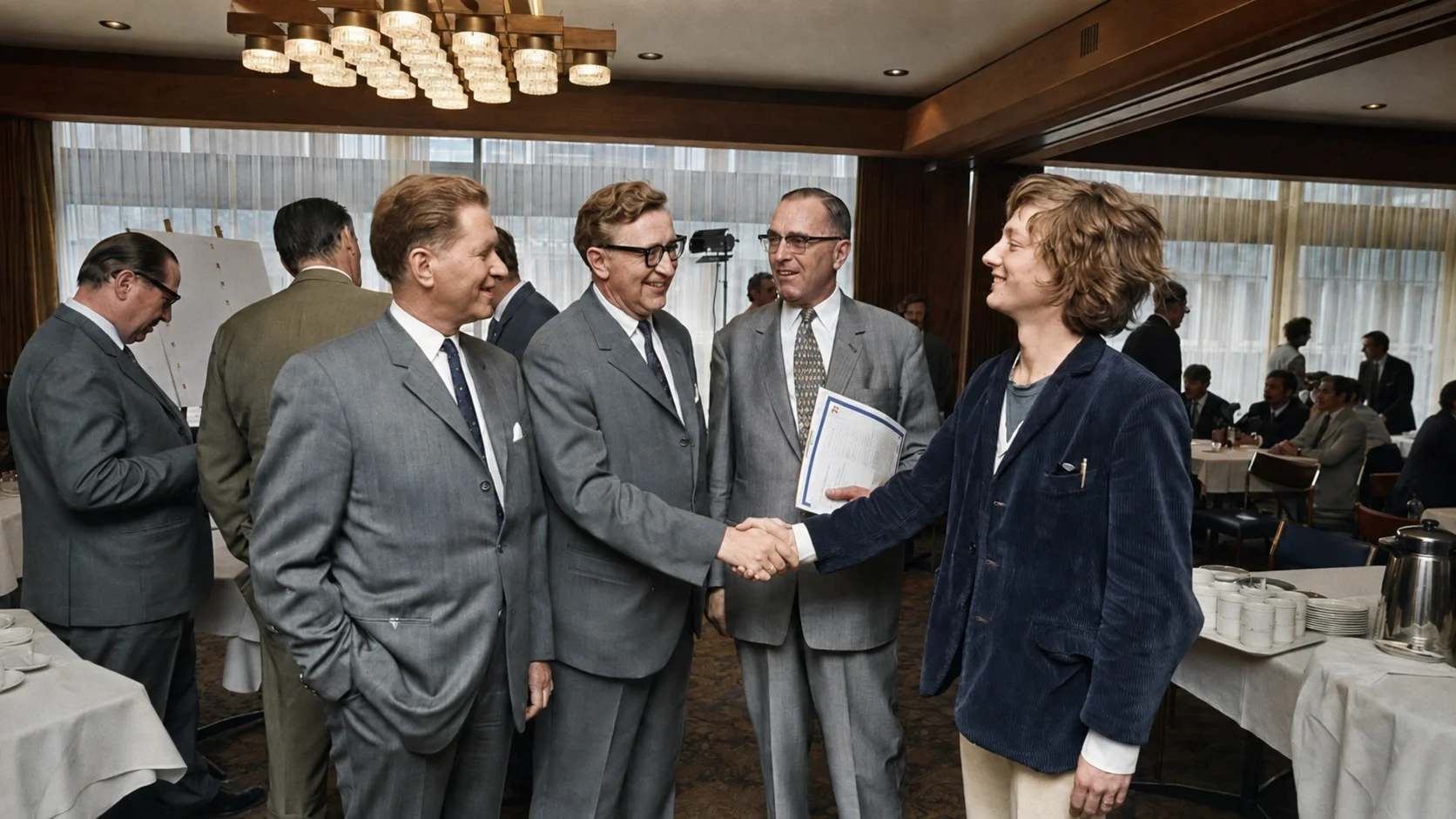
Vasily Smyslov meeting Indonesian chess officials: van Duinen / Anefo, CC0, via Wikimedia Commons
Early Life and Rise
Vasily Vasilyevich Smyslov was born on March 24, 1921, in Moscow, into a modest Russian family. His father, Vasily Osipovich Smyslov, an engineering technician and strong amateur player, became young Vasily’s first mentor in chess. The elder Smyslov had once taken lessons from the legendary Mikhail Chigorin and passed down this lineage of knowledge to his son along with a well-worn copy of Alexander Alekhine’s My Best Games of Chess. The boy absorbed these pages ardently – “I was later to read everything that my father had in his library,” Smyslov recalled of his early immersion in chess lore. By age 6 he was moving pieces under his father’s watchful eye, and by 14 he entered his first tournaments, a late start by future-champion standards but one quickly overcome by talent and studious dedication. At 17, Smyslov announced himself to the Soviet chess scene by winning the USSR Junior Championship and tying for first in the Moscow City Championship. These early successes, achieved amid the tumult of late 1930s Europe, hinted at a prodigy coming into his own.
The outbreak of World War II soon cast a shadow over Smyslov’s crucial developmental years. Exempted from military service due to poor eyesight, the young master continued to pursue chess even as battle raged around him. In 1940, at just 19, he burst into the elite by placing third in the USSR Championship (ahead of the reigning national champion, the formidable Mikhail Botvinnik). This remarkable result in what was then the strongest Soviet tournament ever held affirmed that Smyslov belonged among the chess world’s best. During the war years, international chess largely ground to a halt, but Smyslov kept honing his craft in Soviet events. He won the Moscow Championship of 1942 outright and consistently finished near the top of strong wartime tournaments, climbing into the top ranks of Soviet chess by 1944. It was as if the young man found in chess a small island of order and logic amidst the surrounding chaos of war – sixty-four squares where his mind could seek clarity while the world was shrouded in uncertainty.
When the war ended, Smyslov faced a new battle: proving himself on the world stage. Initially, he suffered a crisis of form in the immediate post-war tournaments, a rare slump for the rising star. One particularly dismal result in 1945 saw him near the bottom of the standings – a humbling experience that must have tested the foundations of his confidence. It is tempting to imagine the introspective Smyslov in those moments, questioning like a Dostoevskian hero whether fate had set limits to his ascent. But any self-doubts were short-lived. In 1946, at the first major international tournament after the war (in Groningen, Netherlands), Smyslov dramatically regained his stride. He finished third behind only Botvinnik and former world champion Max Euwe, reconfirming his status as a world-class player. This achievement at age 25 – coming so soon after his wartime setbacks – illustrated Smyslov’s resilience. He had stared into the abyss of uncertainty and emerged with a renewed sense of purpose. By the late 1940s, the stage was set for Smyslov’s pursuit of the ultimate title in chess, a pursuit that would span many years of struggle, hope, and fulfillment.
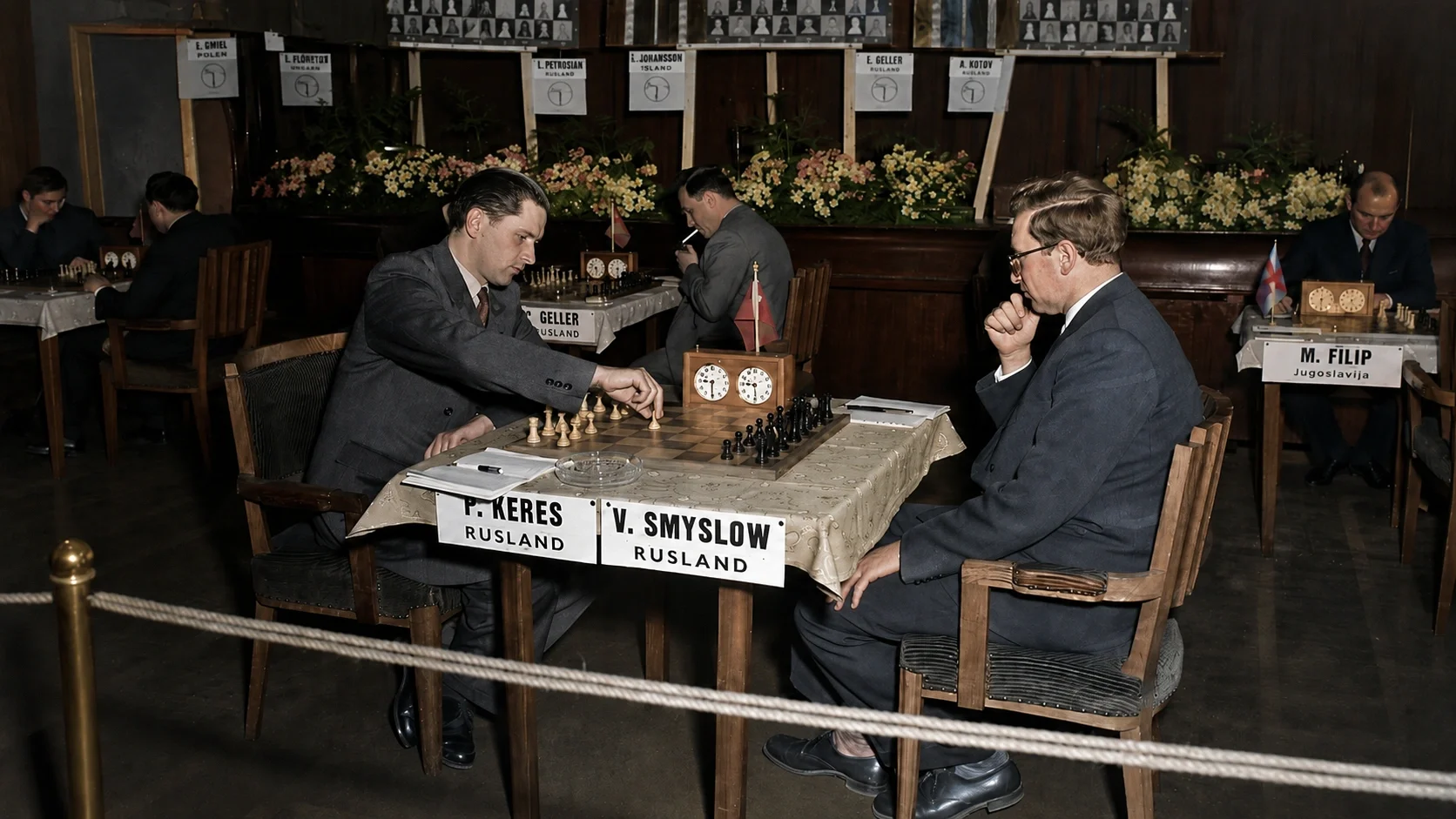
Harry Pot for Anefo, CC0, via Wikimedia Commons
World Championship Journey
Smyslov’s first opportunity to compete for the highest crown came in the wake of tragedy. When World Champion Alexander Alekhine died in 1946, FIDE organized a five-man tournament to determine his successor in 1948. The young Smyslov was included in this select field – a somewhat controversial choice to some, but one that he quickly vindicated. Facing legendary names of the era, Smyslov delivered a performance beyond all expectations: he finished second, behind only the veteran Botvinnik, and comfortably ahead of the other contenders. In the span of a few weeks, the 27-year-old Muscovite had transformed from a dark-horse candidate into the heir apparent to the chess throne. Botvinnik took the title, but Smyslov’s runner-up finish in the 1948 World Championship tournament established him as the Soviet Union’s next great champion-in-waiting. With characteristic reserve, he absorbed both the accolades and the lingering questions – aware that, in a world as unforgiving as chess, opportunities at the summit are rare and must be seized with sure hands.
In the years that followed, Smyslov doggedly pursued that summit. He earned another title shot by winning the historic Candidates’ Tournament in Zürich 1953, a gruelling double-round robin immortalized by David Bronstein’s famous book on the event. This triumph confirmed Smyslov’s stature: after Zürich, none could doubt he was the logical challenger to Botvinnik’s crown. The championship match took place in Moscow in 1954 and was an epic duel of contrasting styles and wills. Smyslov, the challenger, displayed sublime form and pushed the champion to the brink. After 24 hard-fought games, the match ended tied 12–12 – an outcome as dramatic as it was frustrating. Under the rules of that time, a tied match meant the defending champion (Botvinnik) kept the title, leaving Smyslov empty-handed despite having matched the great Botvinnik blow for blow. It was a heartbreaking near-miss. One can almost picture Smyslov in a quiet moment afterward, hands clasped, pondering the capricious nature of fate: how the difference between reigning as king and remaining a challenger could be nothing more than a quirk of rules. The skeptic in him might have questioned whether the laurel of champion was but an illusion, while the believer in him resolved that his moment had not yet come.
A tense moment during the World Chess Championship match in Moscow, 1957. The hard-fought duel between two titans would soon crown a new champion. Smyslov did not wallow in disappointment for long. Instead, he treated the 1954 match as a learning experience and kept his resolve intact. In 1956, he once again earned the right to challenge Botvinnik by winning the Candidates’ Tournament in Amsterdam, demonstrating that his conviction had only hardened with time. “The experience of the first duel was useful… Fate offered me the rare opportunity to fight for the world title a second time,” Smyslov reflected, framing his return not just as ambition but almost as destiny. In their 1957 rematch, the now 36-year-old Smyslov seemed a man transformed – calmer, wiser, and better prepared. He struck first by winning the very first game of the match, a result he took as a good omen. Indeed, this time Smyslov did not let the chance slip away. With a blend of steely positional play and the occasional tactical brilliance, he pulled ahead of Botvinnik and never relinquished his lead. After 22 games, Smyslov prevailed with a final score of 12½–9½, becoming the seventh World Chess Champion. The new champion’s style during the match was so measured and confident that observers spoke of an almost musical flow to his games – each move following logically from the last, creating a coherent whole that Botvinnik ultimately could not withstand. Smyslov’s ascent to the summit was complete, and for a moment he wore chess’s elusive crown.
Triumph in hand, Smyslov soon faced a fresh trial: Botvinnik, by pre-arranged privilege, exercised his right to a return match in 1958. In that return encounter, Smyslov’s title slipped from his grasp as Botvinnik, fiercely determined to reclaim supremacy, won by a margin of 12½–10½. Smyslov later revealed that he had been hampered by a bout of pneumonia during the match, yet he freely acknowledged that Botvinnik’s rigorous preparation was the decisive factor in his defeat. Thus, after one year, Smyslov’s reign ended, making his tenure as champion as brief as a single turn of the calendar. But the manner in which he handled this reversal only added to his legend. Rather than express bitterness, Smyslov responded with philosophical equanimity. Over the course of their three title matches, he had actually scored 18 wins to Botvinnik’s 17 (with many draws), proving himself every bit the champion in skill if not in official status. He accepted the quirks of fate with grace. “I have no reason to complain of my fate. I fulfilled my dream and became the seventh world champion in the history of chess,” Smyslov wrote in his memoir, content that even a one-year reign had given him a permanent place in the annals of the game. Such words, coming from a man who knew both the zenith of victory and the abyss of defeat, carry a distinctly stoic ring. In them one hears not only Smyslov’s personal relief and pride, but also an echo of the broader human condition: the understanding that great achievements, however transient, are meaningful in themselves.
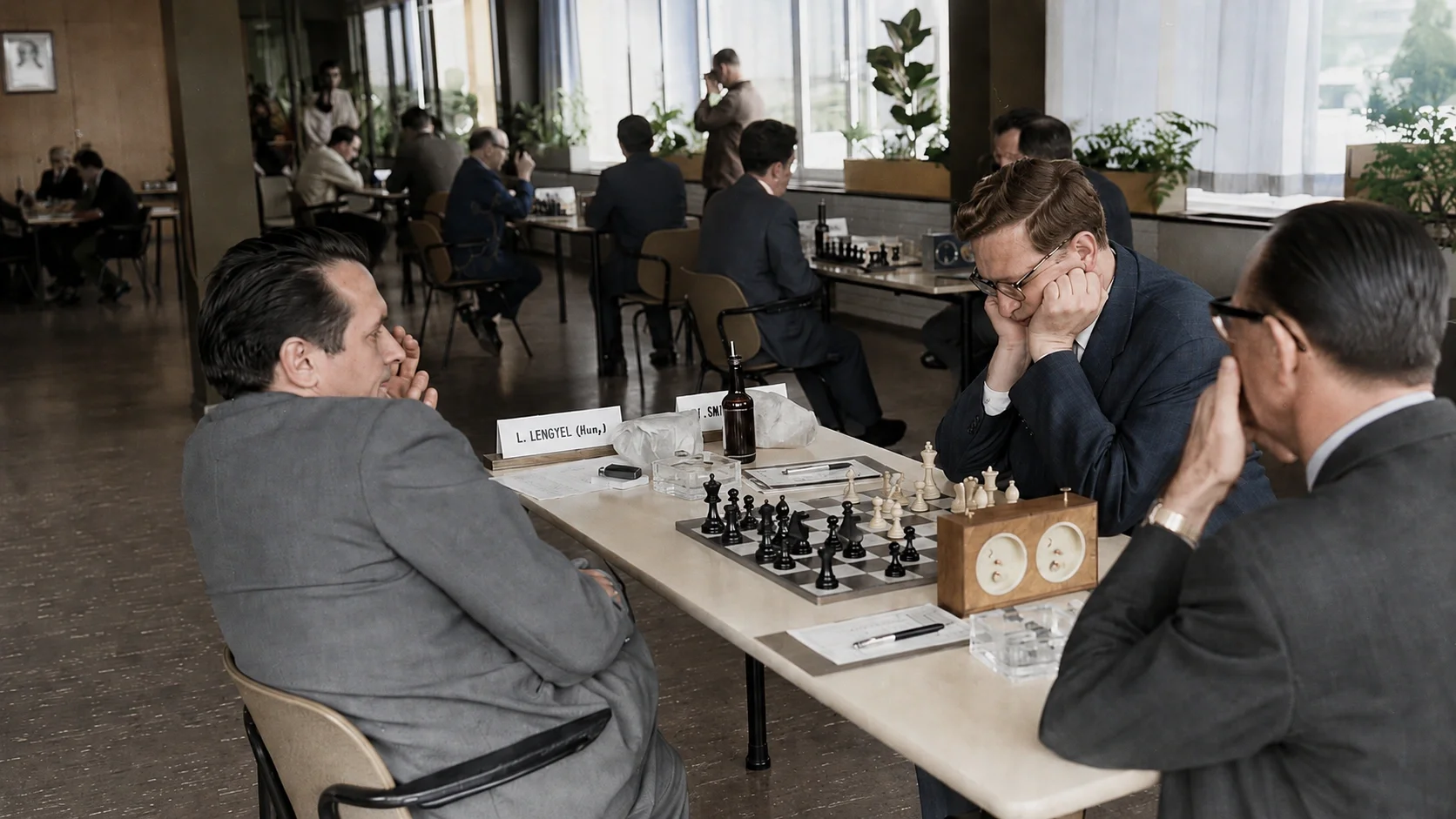
Harry Pot for Anefo, CC0, via Wikimedia Commons
Later Years and Longevity
Smyslov’s loss of the title in 1958 proved not an end but the beginning of a new chapter defined by longevity and continued excellence. Demonstrating remarkable resilience, he remained a formidable force on the international chess scene for decades after his brief championship reign. In the late 1950s and 1960s, Smyslov regularly featured in the World Championship cycles. He was a Candidate for the title on no fewer than eight occasions in his career – a testament to his enduring elite status. The 1960s saw him contend with (and often overcome) a younger generation of grandmasters who had grown up idolizing the very games he had played in the 1940s and ’50s. Smyslov won or shared first place in numerous top tournaments, from Mar del Plata to Monte Carlo, and even notched two more shared titles in the insanely competitive Soviet Championship (1949 and 1955). By the end of the 1970s he was well into his fifties, an age when most chess masters have long faded, yet Smyslov kept playing at a high level. In 1971 he was still strong enough to tie for second in the Soviet Championship (behind only the youthful Tal). For nearly forty years – from the late 1940s into the 1980s – Smyslov was consistently ranked among the world’s top players. This extraordinary competitive lifespan places him in select company. Along with Emanuel Lasker and Viktor Korchnoi, Smyslov became one of the game’s great exemplars of longevity. Korchnoi, who fought his own battles against age, once quipped on his 75th birthday, “Smyslov is proof that I can play chess for another ten years”. Indeed, Smyslov’s career offers a kind of reassurance that in chess – as in life – genius can endure even as youth fades.
The seventh world champion in his study during his twilight years, still contemplating chess with undiminished fervor. Incredibly, Smyslov remained a serious title contender even as a senior citizen. In 1983, at the age of 62 – when most grandmasters have long retired or relaxed into honorary roles – Smyslov embarked on a final astonishing run at the World Championship. The format had changed to knockout matches, and Smyslov was pitted against much younger opponents who were not even born when he first fought for the crown. Unfazed, the aging strategist defeated strong grandmasters one by one, displaying a timeless positional clarity that seemed immune to the years. He won matches against Ulf Andersson and Zoltán Ribli, and in the Candidates semifinal in 1983 he drew 7–7 with Robert Hübner. What happened next was a moment almost too poetic to be believed: the tie with Hübner was resolved not over the board but by the spin of a roulette wheel – literally chance deciding what skill could not. By this odd lottery of fate, Smyslov was chosen to advance to the Candidates final. It was a surreal intersection of randomness and reason, as if the universe (with a wry smile worthy of Bertrand Russell’s skepticism) wanted to remind everyone that not even chess mastery is free from luck. Smyslov himself, ever poised, accepted this bizarre outcome with a shrug and proceeded to the final match to face a 21-year-old rising star named Garry Kasparov. The final, held in early 1984, was a classic showdown of generations: Smyslov, the wise old lion, versus Kasparov, the fiery young prodigy. This time, youth prevailed – Kasparov won handily, and shortly thereafter he would become world champion – but Smyslov’s achievement was nonetheless monumental. At 63 years old, he had come within a hair’s breadth of qualifying to play for the world title yet again. It was a record for the ages, highlighting an ageless quality in Smyslov’s play.
After this swansong on the world stage, Smyslov gradually stepped back from top-tier competitions, yet he never truly stopped playing. In 1991, he won the inaugural World Senior Championship, adding another laurel to his storied career. He continued appearing in tournaments through the 1990s, his mere presence a living link to chess history. Only when his health intervened did Smyslov finally relent. His eyesight, never strong to begin with, deteriorated severely in his late years, eventually rendering him nearly blind. And still, even as physical sight left him, his inner vision remained sharp: Smyslov turned his formidable mind to composing chess studies and endgame problems, pursuing the same search for truth and beauty on the board that had animated him since boyhood. He was drafting chess compositions and analyses almost up to his final days, as if the act of contemplating chess was as vital to him as breathing. There is something profoundly moving in this image of the elderly Smyslov, thick glasses resting on his nose, feeling the shapes of pieces and dictating moves to his wife or friends – the fire of intellect undimmed by the frailties of age. It calls to mind an artist who must paint, or a philosopher who must question, until the very end. And for Smyslov, indeed, the end came on March 27, 2010, just after his 89th birthday, when he passed away in Moscow having given his life’s energy to the game he loved.
Keres, Smyslov, Euwe, Timman, IBM Chess Tournament, Amsterdam, 1971: Bert Verhoeff / Anefo, CC0, via Wikimedia Commons
Chess Style and Philosophy
Smyslov’s playing style was often described as classical and deeply logical – a style less flashy than some of his contemporaries, but arguably more profound. He was noted for his patient positional approach and extraordinarily precise endgame technique. In an age of sharp attacking geniuses, Smyslov cultivated an image of the endgame virtuoso, a master who could steer a game into quiet waters and then outplay anyone in the final phase. He had thoroughly studied the games and teachings of past champions like Emanuel Lasker, José Capablanca, and Alekhine – all renowned endgame artists – and from them he absorbed principles of technique and harmony that he made distinctly his own. “Nowhere does logical thinking emerge so clearly as in the final stage of the game,” Smyslov emphasized, repeating this credo time and again as he extolled the virtues of endgame study. To him, the endgame was chess in its purest form, stripped of ornamentation – a stage where truth could be found by the discerning mind. This philosophical bent did not mean Smyslov lacked tactical ability; on the contrary, his games show that when a combination was called for, he could unleash dazzling sequences of moves. “He could always smell a mate!” quipped grandmaster Vlastimil Hort, marveling at Smyslov’s tactical acumen even within his generally positional play. The blend of positional understanding and sudden tactical sharpness made Smyslov a truly universal player. His opening repertoire was rich though not overly ostentatious – he favored classic lines like the Ruy López and English Opening as White, and resilient defenses like the Sicilian and Nimzo-Indian as Black. Over the years, he contributed numerous ideas to opening theory, lending his name to several variations (for example, the Smyslov variations of the Grünfeld and Slav Defenses, and a fianchetto line of the Ruy López) that remain important to this day. In short, Smyslov’s chess bore the stamp of quality over chaos: every move had purpose, every plan was crafted with an almost musical sense of development and resolution.
Indeed, if one were to choose a single word to characterize Smyslov’s approach to chess, it might be “harmony.” Uniquely among World Champions, Smyslov was also an accomplished musician – a talented baritone singer – and he often drew explicit parallels between chess and music. “As in music, I always seek harmony on the chessboard, where each piece plays its part for the whole,” he once wrote, revealing how deeply the aesthetics of coordination influenced his play. He strove for positions in which all the pieces worked together seamlessly, as if in a well-conducted orchestra. Even in positions of great complexity, Smyslov had a way of finding that natural move which balanced the position, avoiding discordant notes. Observers frequently described his style as elegant and effortless, marked by an inner coherence that made even difficult moves appear intuitively obvious. It is no coincidence that his best-known autobiographical book was titled In Search of Harmony – a manifesto reflecting his lifelong quest to unite beauty and truth in chess. Smyslov’s games, especially his finest wins, have a timeless quality: they do not feel aged or outdated even decades later, because they are built on principles and patterns that resonate as fundamentally “correct.” In this sense, Smyslov’s chess can be seen as a form of philosophy in action. Like a patient thinker, he would probe the position for its underlying logic, sometimes asking small questions with quiet moves, other times answering the opponent’s challenges with almost Socratic clarity. There is an existential depth to his best performances – as if through chess he was exploring the contours of human thought itself, balancing intuition and reason, much as a writer or composer explores the depths of the soul. Little wonder that Smyslov is remembered not only as a champion, but as a wise man of chess – a player who approached the game as a grand intellectual and artistic pursuit.
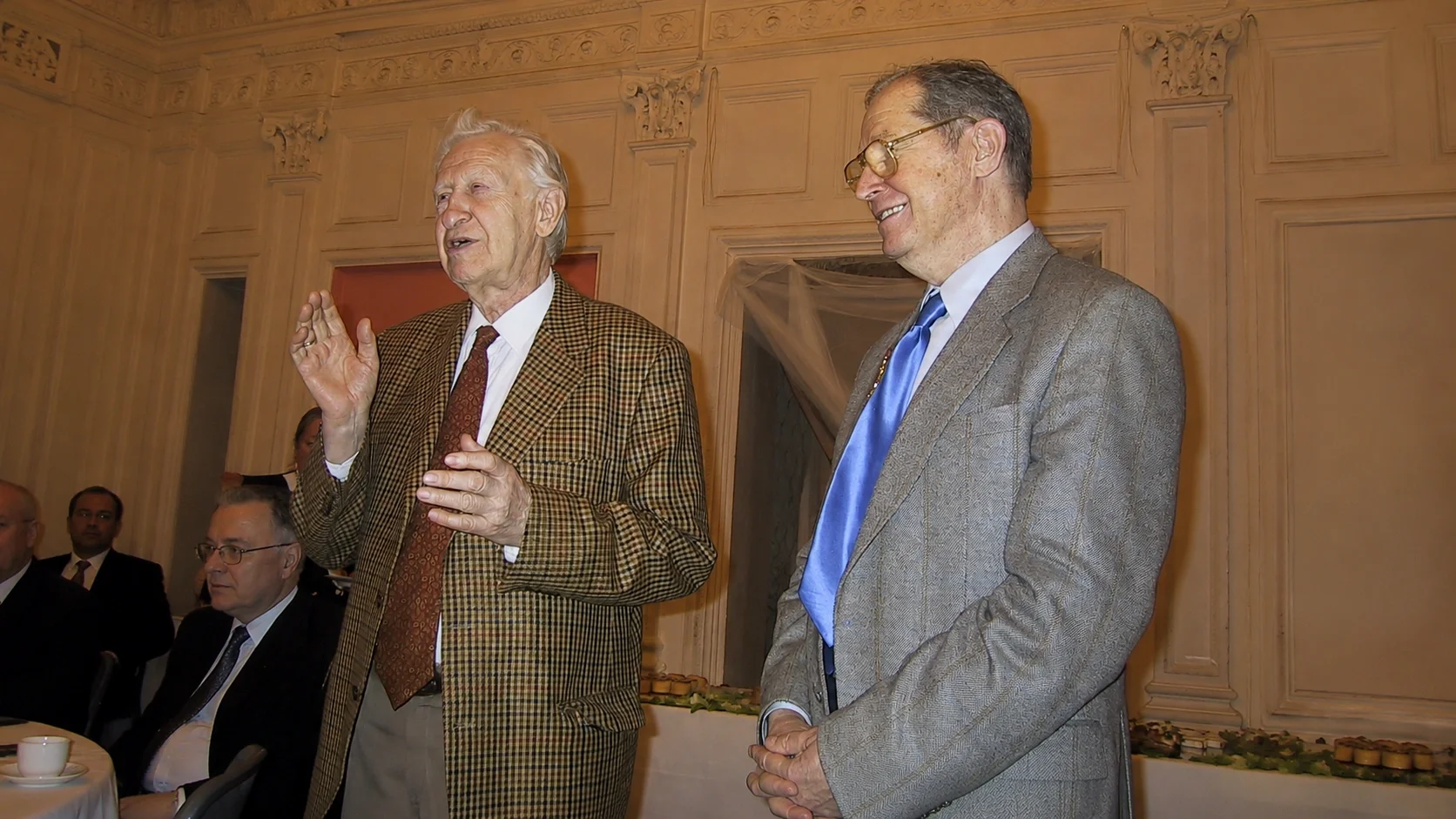
Smyslov and Averbakh: Jurgen Stigter, CC BY-SA 3.0 <https://creativecommons.org/licenses/by-sa/3.0>, via Wikimedia Commons
Music and Personal Life
Outside the chess hall, Smyslov’s life was imbued with music and marked by personal resilience. Had fate taken a slight turn, he might have been known to the world not as a chess grandmaster but as an operatic baritone on the stage of the Bolshoi Theatre. All through his youth, Smyslov nourished a parallel passion for singing. In 1950, he even auditioned for the Bolshoi, aiming for a professional music career. The attempt fell just short – by his own account, a narrowly missed acceptance that closed one path but left another wide open. With characteristic pragmatism, Smyslov accepted that this particular dream would not be realized and devoted himself fully to chess thereafter. Yet music never left his heart. Throughout his chess career, he was known on occasion to give impromptu singing recitals during tournament evenings, often accompanied on piano by his fellow grandmaster and noted pianist Mark Taimanov. Possessing a rich, lyrical voice, Smyslov delighted his friends and rivals alike with renditions of arias and Russian romances. In one famous instance, a Dutch insurance company that sponsored a chess tournament even produced a special record of Smyslov singing traditional songs (the album titled Chess Grandmaster Vassily Smyslov Sings, released in the Netherlands) to commemorate their event. He recorded operatic arias and folk songs in his native Russia as well, and as late as his 70s gave public concerts – performing to an admiring audience of chess enthusiasts who saw a different side of the former champion. For Smyslov, music was not merely a hobby but a spiritual complement to chess. He often remarked that the two arts shared a search for order and harmony. When he sang, he invested his full soul into the melody; when he played chess, one could sense a certain rhythmic, melodic quality in the flow of his pieces. This dual love endowed Smyslov’s life with a rare balance: where chess could be intense and exacting, music was emotional and liberating. Each perhaps kept the other in check, maintaining the equilibrium of his gentle spirit.
In his personal life, Smyslov was as steady and composed as he was at the chessboard, but he was not untouched by tragedy or temptation. He married Nadezhda Andreyevna in 1948, and their union would last for over half a century. Nadezhda, three years older than Vasily, had already experienced the cruel caprices of Soviet history – her first husband had been executed in a Stalinist purge in the early 1940s. Perhaps it was this shared understanding of life’s fragility that bonded Vasily and Nadezhda. They had no children of their own, but Nadezhda had a son from her previous marriage, Vladimir, whom Smyslov helped raise and encouraged in chess. (Vladimir Selimanov was talented enough to compete in the World Junior Championship for the USSR in 1957.) Nadezhda often traveled with Smyslov to major tournaments, acting as a loving companion and a source of moral support during the stressful cycles of preparation and play. Observers noted the quiet devotion between them – a partnership built on mutual respect and endurance. However, even this stable family life saw turbulence. During the 1959 Candidates’ tournament in Yugoslavia, which Nadezhda did not attend, the normally disciplined Smyslov became involved in a brief but scandalous affair with a female chess grandmaster. The liaison, shocking to the Soviet chess authorities, seemed to knock Smyslov off balance in the tournament and introduced uncharacteristic chaos into his orderly life. It was a humanizing episode – a reminder that this grandmaster, so logical and serene at the board, was still a man of flesh and blood, susceptible to folly. The indiscretion passed, and by all accounts Smyslov and his wife overcame the rift. But soon after, a far deeper sorrow struck: in 1960, Smyslov’s stepson Vladimir died by suicide. The young man’s tragic end left a wound that never fully healed. Smyslov spoke little of this loss in public, but friends noted a shade of sadness that occasionally clouded his eyes in the years afterward. One cannot help but draw a parallel to Dostoevsky’s characters who suffer in silence, seeking solace in faith or work. Smyslov, true to form, immersed himself ever more in chess and music – perhaps as a way to process grief, perhaps simply to continue living as the people he lost would have wanted him to.
In his later years, Smyslov’s life took on an almost monastic simplicity. As he grew older and his health declined, he turned increasingly toward spiritual contemplation. Raised in an era when religious expression was suppressed, Smyslov in old age became openly devout, embracing the Russian Orthodox faith with a heartfelt sincerity. By the 1990s, the former world champion lived in quiet seclusion with Nadezhda, spending most of their time at a dacha (country cottage) outside Moscow. There, far from the limelight of competition, he led a routine of study, reflection, and gentle recreation. His failing eyesight meant that he could no longer read chess notation or literature easily, but Nadezhda would read aloud to him, and he would discuss endgame studies or sing snatches of old arias in a soft baritone hum. A stray cat with a shimmering white-red coat, adopted by the couple and whimsically named Belka, became their close companion in these years. Smyslov doted on the animal, claiming she was “highly intelligent and had a keen sense of what was happening on the board” – a fanciful attribution that nevertheless reveals the gentle humor and warmth that he retained to the end. Those who visited the Smyslovs in this period came away with the impression of a household at peace. There were no grand luxuries or ostentatious trophies on display – only books, a piano, a chessboard never quite idle, and the palpable bond between an old master and his lifelong love. It was a life stripped to its essentials, rich in quiet joy. In March 2010, just a few days after celebrating his 89th birthday with a simple toast, Vasily Smyslov passed away in a Moscow hospital, closing the final chapter of a life that had seen triumph and despair, war and peace, the roar of ovations and the silence of solitude. His wife Nadezhda was by his side at the end. One of Smyslov’s contemporaries and admirers, former world champion Boris Spassky, delivered a poignant eulogy: “He was one of the chess geniuses of the 20th century… After the Second World War, there were four titans who shaped chess in the Soviet Union: Botvinnik, Smyslov, Keres and Bronstein. We should preserve their memory forever.”
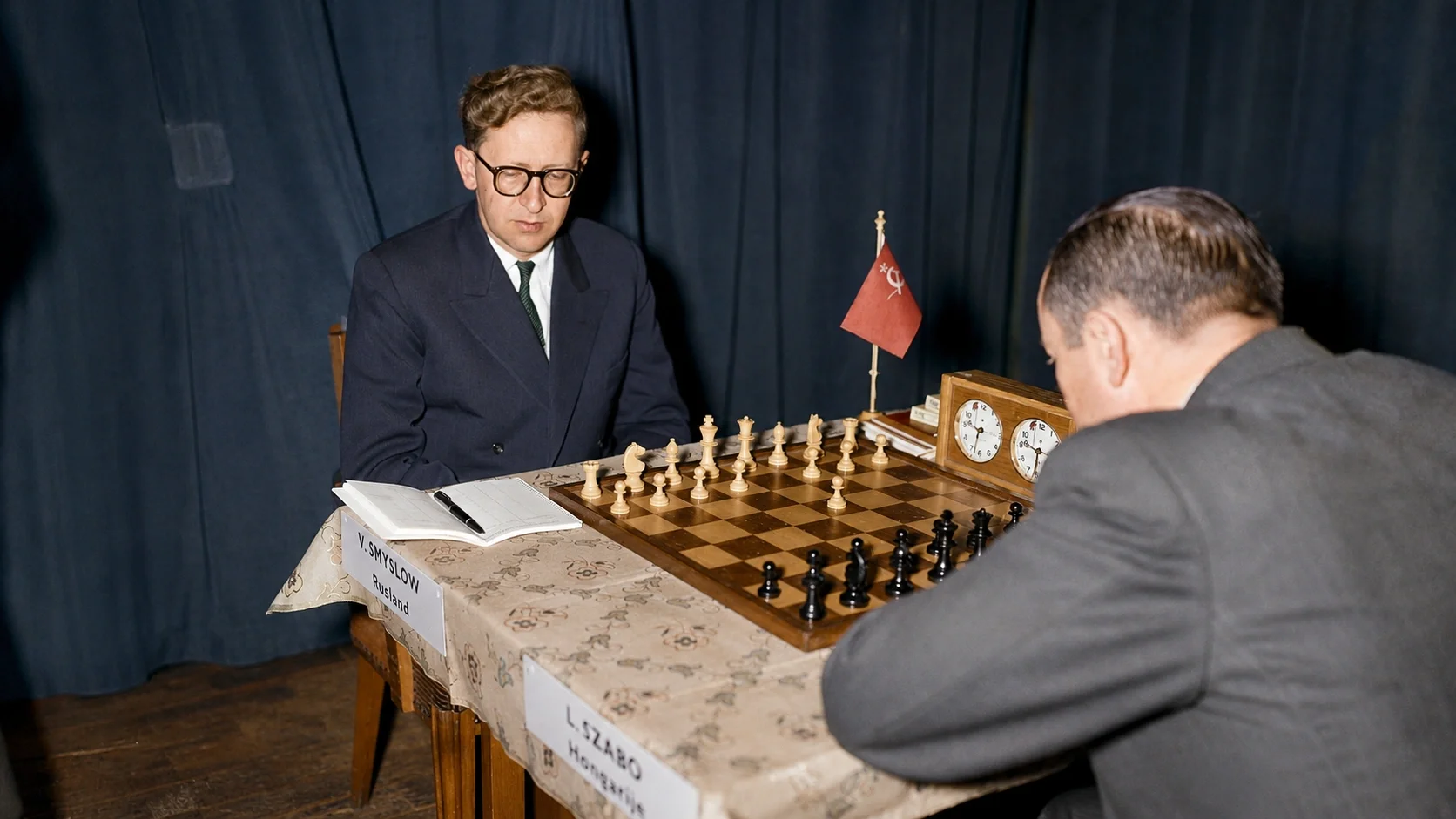
Smyslov and Szabo: Joop van Bilsen for Anefo / Anefo, CC0, via Wikimedia Commons
Legacy
Smyslov’s legacy in chess is as rich and harmonious as the music he loved. Although his reign as World Champion lasted only a single year, his contributions to the game ensure that he will be remembered for all time. In the pantheon of chess greats, Smyslov stands as a symbol of classical excellence – a player who demonstrated that profound positional understanding and endgame mastery can be as awe-inspiring as the fiercest attacks. He authored or co-authored several classic books, including Smyslov’s Best Games and Endgame Virtuoso, which distill his profound insights into play. Generations of students have pored over these works and his recorded games, learning the delicate art of maneuvering and the logical beauty of chess endings from Smyslov’s example. His total of 17 Chess Olympiad medals remains unequaled by any other player, reflecting his consistent brilliance in team competitions and his importance to Soviet chess dominance in the mid-20th century. In team events or individual tournaments, he was universally respected as a calm and sportsmanlike competitor who let his moves speak for themselves. To this day, one finds his name attached to numerous opening ideas – the Smyslov variations and lines that he pioneered are still played, their soundness and vitality a living testament to his analytical contributions. Endgame theory, too, has been shaped by his teachings; many basic positions in endgame manuals cite “Smyslov’s method” for their solution, especially in rook endgames, a domain in which he was an undisputed virtuoso.
Perhaps the most distinctive element of Smyslov’s legacy is the concept of harmony in chess. Players and commentators often use the word “harmonious” when describing Smyslov’s play, and it’s a description he would surely have appreciated. His best games have an almost narrative quality – they feel as if a story is unfolding on the board, each piece finding its perfect role, the outcome a logical consequence of what came before. Such was his influence that even beyond the chessboard, his name found an unexpected echo in popular culture. Famed filmmaker Stanley Kubrick, a lover of chess, named a character after Smyslov in the sci-fi classic 2001: A Space Odyssey, a subtle nod to the grandmaster’s enduring impression on those who understand the deeper layers of the game. It is a curious footnote to history that somewhere between the monoliths and starry infinity of Kubrick’s imagination stands a scientist character called Dr. Smyslov – as if to quietly acknowledge the chess player’s philosophical bent in a film filled with existential questions.
For the chess world, Smyslov’s centenary in 2021 was an occasion to reflect on his lasting impact. Articles and memoirs recalled the “genteel, friendly demeanour” of the man, the kindness that accompanied his genius. He was often called a “grand seigneur” of chess – a noble gentleman of the game. Unlike some champions, Smyslov was free of ego or theatrics; he approached chess with the purity of someone who loved it for its own sake. This humility and focus on the essence of chess earned him a special reverence. Modern champions like Garry Kasparov and Magnus Carlsen, known for their ferocious wills to win, have expressed admiration for Smyslov’s games, citing their clarity and technical perfection. In the wider scope of chess history, Smyslov is frequently ranked among the top players of all time, and certainly as one of the greatest endgame players who ever lived. His rivalry with Botvinnik, though often overshadowed by Botvinnik’s clashes with Tal or Bronstein, is now recognized as a duel of two titans who pushed each other to new heights. Over three matches, they produced games of immense theoretical and artistic value that continue to be studied. Botvinnik himself, famously hard to please, regarded Smyslov’s style with respect – noting that Smyslov always sought the most coordinated and correct continuation. In an age of increasing computer influence on chess, Smyslov’s legacy also serves as a reminder of human artistry. His games remind us that chess is not only about calculation and brute force, but also about intuition, evaluation, and the search for harmony amidst conflict.
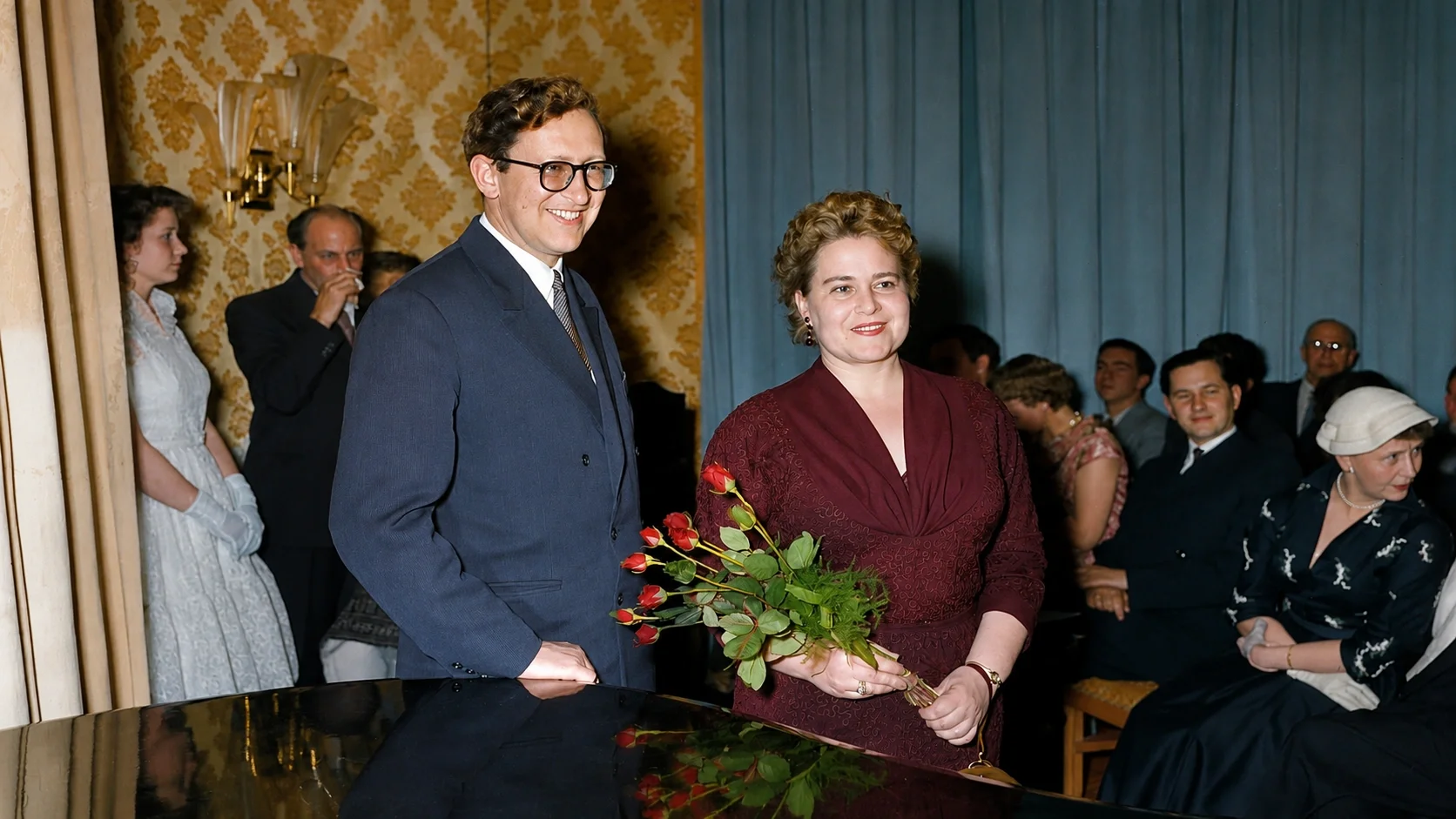
Daan Noske / Anefo, CC0, via Wikimedia Commons
In the final measure, Vasily Smyslov’s life and career present a portrait of a man who was both a great champion and a deeply thoughtful soul. He experienced the highest highs and the lowest lows that competitive sport can offer, and through it all maintained a perspective that seems almost spiritual. Smyslov once said, only half in jest, that he aimed to play chess in such a way that “the board sings.” In his best moments, it truly did. He leaves behind a trove of brilliant games that indeed sing to those who study them – melodies of strategic planning and endgame purity that reveal the mind of a master composer at work. Smyslov’s legacy endures in every rook endgame squeezed to victory with quiet finesse, in every harmonious development of pieces that leaves an opponent positionally suffocated without a single tactical blow. It endures in the memory of his dignified conduct and the inspiration he provided to generations who followed. As Boris Spassky urged, the chess world will “preserve their memory forever” – and Smyslov, the philosopher-king of chess, is assured an honored place in that immortal pantheon. His life invites us to ponder the nature of success and fulfillment: is it the length of time one holds the crown, or the depth of one’s contribution, that truly matters? Smyslov’s story suggests an answer. He held the crown briefly, yes, but he enriched the game for eternity. In the intricate interplay of pieces and plans that he left behind, one finds not only lessons in chess but also a reflection of the human quest for meaning and harmony. And so, long after his final move, Vasily Smyslov continues to speak to us – in a quiet, compelling voice – about the beauty of a well-played life, on and off the board.
