Vitaly Tseshkovsky (Виталий Цешковский)
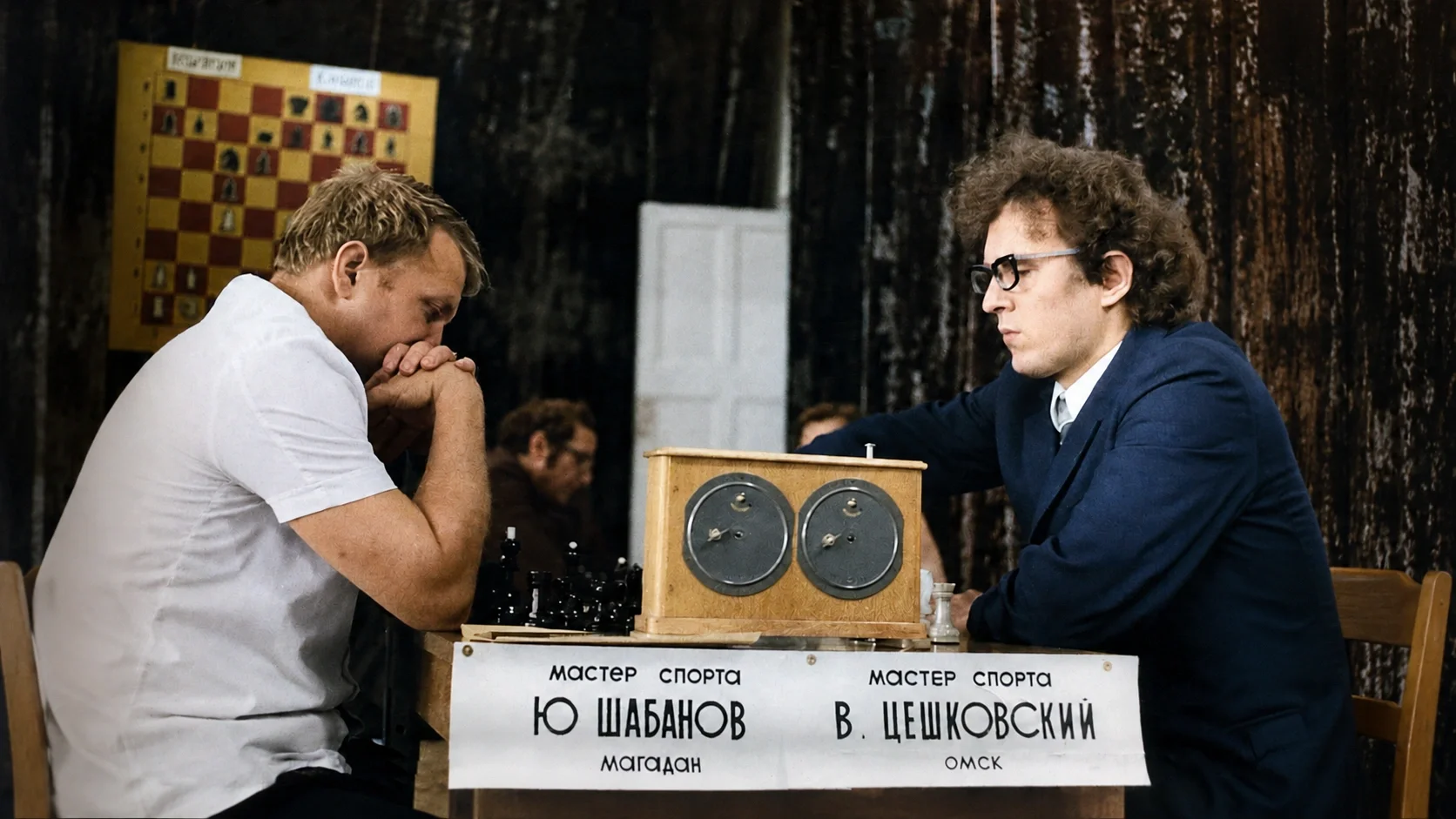
Vitaly Valeryevich Tseshkovsky (Виталий Валерьевич Цешковский) was born on 25 September 1944 in Omsk, USSR (now Russia). He came from a family with Polish roots whose ancestors were nobles from Volhynia, a historic region that straddles present‑day Ukraine and Poland. As a teenager, he learned chess quickly and, by the late 1960s, had become one of the strongest players in the Russian Far East. He studied engineering at the Leningrad State University of Communication Engineers from 1964 to 1972 and graduated while competing at the national level. During those years, he honed a fiercely independent understanding of chess, drawing inspiration from players like Mikhail Tal and Tigran Petrosian. In 1968, he burst onto the Soviet scene by sharing 4th–5th place in the USSR Championship, an achievement that announced him as one of the most promising young masters.
Rise in Soviet chess
Tseshkovsky received the International Master title in 1973 and two years later became a Grandmaster. His first major international victory came at Leipzig 1975, followed by wins in Dubna 1976, Yerevan 1980, Banja Luka 1981, Sochi 1981, and Minsk 1982. He performed strongly at the 1978 Soviet Championships, sharing first place with Mikhail Tal in Tbilisi. Eight years later, he became the sole champion of the USSR by winning the 1986 Soviet Championship held in Kiev. These successes came despite a playing style that was more artistic than pragmatic; Tseshkovsky excelled at complex, tactical positions but struggled in simpler endgames.
International achievements
The 1970s and 1980s were the peak of Tseshkovsky’s competitive career. At the 1975/76 FIDE zonal tournament, he shared first–fourth place, qualifying for the Interzonal tournament in Manila (1976). There, he scored well in the early rounds but ultimately finished fourth, missing qualification for the Candidates matches by one spot. Nevertheless, he recorded notable wins over several world champions: Vasily Smyslov at the Moscow Spartakiad (1974), Mikhail Tal at Sochi (1970), and a young Garry Kasparov at the 1978 Soviet Championship. In team competitions, he played for the USSR at the 1977 and 1978 European Team Championships and for the Soviet Union at the 27th Chess Olympiad in 1986; at the Olympiad, he scored 2½/5 on the second reserve board and helped the team win gold. His world ranking peaked at No. 15 in January 1980, and he maintained an Elo rating of 2600 even in his sixties.
During the 1980s, he continued to compete successfully. He tied for first at the Georgy Agzamov Memorial in Tashkent in 2008 and won the event outright in 2009. In 2009 and 2010, he won consecutive European Senior Chess Championships, demonstrating his enduring strength. He qualified for the Russian Championship Superfinal in 2004 by scoring 6/9 at a strong qualifying tournament. Even in his later years, he remained an active competitor; his 2600 rating in October 2005 (at age 61) was one of the highest ever achieved by a senior player.
Playing style and influence on chess
Contemporaries described Tseshkovsky as a combative tactician with an “uncompromising” approach. Vladimir Tukmakov, who served as his second at the 1976 Interzonal, wrote that Tseshkovsky possessed a deep understanding of the game and a great sense of dynamics, but his relentless search for the truth led to severe time pressure: he enjoyed calculating complex lines to the end and was “completely devoid of pragmatism,” which made his play unstable. Tukmakov added that Tseshkovsky lacked ambition and self‑confidence—traits that likely prevented him from reaching the Candidates level despite his enormous natural talent. Nevertheless, his tactical creativity inspired many Soviet players. He was particularly strong in sharp openings such as the Najdorf Sicilian and the Ruy Lopez; his games often featured bold pawn sacrifices and complex piece activity.
Tseshkovsky’s love for complicated positions made him an unconventional chess thinker. Vladimir Kramnik, one of his students, noted that Tseshkovsky taught him that chess is more multifaceted than dogmatic positional rules suggest: positions are not always simply “good or bad,” and the evaluation often depends on subtle dynamics. Kramnik also remarked that Tseshkovsky could analyze any position for hours, often lying on a bed with a portable magnetic chess set. This thorough analytical method influenced how Kramnik approached complex middlegames and contributed to his later successes.
Coaching and mentorship
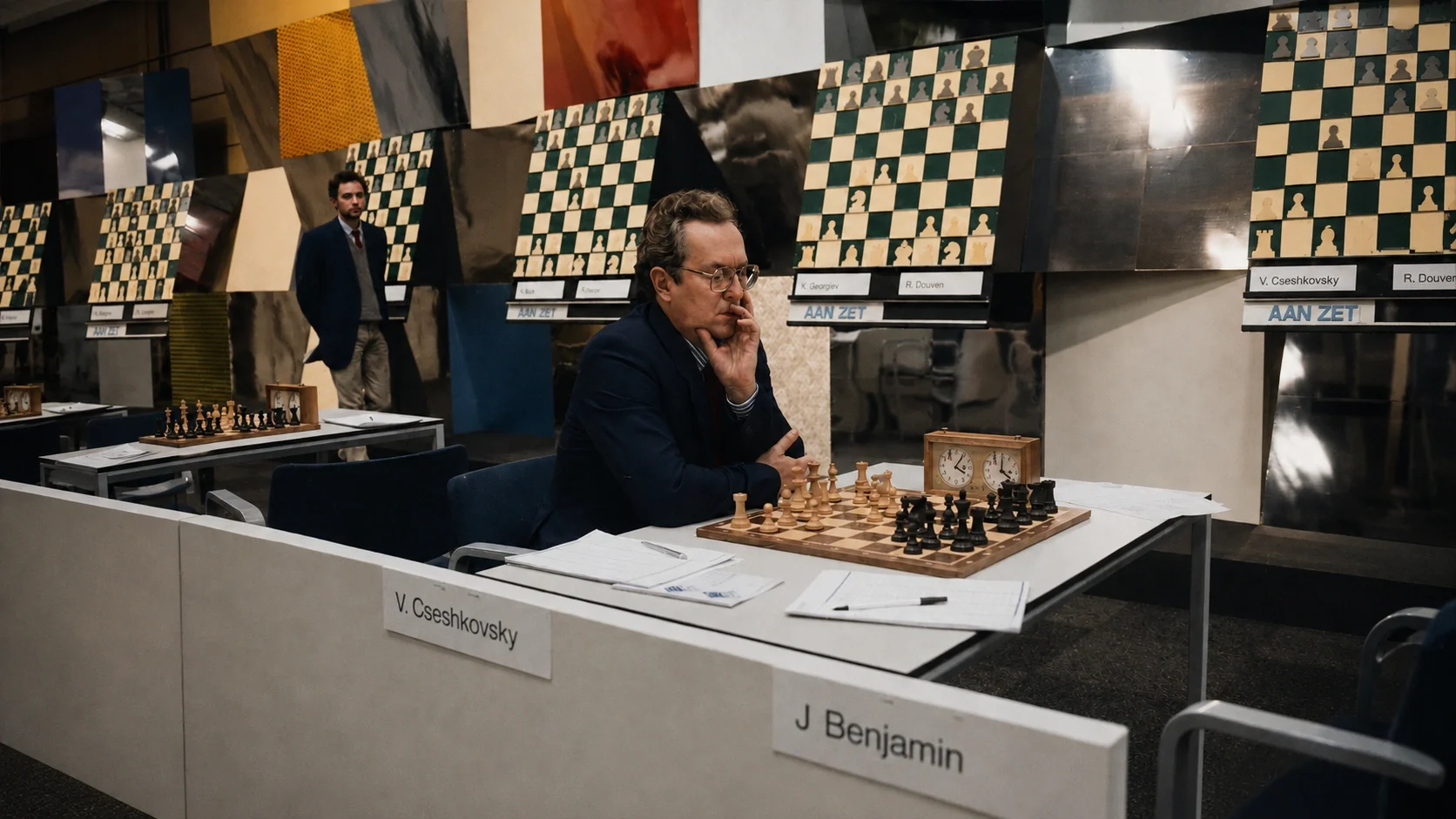
Although Tseshkovsky is best known as a player, he was also an experienced trainer. In the early 1990s, he became a coach to Vladimir Kramnik, who later became World Champion. The Russian Chess Federation notes that Tseshkovsky mentored Kramnik until 1993, after Kramnik moved from Omsk to Krasnodar. In a Spanish‑language interview, Tseshkovsky recalled that when he first saw Kramnik’s games at age 12, he was “delighted” and told the boy’s parents that he “saw a Grandmaster in him”. Kramnik studied with Tseshkovsky from age 12 to 20. After Tseshkovsky’s death, Kramnik remembered that his teacher never imposed his ideas, apologizing repeatedly before disagreeing and sharing insights generously; he described Tseshkovsky as an honest, gentle person with no malice or desire for revenge. Kramnik noted that Tseshkovsky’s love of chess sometimes exceeded his competitiveness; he preferred analyzing interesting positions to preparing his own openings.
Tseshkovsky also trained Bartłomiej Macieja (Poland) and Boris Savchenko, as well as several young grandmasters in southern Russia. These coaching roles enabled him to share his analytical methods and ethical approach with a new generation. His students often praised his ability to explain complex positions clearly and his emphasis on creative thinking over rote memorization.
Personal qualities and anecdotes
Those who knew Tseshkovsky emphasized his kindness and humor. Kramnik recalled that Tseshkovsky had a good sense of humor and enjoyed telling stories. One anecdote describes how, when a prospective mother‑in‑law commented on his smoking, Tseshkovsky jokingly replied that he also drank and chased women; the romance ended immediately. Friends noted that he was devoted to his family, enjoyed cultural pursuits outside chess, and had a broad interest in literature and philosophy. Despite his sometimes impractical approach to competition, he demonstrated that one could love chess deeply without being consumed by ambition.
Later years, death, and legacy
After the Soviet era, Tseshkovsky continued to compete and coach. In 2008, he tied for first at the Georgy Agzamov Memorial and won the tournament outright in 2009. He won the European Senior Championship in 2009 and 2010 and remained active in Russian club competitions. On 24 December 2011, while playing in the Krasnodar Krai Rapid Cup, Tseshkovsky fell ill during the first round and died without regaining consciousness. He was 67 years old.
The Russian Chess Federation’s obituary described him as a two‑time Soviet champion, winner of the 1986 Olympiad and 1977 European team championship, and a multiple champion in veterans’ competitions. The Federation emphasized his contributions as a trainer, noting his work with Kramnik, Macieja, and younger grandmasters. Memorial tournaments bearing his name have been held in Russia, and commentators continue to analyse his most creative games. His approach to chess—both combative and artistic—remains a model for players who value originality and integrity over pragmatic results. As Kramnik put it, Tseshkovsky “loved chess too much”; his passion for the game and his generous mentorship ensure that his legacy endures.
Significance in the history of chess
Vitaly Tseshkovsky occupies an interesting place in chess history. He was part of a generation of Soviet grandmasters who produced brilliant games yet often remained in the shadows of more pragmatic champions. His wins against world champions and his repeated near‑misses in world championship qualification show that he possessed world‑class strength. More importantly, his mentoring of Vladimir Kramnik and others extended the intellectual tradition of Soviet chess into the modern era. Tseshkovsky’s emphasis on dynamic thinking, complex calculation, and ethical behavior influenced Kramnik’s universal style and helped shape the 14th World Champion’s approach to the game. Through both his games and his teaching, Tseshkovsky contributed to a richer, more creative understanding of chess that continues to inspire players today.
