Efim Geller and Counterplay as Chess Theory
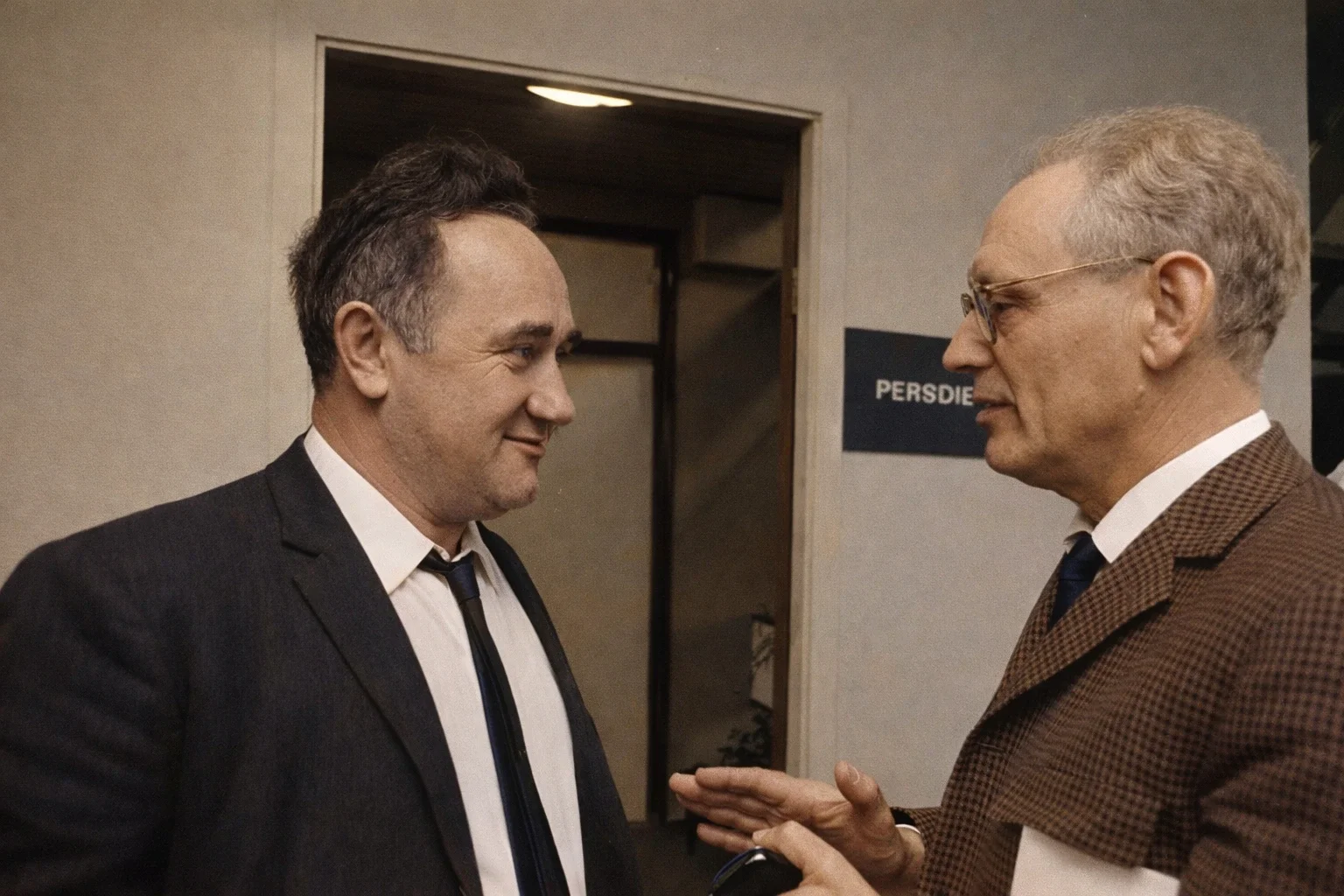
Geller and Botvinnik
Efim Geller deserves a central place in the history of modern chess theory. He was not only a powerful grandmaster. He was one of the great Soviet opening analysts, a player whose work helped make dynamic counterplay part of elite preparation.
Born in Odessa in 1925, Geller became one of the strongest players of the Soviet golden age. He won the Soviet Championship twice, competed in Candidates events, and defeated many world champions during his career. His tournament achievements were impressive, but his theoretical influence may be even more significant.
Geller helped show that risk could be prepared. He turned dangerous positions into structured systems. He treated counterplay as something that could be studied from the first moves of the game.
That is why his chess still feels modern.
The Theoretician at the Board
Geller’s reputation among elite players rested heavily on his opening knowledge. He was feared not only because he could attack, but because his attacks often grew from deep preparation. He understood move orders, pawn structures, middlegame plans, and recurring tactical themes.
This made him a different kind of dynamic player. His chess was not built on improvisation alone. It was built on research.
Geller’s games often showed that active play could be created long before the middlegame. A sharp opening choice could define the entire struggle. A pawn structure could contain future breaks. A small concession in space could prepare later counterplay. A line that looked dangerous could become playable if the plans were understood deeply enough.
For Geller, opening theory was not memorization. It was a way of shaping the future of the game.
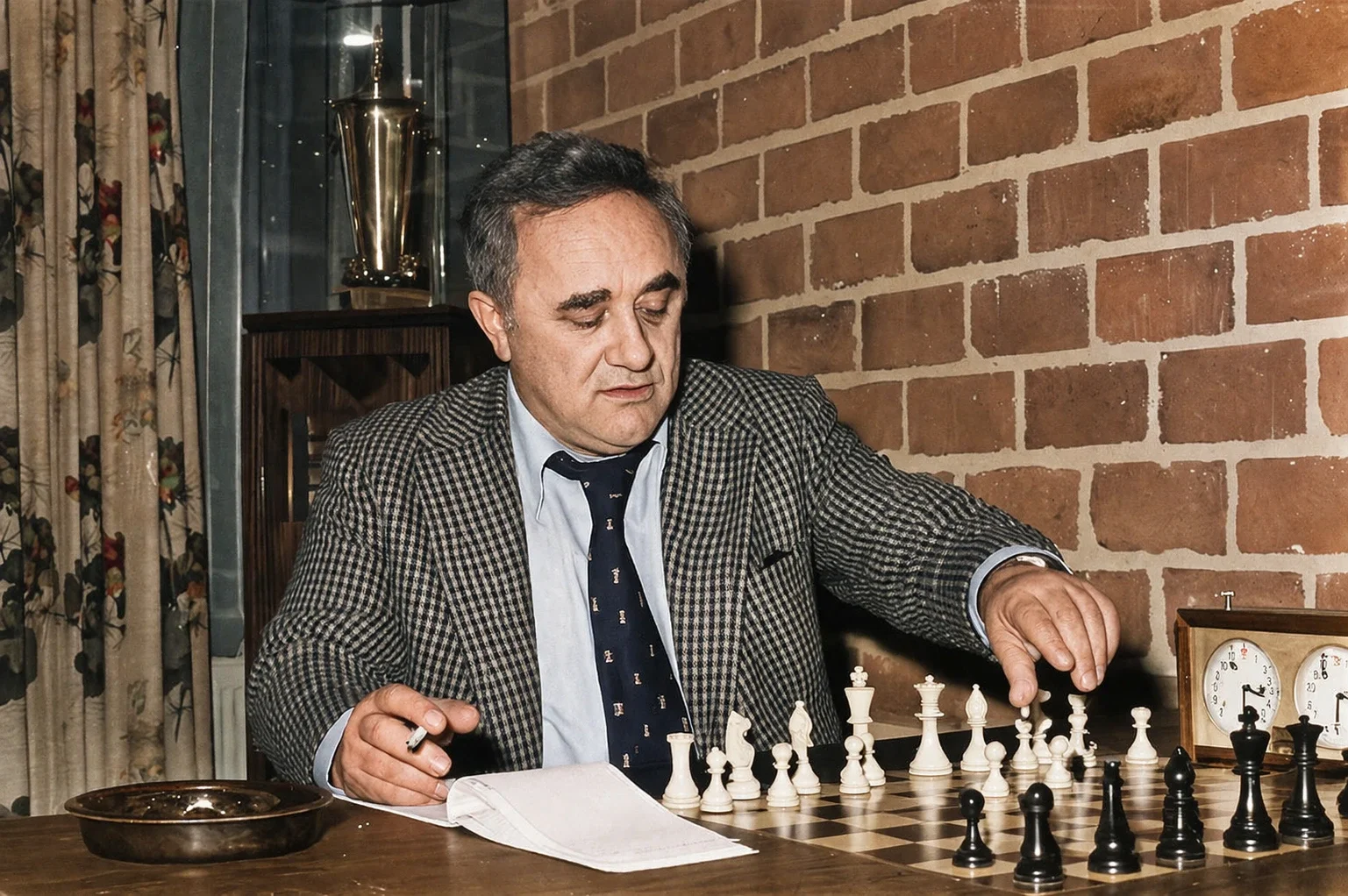
The King’s Indian Defense
The King’s Indian Defense is central to Geller’s legacy.
In many King’s Indian positions, Black allows White to build a broad pawn center. Black often accepts less space, then prepares counterplay with pawn breaks, piece activity, and pressure against the center. The opening demands trust in dynamic resources. It also demands precise understanding.
Geller helped make that trust stronger.
His work clarified important plans and move orders. He helped demonstrate that Black’s position could contain real energy even when White appeared to have more space. The King’s Indian became one of the great fighting openings of modern chess, and Geller’s contribution belongs inside that history.
A famous remark attributed to Botvinnik says that before Geller, Soviet players did not fully understand the King’s Indian. The exact weight of that claim should be handled carefully, since Bronstein and Boleslavsky were also major figures in the opening’s development. Still, the remark captures Geller’s reputation. He was seen as a player who helped reveal the opening’s deeper logic.
The King’s Indian suited his strengths: preparation, counterplay, dynamic tension, and long-term attacking chances.
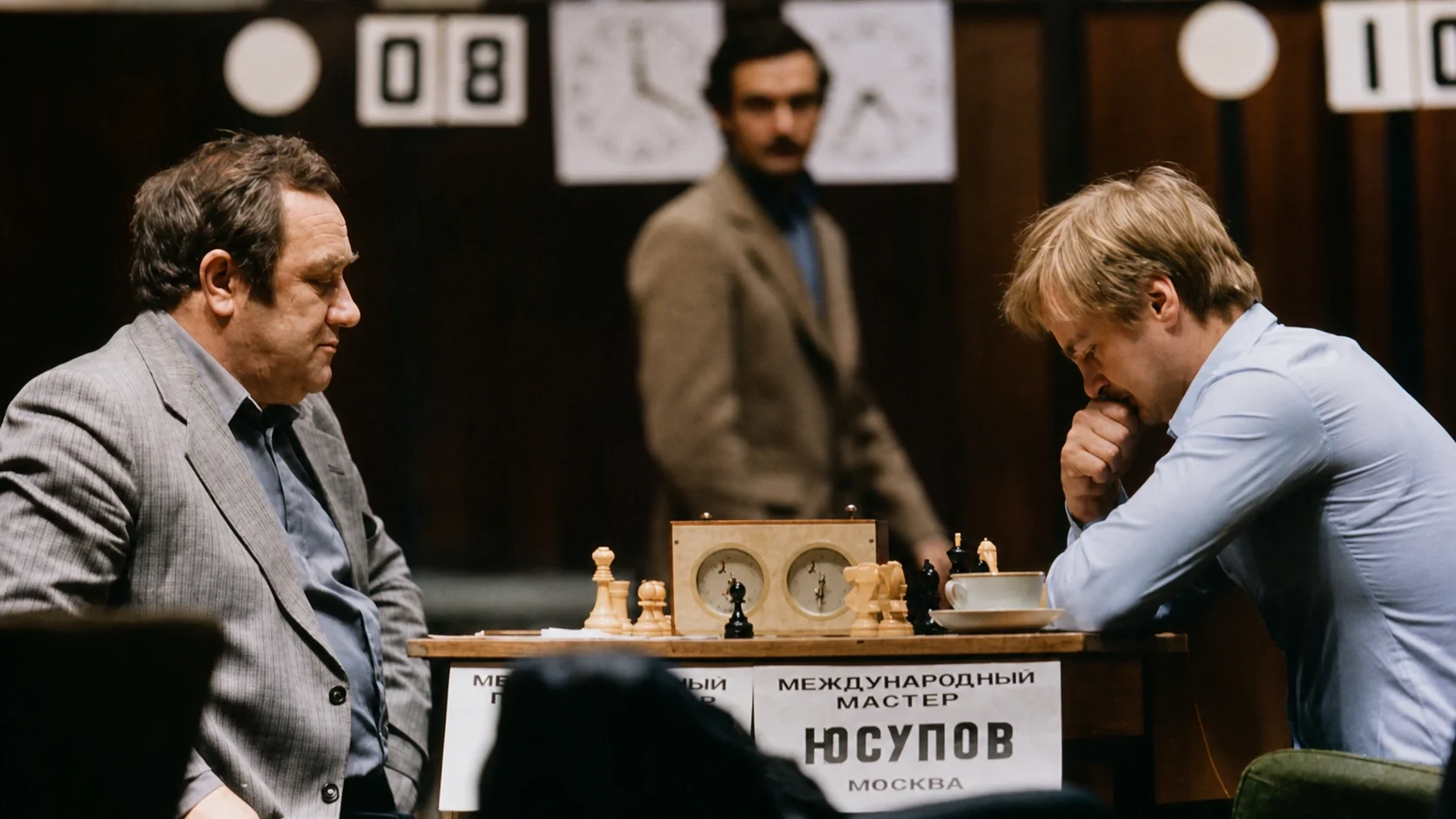
Efim Geller and Artur Yusupov
Counterplay From the Opening
Geller’s importance extends beyond one opening.
He contributed to the development of sharp systems in the Sicilian Defense, the Slav, and other modern openings. His work helped normalize a major idea in elite chess: one side may accept structural risk, space disadvantage, or material tension in return for activity.
This idea is now everywhere in modern chess. Players routinely enter positions where the engine evaluation is narrow, the structure is unbalanced, and both sides must understand concrete resources. Geller belonged to the generation that helped create that world.
His chess showed that counterplay is not merely a defensive reaction. It can be a strategic goal from the beginning. A player can invite the opponent forward, then strike at the center. A player can accept an apparent weakness, then use it to generate activity. A player can delay direct confrontation until the right pawn break changes everything.
Geller helped make these ideas practical.
A Soviet Champion in a Golden Age
Geller’s competitive record also deserves serious attention. Winning the Soviet Championship during his era was one of the hardest achievements in chess. The Soviet field often included world champions, future world champions, Candidates, and leading theoreticians.
Geller won the title in 1955 after a playoff against Vasily Smyslov. He won it again in 1979, decades later, in a field that included younger stars. This longevity speaks to his depth as a player.
He also built an outstanding record against world champions. Geller defeated Botvinnik, Smyslov, Tal, Petrosian, Fischer, Karpov, and others in serious games. That record was not an accident. His preparation and fighting style made him dangerous to the very best players in the world.
Geller was not a marginal figure in Soviet chess. He was part of its elite intellectual class.

Efim Geller and Vladimir Alatortsev
Geller in the Engine Era
The engine era has made Geller’s legacy easier to appreciate.
Modern chess places enormous value on opening preparation, dynamic resources, and concrete calculation. Geller worked in that direction long before computers transformed training. He studied sharp systems deeply. He found playable resources in positions that required confidence. He understood that opening theory could create long-term practical pressure.
Engines now reveal details that Geller could not have known. They refine move orders, correct old evaluations, and expose hidden defensive resources. Yet the structure of modern preparation still resembles the world Geller helped build: deep opening files, recurring pawn structures, planned counterplay, and willingness to accept imbalance.
Geller’s chess belongs naturally to this modern landscape.
Legacy
Efim Geller’s legacy is the theory of counterplay.
He showed that dynamic chess could be prepared. He helped make the King’s Indian Defense and other fighting systems part of elite chess. He demonstrated that activity, tension, and imbalance could be organized from the opening.
His name may not be as famous among casual fans as some world champions, but his influence runs deep. Every time a modern player accepts less space for active chances, enters a sharp opening line based on long-term pressure, or values counterplay over comfort, Geller’s world is nearby.
He helped teach chess players that risk can be studied.
That is the mark of a great theoretician.
Sources and Further Reading
Geller, Efim. The Application of Chess Theory. Pergamon Press.
Kasparov, Garry. My Great Predecessors, Part II. Everyman Chess.
Averbakh, Yuri, ed. Soviet Chess Strategy. Quality Chess.
Russian Chess Federation. “Efim Geller.”
ChessBase. “Efim Geller, the Father of the King’s Indian.”
Sosonko, Genna. Russian Silhouettes. New in Chess.
