Introduction
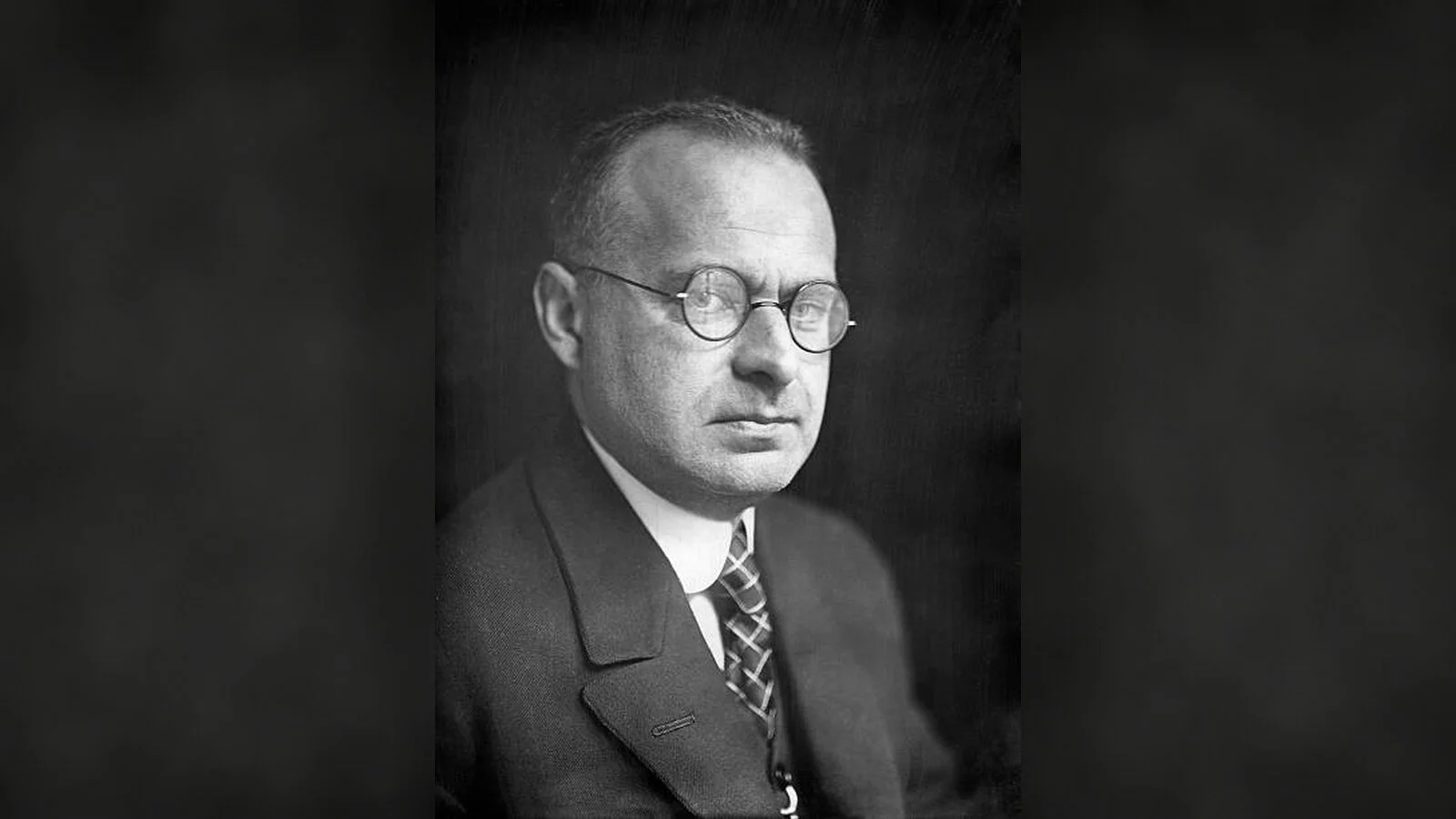
Aron Nimzowitsch (1886–1935) was a Riga-born chess master, theorist, and author whose work helped shape twentieth-century positional play. A leading figure in hypermodern chess, he developed influential explanations of blockade, prophylaxis, pawn structure, and the control of important squares. His books My System and Chess Praxis brought these ideas to generations of players. [1, 9, 11]
His achievements included shared first place in the 1914 All-Russian Masters’ Tournament, an exceptional victory at Dresden in 1926, and outright first at Carlsbad in 1929. Copenhagen became his home during his most productive years. His connection to Soviet chess history is especially clear in the writings of Tigran Petrosian, who described the formative influence of Chess Praxis on his understanding of the game. [3, 6, 7, 12]
Early Life and Chess Formation
Nimzowitsch was born on 7 November 1886 in Riga, then part of the Russian Empire, into a Jewish merchant family. His father was a capable amateur who taught him chess at the age of eight. The biographical note accompanying the early English edition of My System describes his youthful enthusiasm for combinations and his subsequent efforts to develop a fuller understanding of positional play. [1, 2]
In 1904, he traveled to Berlin to study philosophy. Chess increasingly occupied his attention, and he eventually devoted himself to a professional playing career. His early tournament setbacks encouraged him to examine how positions were built, how pieces cooperated, and why an apparently promising attack could fail. [2, 14]
A breakthrough came at Munich in 1906, where he scored 8½ out of 10 and finished first. Further successes followed in 1907: he shared third and fourth at Ostend with Jacques Mieses, and fourth and fifth at Carlsbad with Carl Schlechter. These results established the young master in international competition. [1]
Rise in Competitive Chess
Nimzowitsch finished third at Hamburg in 1910 and shared second place with Rudolf Spielmann at San Sebastián in 1912. He was developing the tournament record and independent approach that would support his later theoretical writing. [1]
At the All-Russian Masters’ Tournament in St. Petersburg in early 1914, he shared first place with Alexander Alekhine with 13½ points from 17. His twelve victories included wins against Efim Bogoljubow and Grigory Levenfish. The result placed him among the leading masters of the Russian Empire immediately before the First World War. [3]
His published challenge to Siegbert Tarrasch’s teaching had already begun. In a 1913 essay, Nimzowitsch questioned whether the approach in Tarrasch’s Die moderne Schachpartie adequately reflected modern chess. The argument concerned central control, the interpretation of pawn formations, and the freedom to judge positions on their particular features. These questions became central to his mature work. [1, 5, 9]
War and the Move to Denmark
The First World War interrupted his international tournament career. By 1920, he was competing in Sweden, where he finished second behind Bogoljubow at Stockholm. His subsequent Scandinavian activity included lectures and simultaneous exhibitions, providing opportunities to explain the ideas he was developing. [1, 5]
A Copenhagen police registration record places him at Nansensgade 32 on 29 November 1922. After another move, he settled at Øster Farimagsgade 11 in August 1923. The record provides a clear chronology of his establishment in Denmark, where he spent the rest of his life. [4]
In 1923, he won the international tournament at Copenhagen. He also won the Nordic tournament there in 1924 with 9½ out of 10. His career was entering the period in which his competitive strength and theoretical work developed together. [1, 5]
Major Tournament Achievements
Nimzowitsch shared first place with Akiba Rubinstein at Marienbad in 1925. At Dresden the following year, he produced one of his finest performances: eight victories and one draw from nine games. Alekhine finished second with seven points, followed by Rubinstein on 6½. Nimzowitsch drew with Alekhine and defeated every other opponent. [1, 6]
His greatest tournament success came at Carlsbad in 1929. He scored 15 out of 21, finishing half a point ahead of José Raúl Capablanca and Spielmann. The field included Rubinstein, Max Euwe, Bogoljubow, Milan Vidmar, and Frank Marshall. Nimzowitsch won ten games, drew ten, and lost once. [7]
His victory over Spielmann in the nineteenth round proved particularly valuable. He then drew with Géza Maróczy and defeated Savielly Tartakower in the final round to secure outright first place. Across a demanding month of play, he had sustained the form needed to finish ahead of several of the strongest players of his generation. [7]
World championship ambitions accompanied these results. In September 1926, Capablanca wrote to Nimzowitsch about the conditions for arranging a title match. After Carlsbad, Nimzowitsch argued in his tournament book that his victory justified a match with the reigning champion, Alekhine. No world championship match followed. [4, 8]
Playing Style and Contemporary Reputation
Nimzowitsch’s strategic writing focuses on the opponent’s possibilities. Prophylaxis involves anticipating useful enemy plans and taking measures against them. In My System, he gave particular attention to pawn advances that could free a restricted position, asking whether they could be prevented, delayed, or allowed under favorable circumstances. [9]
Blockade was another major theme. A piece placed immediately in front of an enemy pawn could stop its advance and help restrain the surrounding position. His discussion examined the blockading piece’s security, mobility, and additional duties. Overprotection concerned reinforcing strategically important points, with the supporting pieces gaining coordination around them. [9]
His opening work expressed these ideas from the first moves. The Nimzo-Indian Defense, reached after 1.d4 Nf6 2.c4 e6 3.Nc3 Bb4, bears his name and owes much of its early development to him. Black brings pressure against White’s central squares, restrains e4, and retains several pawn formation options. It provides a practical example of central control through piece activity. [15]
His 1923 victory with Black against Friedrich Sämisch at Copenhagen became known as the “Immortal Zugzwang Game.” After 25...h6, Sämisch resigned in a position of severe restriction. Later analysts disputed whether the ending met a strict definition of zugzwang. The game remains a striking demonstration of coordinated pieces, tactical threats, and the progressive reduction of an opponent’s freedom. [10]
Alekhine’s tribute in the May 1935 issue of Skakbladet emphasized Nimzowitsch’s contribution to understanding square control and the educational value of his books. Written by a contemporary who had faced him repeatedly, it acknowledged the lasting significance of his chess thought. [2]
Relationships and Place in Chess Culture
In Denmark, Nimzowitsch became part of a community of players, writers, and organizers. The Danish memorial account records his regular contributions to Skakbladet and the importance of his books and articles to local chess life. Copenhagen provided a stable base for his writing and international travel. [2]
Jens Enevoldsen’s recollections offer a personal example. After defeating Nimzowitsch in Copenhagen in 1933, Enevoldsen remembered that the older master returned to congratulate him and thank him for the game. Their relationship developed into friendship during the remaining two years of Nimzowitsch’s life. Enevoldsen later expressed pride in playing games that reflected his friend’s principles. [4]
The connection with Petrosian developed through books. In his 1979 foreword to Chess Praxis, Petrosian recalled keeping the volume beneath his pillow as a child. Returning to it as an experienced grandmaster, he recognized ideas that had long since become part of his own chess outlook. His account provides direct evidence of Nimzowitsch’s influence on a future Soviet world champion. [12]
Contributions Beyond Tournament Play
My System grew out of years of articles, annotations, and lectures. Its German publication began in 1925 and proceeded in five installments; the collected edition appeared in February 1927. The first English edition, translated by Philip Hereford, followed in 1929. [5]
The book organized its teaching around recurring features of a position: central pawns, open files, the seventh rank, passed pawns, exchanges, pawn chains, and piece coordination. These subjects gave readers a vocabulary for explaining plans and evaluating the consequences of a move. The arrangement connected individual strategic elements with broader positional judgment. [9]
Chess Praxis extended the instruction through 109 annotated games arranged by strategic theme. Centralization, restraint, blockade, prophylaxis, pawn formations, and maneuvering received sustained treatment. Readers could follow how an idea developed through a complete game and how it interacted with calculation and the opponent’s resistance. [11]
Petrosian encouraged readers to study this material actively. He acknowledged that particular variations and evaluations could contain errors, while explaining how deeply Nimzowitsch’s formulations had shaped his own understanding. This is a useful guide to the books’ historical value and to the care required when studying their analysis. [12]
Later Life
Nimzowitsch remained a leading competitor into the early 1930s, finishing second at San Remo in 1930 and third at Bled in 1931. At Zurich in 1934, he shared sixth and seventh places with Ossip Bernstein on nine points from fifteen games. His victories there included a win with Black against Emanuel Lasker. [13]
He also won the Nordic tournament in Copenhagen in 1934. He died on 16 March 1935, aged forty-eight. The memorial issue of Skakbladet brought together an appreciation by Alekhine, an account of his place in Danish chess, tournament records, and selected games. [2, 13, 14]
Legacy and Historical Assessment
Nimzowitsch’s lasting contribution joins competitive achievement with an unusually systematic effort to teach chess strategy. His strongest tournament performances demonstrated the practical force of his ideas. His books gave readers detailed ways to think about restraint, pawn structure, central control, and the cooperation of pieces. [6, 7, 9, 11]
Petrosian’s testimony makes that legacy particularly tangible. A young player studying Chess Praxis could absorb habits of thought that continued to guide him at world championship level. Nimzowitsch’s place in chess history rests on that enduring relationship between his own games, his explanations, and the players who learned from them. [12]
Notes and Sources
Aron Nimzowitsch, My System, trans. Philip Hereford (New York: Harcourt, Brace and Company, 1930), biographical note, p. vii and p. viii. Early English edition, first published in London in 1929. Used for his chess formation and selected early tournament results.
Skakbladet 31, no. 5 (May 1935), pp. 59–62. Alexander Alekhine’s “Nimzowitsch,” p. 59; “Nimzowitsch og Danmark,” pp. 60–61; tournament results, pp. 61–62. Contemporary Danish memorial issue. Page numbers refer to the printed magazine.
Wilfried Krebbers, “St. Petersburg 1914: Allrussische Meisterschaft,” Nimzowitsch.net. Compiled crosstable and game records for the All-Russian Masters’ Tournament.
Edward Winter, “Aron Nimzowitsch.” C.N. 7647 presents the Copenhagen police registration record; C.N. 5776 quotes Enevoldsen’s 30 år ved skakbrættet (Copenhagen, 1952), p. 150. The opening section reproduces Nimzowitsch’s championship appeal from his Carlsbad tournament book. These materials were consulted through Winter’s presentation.
Edward Winter, “Nimzowitsch’s My System.” C.N. 7735 documents the installments, the February 1927 collected edition, and earlier lectures and articles. C.N. 3004 covers the 1924 Nordic tournament; C.N. 6245 gives the English publication sequence.
Krebbers, “Dresden 1926: Internationales Meisterturnier.” Crosstable and round records.
Krebbers, “Karlsbad 1929: IV. Internationales Schachmeisterturnier.” Crosstable and game records establishing the scores, field, and final-round sequence.
Edward Winter, “Nimzowitsch the ‘Crown Prince’.” See C.N. 3323 and the account of Capablanca’s letter of 21 September 1926.
Nimzowitsch, Mein System, original German text transcribed on Nimzowitsch.net. See especially the chapters on blockade, prophylaxis, and overprotection.
Edward Winter, “Zugzwang.” Gives the Sämisch–Nimzowitsch game, its early publication history, and later discussion of the final position.
Nimzowitsch, Die Praxis meines Systems, known in English as Chess Praxis. Online description and contents identify the 109 games and thematic organization.
Tigran Petrosian, foreword to the 1979 edition of Chess Praxis, consulted in the English translation posted by Spektrowski, 6 August 2013. Petrosian’s early study is also discussed in Winter’s review of The Games of Tigran Petrosian, vol. 1. This profile paraphrases the translated testimony.
Krebbers, tournament records for San Remo 1930, Bled 1931, Zurich 1934, and Copenhagen 1934.
Chess Federation of Russia, “Арон Нимцович.” Used for his turn toward professional chess and the date of his death.
Chess.com, “Nimzo-Indian Defense.” Reference for the move order, strategic ideas, and Nimzowitsch’s role in popularizing the defence.
