Chess Fever 1925
Chess Fever
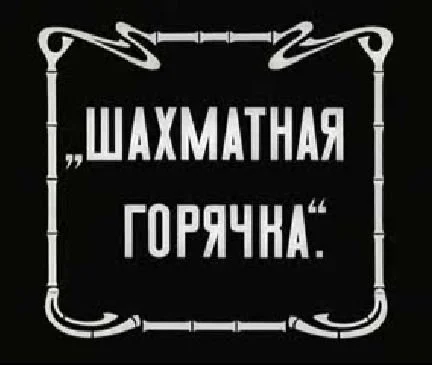
Chess Fever (1925) turns the excitement surrounding Moscow’s international chess tournament into a silent comedy about love and obsession. Directed by Vsevolod Pudovkin and Nikolai Shpikovsky, the film combines a fictional romance with tournament footage and an appearance by reigning world champion José Raúl Capablanca. Produced by Mezhrabpom-Rus, it was released on 21 December 1925 under the Russian title Shakhmatnaya goryachka (Шахматная горячка).
A romance interrupted by chess
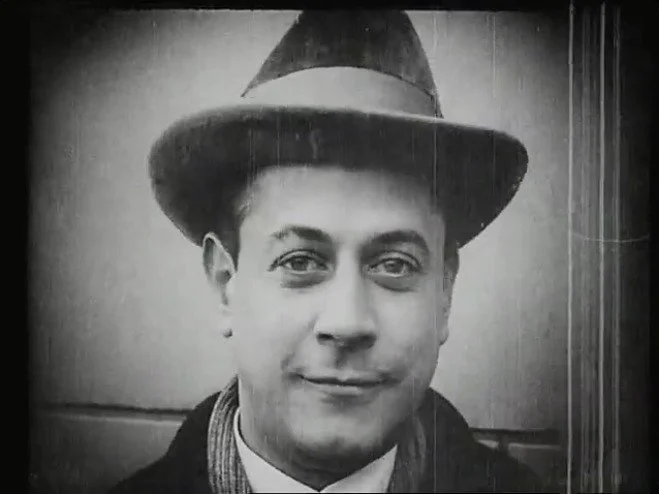
Vladimir Fogel plays a young man whose fascination with chess threatens his relationship with his fiancée, played by Anna Zemtsova. Distracted by the game, he arrives late for their meeting and struggles to repair the damage. Even his checked clothing echoes the chessboard, extending the joke into his appearance.
The surrounding city seems equally absorbed. A distracted pharmacy worker hands over a chess piece, and an encounter between a policeman and a street offender becomes a discussion about chess. These comic episodes suggest a Moscow where the game interrupts work, romance and everyday responsibilities.
Capablanca and the Moscow 1925 tournament
The international tournament at Moscow’s Hotel Metropol supplied the film’s setting and its connection to contemporary chess. Alongside Capablanca, viewers can see leading masters including Frank Marshall, Richard Réti and Carlos Torre. Their appearances preserve a moving record of the players who gathered in the Soviet capital.
Capablanca also enters the fictional story. The heroine’s chance meeting with the world champion leads her to the tournament, where she develops an enthusiasm for chess and reconciles with her fiancé. His presence gives the comedy a particularly appealing historical detail: the reigning champion becomes part of the solution to a romance disrupted by his own game.
Chess culture and Soviet silent cinema
Chess Fever offers a comic interpretation of chess enthusiasm in the early Soviet period. Its staged scenes exaggerate the game’s hold on everyday life, while its tournament footage preserves contemporary players and surroundings.
The film also belongs to the beginning of Pudovkin’s directing career, shortly before Mother (1926). Its editing connects it to the experiments associated with Lev Kuleshov. Iris Barry, MoMA’s founding film curator, praised its “simple satire and movie wit,” a description that captures the humour of a city repeatedly distracted by the chessboard.
Sources
Gosfilmofond: Шахматная горячка. Film credits and synopsis.
UCL SSEES film catalogue, pp. 161–162. Production, release date and cast.
Museum of Modern Art: Chess Fever programme notes. Tournament setting and editing.
Charles Nicol, “Did Luzhin Have Chess Fever?”, The Nabokovian, no. 27, Fall 1991, pp. 40–42.
