Leonid Shamkovich
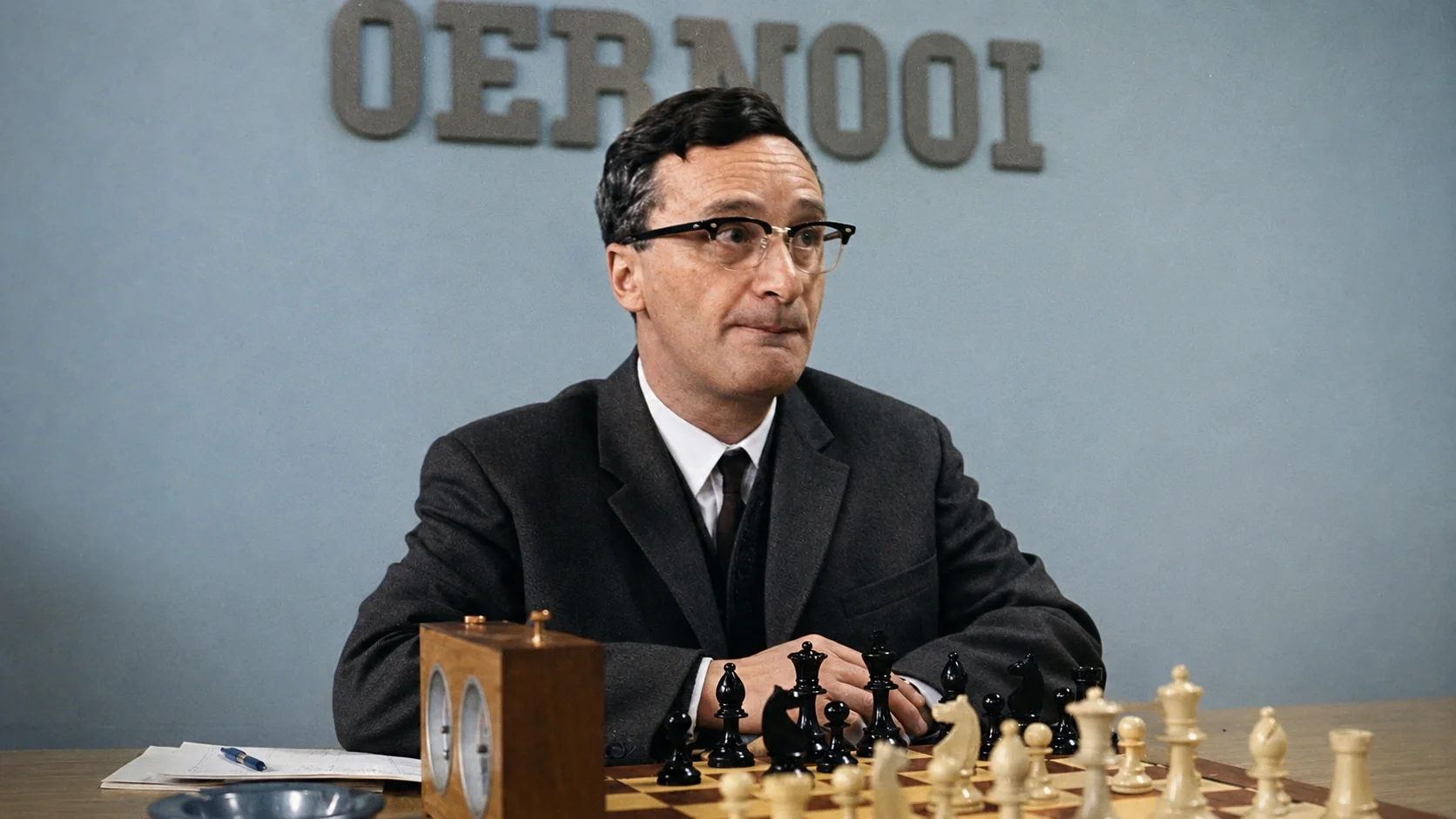
Ron Kroon for Anefo, CC0, via Wikimedia Commons
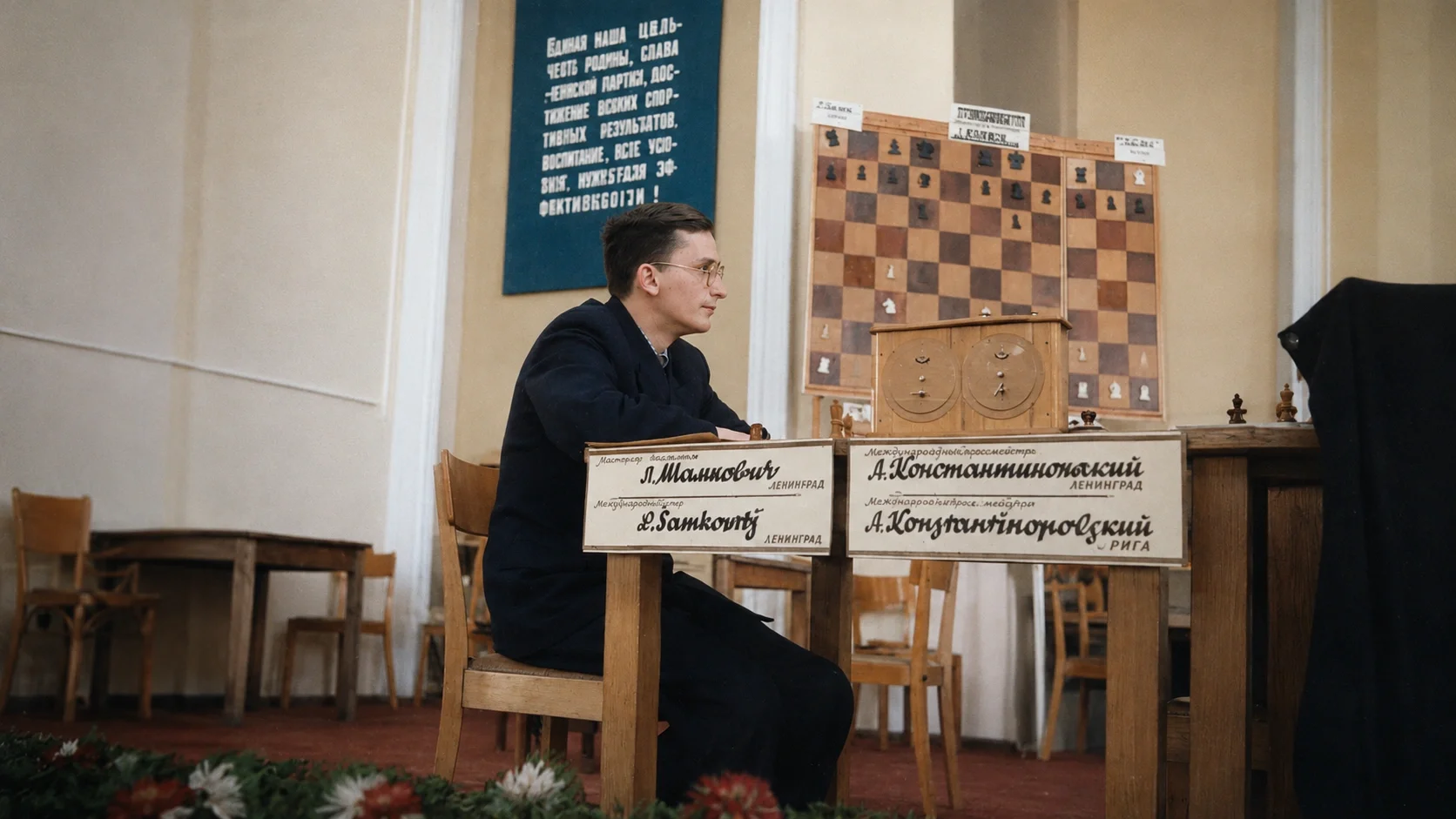
Leonid Shamkovich (June 1, 1923 – April 22, 2005) was a Soviet-trained grandmaster whose most enduring reputation rests on deep opening analysis, a distinctive “maximalist” taste for complications, and an unusually strong record as a trainer and analytical collaborator. In a detailed memorial written by Michael Khodarkovsky for Chess Life, he is described as being born in Taganrog, raised in a Jewish family with a professional father (lawyer/writer) and grandfather (doctor), evacuated to Georgia during World War II (where he learned chess), and later trained in theoretical physics at Leningrad Polytechnic Institute before committing fully to chess.
On the international rating lists, he reached a peak published Elo of 2540 in July 1973, tied around the low-40s worldwide on the list headed by Robert James Fischer. His competitive highlights include a share of first place at Sochi 1967 with a field that included Nikolai Krogius, Vladimir Simagin, Boris Spassky, and Alexander Zaitsev, plus later successes in North American open tournaments after emigration.
According to the same Chess Life memorial, he emigrated at 51—citing Soviet anti‑Semitism as a decisive factor—moving via Israel to the United States in 1976. He subsequently co-won the U.S. Open (1976, 1977), represented the U.S. in the 1979 Interzonal cycle, and played for the U.S. at the 1980 Chess Olympiad in Malta. He was inducted into the U.S. Chess Hall of Fame in 2004.
His theoretical legacy is most concretely tied (in contemporary testimony) to a major shift in Grünfeld Defense theory: Khodarkovsky credits him with popularizing the idea of meeting the Orthodox Gruenfeld with 7.Nf3 and 8.Rb1, reversing older caution attributed to Alexander Alekhine.
A key research constraint for this report is that the New York Times obituary referenced widely in secondary summaries could not be accessed directly due to the site’s robots.txt restrictions; where that obituary may resolve discrepancies (e.g., birth city, emigration dates, medical cause of death), this profile explicitly flags the gap.
Sources and evidentiary standards
This report prioritizes primary/official and archival sources where available. The backbone is the two-page Chess Life memorial “Goodbye Prince” (July 2005), hosted by US Chess and authored by Michael Khodarkovsky, which provides unusually specific biographical detail, the motivation for emigration, and two model annotated games.
For ratings, the report uses published FIDE rating lists reproduced by OlimpBase (a long-running archival project that mirrors historical FIDE lists) and spot-checks specific lists (e.g., the July 1973 list).
For major event participation, the report relies on:
OlimpBase Olympiad crosstables for verified national-team participation and board scores (1980 Olympiad).
US Chess yearbook material for U.S. Open champions.
Contemporary USCF publication archives (e.g., Chess Life PDFs) for period reporting (Mariánské Lázně 1965 coverage).
Where only secondary databases were easily accessible for specific crosstables (e.g., Sochi 1967), they are used cautiously and cross-referenced with contemporaneous descriptions when possible.
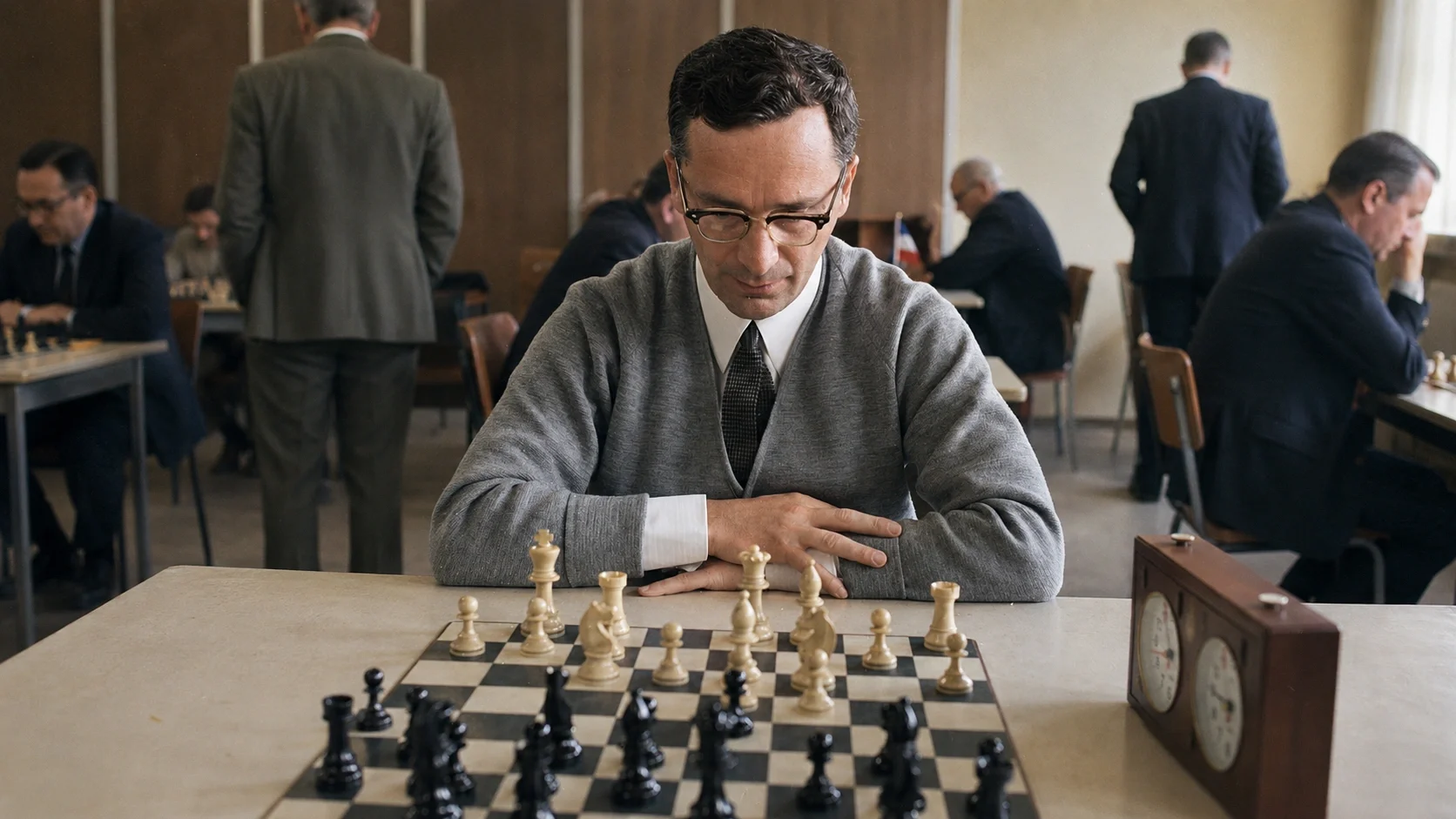
Eric Koch for Anefo, CC0, via Wikimedia Commons
Biography and life trajectory
Origins, family, war, and education
In the Khodarkovsky memorial, Shamkovich is described as born on 1 June 1923 in Taganrog (southern Russia) into a Jewish family. His grandfather is described as a prominent regional doctor, and his father as a lawyer and writer. During World War II, his family was evacuated to the Republic of Georgia, where he began to play chess. After the war, he attended Leningrad’s Polytechnic Institute and studied theoretical physics before pivoting fully to professional chess.
A notable discrepancy exists here: widely circulated secondary summaries (including encyclopedic entries) list Rostov-on-Don as his birthplace rather than Taganrog. Taganrog lies within the Rostov region, so this may reflect regional conflation, but the difference should be treated as unresolved without a birth record or the inaccessible New York Times obituary.
Multiple accounts describe him as “The Prince,” attributing the nickname to politeness and an “aristocratic” manner. The Chess Life memorial explicitly grounds this epithet in his demeanor and speech.
Khodarkovsky states that he came to the United States in 1976 by way of Israel, explicitly attributing the decision to an inability to tolerate anti‑Semitism in the Soviet Union; the memorial frames this as an unusually bold move at age 51 compared with peers who sought secure pensions through Soviet institutions.
Secondary summaries often present a more granular federation timeline (USSR → Israel → USA in the mid-to-late 1970s), but the precise year-by-year sequence is inconsistent across non-primary accounts, and the New York Times obituary that might clarify it cannot be verified directly in this research environment.
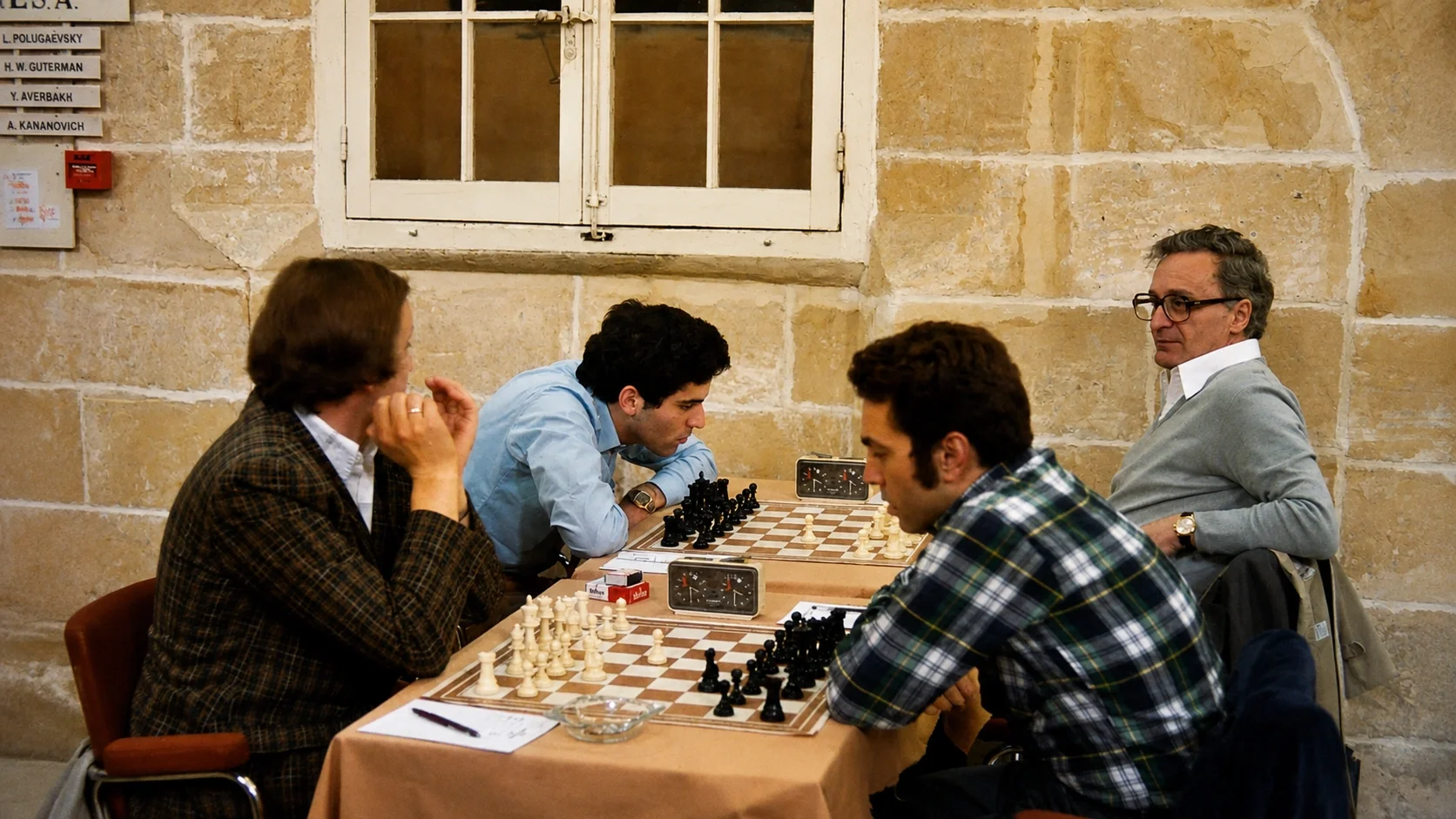
Shamkovich playing Kasparov
Competitive chess career, ratings, and timeline
Titles and peak ratings
He held the grandmaster title by the early 1970s (marked “g” on published rating lists), and a widely cited reference work on rating history lists him as “GM‑65,” supporting the commonly reported grandmaster award year of 1965.
On the July 1973 FIDE rating list, he appears at 2540, tied at rank-band around 41st globally (the exact ordinal is not uniquely assigned on tied lists), confirming both his peak published rating and his world-class standing at that moment.
Soviet-era results and standing
Khodarkovsky credits him with major domestic achievements: “Russian Championship” victories (given as 1954 and 1957), a Moscow Championship title in 1963, and six participations in Soviet Championship finals alongside a very strong cohort of Soviet grandmasters.
Two evidentiary cautions are important:
Terminology ambiguity: “Russian Championship” in Soviet-era contexts often refers to the RSFSR championship rather than the post‑1991 Russian Federation championship; the memorial does not specify the governing structure.
Year discrepancy: Some secondary summaries report 1954 and 1956 instead of 1954 and 1957; without a primary RSFSR crosstable in hand, the memorial’s dates are treated as the leading claim but not definitively resolved.
International tournament highlights
The record that can be supported most directly from sources available here includes:
Mariánské Lázně 1965 (Czechoslovakia): A contemporary Chess Life report notes that Paul Keres and Vlastimil Hort shared first; it states that Shamkovich finished third and performed strongly enough to meet FIDE grandmaster standards in that event.
Sochi 1967 (Chigorin Memorial): A major highlight frequently cited is a shared first; one accessible tournament summary lists him among five co-winners on 10 points (with Krogius, Simagin, Spassky, and Zaitsev).
Canadian Open 1975 (Calgary): A published crosstable summary shows him winning with 9.0 points, ahead of Kevin Spraggett on 8.5.
U.S. Open 1976 and 1977: Official US Chess yearbook material lists him as co-champion in 1976 (with Anatoly Lein) and as a co-champion again in 1977 (with Andy Soltis and Timothy Taylor).
World Championship cycle: The Chess Life memorial states he represented the United States in the 1979 Interzonal. A commonly used cycle table lists him in the 1979 Rio de Janeiro Interzonal with a mid-table finish (8½ points), but because that table is secondary, the memorial is treated as the primary confirmation of participation rather than placement.
1980 Chess Olympiad (La Valletta, Malta): OlimpBase’s U.S. team page shows him as second reserve, scoring 4/7 (57.1%) with a team lineup that included James Tarjan and Nick de Firmian.
The dated claims above are supported by the Chess Life memorial, US Chess yearbook entries, and published FIDE/OlimpBase records, where a point is widely reported but not directly primary here (e.g., some Interzonal placement specifics), it is presented as secondary.
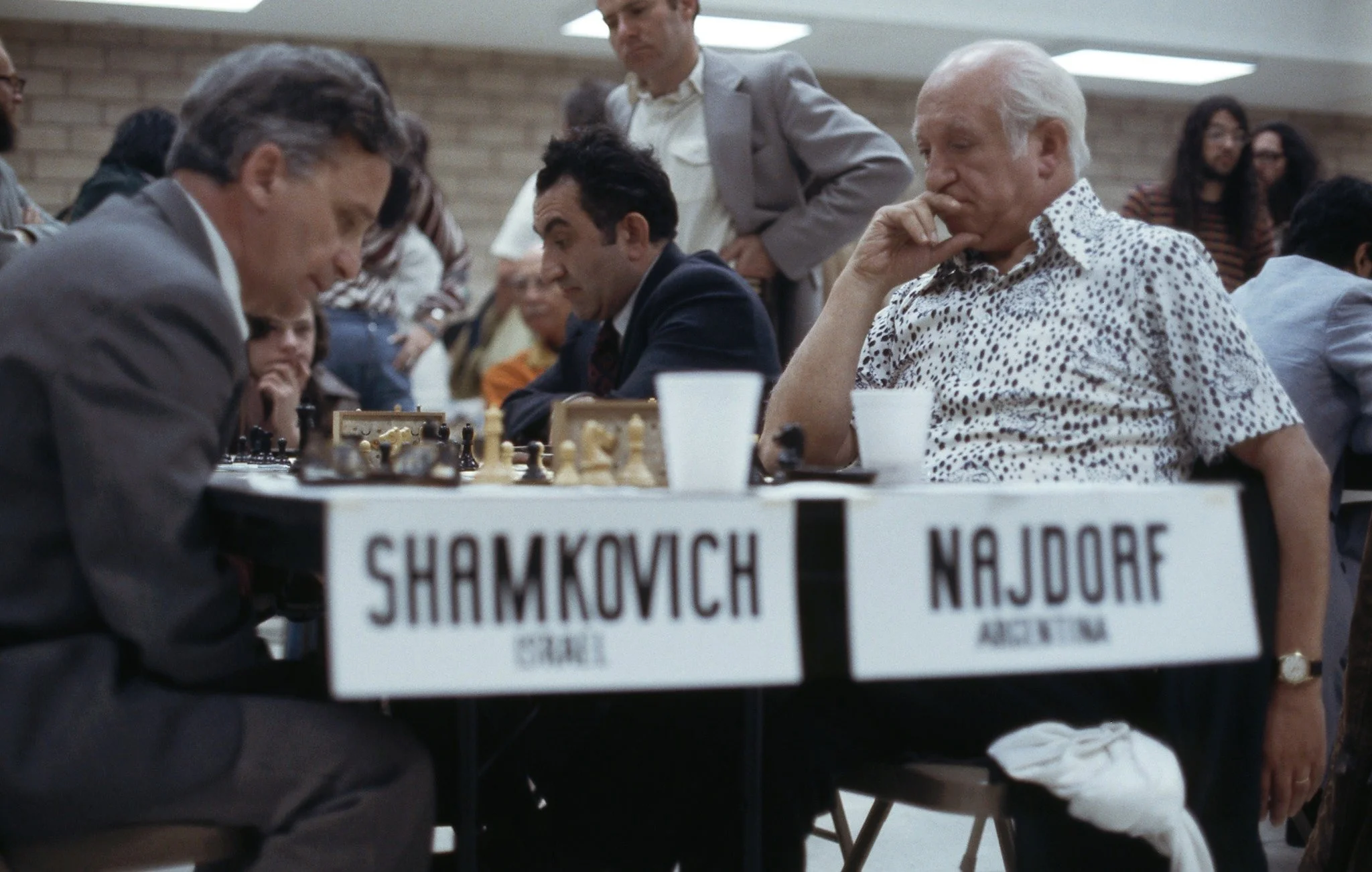
Source: Douglas Griffin Chess
Contributions to chess theory, coaching, and published work
Opening theory and analytical innovations
The most explicit, source-attested theoretical contribution is in the Grünfeld: Khodarkovsky credits him with “radically” changing a long-standing theoretical taboo (attributed there to Alekhine) against playing Nf3 on move seven in the Orthodox Grünfeld structure, recommending and employing 7.Nf3 and 8.Rb1 and noting the system’s adoption by elite players, including Garry Kasparov.
From an analytical standpoint, the idea is coherent in strategic terms: 8.Rb1 is a flexible “anti-pin/anti-...Bg4” resource because it prepares b4 (challenging Black’s queenside pressure) while keeping options for Be2/Qd2 depending on Black’s development. The memorial’s accompanying annotated game (below) shows how he paired opening ideas with concrete tactical motifs (…Rd8, …g5, and a central exchange sacrifice) rather than treating the line as purely positional.
Tactical and sacrificial play as a signature contribution
Even more than a single named variation, sources portray his value as a theoretician-as-craftsman. The Chess Life memorial repeatedly emphasizes (a) a relentless search for complications, (b) exceptionally concrete calculation, and (c) deep analysis performed without modern databases.
One of the memorial’s central “identity claims” is his wish to be remembered as an artist of analysis rather than as a provocateur; it explicitly recounts his displeasure with a book title that includes the word “terrorist”—a small but telling controversy about public framing versus private self-conception.
Coaching and influence networks
Khodarkovsky reports that his analytical skills led to invitations to assist as a coach/analyst by former world champion Mikhail Tal and by Leonid Stein. The same text also relays an anecdote (attributed there to Kasparov’s recollection) describing a childhood impression made by a debate between Shamkovich and Alexander Nikitin—presented as evidence of standing within elite analytic culture.
A major newspaper chess columnist likewise characterized him as “genial” and suggested his talent as a trainer surpassed his tournament reputation—consistent with the memorial’s emphasis, although the full article text could not be programmatically opened here beyond indexed snippets.
Published works and bibliographic anchors
A fully exhaustive bibliography would require systematic library catalog harvesting and/or access to publisher archives. Within the constraints of sources retrieved here, the following works are directly evidenced:
The Modern Chess Sacrifice (book). The New York Public Library catalog lists it as a New York publication by David McKay (1978), providing a stable bibliographic anchor.
A New Era: How Garry Kasparov Changed the World of Chess (book; co-authored with Michael Khodarkovsky). A Library of Congress catalog description identifies move-by-move analyses by Khodarkovsky and Shamkovich and positions the work as a major analytical treatment of Kasparov-era chess.
Fischer–Spassky 1992: World Chess Championship Rematch (book; with Jan R. Cartier). Edward Winter’s bibliographic notes reference the volume and discuss it as part of the literature on major Fischer/Kasparov topics.
The Chess Terrorist’s Handbook (book). The Chess Life memorial identifies this title among his books and reports his objection to the “terrorist” framing.
In addition, Khodarkovsky’s memorial states that one of the featured annotated games was contributed by Shamkovich to Khodarkovsky’s Grünfeld book (indicating a direct role as analyst-contributor even where he was not the primary named author).
Source: Douglas Griffin Chess
Legacy, critical assessment, and unresolved questions
Hall of Fame recognition and institutional legacy
He was inducted into the U.S. Chess Hall of Fame in 2004; US Chess delegate communications and the Hall’s own inductee listings corroborate the year and place him among a cohort of Soviet-born grandmasters who profoundly shaped late-20th-century American chess culture.
His name continues to appear in institutional memorialization through events named in his honor (e.g., “Leonid Shamkovich FIDE Open”), indicating ongoing community remembrance rather than purely historical recognition.
Critical assessments of style and contribution
The most consistent evaluative theme in accessible primary commentary is that his identity was analytic: a theoretician and calculator who treated chess as an artistic construction, obsessively revising and extending ideas. This is not presented as generic praise; Khodarkovsky’s memorial ties the claim to observable behaviors (continued analysis late in life, attention to new theoretical innovations, and the ability to generate forcing, engine-like sequences without databases).
This assessment gains additional credibility because it is paired with concrete exemplars: (1) the rook-sacrifice Grünfeld win where opening nuance and tactics fuse seamlessly, and (2) the Keres‑Attack sacrifice where initiative is converted into a long, technically clean win.
Lesser-known controversy: the “terrorist” title dispute
A small but revealing controversy is documented in the memorial: he disliked the title The Chess Terrorist’s Handbook, believing it distorted how he wanted his work to be remembered. The text emphasizes the mismatch between the word and his personal reputation for kindness and refinement.
Gaps, contradictions, and research uncertainties
Several points remain unresolved or contested, given currently accessible sources:
Birthplace: Taganrog is stated in the Chess Life memorial, while other summaries list Rostov-on-Don. Without an accessible civil record or the blocked New York Times obituary, the discrepancy cannot be decisively resolved here.
“Israeli championship” claim: the memorial states he won the Israeli championship in 1974, but other chess historical summaries frequently associate Israel’s 1974 championship with other players; it is plausible the memorial meant an Israeli open championship or a similarly named event. Additional federation archives would be needed for precision.
RSFSR “Russian Championship” years: the memorial gives 1954 and 1957; some widely circulated accounts state 1954 and 1956. A primary RSFSR crosstable (or a scholarly tournament compendium) is required to settle the exact years.
Cause and place of death: the memorial supplies the date but not the medical cause or location. Secondary summaries often supply both. This report treats those specifics as unconfirmed until a directly accessible major newspaper obituary or official record is available.
