Salomon Flohr
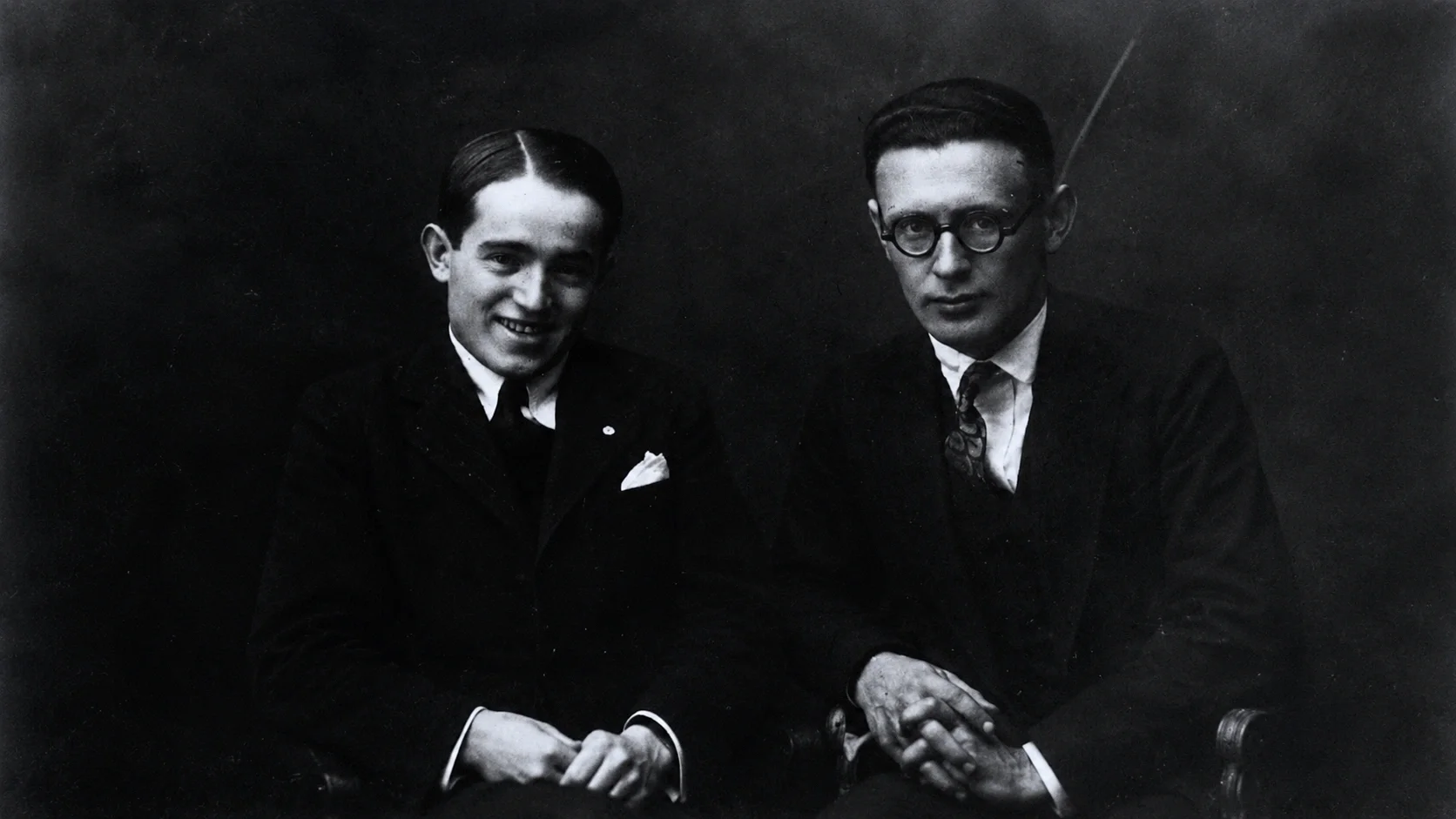
Flohr and Botvinnik, 1933
Salomon "Salo" Flohr, born on 21 November 1908 in Horodenka and died in July 1983, rose from refugee insecurity to become interwar Czechoslovakia’s leading chess figure, one of FIDE’s inaugural International Grandmasters in 1950, and for a brief but real period a plausible challenger for the world title. His prewar standing rested on sustained tournament success, elite Olympiad performances, and a style associated with technical control, strategic patience, and endgame authority. His historical importance also lies outside pure chess strength: antisemitic violence, displacement, the destruction of Czechoslovakia, and later incorporation into Soviet chess culture all redirected a career that might otherwise have reached a title match at its natural peak.
The sources recovered here describe Flohr as coming from a very poor Jewish family with eight children and identify his older brother, Moses, as a key companion in the family’s migration to Prague. Vlastimil Hort’s recollection emphasizes refugee labor and struggle, including market work, rather than formal schooling. On that basis, Flohr’s educational record must be treated as unspecified in this synthesis. What is clear is that his early life was shaped by wartime dislocation and precarious survival, features that later returned with tragic force in the late 1930s.
By the early and mid 1930s, Flohr had entered the absolute top class. Edward Winter cites Alekhine describing him in 1930 as “the second true talent to have emerged in the chess world since the War,” and the tournament record largely supports that judgment. Flohr led Czechoslovakia at the Olympiad, helped make his team a medal favorite at Folkestone in 1933, scored an undefeated 13/17 on board one at Warsaw 1935, shared first at Moscow 1935 with Botvinnik, won Poděbrady 1936 ahead of Alekhine, and won Margate 1936 ahead of Capablanca. Chessmetrics later reconstructed his peak as world number two in 1935, which, while retrospective rather than official, aligns with contemporary testimony about his stature.
Flohr’s ties to contemporaries were inseparable from chess politics. The 1933 Flohr Botvinnik match ended 6-6, and Flohr publicly praised Botvinnik as a player of world caliber. In 1937, FIDE delegates then chose Flohr, by 8 votes to 5 over Capablanca, as the official challenger to Alekhine; contemporary reporting even stated that an Alekhine-Flohr contract had been signed for autumn 1939. Yet geopolitics overran chess. Hort’s account recalls that the coming war destroyed the match, and Soviet sources confirm that after the Nazi destruction of Czechoslovakia, Flohr relocated east and became a Soviet citizen in 1942. He remained strong enough to qualify from the 1948 Interzonal into the 1950 Candidates, but by then, he was already becoming more important as a writer and public intellectual of chess than as a future champion.
Kotov and Yudovich’s Soviet account, though ideological, is still useful: it portrays Flohr as a player who evolved from an imaginative attacker into a master technician, and as a widely admired journalist whose articles combined insight with humor. Opening theory still preserves his name in several systems, including the English Opening, the Caro-Kann, and the Flohr-Zaitsev Ruy López. Modern historical judgment should therefore treat him not simply as a champion who never was, but as a first-rank master whose title chances were broken by war, statelessness, and political upheaval. A fuller scholarly profile would next require primary obituaries, Czechoslovak federation archives, original tournament books, and refugee documentation.
