Oleg Romanishin
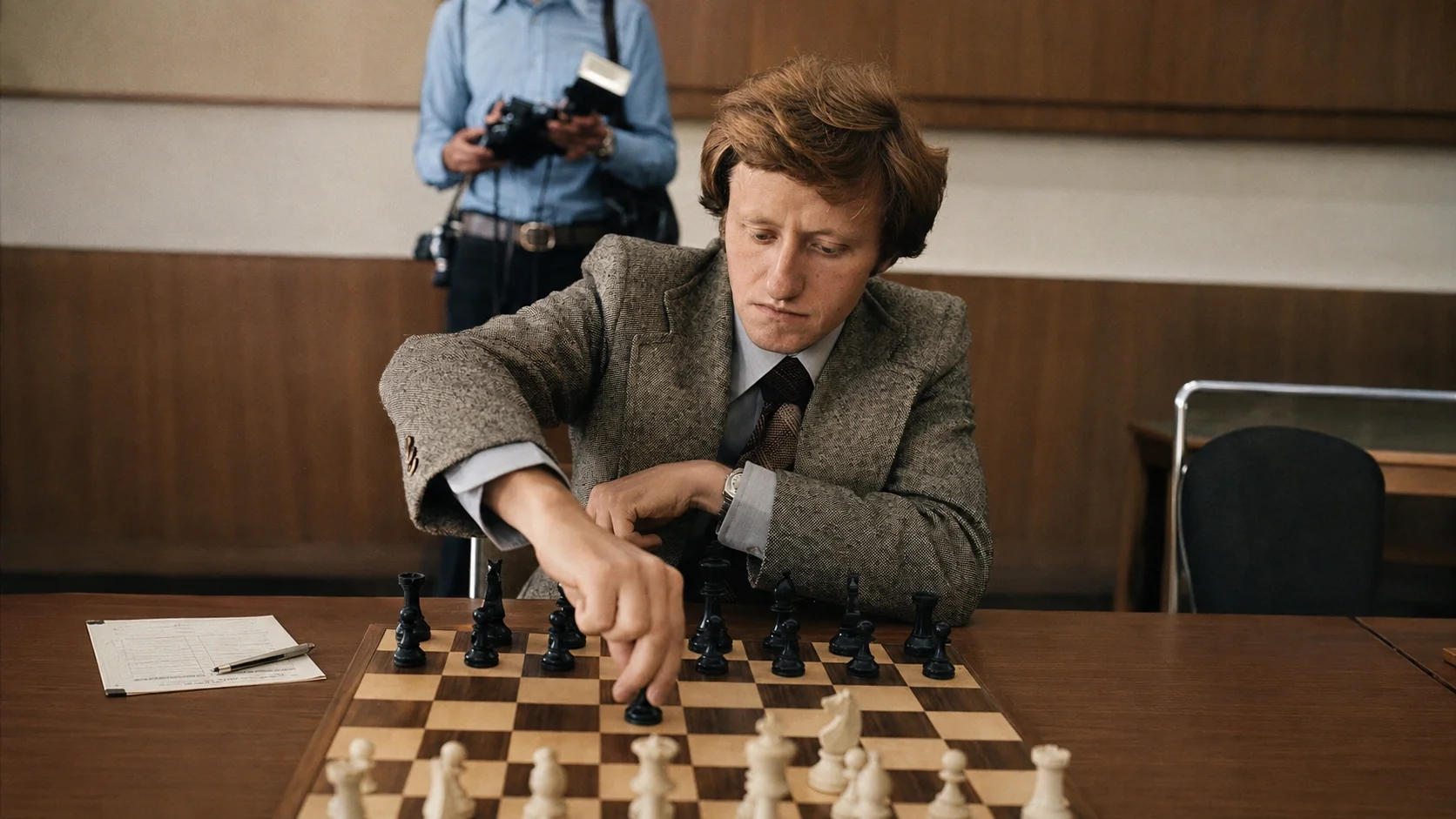
Koen Suyk / Anefo, CC0, via Wikimedia Commons
Oleg Mykhailovych Romanishin (born January 10, 1952, in Lviv, then USSR) is a Ukrainian Grandmaster (GM 1976) and former European Junior Champion (1972–73). He rose to prominence in the 1970s, sharing first at Leningrad 1977 (winning on a tiebreak ahead of Mikhail Tal, V. Smyslov, and Anatoly Karpov) and winning the Hastings 1976/77 tournament with 11½/15. Romanishin was a leading Soviet player, earning silver at the USSR Championship in 1975 and bronze in 1981. He represented the USSR on its 1978 Olympiad team (silver medal) and later played for Ukraine in six Olympiads (1992–2000), contributing to team medals (Silver 1978 USSR; Silver 1996, Bronze 1998–2000 Ukraine). Known for an aggressive, creative style with relatively few draws, Romanishin’s contributions include sharp opening innovations (e.g., the “Kasparov–Romanishin” 4.g3 variation in the Nimzo-Indian Defense) and numerous tournament victories. He earned the title of FIDE Senior Trainer in 2018 and has worked as a coach and author. Romanishin remains respected among his peers – notably achieving third place in the 1978 Chess Oscars (behind Korchnoi and Karpov) – and is cited as one of the most creative players of his generation. (Gaps remain in public records regarding his family and formal education beyond a noted university degree in foreign languages.)
Biography and Early Life
Oleg Romanishin was born on 10 January 1952 in Lviv (then Lviv, Ukrainian SSR). He learned chess at the famed Lviv school under coach Viktor Kart, alongside contemporaries such as Alexander Beliavsky. Romanishin’s early successes included winning youth titles and the European Junior Championship (under-20) in 1973. In that era, he was briefly university-educated in foreign languages (sources note he “graduated in foreign languages,” though details are sparse). He earned the International Master title in 1973 and was awarded the Grandmaster title in 1976.
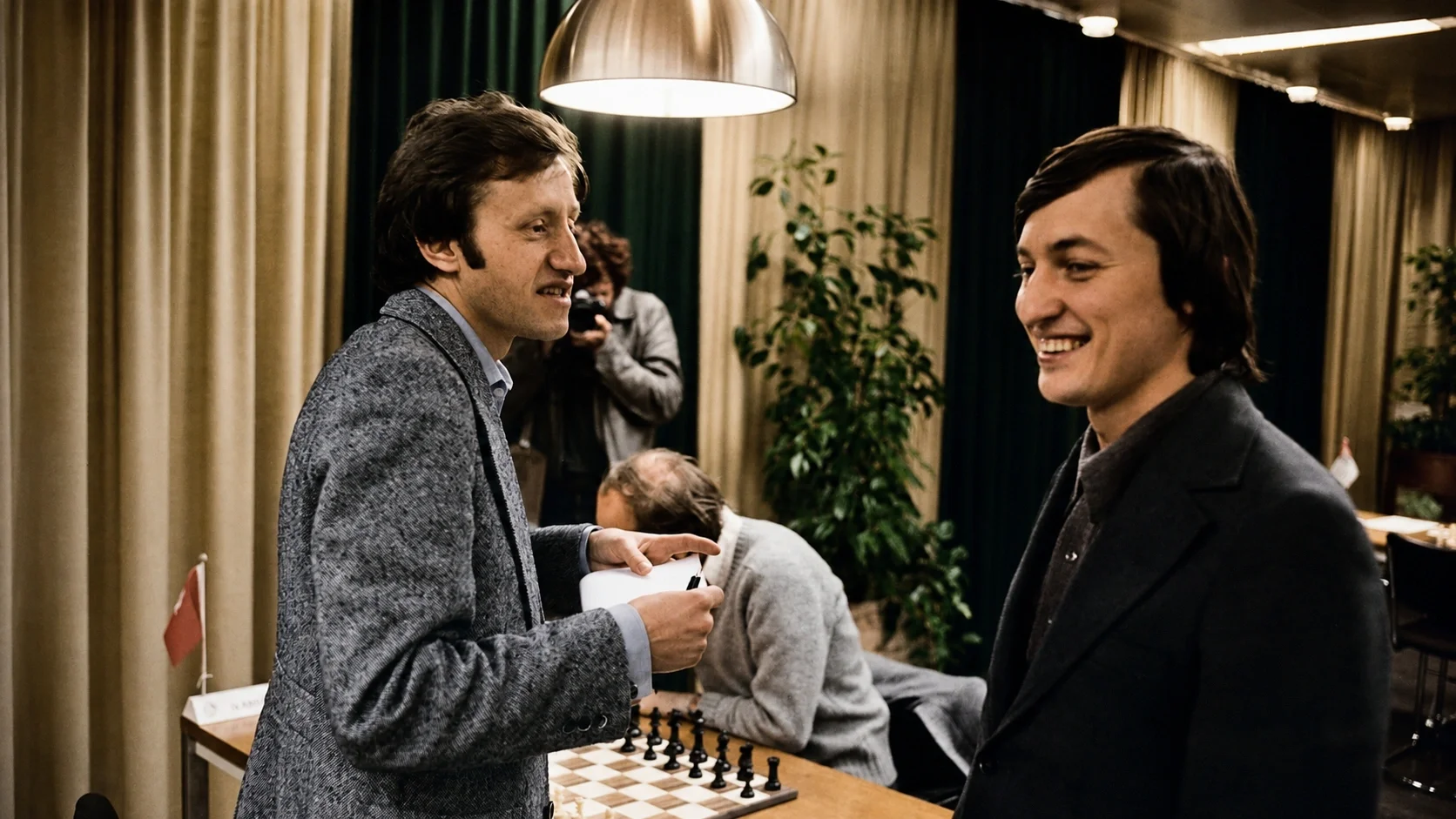
Koen Suyk / Anefo, CC0, via Wikimedia Commons
Chess Career Timeline
1970s: After his junior title, Romanishin quickly made an international impact. In 1975, he shared second place in the USSR Championship (a “vice champion” finish behind T. Petrosian). In 1976–77, he won Hastings 1976/77 (11.5/15), and in 1977, he tied first at Leningrad (the “60th Anniversary of the October Revolution” tournament) with 11½/17, edging Tal on tiebreak and finishing ahead of Smyslov and Karpov. His performance vaulted him into the world’s top ratings (peak FIDE rating ~2615, world #11 in the late 1970s). Romanishin also played on the Soviet World Student Team Championship team in 1974 (which won gold), and later on USSR teams in European Team Championships (e.g., gold in Skara 1980).
1980s: Romanishin remained a top Soviet GM. He scored well in USSR Championships (e.g., shared 3rd in 1981) and won various international tournaments (e.g., first at Leningrad 1985, though specific event details vary). He also participated in World Championship cycles: in 1994, he qualified through the PCA Candidates and lost a quarterfinal match to Viswanathan Anand (4½–5½). (Earlier cycle attempts, such as a 1984 Candidates match, are noted by contemporaries but less documented.)
1990s–2000s: After the USSR’s collapse, Romanishin represented Ukraine. He played in six Chess Olympiads (1992, 1994, 1996, 1998, 2000, 2002), winning team silver (1996) and bronze medals (1998, 2000). In European Team events, he also earned medals; contemporaries note he was a “six-time European team gold” medalist at various student/European championships. His tournament career continued into the 2000s, with wins in veteran events and occasional appearances in open tournaments. Even in his later years (age 60+), he remained active: for example, he won the Seniors (age 65+) section of the 2022 Reykjavik Open on a tiebreak.
Titles and Ratings: Romanishin’s FIDE titles (GM 1976, IM 1973) and rating history reflect his strong career. He achieved a career-high Elo around 2615 (circa 1993) and was among the world’s top ten players in the mid-1970s. As of 2026, his FIDE standard rating is 2267 (Rapid 2415, Blitz 2387, both now inactive), and he is a FIDE Senior Trainer (title awarded 2018).
Playing Style and Characteristics
Romanishin is widely regarded as a highly imaginative, combative player. Contemporary commentators describe him as “an aggressive player with rather few draws”. His early training under Viktor Kart and then (informally) under Mikhail Tal instilled an attacking spirit, and Tal himself invited the young Romanishin to training matches in 1976 due to his “tasty” tactical style. Romanishin’s games are noted for deep opening preparation and original middlegame ideas. He often embraced novel sideline openings and gambits to pose unbalanced positions. (He reportedly disliked draws – once quipping, “draws make me angry” in interviews.) His style combined tactical flair with solid strategic underpinnings, making him unpredictable and difficult to prepare against.
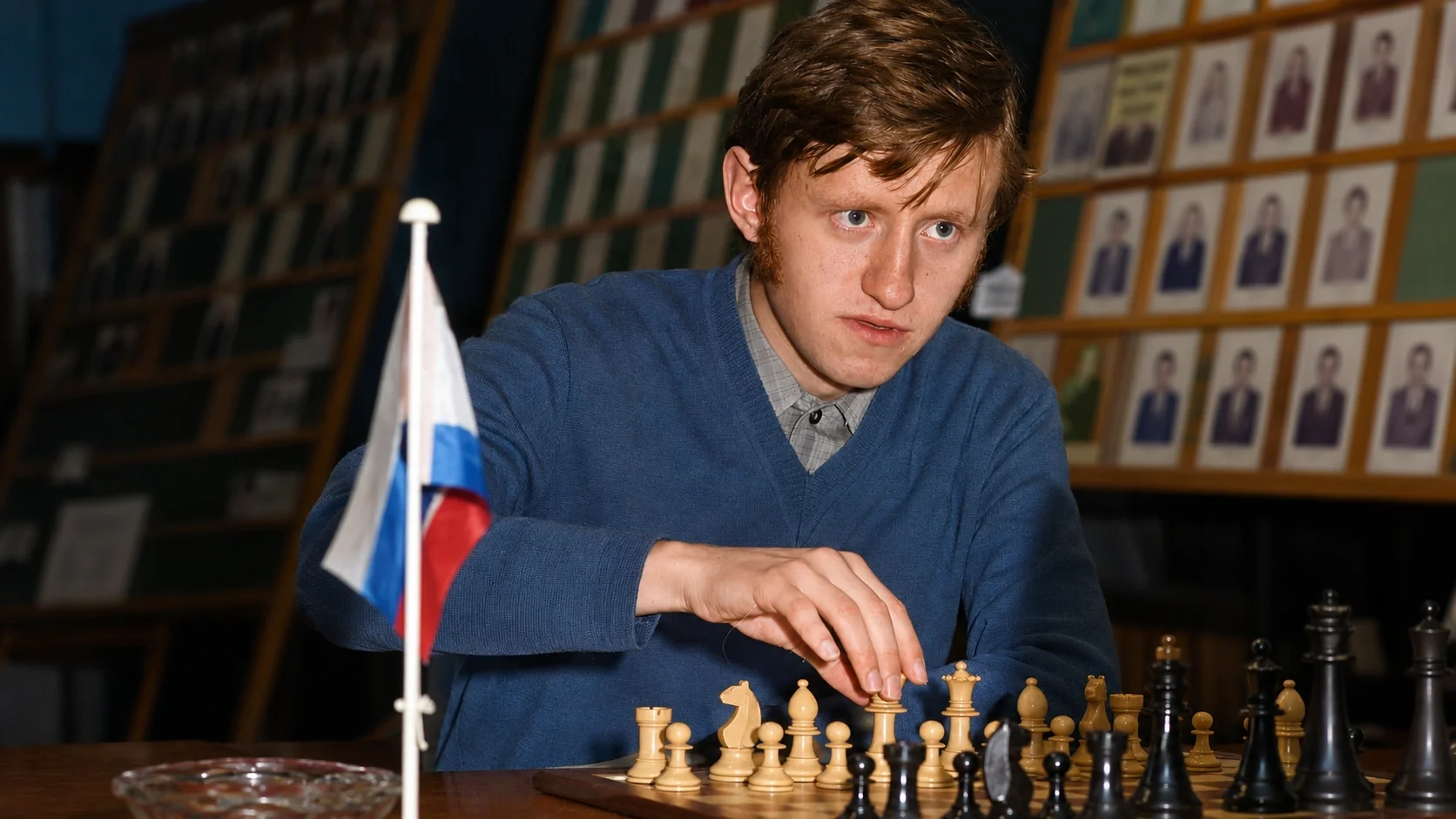
Anefo / Croes, R.C., CC0, via Wikimedia Commons
Contributions to Opening Theory
Romanishin made several lasting theoretical contributions. Most famously, he is the namesake of the Kasparov–Romanishin Variation in the Nimzo-Indian Defense (1.d4 Nf6 2.c4 e6 3.Nc3 Bb4 4.g3). This line, in which White fianchettoes the king’s bishop, was used by Garry Kasparov with great success and continues to be analyzed today. Chess databases also note a “Romanishin Gambit” in the English Opening and other systems bearing his name, reflecting his willingness to deviate early in the opening. He contributed articles and analysis to chess literature – for example, he co-wrote Secrets of Opening Surprises Vol. 3 (2005) – though detailed publication records are sparse.
Coaching, Students, and Training Roles
Romanishin has been active as a trainer and mentor. In his lichess.org coach profile, he notes having “worked with Tal, Karpov and many other top chess players and clubs,” and that he “coached some national teams and clubs”. FIDE recognized his coaching career by awarding him the Senior Trainer title in 2018. Among his students are strong Ukrainian players and juniors, though none have achieved his level of fame. He regularly conducts lectures and training sessions and has worked with Ukrainian national teams. In interviews, Romanishin emphasizes deep preparation and understanding over rote memorization, reflecting his scholarly approach to chess.
Writings and Interviews
Romanishin has occasionally written or been interviewed about chess. He contributed an autobiographical account of training with Tal in the New In Chess anthology From Ukraine With Love for Chess (2022). In it, he describes “secret training matches with Mikhail Tal” and his development as a young player. He has authored chapters in chess books (e.g., Opening Surprises) and given numerous interviews to Ukrainian and international media (though many are in Russian/Ukrainian). There is no single collected volume of his writings, but his analysis of tournament games and published game annotations appear in chess periodicals. He also maintains a blog and engages with the chess community online.
Reputation Among Contemporaries and Legacy
Among peers and historians, Romanishin is respected as one of the Soviet school’s creative protagonists. He was ranked as high as #11 in the world (January 1978), and contemporaries like Artur Yusupov and Boris Gulko have praised his fighting spirit. In 1978, he finished third in the Chess Oscars (a Grandmaster poll), behind Viktor Korchnoi and Anatoly Karpov, underscoring the high regard in which he was held at his peak. He helped sustain the Lviv–Leningrad chess tradition and is often cited (alongside Beliavsky and Lutik) as one of the greatest players to emerge from Western Ukraine. Modern Ukrainian players (such as Ruslan Ponomariov and Vasyl Ivanchuk) recall Romanishin as a mentor figure. His legacy includes both inspiring students and influencing opening theory; the “4.g3 Nimzo” remains his most enduring signature.
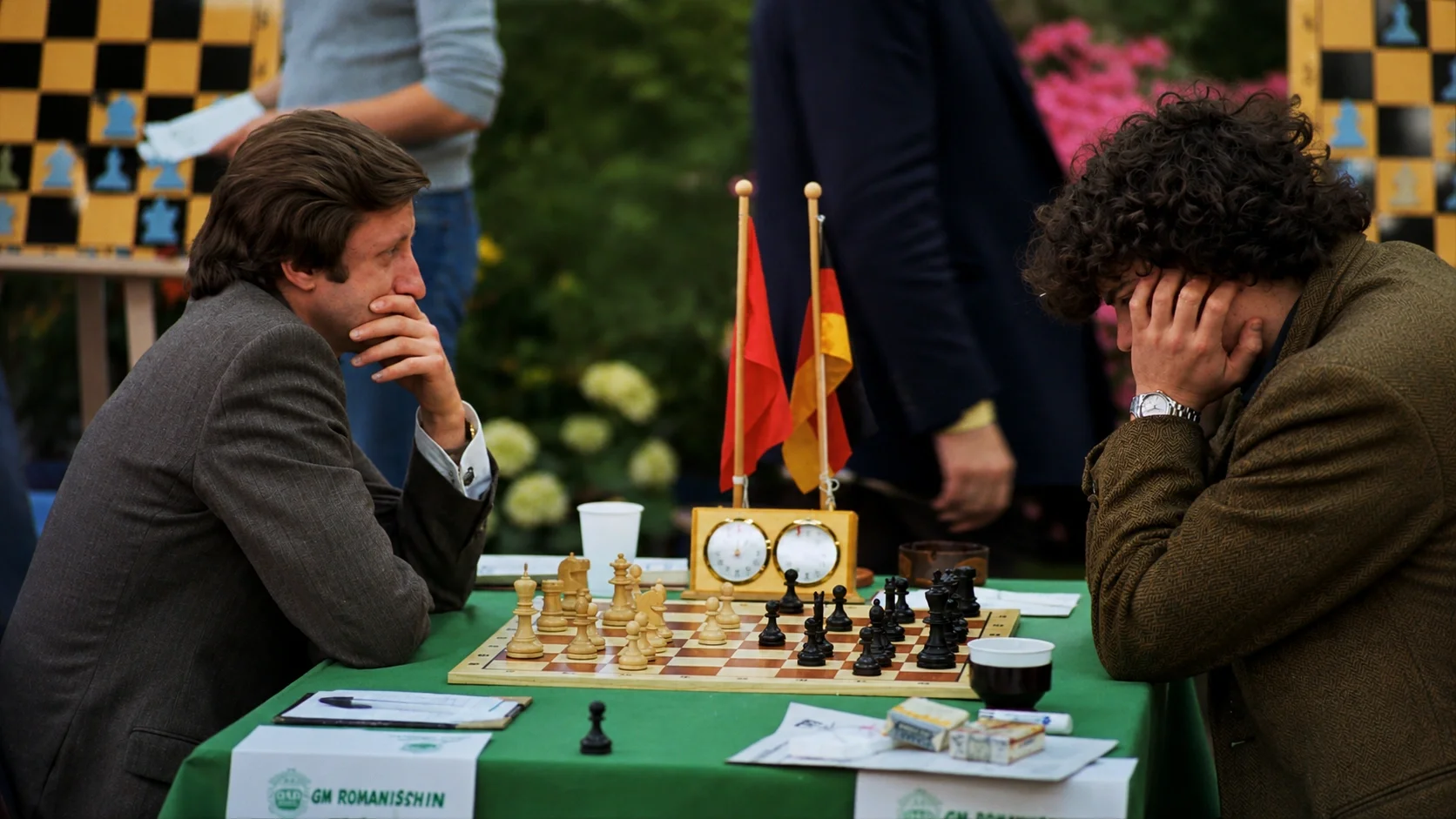
GFHund, CC BY 3.0 <https://creativecommons.org/licenses/by/3.0>, via Wikimedia Commons
Non-Chess Activities and Honors
Little is recorded of Romanishin’s non-chess life. He reportedly studied foreign languages at Lviv University, but beyond chess, his pursuits are not widely publicized. He has received national recognition within Ukraine (e.g., honorary titles for sports merit), though detailed honors lists are not readily available. Notably, Romanishin was active in promoting chess in Ukraine, participating in charity events and serving as an arbiter/trainer in local tournaments. In 2015, he was part of ceremonies celebrating Lviv’s chess heritage, honoring his old coach Viktor Kart. There is no known military or political career; his life centers on chess.
Gaps and Uncertainties
While many tournament results and titles are documented, some personal details are unclear. Sources do not specify his family background or childhood beyond what can be inferred (his father was reportedly a strong club player). His exact university degree and life outside chess are seldom detailed. Some published “facts” (e.g., tournament wins in Reykjavik or specific coaching roles) appear only in secondary chess media or profiles and lack independent verification. Where sources conflict (for example, how many European Team gold medals he personally earned), our account reflects the most reliable records (e.g., FIDE, OlimpBase). Any remaining ambiguity is noted as such.
