Shakmatty v SSSR
Shakmatty v SSSR
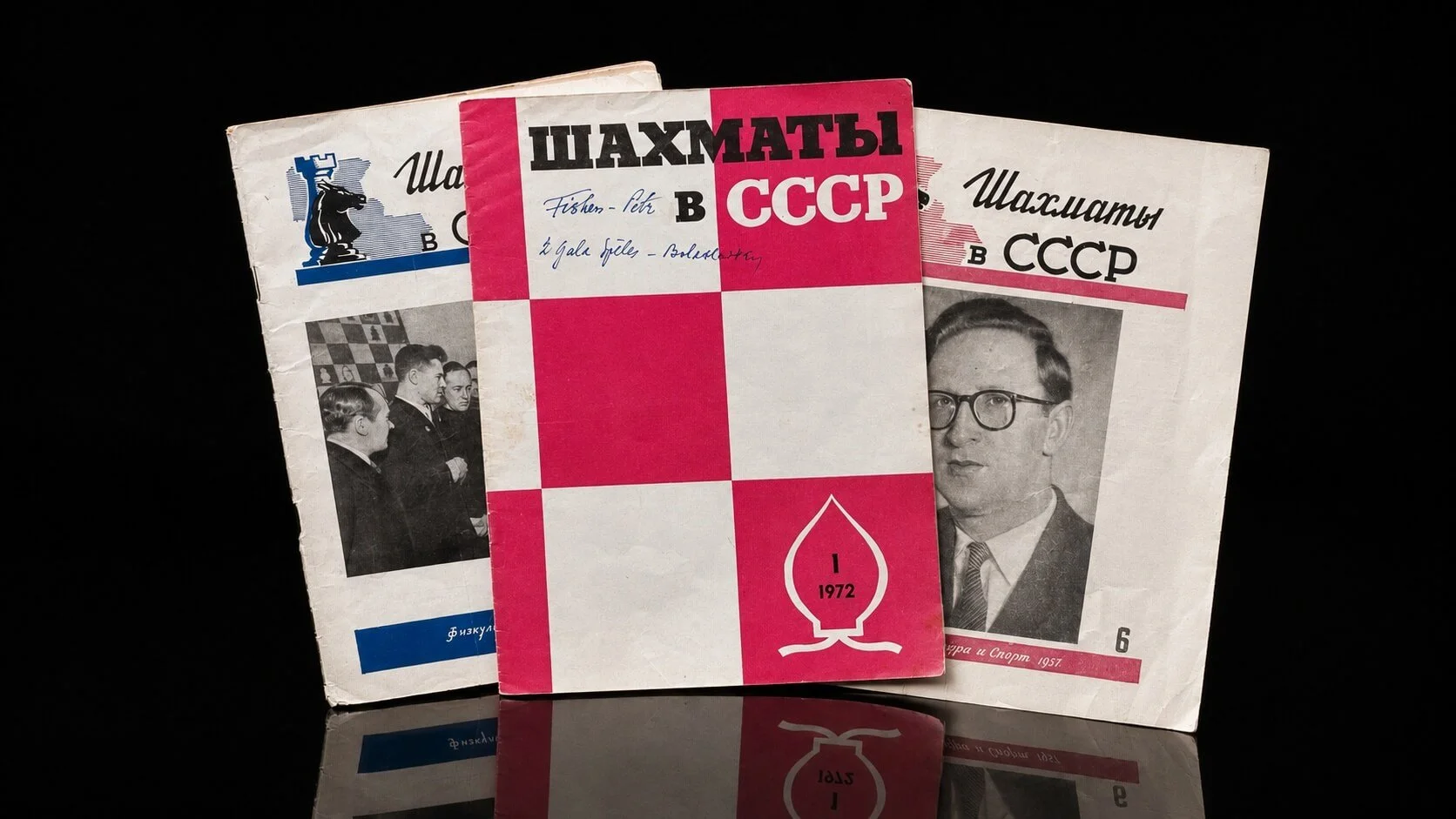
Shakhmaty v SSSR (Шахматы в СССР, “Chess in the USSR”) was more than a chess magazine. It was one of the printed centers of Soviet chess life, a record of tournament results, theoretical development, organizational policy, player achievements, and the everyday culture surrounding the Soviet chess school.
The title was founded in 1931 on the basis of Shakhmatny Listok and became the official organ of the USSR Chess Federation. It was issued as a monthly magazine and later reached an international readership. By 1987, it reportedly circulated in 50 countries with a total circulation of 52,000 copies. In 1995, it was renamed Shakhmaty v Rossii (Chess in Russia), and the publication ceased in 1999.
For historians, collectors, and chess players, Shakhmaty v SSSR is valuable because it preserves Soviet chess as it appeared to its own institutions. Its pages carried tournament reports, annotated games, news from the republics, theoretical discussions, photographs, problem columns, and commentary on the chess movement inside the Soviet Union. The magazine was not simply reporting chess from the outside. It was part of the structure that presented, organized, and interpreted Soviet chess for Soviet readers.
The magazine’s institutional identity is important. WorldCat lists Shakhmaty v SSSR as a Russian journal and magazine beginning in 1931, published by Fizkultura i sport in Moscow and associated with Soviet physical culture and chess organizations. That connection placed the magazine within the broader Soviet sports system, where chess was treated as a serious cultural and intellectual pursuit.
The covers themselves tell part of the story. Some issues were austere and typographic. Others featured portraits, tournament images, national championship coverage, or bold graphic design. The visual language changed across decades, yet the purpose remained recognizable: to present chess as a disciplined, modern, and socially significant activity.
During the Soviet period, chess was tied to education, international prestige, and mass participation. Shakhmaty v SSSR reflected that world. It covered elite players and major events, but it also helped connect local clubs, young players, coaches, composers, arbiters, and readers across a vast chess culture. To read the magazine today is to see how deeply chess was embedded in Soviet public life.
The editorial history also gives the magazine weight. Vladimir German became the responsible editor when the magazine’s editorial office was moved from Leningrad to Moscow in 1938, and it was revived in 1945 after wartime disruption. Mikhail Yudovich later spent more than four decades, from 1945 to 1987, as deputy chief editor of Shakhmaty v SSSR, and became a major writer, theorist, and popularizer of chess.
That continuity helped make the magazine a long-running archive of Soviet chess memory. Its issues allow modern readers to follow the rise of postwar Soviet dominance, the careers of Botvinnik, Smyslov, Tal, Petrosian, Spassky, Karpov, Kasparov, and many others, and the development of chess theory as it was discussed in Soviet print culture.
At the same time, Shakhmaty v SSSR should be read carefully. It was an official publication, not an independent newspaper in the modern sense. Its reports, language, omissions, and emphases often reflected the priorities of Soviet sport institutions. That does not reduce its historical value. It makes the magazine even more useful as a primary source, because it shows how Soviet chess wanted to explain itself.
For collectors, original issues of Shakhmaty v SSSR are artifacts of the chess world that produced much of the twentieth century’s strongest competitive tradition. For historians, they are evidence. For players, they remain a window into a culture that treated chess analysis, preparation, and publication with extraordinary seriousness.
Shakhmaty v SSSR survives as one of the essential printed records of Soviet chess history. Its pages preserve the names, games, debates, photographs, and ambitions of a chess civilization that shaped the modern game.
Notes
Russian Chess Federation, “Vladimir German.” The article notes the move of the magazine’s editorial office from Leningrad to Moscow in 1938 and German’s role as responsible editor, then his return as chief editor when Shakhmaty v SSSR resumed in 1945.
Russian Chess Federation, “Mikhail Yudovich.” The article states that Yudovich served for more than four decades, from 1945 to 1987, as deputy chief editor of Shakhmaty v SSSR.
