Valery Zhidkov
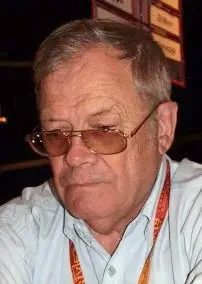
Introduction
Valery Stepanovich Zhidkov (Russian: Валерий Степанович Жидков; Ukrainian: Валерій Степанович Жидков; 4 September 1939 to 23 February 2026) belonged to the historically important class of Soviet masters whose strength was clearer to their peers than their international fame would suggest. English-language records variously render his first name as Valery, Valeriy, or Valerij. FIDE lists him as “Zhidkov, Valery S.” and records his International Master title as awarded in 1993.1
Zhidkov’s central achievements were his shared victory in the 1967 championship of the Ukrainian SSR, an outright second place in 1966, a share of second in 1972, qualification for the 1972 USSR Championship final, and an unusually reliable record in all-Union team competition. His later work as a Moscow trainer extended his influence into the careers of post-Soviet grandmasters, most visibly Dmitry Andreikin and Nikita Afanasiev.
His surviving record is uneven. Tournament scores, team results, and rating data are comparatively rich. Secure information about his family, formal education, childhood, first teacher, and earliest chess instruction is scarce. This profile treats those absences as part of the historical record and does not fill them with conjecture.
Early Life and Chess Formation
Long-running FIDE records and standard chess references give Zhidkov’s date of birth as 4 September 1939.1 His birthplace is not securely established in the sources consulted. The firmly documented fact is that he represented Zaporizhzhia in Soviet competition by the early 1960s. No dependable published source located for this profile establishes his parents’ occupations, schooling, higher education, or a named formative coach.
Zhidkov entered the Soviet master class in 1962. According to Shakhmatnyi ezhegodnik 1962, he scored 8 points from 15 in an Odessa classification tournament. Five candidate masters played three cycles against five established masters, giving the aspirants a direct route to the Master of Sport norm. Zhidkov’s result earned him the title of Master of Sport of the USSR.2 In the Soviet system, this was a substantial competitive credential, especially for a player outside the most internationally visible centers.
His progress through Ukrainian chess is easier to trace. Representing Zaporizhzhia in the 1964 Ukrainian SSR Championship, he scored 10 from 20 and shared sixth through ninth place.3 The result itself was modest, but it placed him securely among the republic’s established masters. Two years later he moved decisively into championship contention.
Rise in Competitive Chess
The 1966 Ukrainian SSR Championship in Kyiv was Zhidkov’s first major breakthrough. Vladimir Savon began with 9 points from 10 games, while Zhidkov stood on 7½. In round eleven Zhidkov defeated the leader with Black, changing the course of the event. Yuri Sakharov ultimately won with 13 from 17; Zhidkov finished second with 12, scoring nine wins, six draws, and two losses. A contemporary report appeared in Shakhmaty v SSSR, no. 9, 1966, and the full crosstable survives in Alexey Popovsky’s tournament archive.4 The victory over Savon deserves mention because it established Zhidkov as a player capable of intervening directly in a strong championship race.
His defining tournament success followed in Kyiv in October 1967. The Ukrainian championship was a 62-player, 13-round Swiss event. Zhidkov and the Kyiv master Yuri Nikolaevsky each scored 10 from 13 and were recognized as joint champions. Zhidkov remained undefeated, with seven wins and six draws. His late victories over Naum Levin and E. Gindin were central to the final outcome.5 The title placed him in a distinguished Ukrainian championship tradition that included Isaac Boleslavsky, Anatoly Bannik, Yuri Sakharov, Vladimir Savon, and, soon afterward, Vladimir Tukmakov and Lev Alburt.
Zhidkov also entered the mass 1967 USSR Championship in Kharkov, the first Soviet final run as a large Swiss tournament. He scored 5 points in nine rounds and did not complete the event. The accessible record does not establish why he withdrew, so no explanation should be attached to the episode.6
Major Career Achievements
Zhidkov’s team record provides some of the clearest evidence of his practical strength. In the 1966 Soviet Team Cup he played fifth board for Spartak, scoring 5½ from 9 as the club took third place.7 He subsequently represented the Ukrainian SSR in three all-Union team championships, in 1967, 1969, and 1972. Ukraine won bronze each time. Across those appearances Zhidkov scored 16 from 23, with ten wins, twelve draws, and a single loss. He also collected individual silver in 1967, bronze in 1969, and gold in 1972. His 1972 score, 6½ from 8 without defeat on fifth board, was the best performance of his Soviet team career.8
These results deserve more weight than a simple medal count suggests. Soviet team events drew heavily from the same master and grandmaster population that made individual qualification so difficult. Zhidkov’s record shows that selectors trusted him repeatedly and that he rewarded that trust with low-risk, high-yield play. One loss in 23 games is a particularly strong indicator of competitive stability.
In the 1972 Ukrainian SSR Championship at Odessa, Zhidkov represented Kyiv and again came close to the title. After sixteen rounds he and Nathan Zilberman led with 10 points, while Lev Alburt still had several adjourned games to complete. Alburt’s successful adjournment session carried him to first place with 11½ from 17. Zhidkov, Zilberman, and Valery Beim shared second through fourth on 10½.9 The event showed that Zhidkov’s 1967 championship had lasting substance.
Later that year Zhidkov advanced from the Kaliningrad semifinal to the 40th USSR Championship final in Baku. The final was also a FIDE zonal and included Mikhail Tal, David Bronstein, Ratmir Kholmov, Vladimir Tukmakov, Gennady Kuzmin, Yuri Balashov, Vladimir Savon, and other leading grandmasters. Zhidkov scored 8½ from 21 and placed twenty-first. He did not contend for the title, although his win over Balashov and draws with players such as Tukmakov, Savon, and Kholmov demonstrated that he could obtain results against elite opposition.10 Qualification for this field remains one of his major achievements. The final score also marks the limit of the available evidence: Zhidkov was a powerful Soviet master, while repeated success at the very highest all-Union level did not become part of his record.
The Ukrainian chess writer Yukhym Lazarev reported that Zhidkov produced an International Master-level result at the 1973 international tournament in Varna.11 FIDE did not confer the title until 1993, twenty years later. No source located for this article explains the delay, and it should not be attributed to a particular administrative or political cause without further documentation. His peak published rating was 2520 in January 1978, a figure consistent with the strength shown in his best republican and team performances.1
Zhidkov continued to compete after his peak years. He finished fourth in the 1976 Ukrainian championship, scoring 7½ from 13,12 and remained visible in master events well into the post-Soviet period. FIDE retained him under the Ukrainian federation. By then he was living and teaching in Moscow, a combination that explains why later references variously describe him as Soviet, Ukrainian, or Russian. In 2018 he joined veteran colleagues from several former Soviet republics at the Viktor Kupreichik Memorial in Minsk, an event explicitly organized around Kupreichik’s friends and colleagues.13
Style and Reputation
Lazarev’s near-contemporary assessment remains the most useful published characterization of Zhidkov’s chess. He described a player inclined toward positional struggle who was fully prepared to decide a game by combination when the opportunity arose.11 That description fits the competitive record. Zhidkov’s best results came from sustained control, sound judgment, and the ability to remain difficult to defeat, especially in team play.
His strengths can be stated with reasonable confidence. He was positionally grounded, tactically alert, adaptable against a wide range of opponents, and exceptionally dependable in a team setting. The surviving games also show a player comfortable in flexible queen-pawn and flank-opening structures, although the incomplete database record does not justify reducing his style to a particular opening system.
Grandmaster Yuri Razuvaev’s later annotations to their game in the 1971 USSR Championship semifinal offer a useful contemporary impression. Razuvaev wrote that Zhidkov played one phase “very inventively” and even “inspiredly.”14 Zhidkov eventually lost that game, which makes the observation especially valuable: it was an assessment of the quality and resourcefulness of his play, independent of the result.
The limits of his record should be described precisely. Zhidkov did not assemble repeated top finishes in USSR Championship finals or a large body of international tournament victories. The available sources do not show whether his relatively narrow international schedule resulted chiefly from selection decisions, professional priorities, or competitive outcomes. His historical standing therefore rests on sustained master strength, republican success, and team reliability, supported by later work as a teacher.
Contributions Beyond Tournament Play
Zhidkov worked as a chess trainer in Moscow. Later biographical accounts also state that he was brought into work with the USSR national team, although the accessible sources do not identify the dates, assignment, or players involved. The claim should therefore be retained with that qualification.
His direct work with younger players is better documented. After reaching the Candidates Tournament through the 2013 World Cup, Dmitry Andreikin identified Zhidkov as his last trainer and said that working with him had been highly interesting and had given him a great deal.15 Andreikin’s statement is brief, yet it places Zhidkov inside the development of a modern elite grandmaster.
Grandmaster Nikita Afanasiev has supplied a more detailed recollection. In an interview with the Russian Chess Federation, Afanasiev recalled joining a branch of the Perovo chess school at age seven, where Zhidkov and his wife taught. Zhidkov directed him toward Sergei Ivashchenko’s graded problem books, and the young student worked rapidly through several volumes.16 This small piece of testimony reveals a concrete pedagogical preference: systematic calculation exercises, presented in an age-appropriate sequence, formed part of Zhidkov’s approach to early training.
No substantial body of books, theoretical articles, or published opening research by Zhidkov has been securely identified. Nor is there adequate evidence for a major public role as journalist or commentator. His contribution beyond competition was primarily instructional and personal, transmitted through coaching relationships rather than a large printed oeuvre.
Later Life and Historical Legacy
Zhidkov’s later life connected several phases of chess culture. He emerged through the Ukrainian republican structure, represented Ukraine in high-level Soviet team play, competed under the Ukrainian federation after 1991, and taught in Moscow. His presence at the 2018 Kupreichik Memorial illustrates the persistence of professional relationships formed across the former Soviet chess community.13
He died in Moscow on 23 February 2026, aged 86. The Moscow chess school Orienta, with which his later teaching career was associated, published the death notice the following day; subsequent biographical notices report that he was buried at Khovanskoye Cemetery.17
Zhidkov’s reputation rests on four connected achievements: a Ukrainian republican title won against a deep field, a place in a USSR Championship final, outstanding service in team competition, and a coaching legacy visible in later grandmasters. Each element corrects the impression created by his delayed international title and limited visibility in English-language chess literature.
Historical Assessment
Valery Zhidkov deserves attention today because his career reveals a historically significant form of chess achievement that conventional grandmaster lists often obscure. He won a major republican championship, scored with remarkable consistency for Ukraine in Soviet team events, reached the country’s strongest individual final, and carried his practical knowledge into the next generation. His record is also a reminder of responsible historical method: his chess career is well documented, while much of his private biography remains open for archival research. On the evidence already available, Zhidkov stands as an important Ukrainian champion, a trusted Soviet team professional, and a consequential teacher.
Notes and Sources
FIDE profile for Valery S. Zhidkov. FIDE records birth year 1939, Ukrainian federation affiliation, a final standard rating of 2314, and the International Master title in 1993. Historical FIDE lists give the full date 4 September 1939 and a peak rating of 2520 in January 1978.
Shakhmatnyi ezhegodnik 1962 [Chess Yearbook 1962] (Moscow: Fizkultura i sport, 1964), 192.
“Championship of the Ukrainian SSR,” Shakhmaty v SSSR, no. 9 (1966), 3 to 5; Alexey Popovsky, crosstable of the 1966 Ukrainian Championship.
“Championship of the Ukrainian SSR,” Shakhmaty (Riga), no. 22 (1967); Popovsky, crosstable of the 1967 Ukrainian Championship; Yukhym Lazarev’s history of the Ukrainian championships, published by the Ukrainian Chess Federation.
Popovsky, crosstable of the 1967 USSR Championship; contemporary coverage in Shakhmatnaya Moskva, nos. 23 and 24 (1967) and nos. 1 and 2 (1968), and Shakhmaty (Riga), no. 3 (1968).
OlimpBase, 1966 Soviet Team Cup final standings and individual results.
OlimpBase, Valery Zhidkov in the Soviet Team Chess Championship.
Sportivnaya gazeta, nos. 64 and 65 (27 and 30 May 1972); 64, no. 24 (1972), 11; Popovsky, crosstable of the 1972 Ukrainian Championship.
RUSBASE crosstable, 40th USSR Championship, Baku 1972. See also Bernard Cafferty and Mark Taimanov, The Soviet Championships (London: Cadogan, 1998), and Andy Soltis, Soviet Chess 1917-1991 (Jefferson, NC: McFarland, 2000).
Yukhym M. Lazarev, Tvorchist shakhistiv Ukrainy [The Creative Work of Ukrainian Chess Players] (Kyiv: Zdorov’ia, 1982), 95 to 96.
Russian Chess Federation, “Lest We Forget,” report on the 2018 Viktor Kupreichik Memorial.
Boris Postovsky, comp., Akademik shakhmat Yuri Razuvaev [Chess Academician Yuri Razuvaev] (Moscow, 2016), annotations to Zhidkov versus Razuvaev, USSR Championship semifinal, 1971.
Archived 2013 interview with Dmitry Andreikin. The original publication is no longer live; the quotation is preserved in the dated archive.
Russian Chess Federation, interview with Nikita Afanasiev.
Chess School Orienta, “Valery Stepanovich Zhidkov,” 24 February 2026.
