Yuri Shulman
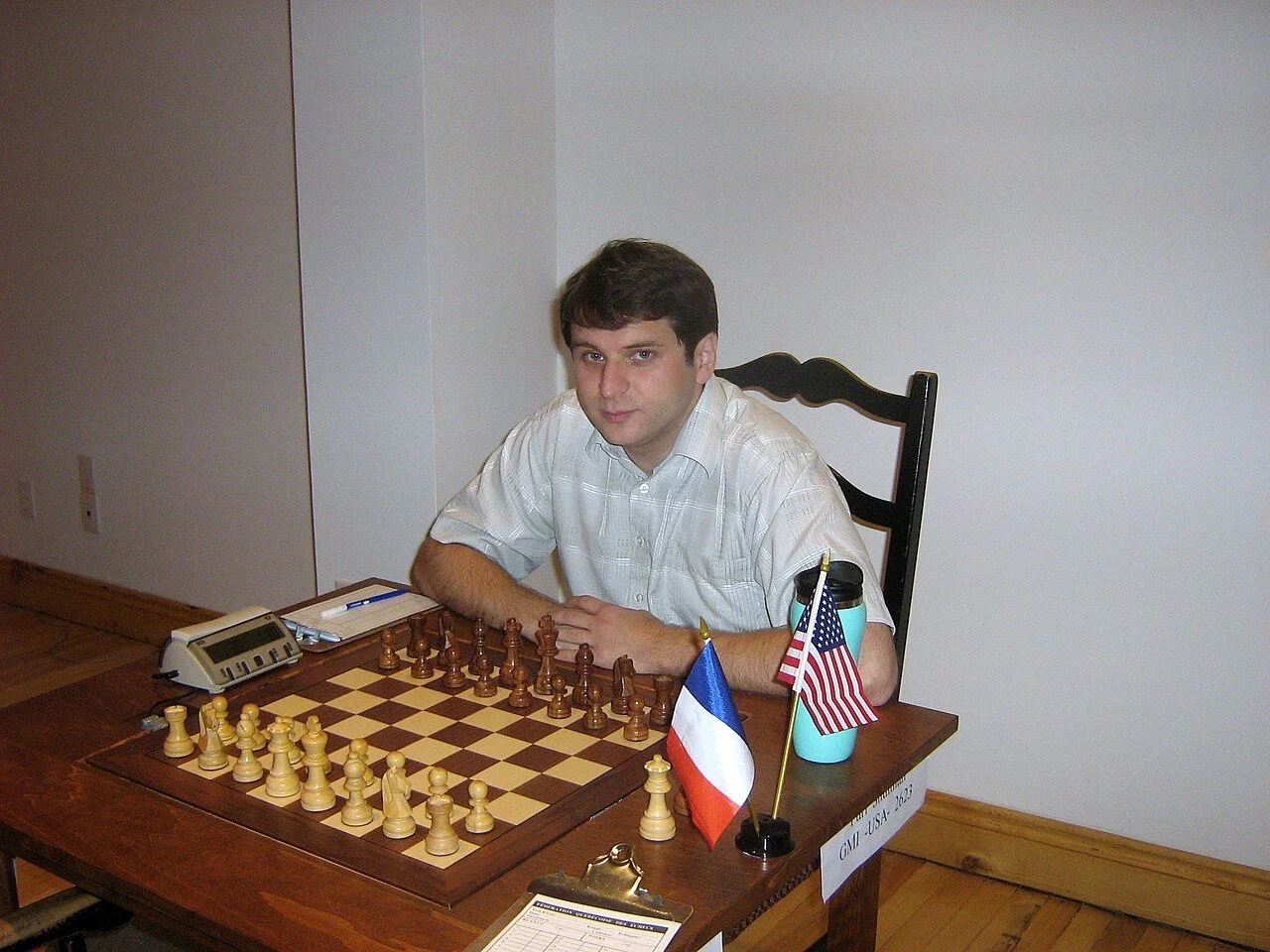
Introduction
Yury Shulman, also rendered as Yuri Shulman and in Russian as Юрий Шульман, was born in Minsk on April 29, 1975, and belongs to a generation formed at the end of the Soviet chess era, matured in independent Belarus, and then rebuilt its professional life in the United States. FIDE records him as an International Master from 1993, a Grandmaster from 1995, and a player whose federation transfer from Belarus to the United States was registered on December 2, 2002. Taken together, those facts place him at an interesting junction in chess history: he is best understood as a Soviet-trained Minsk product whose most visible public successes came in American chess.
Shulman deserves attention because his career combined several kinds of achievement that are often studied separately. He was a serious junior and national player in Belarus, a reliable international grandmaster who reached the world top 100, an exceptionally consistent performer in U.S. Championships, a member of major American team successes, and a teacher-organizer whose educational work became central to his public identity. The record is strong enough that he was inducted into the U.S. Chess Hall of Fame in 2023.
Early Life and Chess Formation
Shulman’s family background helps explain both his early entry into chess and his later ease in moving between competition and instruction. The Russian Chess Federation’s biographical notice identifies his father, Mark Shulman, as a multiple champion of Belarus in draughts, while Shulman himself recalled that his father taught him chess when he was six years old and later helped with his chess school. His first formal coach was Tamara Golovey, after which he studied with Albert Kapengut and worked with Boris Gelfand. He also completed studies at the State Academy of Sports in Belarus.
Those coaching names are historically significant. Golovey was one of the notable Minsk trainers of the late Soviet period, and Kapengut’s student line included Boris Gelfand, Ilya Smirin, and Shulman himself, which places Shulman inside a clearly traceable Minsk pedagogical lineage. A careful interpretation, based on these links, is that Shulman’s later practical style and professional seriousness came from a training culture that valued structured study, disciplined preparation, and strong classical models more than stylistic self-display.
His own description of how he improved is revealing. In a 2006 interview, he said he became an IM by studying the games of Chigorin and Alekhine in a highly active way, setting up a clock, guessing moves, writing down his conclusions, and then reviewing the differences with his coach. In the same interview he connected his teaching philosophy to what he learned from his first coach: first enjoyment of chess, then study. That pairing, pleasure and discipline, is one of the clearest continuities across his whole career.
Rise in Competitive Chess
By the early 1990s Shulman had moved from promising pupil to national-level competitor. The Russian Chess Federation notes that he represented Belarus at the World Under 18 Championship in 1992, won the Belarusian championship in 1994 by a clear margin, and then became European Junior Champion in 1995, edging Emil Sutovsky on tiebreak. OlimpBase likewise records Shulman as the 1995 winner of the European Junior Championship. FIDE’s title record confirms that his grandmaster title followed in that same year.
His Belarusian years were not limited to individual successes. OlimpBase records him on Belarusian Olympiad teams in 1994, 1996, and 1998, which shows that he was already regarded as a national representative, not simply a junior prospect. The Russian Chess Federation summary extends that pattern through the later 1990s and notes that he remained a member of the Belarusian national side while continuing to collect domestic distinctions. In historical terms, this phase made him part of the first post-Soviet Belarusian chess generation that had to convert Soviet schooling into national and international standing under new institutional conditions.
The next turning point came with his move to the United States in 1999 to attend the University of Texas at Dallas. UT Dallas records him first as a senior majoring in computer science and later as a graduate student in the School of Management, while the Russian Chess Federation summary adds that he completed both a computer science degree and an MBA in finance. The combination is historically telling. Shulman did not move into an existing American elite circuit in the old sense. He entered through the growing collegiate chess infrastructure, and UT Dallas was a major institutional node in that development.
American Peak and International Standing
Shulman’s American career became strong almost immediately. His own biographical materials identify a tie for first at the 2001 World Open, and UT Dallas recorded him winning its FIDE-rated intramural event in 2001 and again in 2002. Those results do not by themselves define a legacy, but they show that he adapted quickly to the American tournament ecosystem and remained a force in both invitational and open events.
His breakthrough into wider public visibility came through a compact run of results in the middle of the decade. In the 2005 World Cup, according to U.S. Chess championship materials, he defeated three higher-rated grandmasters, including former FIDE World Champion Alexander Khalifman, and reached the round of 32. Contemporary reporting on the Khanty-Mansiysk event likewise emphasized that he had unsettled favored opponents. In 2006 he then finished second in the U.S. Championship, a result that looked less accidental in light of the World Cup performance, and later won the 107th U.S. Open.
The high point came in 2008. U.S. Chess reported that Shulman clinched his first U.S. Championship with seven points, and that victory automatically qualified him for the U.S. Olympiad team. At Dresden later that year he scored a decisive final-round win against Zahar Efimenko, a game Shulman himself later identified as one of the proudest moments of his career because it secured bronze for the United States. His peak rating strength followed soon after. A 2700chess profile summary places his peak at 2648 and his peak world rank at number 85 in July 2009.
His value to team chess continued beyond Dresden. U.S. Chess noted that the American team’s performance in Bursa earned silver at the event officially designated the 2009 World Team Championship, though it was played in January 2010, and Shulman was on board three. OlimpBase records his participation in the American World Team squads of 2010 and 2011, with a team silver medal attached to that span. Even when his individual score was mixed, selectors continued to trust him in top team competition, which says something important about his standing inside U.S. chess at the time.
Style and Reputation
The most concise contemporary description of Shulman’s style appears on the Saint Louis player profile prepared from his championship years. It describes his repertoire as that of a solid, positional player, noting his reliance on 1.d4 with White and the French Defense with Black, yet immediately adds that he was “about as aggressive as they come.” That pairing is consistent with Shulman’s own comments. In interview he said he liked sharp, attacking positions, had played 1.e4 as a child, later reintroduced it in selected games, and drew early inspiration from Chigorin. The broad picture is of a player whose foundation was classical and strategic, but whose practical instinct in battle was far more combative than his opening labels might suggest.
His remarks on specific games support that reading. Asked in 2006 for his favorite game from the U.S. Championship, he chose his encounter with Alexander Shabalov, a tactically charged fight in which, by his own account, both players handled a sharp and unstable position well. He also stated plainly that many opponents in San Diego attacked him aggressively, which he believed helped him because he was in better form and better shape. This is not the language of a purely dry technician. It is the voice of a practical fighter who welcomed complexity when he felt physically and psychologically ready.
Among contemporaries and institutions, his reputation rested heavily on consistency. The World Chess Hall of Fame notes that, across nine U.S. Chess Championships after his move from Belarus, he won the title in 2008, finished second in 2006, 2010, and 2011, tied for third in 2005 and 2007, and shared fourth in 2004 and 2012. The same profile adds that his lifetime winning percentage in those championships, 61.5 percent, ranks among the best ever. For historical assessment, this may be the single most important statistical summary of his competitive legacy: Shulman was not a one-tournament wonder in the United States, but one of the most dependable high-level national performers of his era.
Contributions Beyond Tournament Play
Shulman’s post-peak importance in chess has at least as much to do with teaching as with titles. In 2006 he told Chess Life Online that his results improved after he began to teach, that students gave him interesting ideas, and that he had even found an opening novelty with one of them while analyzing a Khalifman game. His teaching philosophy was direct: students should enjoy chess first, then learn how to study it. A decade later he was still describing chess in educational terms, as a way to improve focus, critical thinking, and emotional control. These are not generic promotional lines. In his case they fit a long record of practice.
That practical work took organizational form in the Yury Shulman International Chess School and in Chess Without Borders, the philanthropy-oriented program he built with Rishi Sethi. Shulman’s current site presents the school as an active operation in 2026, and the school’s own background page says it was founded in 2005 and teaches in more than twenty-five schools. U.S. Chess covered Chess Without Borders in 2009 as a nonprofit founded by Shulman, showing the organization raising funds through scholastic tournaments, book sales, and other events, while also supporting chess clubs locally and abroad. The central idea was that chess could be joined to service, not merely instruction.
His book, Chess! Lessons From a Grandmaster, written with Rishi Sethi and collaborators, belongs to the same educational profile. Elizabeth Vicary’s review for U.S. Chess praised it as an unusually effective beginner curriculum, especially for the clarity of its elementary concepts and the way its exercises reinforce ideas through structured repetition. That pedagogical emphasis helps explain why Shulman’s public image in the United States gradually shifted from active grandmaster-competitor to teacher-builder.
He also contributed in official team and developmental roles. U.S. Chess sources credit him with coaching the U.S. women’s team to fourth place at the 2006 Olympiad in Turin, and in his own 2014 Olympiad report he wrote that Tromsø was his eighth Olympiad overall and that over the years he had served in nearly every role except open-team captain and women’s player. More recently, U.S. Chess records show him serving on the Samford Fellowship Committee in 2023 and again in 2026, helping choose promising American talents for the country’s most important long-term chess fellowship. This is a strong sign that his authority in American chess has outlived his peak competitive years.
Historical Legacy
Shulman’s historical place is clearest when his career is viewed as a whole rather than through a single trophy. He came out of Soviet Minsk coaching structures, proved himself in post-Soviet Belarus, and then became one of the most reliable high-level players in American national competition. He reached the world top 100, won the U.S. Championship, played a crucial role in an Olympiad bronze, helped the United States to a World Team silver, coached national teams, and became part of the institutional machinery that trains and funds the next generation. The World Chess Hall of Fame and FIDE’s 2023 coverage of his U.S. Chess Hall of Fame induction effectively recognize that breadth of contribution.
There is also a quieter reason to remember him. Shulman illustrates a form of chess significance that is easy to underrate if one looks only for world title matches or elite supertournament victories. He was a serious professional who carried strong inherited training into a new national setting and then helped thicken that setting from within, through competition, coaching, philanthropy, and talent development. FIDE now lists him as inactive, with a standard rating of 2559 as of June 2026, while his school site shows that his instructional work in Illinois continues. That combination of competitive residue and educational continuity captures his legacy well.
Yury Shulman deserves attention today because he represents a durable and historically revealing chess life. He was one of the strongest Belarusian-born products of the late Soviet training world to reestablish himself successfully in the United States. He then turned that success outward, into teaching, institution-building, and service. For a serious history of modern chess, that is a substantial legacy.
Notes and Sources
This profile uses the spellings Yury Shulman, Yuri Shulman, Юрий Шульман, and Юрый Шульман, because the English-language and Russian- or Belarusian-language record is not fully uniform. Core factual checks were taken from FIDE’s player card and federation-transfer record, the World Chess Hall of Fame and Saint Louis championship profile pages, U.S. Chess reporting, UT Dallas news releases, and OlimpBase team records. For Russian-language context on family background, coaches, education, and Belarusian achievements, the most useful concise source was the Russian Chess Federation’s “Person of the Day” entry. For Shulman’s own views on study, style, and teaching, the most valuable sources were his 2006 Chess Life Online interview, his 2014 Olympiad report, and his 2015 interview on chess education and meaning. Where this article offers interpretation, especially about Shulman as a bridge figure between Soviet, post-Soviet, and American chess cultures, that interpretation is based on those documented career facts rather than on anecdote
