Nukhim Nikolayevich Rashkovsky
Introduction
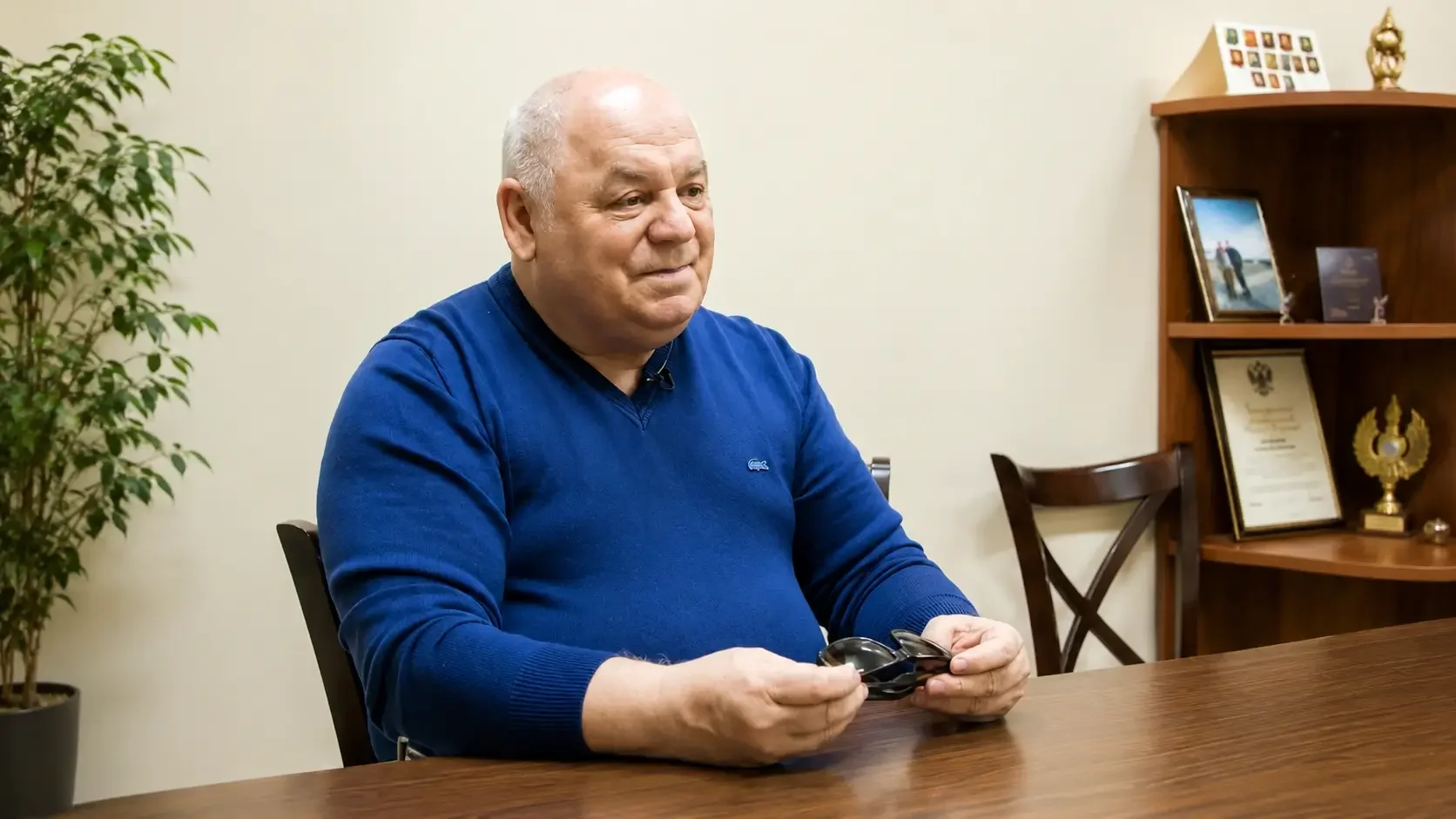
Nukhim Nikolayevich Rashkovsky, more often called Naum Rashkovsky in Russian chess writing, belongs to that important class of Soviet players whose historical weight cannot be measured by world title matches alone. Born in Sverdlovsk on April 18, 1946, and died in Yekaterinburg on March 14, 2023, he was a grandmaster, a two-time adult champion of the RSFSR, a leading trainer of Russian national teams, and one of the principal builders of post-Soviet club chess in the Urals. FIDE’s English language memorial uses the form “Nukhim,” while Russian Chess Federation texts usually call him “Naum,” and memoir literature shows that contemporaries often knew him simply as “Nyoma.”
Rashkovsky deserves attention today because his career involved several distinct roles that are too often separated in chess history. He was first a gifted Soviet junior, then a dangerous and highly original grandmaster on the margins of the very top tier, later a successful national team coach, and finally a regional institution builder whose work helped give Yekaterinburg an enduring place in Russian chess life. In his case, the line from player to trainer to organizer was not accidental. It was the shape of a whole chess life.
Early Life and Chess Formation
The broad outlines of Rashkovsky’s early life are clear, even if some family details survive mainly in memoir and retrospective journalism rather than in formal archival biographies. He came from postwar Sverdlovsk, a city with a substantial intellectual and sporting culture, and later, memorial writing describes his upbringing as difficult, with his parents separated and his childhood marked by instability. Russian Federation memoir pieces also place him in the active local chess environment shaped by strong Sverdlovsk masters and coaches.
Much better documented is the speed of his chess development. A Russian Chess Federation memorial states that he entered the section of the noted teacher Aleksandr Ivanovich Kozlov at age seven, having known only the rules, and progressed quickly enough to become the country’s youngest first category player. FIDE later summarized the same early promise by noting that he was among the first students of the Botvinnik School, won the USSR championship among schoolchildren in 1958, and then won the RSFSR youth championship in 1962. Another federation retrospective adds an important concrete detail: in 1962, he scored a perfect 10 out of 10 in the RSFSR school championship, ahead of a field that included future stars such as Vitaly Tseshkovsky and the still-very-young Anatoly Karpov.
His formal education is less fully documented in accessible primary sources than his chess achievements. Official obituaries and federation profiles consistently describe him as a teacher by profession or education, which is significant because it anticipates the later Rashkovsky, the analyst, coach, and academy director. More detailed claims about specific university study circulate in later compilations, but I have not found a comparably strong primary or official source for those details, so it is safer to say that the documentary record firmly supports his pedagogical training, but not every biographical detail often repeated online.
Rise in Competitive Chess
Russian Chess Federation retrospectives place Rashkovsky in the strong Soviet generation that emerged in the late 1960s and early 1970s alongside players such as Gennady Kuzmin, Vitaly Tseshkovsky, and Karen Grigorian. This was an unfortunate generation in one respect. Their rise coincided with the continued presence of Petrosian, Tal, Spassky, Korchnoi, Geller, Taimanov, and then the ascent of Karpov and Kasparov. In other words, Rashkovsky matured inside perhaps the most crowded elite environment any national system has produced. That context helps explain the gap between his evident strength and his absence from the world title cycle’s innermost circles.
His USSR Championship debut came in Baku in 1972. Official federation memorials stress that he immediately attracted notice for “original” and “unconventional” ideas, and that Mikhail Tal, who won the event, singled out his play for praise. Rashkovsky remained a recurrent presence in Soviet top-level competition, with his best USSR Championship finish coming in 1986, when he took eighth place, which was a serious achievement in a field of that depth. The Russian Federation’s 2026 profile also notes that in the same period, he shared third and fourth in the qualifying “first league,” evidence that he remained close to the center of Soviet grandmaster competition well into the mid-1980s.
His adult tournament record is compact but substantial. He won the RSFSR championship in 1974 and again in 1976. He tied for first and second place at the 1982 Moscow championship with David Bronstein. His most important international breakthrough came in Sochi in 1979, where a first-place finish in a strong field effectively secured the grandmaster title. Federation retrospectives also note successful results in Lviv in 1981 and in Hungary in 1987. This is not the record of an occasional spoiler. It is the record of a player who belonged, for many years, to the broad Soviet grandmaster class just below the very top few.
His geographical path also reflects the realities of Soviet chess life. Federation biographies note that after his years in Sverdlovsk, he lived for periods in Kurgan, Sochi, and Kazakhstan, representing the Kazakh SSR for several years before returning to Yekaterinburg after the collapse of the USSR. Russian Federation memorials also describe him as “non-traveling” for a long stretch, and memoir testimony from contemporaries indicates that foreign opportunities were restricted for him for years. The precise administrative history of that status remains unclear in accessible sources, but it is a reasonable historical inference that these restrictions narrowed his international exposure during what should have been prime competitive years.
Major Career Achievements
If one asks what Rashkovsky actually achieved over the board, the answer should begin with three landmarks. First, his youth results marked him as a prodigy of real national significance. Second, his two adult RSFSR titles in 1974 and 1976 confirmed that this was not merely a junior promise. Third, the 1979 Sochi result transformed him from a respected Soviet master into an international grandmaster. That sequence, youth champion, strong republican champion, internationally recognized grandmaster, is the backbone of his playing biography.
He also built a reputation through specific results against leading figures, even if his historical stature does not rest on a single immortal game. The example most often cited in later memorials is his 17-move win with Black over Tigran Petrosian in 1974. The point is not the miniature by itself. The point is what later commentators used that game to represent. As Rafael Vaganian recalled at a 2025 memorial event, it was almost impossible to win top prizes in the era of Petrosian, Tal, Spassky, Korchnoi, Geller, and Taimanov, yet Rashkovsky played successfully against the leaders. That judgment from a great contemporary captures his standing better than any long tournament list could.
His senior career added a final layer to his playing record. Russian chess reporting identifies him as the 2007 European senior champion, and The Week in Chess records that he won the 7th European Individual Senior Championship on tiebreak in Hockenheim after finishing with 7.5/9. He also remained highly competitive at the world senior level: the final standings of the 2018 World Senior Championship 65+ section show him in third place with 8.5 out of 11, behind only Vlastimil Jansa and Yuri Balashov. These were not ceremonial appearances by an old master. They were serious results.
Style and Reputation
The most consistent descriptions of Rashkovsky’s chess emphasize originality, non-standard judgment, and practical problem solving. Official federation obituaries stress that in the 1972 USSR Championship, he produced original and unconventional ideas that unsettled experienced opponents. His continued association with a favorite Nimzo-Indian setup, still highlighted at a 2025 memorial masterclass, fits that image well. He was not remembered as a dry accumulator of official theory. He was remembered as a player who made strong opponents think for themselves early and often.
Contemporary and retrospective assessments suggest a player of striking resourcefulness who did not always convert talent into maximum competitive yield. A Russian Federation memoir by Nikolai Pushkov explicitly says that lack of self-discipline kept Rashkovsky from realizing his full potential as a player, even though the same piece calls him one of the most talented junior players in Russia and notes how fully he later realized himself as a trainer and organizer. That interpretation should be read as memoir evidence, not as a final archival verdict, but it fits the broader picture presented elsewhere: a brilliant, independent, highly original chess personality whose career was too irregular to become a Candidates career.
His reputation among peers also had a social dimension. Even affectionate memorials present him as unruly, humorous, charismatic, and hard to fit into bureaucratic expectations. That personality seems to have shaped both the strengths and limits of his chess life. It helped produce creative over-the-board play and intense team loyalty, but it also contributed to the sense, repeated in memoir literature, that Rashkovsky was too singular a character to become a fully systematized Soviet chess functionary in his prime.
Contributions Beyond Tournament Play
Rashkovsky’s second great career was as a trainer. Official Russian and FIDE memorials agree on the principal nodes of that work: he coached Nona Gaprindashvili, Vitaly Tseshkovsky, the Kazakhstan team, and the RSFSR women’s team. His work with Tseshkovsky became especially celebrated. Rashkovsky himself recalled that at the 1978 USSR Championship in Tbilisi, he served as Tseshkovsky’s trainer and received the gold medal for coaching the champion. Later federation profiles describe that as the only such case in Soviet history. Whether one stresses the uniqueness of the medal or the practical value of his help in opening choice and adjournment analysis, the record is clear that elite Soviet players trusted his judgment.
His national team coaching work is even easier to document. FIDE records that, as head of the Russian women’s team in the 1990s, he led them to bronze at the 1996 Olympiad in Yerevan and silver at the 1998 Olympiad in Elista. From 2001 to 2003, he trained the Russian men’s team that won the Chess Olympiad in 2002 and the European Team Championship in 2003. The Russian Chess Federation’s own 2026 retrospective went further, calling him the last Russian trainer to win the men’s “Tournament of Nations,” which is to say, the Olympiad. That is not a minor administrative footnote. It fixes Rashkovsky in the institutional history of the Russian national team's success.
What kind of coach was he? Dmitry Kryakvin’s retrospective, although clearly written in a memoir rather than bureaucratic mode, gives a revealing answer. Rashkovsky is described there as effective because he could identify critical positions, evaluate them accurately, and create a positive team climate, rather than because he built exhaustive opening repertoires full of prepared novelties. In one memorable paraphrased formulation, his strength lay in understanding whether a critical position was sound and how it should be played. This suggests a trainer shaped more by practical Soviet tournament culture than by later computer-age specialization.
His later life also included public commentary. The regional newspaper Oblastnaya Gazeta listed him as a columnist, and the news archive of e3e5 repeatedly pointed readers to his commentary on the 2016 Carlsen-Karjakin title match. That activity is worth noting because it shows him not only as a back-room analyst or institutional official, but also as a public explainer of high-level chess for a wider regional audience.
Historical Legacy
Rashkovsky’s broadest legacy probably lies in what he built in Yekaterinburg after the Soviet period. FIDE and the Russian Chess Federation credit him with founding and captaining the club teams Agat, MaxVen, and Ural, and later reviving the regional superclub under the new name Malachite. Under his leadership, Yekaterinburg teams won the Russian Club Championship three times and the European Club Cup once. In 2008, he became director of the Ural Chess Academy, which made him not merely a coach attached to institutions, but an institution maker in his own right.
His long partnership with Boris Fradkin formed part of this institutional legacy. Russian memorial pieces on their joint cup and on Fradkin’s own life repeatedly describe them as standing at the origins of the Ekaterinburg teams Agat, MaxVen, Ural, and Malachite, and as close friends over decades. That partnership helps explain why Rashkovsky’s legacy is not reducible to a single heroic individual. He worked through networks of trust, local patronage, and team culture, which is exactly how much of post-Soviet chess organization functioned outside Moscow.
His 2013 interview as president of Malachite is especially revealing. There, he insisted that a club had to be a real team, united “by spirit,” and also argued for creating a farm club based on local university players so that regional talent would have a pathway upward. That ambition, to combine imported elite strength with local development, shows that Rashkovsky was thinking structurally. He did not see club chess only as a matter of hiring stars. He saw it as a way to organize a regional chess culture.
His last years continued to bring recognition. He helped Russia win the World Senior Team Championship in 2018, when the 65+ Russian team scored a perfect 18 match points out of 18, and FIDE later credited him with three world senior team titles in 2018, 2019, and 2020. He was also honored by the FIDE Trainers’ Commission, which placed him in its Hall of Fame in the 2015 awards. His death in 2023 was followed by memorial events in Yekaterinburg and continued cup competitions in his name, a sign that in the Urals, he was remembered not as a remote former star, but as a living founder of local chess culture.
The concise historical assessment is this. Rashkovsky deserves attention today because he embodied a whole layer of chess history that standard grandmaster narratives often miss. He was a genuine Soviet talent, strong enough to earn Tal’s praise and defeat world-class opposition, yet also a figure whose truest historical importance emerged in training rooms, team competitions, club structures, and regional institutions. He was not only a product of the Soviet chess school. He became one of the people who carried that school, in altered form, into post-Soviet Russia.
