Yuri Nikolaevsky
Introduction
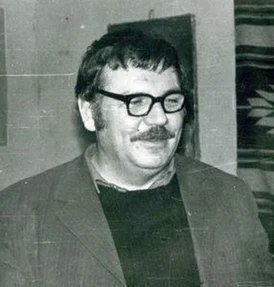
Yuri Vasilyevich Nikolaevsky (14 February 1937- 2004) belonged to the formidable generation of Ukrainian masters who developed in Kyiv during the 1950s and 1960s. A three-time champion of the Ukrainian SSR, twice champion of Kyiv, a student world team champion, and a participant in three USSR Championship finals, he competed successfully against many of the strongest Soviet players of his era.
His official FIDE rating reached 2490 in July 1971, placing him joint 83rd on the published world list. He nevertheless remained a Soviet Master of Sport and never received an international title. This discrepancy has contributed to his relative obscurity. Modern readers who judge historical strength through the labels “grandmaster” and “international master” can easily underestimate a player whose most important achievements occurred within the exceptionally demanding Soviet domestic system.
His name appears in English as Yuri, Yury, or Yuriy Nikolaevsky, with Nikolaevskiy occasionally used as well. The Russian form is Юрий Васильевич Николаевский; Ukrainian sources use Юрій Васильович Ніколаєвський.
Early Life and Chess Formation
Nikolaevsky was born in Kyiv on 14 February 1937. Published biographical accounts provide little information about his parents, their occupations, or the circumstances of his childhood household. Any detailed reconstruction of his family background would therefore be speculative.
Chess was not his first competitive pursuit. According to Petr Marusenko, a Kyiv player who knew him personally from around 1970, Nikolaevsky boxed during his school years and attained the second sports category. His substantial build and physical confidence apparently suited the sport. Marusenko interpreted this experience as one source of the determination that later characterized his chess.
His initial progress at chess was less immediate. Marusenko recalled that Nikolaevsky needed four attempts to earn the third chess category. Once he crossed that early threshold, his advancement became rapid. In 1957, at the age of twenty, he qualified as a Soviet Master of Sport. Later Kyiv accounts identify him as the youngest Soviet chess master at that time. The surviving sources do not specify the complete sequence of qualifying events, so the claim should be understood as a contemporary biographical description rather than an all-time record. Marusenko’s memoir-profile remains the fullest account of this formative period.
Nikolaevsky studied history at Kyiv State University. The education appears to have complemented a reputation for wit, cultural knowledge, and lively conversation. His university years also brought him into contact with Lilia Kovalenko, a fellow history student who became his first wife. Kovalenko later established her own reputation as a journalist and researcher of the Ukrainian Holodomor.
The nature of Nikolaevsky’s early chess instruction requires some clarification. Marusenko wrote that he never had a sustained personal trainer and emphasized the highly independent culture among young Kyiv players. Originality and practical discovery were valued, sometimes at the expense of systematic study. The Russian Chess Federation’s biography of Evsei Polyak, however, explicitly names Nikolaevsky among the masters he trained. The evidence suggests a combination of institutional guidance and substantial self-directed work. Polyak, an important teacher at the Avangard sports society and Kyiv Palace of Pioneers, also worked with Leonid Stein and Eduard Gufeld.
Rise in Competitive Chess
Nikolaevsky’s first major successes came in 1958. He won the Kyiv Championship and was selected for the Soviet team at the World Student Team Chess Championship in Varna. Used as the second reserve, he scored 1½ points from three games as the Soviet Union won the championship. The team included several exceptional young players, among them Mikhail Tal and Boris Spassky. OlimpBase’s Varna record confirms Nikolaevsky’s contribution.
His progress accelerated in 1959. In the Ukrainian Championship in Kiev, he scored 16 points from 21 games, with twelve victories and a single defeat. Only Efim Geller finished ahead of him, while Nikolaevsky placed above Leonid Stein and an experienced field of Ukrainian masters. The surviving crosstable shows the scale of his performance.
That year he was also exceptionally effective in team competition. At the World Student Team Championship in Budapest, he scored 8/10 without losing a game. He won the individual gold medal on fourth board while the Soviet team took silver. In the 1959 Soviet team championship, representing the Ukrainian SSR on second board, he scored an undefeated 6/8 as Ukraine earned the bronze medal. These results established him as a dependable team player whose strength held up well in international and all-Union competition.
Nikolaevsky represented the Soviet student team once more at Leningrad in 1960, scoring 5½/9 as the team again won silver. Across the three student championships, his combined score was 15/22. He collected one team gold medal, two team silvers, and an individual board gold. These events provided his earliest sustained experience against foreign opposition. OlimpBase records the Budapest result and his 1960 performance.
Ukrainian Champion and Soviet Contender
Nikolaevsky won a second Kyiv Championship in 1962. The same year he produced one of his strongest large-field results in the Second All-Union Mass Tournament. Marusenko records that the event brought together 102 players in a ten-round Swiss system. Nikolaevsky scored 8/10 without defeat and finished ahead of such established masters as Eduard Gufeld, Vladimir Bagirov, and Alexey Suetin.
His first Ukrainian championship followed in 1963. He scored 11/17, winning eight games and finishing half a point ahead of Gufeld and Yefim Lazariev. The tournament was held in Kyiv from 4 to 29 May and was reported contemporaneously in Shakhmaty v SSSR. The complete championship record confirms both his score and the closeness of the final standings.
Nikolaevsky shared the Ukrainian title with Valery Zhidkov in 1967, when both scored 10/13. A decade later, at the age of forty, he won the championship for a third time, scoring 7/9 at Zhytomyr in 1977. The fourteen-year interval between his first and third titles demonstrates unusual competitive longevity. The Ukrainian Chess Federation’s historical list recognizes all three championships.
Qualification for the USSR Championship presented an even more demanding test. In the 1965 semifinal at Kaliningrad, Nikolaevsky, Gennady Kuzmin, and Evgeny Vasiukov each scored 10/14. Tiebreak calculations awarded the qualifying places to Nikolaevsky and Kuzmin.
Nikolaevsky did not appear in the subsequent final. Retrospective accounts by Lazariev and Marusenko attribute his removal to a State Sports Committee disciplinary decision following an altercation after the semifinal. A contemporary official ruling has not been located in the publicly accessible material consulted for this profile. Some details in the memoir versions are partisan or anecdotal. The securely documented sequence is that Nikolaevsky qualified through the tournament result, was excluded from the final, and had to repeat the qualification process the following year.
His response was impressive. In September 1966, he won the next USSR semifinal by two full points, finishing ahead of Grandmaster Nikolai Krogius and International Master Vladimir Liberzon. This result finally brought him to the 1966-67 USSR Championship in Tbilisi, an event that also served as a FIDE zonal tournament.
Nikolaevsky scored 7/20 in a field containing twelve grandmasters and six international masters. His total included four victories. His win with Black against Vasiukov acquired particular resonance after the events of 1965, although its historical interest lies primarily in Nikolaevsky’s competitive resilience. The OlimpBase crosstable supports a score of 7 points; several later summaries incorrectly give 7½.
Nikolaevsky played in the next Soviet final at Kharkiv in December 1967. This was an unusual championship conducted as a thirteen-round Swiss tournament with approximately 130 participants. His presence in this enormous field confirmed his established position within the Soviet master class.
His final USSR Championship appearance came at Leningrad in 1971. He scored 8½/21 and shared seventeenth through nineteenth places. The bare placing disguises several distinguished results. He defeated Mark Taimanov, Rafael Vaganian, Leonid Shamkovich, Vladimir Tukmakov, and Albert Kapengut, while also drawing with Lev Polugaevsky, Efim Geller, David Bronstein, and eventual champion Vladimir Savon. The complete Leningrad record documents the strength of both his opposition and his individual victories.
The July 1971 FIDE list placed Nikolaevsky at 2490, joint 83rd in the world. This was his highest published official rating. Earlier retrospective estimates sometimes place his peak higher, but such reconstructions should be kept separate from contemporary FIDE data. His historical rating record provides the more secure measure.
International Opportunities
Nikolaevsky’s strongest individual foreign tournament came at Varna in 1968. He finished fourth with 8½/14, behind Yuri Sakharov, Ivan Radulov, and János Flesch. Marusenko describes the performance as Nikolaevsky’s first international-master norm. No surviving norm certificate has been located, though the result is consistent with such a claim under the standards of the period.
The tournament also illuminates his relationship with the wider Kyiv chess community. Nikolaevsky traveled with Sakharov, the eventual winner, and later assessed Sakharov’s performance in the Soviet weekly 64. Nikolai Fuzik’s archival study of Sakharov reproduces the final standings and identifies Nikolaevsky’s report in issue no. 16 of 64 for 1968.
Varna appears to have been the only clearly documented individual foreign invitation of Nikolaevsky’s prime years. Scarcity of norm-eligible international tournaments made the completion of title requirements difficult. Later writers believed that selection decisions restricted his career, though the available record establishes limited opportunity without establishing a single motive for it.
Style and Reputation
Nikolaevsky’s chess was shaped by practical struggle. Marusenko described an early preference for dense, tenacious positions that could be played for a long time. Nikolaevsky sought to impose his will on the game and seize the initiative, an approach his friend associated with the psychological discipline acquired through boxing.
This description fits his strongest competitive records. He was resourceful in unclear positions, physically and mentally prepared for long contests, and capable of maintaining pressure without requiring immediate tactical resolution. His undefeated performances in Budapest and the 1959 Soviet team championship also indicate strong match discipline. He could adapt his play to the needs of a team while remaining an ambitious individual competitor.
As he matured, his approach became increasingly classical. His games show greater emphasis on sound coordination, durable positional advantages, and the accumulation of small problems for the opponent. He remained dangerous tactically, though tactical activity usually arose from a strategically prepared position.
Marusenko’s testimony also suggests that Nikolaevsky’s theoretical education was less systematic than his practical development. This assessment belongs partly to the culture of 1950s Kyiv, where independent creativity carried considerable prestige. The resulting strengths were originality and self-reliance. In the longest Soviet finals, where extensive opening preparation and consistency over twenty or more rounds were especially valuable, his results varied more than in shorter championships and team events.
His victory over thirteen-year-old Garry Kasparov in Moscow in 1976 is frequently cited. Its significance should be kept in proportion, since Kasparov was still an emerging prodigy. It nevertheless provides a striking generational connection and demonstrates that Nikolaevsky retained considerable practical force in his late thirties. They met again in the 1978 USSR Championship semifinal at Daugavpils and drew. The Moscow tournament record and Daugavpils record confirm both results.
Journalism, Writing, and Chess Education
Nikolaevsky’s professional status reflects the peculiar organization of Soviet chess. He made chess his principal occupation, but “professional chess player” was not generally used as a formal Soviet job designation. Documents consequently identified him as a journalist.
This description was more than an administrative convenience. His published assessment of the 1968 Varna tournament shows that he contributed chess reporting and commentary to the Soviet press. His historical education and reputation as an articulate observer suited this work.
His most tangible educational contribution was the Ukrainian-language introductory book Вчіться грати в шахи (Learn to Play Chess), coauthored with Evsei Polyak and published by Veselka in Kyiv in 1973. The book introduced young readers to the rules, principal phases of the game, instructive examples, and short accounts of notable players. It also gives Nikolaevsky’s relationship with Polyak a lasting documentary expression.
The book is easily overlooked because it was intended for beginners and published in Ukrainian, outside the Russian-language literature that circulated most widely among international chess historians. It nevertheless represents a meaningful contribution to chess education. A surviving bibliographic description records the authorship and publication details.
The available sources most clearly document Nikolaevsky’s work through journalism and introductory instruction. Claims that he served extensively as an elite second, a federation official, or a professional trainer have not been substantiated by the records consulted.
Later Life
Nikolaevsky’s third Ukrainian championship in 1977 was the principal achievement of his later career. Petr Marusenko considered his omission from a Kyiv international tournament the following year a particularly painful missed opportunity for the reigning republican champion. No selection documentation has been found that explains the decision, so its institutional background remains uncertain.
He continued to compete after his peak years. His historical rating was still 2425 in January 1981, and his FIDE profile records rated tournament activity in 2000. This confirms that his connection with organized chess extended well into the post-Soviet period.
Public information about his private life remains limited. His first marriage to Lilia Kovalenko ended after a comparatively short period. Marusenko reports that Nikolaevsky later remarried and that his second wife died in a traffic accident, a bereavement that deeply affected him. This information comes from personal recollection and has not been independently documented in published civil records.
Most specialist biographical sources place Nikolaevsky’s death in 2004, though the exact date has not been established. A few derivative records give 2005 without citing primary documentation. The 2004 date is followed here because it appears in the fuller Russian and Ukrainian biographical tradition.
Historical Legacy
Yuri Nikolaevsky’s reputation rests on a substantial body of achievement: three Ukrainian championships spread across fourteen years, two Kyiv titles, an individual gold medal in world student competition, qualification for three USSR finals, and victories over leading grandmasters. His peak official rating placed him securely among the world’s leading hundred players.
His career also demonstrates why international titles alone provide an incomplete guide to Soviet chess strength. Nikolaevsky spent most of his prime competing within a deep domestic system, while access to individual foreign tournaments remained scarce. His fourth place at Varna, his results in Soviet semifinals, and his victories in the 1971 national final show playing strength fully compatible with the international-master class of his period.
His journalism and Ukrainian-language instructional writing broaden that legacy. He belonged to a Kyiv chess culture that valued independence, practical invention, and intellectual life beyond the board. Through competition, reporting, and education, he contributed to the continuity of that culture across the Soviet and post-Soviet eras.
Nikolaevsky deserves attention today because his record corrects the distortions created by title-based historical memory. He was one of the strongest Ukrainian masters of his generation, a formidable Soviet competitor, and an instructive example of how significant chess careers could develop largely beyond the international circuit.
Notes and Sources
Petr Marusenko, “Сильная личность Юрия Николаевского”, 19 February 2017, Russian translation by Stanislav Sukhanitsky. This personal memoir is the principal source for Nikolaevsky’s character, education, style, family life, and the 1965 disciplinary episode. Its retrospective and anecdotal passages have been identified as such in the article.
Yefim Lazariev, “Незабутній Юрій Ніколаєвський,” Спортивна газета, 18 February 2007. The original online text is no longer consistently available; an archived version survives. Lazariev’s account influenced several later profiles.
L. Ya. Abramov, ed., Шахматный словарь (Moscow: Fizkultura i sport, 1964), p. 296. This contemporary Soviet reference is important for his early master-level career.
Шахматы в СССР, no. 8 (1963), pp. 14-15, for contemporary coverage of the 1963 Ukrainian Championship. The crosstable gives Nikolaevsky 11/17 with eight wins, six draws, and three defeats.
Wojciech Bartelski’s OlimpBase was used for the World Student Team Championships, Soviet team competition, USSR Championship finals, and historical FIDE ratings. Particularly relevant are the records for Budapest 1959, Tbilisi 1966-67, and Leningrad 1971.
Nikolai Fuzik, “Юрий Сахаров: изломы судьбы, часть 2”, ChessPro, 22 September 2020. The article reproduces the 1968 Varna standings and identifies Nikolaevsky’s contemporary report in 64, no. 16 (1968).
The Russian Chess Federation profile of Evsei Polyak identifies Nikolaevsky as one of Polyak’s students. This evidence qualifies Marusenko’s statement that Nikolaevsky lacked a sustained personal trainer.
The Ukrainian Chess Federation’s historical championship archive confirms Nikolaevsky as champion in 1963, joint champion in 1967, and champion in 1977. The 1977 event at Zhytomyr was a nine-round Swiss tournament in which he scored 7/9.
Date discrepancies remain in secondary sources. This profile follows the Russian and Ukrainian biographical consensus of 14 February 1937 and a death year of 2004. The exact date of death has not been securely documented.
