Alexei Shirov
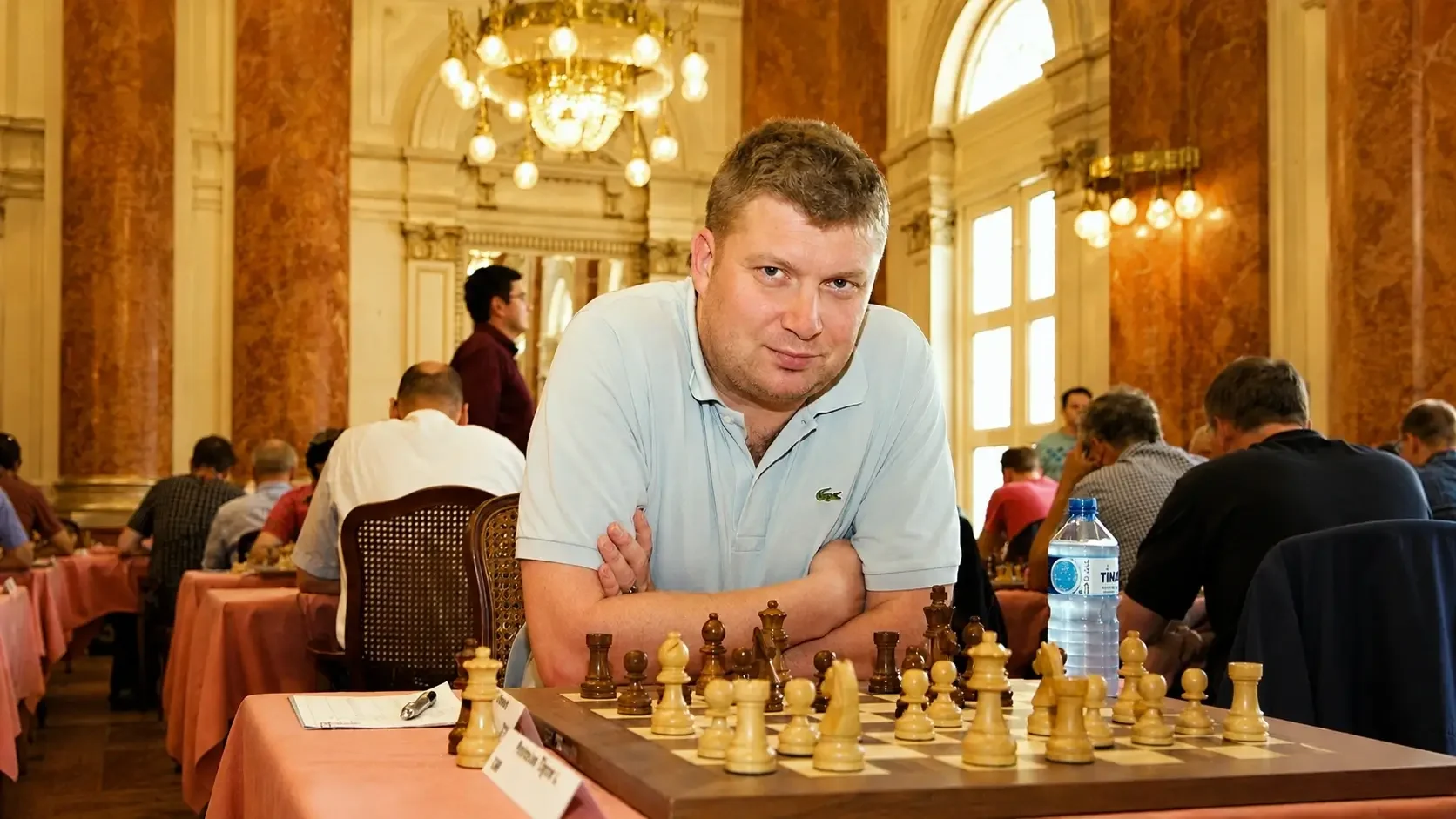
Photo Credit: Vladimir Jagr
Introduction
Alexei Dmitrievich Shirov, born in Riga on July 4, 1972, belongs to the small group of post Soviet grandmasters whose historical image was formed as much by style as by results. He became an International Master in 1989 and a Grandmaster in 1990. By January and July 1994 he stood second on the official FIDE rating list, and in 1998 he defeated Vladimir Kramnik in the Cazorla qualifying match that was supposed to decide Garry Kasparov’s challenger. The title match never happened, but the episode fixed Shirov permanently in chess history. His later career added further weight to that status, above all the run to the FIDE World Championship final in 2000, the 2007 World Cup final, and the elite tournament victories in Sofia in 2009 and Shanghai in 2010.
Shirov deserves attention today not because he fits neatly into a champion centered story, but because he represents a different kind of greatness. He was a late Soviet prodigy formed in Riga’s chess culture, shaped by the Botvinnik Kasparov school but insistent that he came from Latvian chess first. He then became a leading figure in Spain, later returned to Latvia for a period, and remained active across elite tournaments, clubs, teaching projects, and chess publishing. His career offers a compact view of how Soviet training traditions, post Soviet mobility, and modern professional chess intersected in one player.
Early Life and Chess Formation
Publicly documented information about Shirov’s family is comparatively sparse, and most reliable detail comes from his own interviews. What is clear is that chess was present at home. He recalled that his father played in Riga tournaments and that his older brother first tried to teach him the game when he was five. That attempt failed, but in March 1979 his brother returned him to chess, and by May 1979 he had entered the Riga chess school. This is the solid documentary core of his family background as it bears on his chess life.
Shirov consistently credited his first coach, Vija Rožlapa, with giving him a psychologically healthy start. In his recollection, she corrected rather than scolded, and that restraint helped a very ambitious child whose desire to win ran ahead of his actual strength. He described himself as a boy who read chess books constantly and carried a small magnetic set almost everywhere. Later, as his needs grew, he worked with a succession of important Latvian figures, including Jānis Klovāns, Igors Rausis, Alexander Shabalov, Vladimir Bagirov, and from 1987 Zigurds Lanka. That line of teachers is important because it locates Shirov within a specifically Latvian branch of the Soviet chess world, rooted in Riga rather than Moscow.
His education outside chess appears to have been ordinary rather than distinguished. Shirov said plainly that he was not an excellent school pupil, that he sought above all not to overload himself, and that mathematics gave him particular trouble. The revealing point is not the anecdote itself but what it says about prioritization. By the end of school he had already organized his life around chess, and his victory in the World Under 16 Championship convinced him that he would become a professional player and nothing else. On his own account, there was no later moment of conversion because the decision had already been made in adolescence.
The formative influences that most clearly shaped his mature style were Tal, Bagirov, and the Botvinnik Kasparov school, but Shirov was careful about proportions. He attended three sessions of the revived Botvinnik Kasparov school between 1986 and 1988 and remembered making the only draw against Kasparov in one simultaneous display. Yet he later insisted that he should not be considered a pure product of that school. His phrase was that he came out of Latvian chess. That distinction is historically useful. It suggests a player formed by the Soviet developmental apparatus, but filtered through Riga’s local culture and under the shadow of Mikhail Tal. Shirov first met Tal at eleven. He remembered Alexander Koblenc showing Tal one of his games, and he later said that Tal taught him to think in plans and multi move sequences, not just flashes of tactics.
Rise in Competitive Chess
Shirov’s rise from strong junior to international force was rapid. He said that at eleven he had already achieved candidate master level, although the master title resisted him for a time. In 1988 he won the World Under 16 Championship in Timișoara, finished that same year in the Soviet first league, and emerged as one of the most striking late Soviet juniors. The Russian Chess Federation’s biographical notice adds that in 1988 he also qualified for the first league of the USSR Championship, confirming how quickly junior promise had become adult competitive reality.
His transition to full international status followed immediately. FIDE records show the IM title in 1989 and the GM title in 1990. By then he was already producing the kind of tournament results that forced elite notice. Contemporary records gathered by specialist reference sites and later federation summaries show early successes in Stockholm, Daugavpils, Biel, and Reykjavík, while the 1990 World Junior Championship ended with Shirov tied on points for first before losing the title on tie break to Ilya Gurevich. These were not merely good junior results. They were the opening phase of a career that had already crossed from promise into top level competition.
The most objective sign of arrival came in 1994. On the official FIDE lists for January and July, Shirov was number two, behind Anatoly Karpov. That statistic needs a small note of context because Kasparov stood outside FIDE’s rating framework after the 1993 split. Even so, second on the official list at age twenty one was an extraordinary achievement, and it accurately reflects how Shirov was perceived in the middle of the decade: not as a picturesque attacker on the fringes, but as a central member of the world elite.
Major Career Achievements
The decisive middle phase of Shirov’s career combined elite results with institutional instability. In 1996 he received Spanish nationality by royal decree and thereafter represented Spain, a shift that reflected both practical mobility and the wider post Soviet redistribution of chess talent across Europe. Shirov later explained that already in early 1995 he had decided to become Spanish and that freedom of movement was an important part of the calculation. The move did not diminish his Riga identity, but it did place him in a broader professional circuit of Spanish, German, and international club chess.
The turning point came in 1998. After a strong Linares performance, Shirov was chosen to play Kramnik in Cazorla in a World Chess Council qualifying match for the right to challenge Kasparov. A contemporaneous Los Angeles Times report recorded the final score, 5.5 to 3.5, with two Shirov wins and no losses. The result gave him, over the board, a claim that would define his historical reputation. It also produced one of the most discussed absences in modern chess history, because the promised match with Kasparov collapsed. Shirov later stated that the Andalusian authorities failed to honor oral promises and that WCC president Luis Rentero had signed contracts without adequate guarantees. Whatever mixture of sponsorship failure and chess politics lay behind the collapse, Shirov’s complaint is well documented, and his sense of grievance was plainly lasting.
The missed Kasparov match has sometimes overshadowed the rest of Shirov’s achievements, which is a mistake. In the FIDE knockout championship of 2000 he reached the final and lost only to Viswanathan Anand, who won the title by 3.5 to 0.5. In 2007 Shirov remained a real factor in the world championship cycle. He beat Michael Adams in Elista after tie breaks, then lost the crucial next match to Levon Aronian, and later that year reached the World Cup final in Khanty Mansiysk, where Gata Kamsky defeated him 2.5 to 1.5. Taken together, these results show a player who was not living off a single missed chance from 1998. He stayed relevant to the title struggle for close to a decade.
His later tournament career also resists any simple story of decline. Mark Crowther’s contemporary report on the 2009 M Tel Masters called Sofia the best result of Shirov’s career, and Shirov himself, in interview shortly afterward, spoke of the event as a success he had somehow felt before it happened. The Russian Chess Federation’s later summary adds Shanghai 2010 to that period of resurgence. Even after his main years in the championship race had passed, he continued to produce elite level bursts. In 2019 he won the Spanish Championship, and in 2020 FIDE awarded him the Gazprom Brilliancy Prize for his Online Olympiad game against Danyyil Dvirnyy, a late reminder that imaginative attack remained central to his chess identity.
Style and Reputation
Shirov’s style is one of the easiest things to describe badly. The routine shorthand is “Tal’s heir,” and there is truth in it, but only with qualifications. Shirov himself acknowledged Tal as a formative ideal from childhood, and Russian and Latvian chess journalism has long repeated Tal’s reported line that the young Shirov already calculated better than he did. Yet Shirov was not a nostalgic imitator of Tal. His play combined tactical ferocity with hard opening labor, serious endgame alertness, and a willingness to revise his methods as the computer era advanced. Even the much repeated title of his own best games books, Fire on Board, is useful less as a slogan than as a clue to how he wanted his chess to be read: active, initiative seeking, and risk accepting, but not irrational.
He encouraged that reading in his own interviews. In 2009 he said that he still liked sharp lines and complicated chess, but that with age he had begun to seek “more correct complications” than before. That is one of the best short statements of his mature style. It admits the youthful tendency to enter dubious but messy fights, while also showing that later Shirov was trying to preserve the practical pressure of complex positions without relying on unsoundness. His remarks about his second Manuel Pérez Candelario deepen the point. What he praised most was Pérez’s feeling for dynamic positions and his sense for when to attack the enemy king and when to win “by technical means.” That pairing of violence and technique is exactly what strong readers find in Shirov at his best.
Two games are enough to explain the reputation without turning this profile into a game anthology. The first is the ninth game of the 1998 Cazorla match against Kramnik, which effectively settled the contest and therefore changed the course of world championship history. The second is Topalov against Shirov, Linares 1998, the game of the famous 47...Bh3. It has been cited again and again because it condenses the qualities for which Shirov became famous: depth of calculation, courage under practical conditions, and an instinct for turning material imbalance into a narrative of inevitability. One should be careful here. No single move proves a career. But this game became emblematic because it told the truth about the player’s public image in one unforgettable gesture.
Contributions Beyond Tournament Play
Shirov’s off board work is substantial enough to deserve more attention than it usually receives. He wrote Fire on Board and Fire on Board, Part 2, books that became part of the post Soviet grandmaster literature most widely read in English. In his 2009 conference he stated that he wrote both books in English himself, and in 2005 and 2006 he expanded his teaching role through ChessBase training material on his best Spanish Opening games and on the Grünfeld. That body of work did not create his historical standing, but it helped canonize it. For many readers and improving players, Shirov became not only an elite competitor but also an explainer of elite chess from the inside.
His teaching activity was not confined to books and DVDs. In 2011 he said that for several years he had combined tournament play with recorded lectures, and in 2014 he referred to his “Shirov Online” school in Colombia. That geography is instructive. It shows a player whose working world extended well beyond the Soviet and post Soviet sphere into Spanish speaking chess culture. At the same time, his recollections of Bundesliga seasons for Hamburg and his continuing relationship with the Hamburg Chess Club illuminate another part of his career, namely long term participation in the club system that became one of the basic professional structures for elite players after the Soviet collapse.
His return to Latvia in the 2010s added another layer. Shirov said in 2014 that “we are trying to do a lot for the development of Latvian chess.” Contemporary Latvian and Russian federation material linked him to the revival of the Vladimir Petrov Memorial and to the Alexei Shirov Cup for children. One announcement for the first Petrov Memorial in 2012 explicitly stated that the event was organized by the Latvian Chess Federation together with Shirov. The same federation literature later credited him with helping bring out books in Latvia on Vladimir Petrov and Mikhail Tal. Some of these sources are institutional rather than academic, so caution is appropriate, but taken together they show a genuine administrative and commemorative role, not just ceremonial attachment.
Historical Legacy
Historically, Shirov stands at the junction of several traditions. He was a Soviet trained prodigy, but one who insisted on a Riga inheritance. He was shaped by Tal’s charisma and by the technical seriousness of the Botvinnik Kasparov school, but he never became a mere derivative figure. He was a post Soviet émigré professional who found a long second home in Spain, yet also returned to Latvia and helped revive its chess memory culture. Because of those crossings, Shirov is unusually useful for historians. He shows how a player could remain culturally anchored in one school while making a career across several federations and chess publics.
His ultimate legacy is not reducible to the fact that he never became world champion. Indeed, to focus too much on that absence is to miss what his career actually demonstrates. He was one of the strongest players of his generation, good enough to defeat Kramnik in a qualifying match, strong enough to reach a world title final, durable enough to keep returning to the highest levels, and distinctive enough to leave behind a recognizable school of admired games and teaching materials. The historical assessment, stated concisely, is this: Alexei Shirov deserves attention because he joined elite results to a legible chess personality, and because his career embodies a major transition in chess history from the late Soviet system to the global professional era without losing its local Riga stamp.
Notes and Sources
This profile was built primarily from Shirov’s own interviews and from official or near contemporary records. The most important primary materials were the 2011 Russian Chess Federation interview on his childhood and training, and the 2009 Crestbook conference in which Shirov discussed coaching, books, computers, federation identity, and the collapse of the Kasparov match. Official factual control points came from the FIDE profile and transfer history, FIDE’s historical world championship pages, the 2007 World Cup archive, the official Spanish nationality decree in the Boletín Oficial del Estado, and the January and July 1994 FIDE rating lists preserved by OlimpBase.
For historical framing and specialist confirmation, I also used Mark Crowther’s The Week in Chess, federation biographical notices from the Russian Chess Federation, the Latvian Petrov Memorial announcements, and chess publishing records for Shirov’s books and instructional works. Russian language checking was carried out under Алексей Дмитриевич Широв, alongside English and Spanish forms of his name. Where the evidence is stronger for career facts than for private life, I have said so directly, and where later institutional summaries make broader claims about his organizing work, I have treated them as reasonable but not infallible secondary testimony.
