Artashes Minasian
Introduction
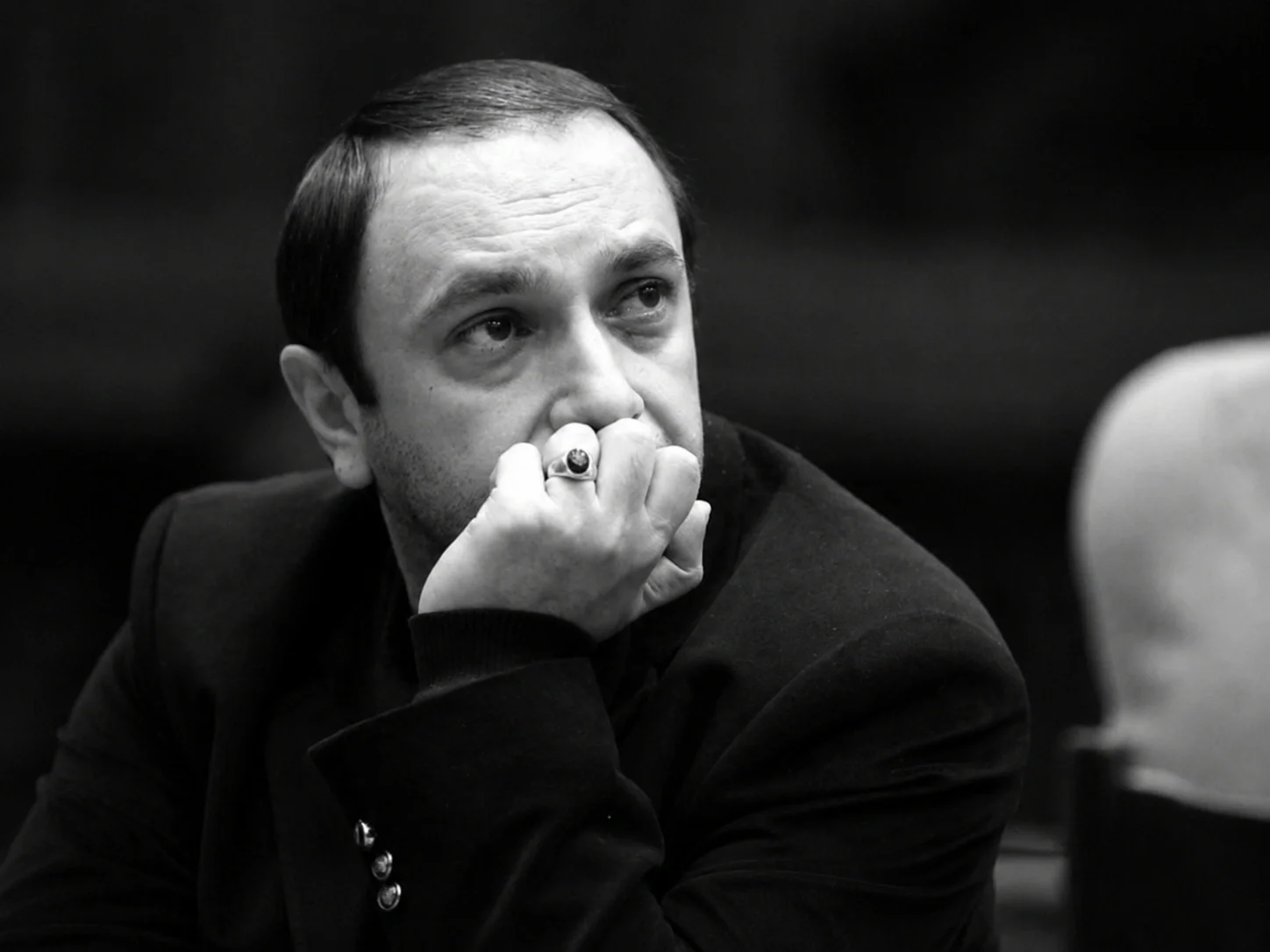
Artashes Minasian, also transliterated as Artashes Minasyan, occupies a distinctive place in late Soviet and Armenian chess history. Born on January 21, 1967, in Yerevan, then in the Armenian Soviet Socialist Republic, he emerged from the exceptionally competitive Soviet system, became an International Master in 1991 and a Grandmaster in 1992, won the final USSR Championship in Moscow in 1991, and went on to become a six time Armenian champion. In Armenian team chess, he was not simply a strong supporting grandmaster. He was one of the durable links between the Soviet era, the first decades of independent Armenian chess, and the later generation that turned Armenia into one of the strongest team nations in the world.
A factually careful profile of Minasian has to begin with a limitation in the record. Reliable public sources give abundant evidence about his tournament career, team record, coaching, and institutional role, but far less about his family life, formal education, or private biography. That imbalance is itself revealing. Minasian is documented primarily as a working chess professional, competitor, and trainer, rather than as a heavily mythologized public figure. What survives best in the sources is his chess labor, his consistency, and his place in Armenian chess culture.
Early Life and Chess Formation
The strongest accessible biographical summary in Russian identifies Minasian as a native of Yerevan who established himself at a young age as a bright attacking player and inventive tactician. According to the Russian Chess Federation, he reached the final tournament of the USSR Under 16 Championship in 1982, in a field associated with future leading Soviet players such as Evgeny Bareev, Alexei Dreev, Igor Khenkin, and Sergei Savchenko, and in the same year debuted in the adult Armenian championship. The same profile states that a successful result in a Dynamo sports society event earned him the Soviet title of Master of Sport.
That profile also places Minasian in the dense traffic jam of Soviet youth chess in the 1980s. He did not break through as spectacularly as Boris Gelfand, Vasyl Ivanchuk, Alexei Shirov, Ilia Smirin, Sergey Ulybin, or Vladimir Akopian, but he did keep rising. A contemporary Soviet magazine summary from 1990 records him as the winner of the USSR Championship for Young Masters in Minsk, finishing with 8.5 out of 13 ahead of a powerful field that included Akopian. The same Russian Chess Federation profile notes that he also qualified for the 1990 zonal. This combination is historically significant. It shows that Minasian’s rise was not the story of a child prodigy who immediately conquered Soviet youth chess, but of a player who matured into elite strength through depth, persistence, and tactical resourcefulness inside the hardest chess ecosystem in the world.
Rise in Competitive Chess
Minasian’s decisive breakthrough came in 1991. OlimpBase’s championship summary records that the Moscow event was the fifty eighth and final USSR Championship, held as an eleven round Swiss with sixty four players. The Russian Chess Federation’s retrospective account adds the shape of the surprise. Minasian started with 6 points from 7 rounds, defeating well known opponents including Rafael Vaganian, Semyon Dvoirys, and Vladimir Eingorn, was caught near the finish by Elmar Magerramov, then defeated Andrei Kharlov in the last round and took the title on tiebreak. In practical terms, that made him the last champion of the Soviet Union. Even in the long and famously brutal history of Soviet championships, his victory registers as a genuine upset rather than a routine ascent by a recognized superstar.
This success marked the hinge between Minasian’s Soviet career and his Armenian one. FIDE’s records show that he received the IM title in 1991 and the GM title in 1992, which is exactly what one would expect after a late Soviet breakthrough of that scale. The chronology also helps explain why Minasian can seem slightly under-described in Western narratives. His signature title came at the moment when the Soviet chess world itself was disintegrating, so his most symbolically powerful achievement belongs to a disappearing structure, while his long professional prime unfolded in the newly independent Armenian system.
Major Career Achievements
After independence, Minasian became one of the pillars of Armenian chess. The Russian Chess Federation credits him with six national titles, in 1990, 1992, 1993, 1995, 2004, and 2006. FIDE’s historical lists and specialist rating sources show that he reached his peak published rating of 2620 in July 1998, placing him in the lower part of the world top fifty range on that list. This was not a fleeting national career. It was a long period of relevance at strong international grandmaster level, sustained through changing generations and changing chess institutions.
His team record is one of the central reasons he deserves serious historical attention. OlimpBase credits Minasian with nine Chess Olympiad appearances between 1992 and 2008, scoring 38 points in 64 games. Those Olympiads track Armenia’s development from post Soviet newcomer to team superpower. He was on Armenia’s bronze medal teams in 1992, 2002, and 2004, then on the gold medal teams in Turin in 2006 and Dresden in 2008. The Armenian Chess Federation’s historical summary also places him on Armenia’s 1999 European Team Championship winning side, on European bronze medal teams, and on World Team Championship bronze medal sides in 1997 and 2001. He was also part of the Yerevan club that won the 1995 European Cup, a lesser known but real milestone in Armenian chess institution building.
Some of Minasian’s most overlooked achievements lie in the details of those team events. In Turin 2006, OlimpBase records him as a reserve who scored 2.5 out of 3, an 83.3 percent result with a performance well above his rating. In Dresden 2008, the same database credits him with 1 out of 1, while ChessBase’s Olympiad coverage noted that Armenian captain Arshak Petrosian used an unusual four player strategy, calling on Minasian only once. This does not diminish his role. It clarifies it. Minasian’s value to Armenian team chess was depth, reliability, and readiness, not simply board count. He strengthened a champion team whether he played many games or very few.
Style and Reputation
The most consistent stylistic descriptions of Minasian converge on a similar picture. The Russian Chess Federation calls him a bright attacking player and inventive tactician. ChessBase, in coverage of the 2017 European Championship, described him as a prolific and sharp player with a very narrow repertoire, noting that he fianchettoed with either color “almost all the time.” In the annotation to one of his wins from that event, the same article observed that Minasian “was never a theoretical player,” a concise phrase that captures both his strengths and his chess identity.
Large game databases support that characterization. A 365Chess profile built from more than a thousand games shows that with White he most often employed systems such as the Réti and King’s Indian Attack, the Closed Sicilian, and the Nimzowitsch Larsen Attack. With Black he most frequently met 1 e4 with the Modern or Robatsch setup and also relied on compact, strategically flexible systems such as the Old Benoni and certain King’s Indian structures. This pattern suggests a player who preferred to steer games into original, unbalanced, and personally familiar territory, where calculation, tactical alertness, and practical judgment could outweigh encyclopedic opening preparation.
A reasonable historical interpretation is that this style both elevated and limited him. It elevated him because it made him dangerous to stronger and more theoretical opponents, which helps explain upset laden runs such as the 1991 USSR Championship and his repeated usefulness in Swiss events and team competitions. It likely limited him because a compact, highly personal repertoire is less adaptable to the week after week demands of super elite round robins. Minasian was good enough to reach the world class fringe, but his career profile remained that of a formidable fighting grandmaster rather than a permanent top ten star. The sources support that distinction without diminishing his quality.
Contributions Beyond Tournament Play
From the late 2000s onward, Minasian increasingly appears in the record as a trainer and chess worker. The Russian Chess Federation states that from 2008 he gave up his place in the national team to younger players and concentrated on working with Armenian juniors. ChessBase coverage of the 2010 World Junior Championship lists him as coach of the Armenian delegation. FIDE’s profile records him as a FIDE Trainer from 2015. By 2019, Armenian press identified him as senior coach of the Armenian youth national team and as a member of the presidium of the Yerevan Chess Federation. In 2024, 2025, and 2026, official Armenian Chess Federation reports continued to identify him as head coach of the Armenian youth national team and head of delegation at major junior events.
That coaching phase is not a footnote. It is a major part of his legacy. The Russian Chess Federation explicitly states that many of his pupils became winners and prize winners of world and European youth championships. Official Armenian federation reports give a contemporary institutional measure of his work: Armenia’s youth team won silver at the 2024 European Youth Team Championship under his leadership, and the federation publicly honored him in its 2025 season review as the head coach of the youth national team. Minasian therefore belongs to the class of chess figures whose influence continued after their peak competitive years, not by withdrawing into private life, but by helping reproduce a national chess culture.
His public remarks also show a certain ethical self understanding of Armenian chess. In a 2019 interview, Minasian argued against factionalizing or politicizing the chess community and stressed unity as a precondition of Armenian success. One should not overread a single interview conducted in a local institutional dispute, but it fits the broader team based character of his career. For Minasian, chess culture appears not only as individual competition but as a shared civic and sporting structure that has to be protected.
Historical Legacy
Minasian’s legacy is easiest to underestimate if one looks only for world title candidates, super tournament winners, or globally famous opening innovators. He was something different and, in Armenian terms, deeply important. He was the last Soviet champion, a six time Armenian champion, a grandmaster of lasting international class, a European club champion with Yerevan, a European team champion with Armenia, a multi Olympiad medalist, and a member of Armenia’s back to back Olympiad gold teams in 2006 and 2008. He also remained active well into the senior circuit, with official Armenian federation reports showing him still competitive at the 2023 World Senior Championship and taking silver in the accompanying senior blitz event.
Historically, his position is that of a bridge figure. This is an inference from the team records, but a well grounded one. He stands between the older Armenian Soviet generation represented by players such as Rafael Vaganian and Smbat Lputian, and the later Armenian golden generation associated with Levon Aronian, Vladimir Akopian, Gabriel Sargissian, and Tigran L. Petrosian. Team rosters from the 1990s and 2000s repeatedly place Minasian in precisely that connecting role. Armenia’s emergence as a small country with outsized team success was not built only by its most famous stars. It also depended on players like Minasian who carried strength, continuity, and institutional memory across eras.
He deserves attention today for one further reason. Minasian shows how chess history is often made by figures who are central without always being celebrated at the same volume as the most marketable names. His career joins late Soviet competitive ferocity, the making of independent Armenian chess identity, and the long work of coaching the next generation. If one wants to understand how Armenian chess sustained excellence across decades, Artashes Minasian is not a peripheral figure. He is one of the people who made that continuity possible.
Notes and Sources
This profile uses the spelling Artashes Minasian, which is the form used by FIDE, while also recognizing the common alternate transliteration Artashes Minasyan. Russian sources use Арташес Минасян, and Armenian sources use Արտաշես Մինասյան. The core factual base comes from FIDE’s player and trainer records, OlimpBase team and championship files, the Armenian Chess Federation’s historical and current institutional reporting, and the Russian Chess Federation’s retrospective profile. Those sources are the most dependable for dates, titles, team appearances, and official functions.
For Minasian’s formative years, one valuable contemporary Soviet source survives in web indexed form. A 1990 summary from Shakhmaty v SSSR identifies him as the winner of the USSR Championship for Young Masters in Minsk. For stylistic assessment, ChessBase’s tournament reporting and large game databases such as 365Chess are useful secondary tools, especially when they are used cautiously and only to illuminate broad patterns rather than to inflate claims. On family background, schooling, and private life, the accessible reliable record is thin, so this article deliberately avoids speculation. A final methodological note is also worth recording: some secondary summaries credit Minasian with eight Olympiads, but OlimpBase’s event by event player record gives him nine appearances from 1992 through 2008, and that more granular source is the safer choice.
