Gennadi Timoshchenko
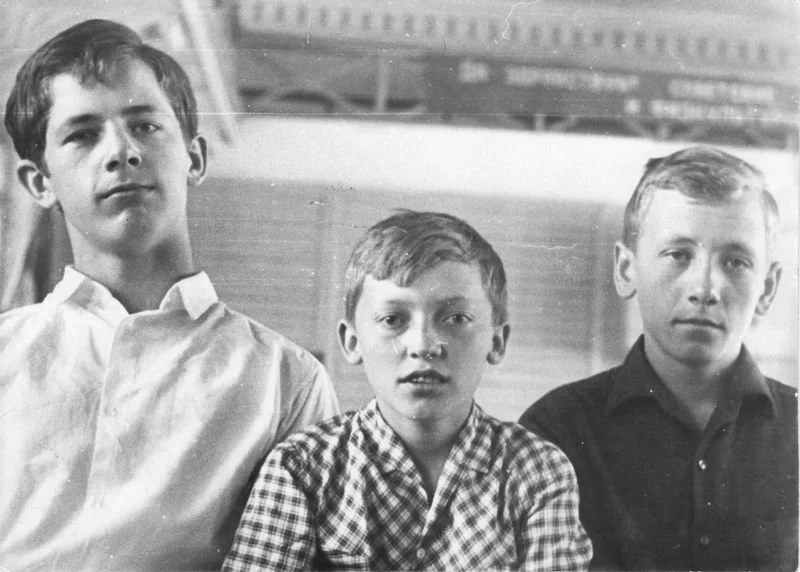
Timoschenko, Karpov, Balashov. ChessPro
Introduction
Gennadi Anatolievich Timoshchenko, rendered in FIDE records as Gennadij Timoscenko and in Russian as Геннадий Анатольевич Тимощенко, belongs to a class of Soviet grandmasters whose historical importance exceeds their public fame. Born in Chelyabinsk on April 27, 1949, he rose from the provincial but unusually fertile chess culture of the southern Urals to become a grandmaster in 1980, later a FIDE Senior Trainer in 2010, a coach in Garry Kasparov’s world championship team, a long-time Slovak representative and trainer, and one of the formative figures behind the variation of the Sicilian that Russian sources still often call the Chelyabinsk Variation.
He deserves attention today for several distinct reasons. As a player, he was strong enough to break through the Soviet qualifying system, reach the USSR championship finals, and win major international tournaments. As a theoretician, he helped transform a once suspect Sicilian line into a modern main weapon. As a trainer, he contributed to Kasparov’s ascent at the most demanding level of chess. As an emigrant professional in the post-Soviet era, he also helped bring Soviet chess knowledge to Central Europe, especially Slovakia. Those four strands, competition, theory, training, and transmission, make him historically significant even if he never became a household name in the manner of Karpov, Tal, or Kasparov.
Early Life and Chess Formation
The surviving biographical record says less about Timoshchenko’s private family life than about his chess, and that limitation is worth stating plainly. What can be documented is that he grew up in Chelyabinsk in what he later described as a family of moderate means, and that he had a younger brother. He learned chess at age nine, then entered the Chelyabinsk training environment that shaped several future masters and grandmasters.
The decisive early influence was Leonid Gratvol, the distinguished Chelyabinsk trainer whose pupils included, at various times, Evgeny Sveshnikov, Aleksandr Panchenko, Semyon Dvoirys, Tatyana Shumyakina, and the young Anatoly Karpov. Multiple recollections by leading Chelyabinsk players describe Gratvol as the central pedagogical figure in the city’s chess life. Timoshchenko’s later career cannot be separated from that local school, which combined disciplined study with a pronounced taste for independent analysis.
A second institutional influence was Botvinnik’s school. Timoshchenko recalled attending its first session in 1963, where Mikhail Botvinnik reviewed his games and advised him to exchange his boyhood taste for scattershot attacks and speculative sacrifices for something more positionally grounded, even suggesting the Ruy Lopez as an antidote to his fondness for the Scottish Gambit. Timoshchenko later credited that advice with making his play more solid and with helping him complete the Soviet master norm within two years. This is a rare and valuable self-testimony because it shows the movement, not away from creativity, but toward controlled creativity.
His formative influences also included Mikhail Tal, in terms of imagination and hero worship. In a later interview, Timoshchenko said that Tal was his first idol, and that he loved sharp positions, sacrifices, and aggressive play. The contrast between Tal’s romantic pull and Botvinnik’s corrective influence is the best documented key to understanding the mature Timoshchenko. He did not abandon risk. He learned to embed it in stronger structures.
Outside chess, Timoshchenko completed higher education in physics at a polytechnic institute and, for a time, contemplated a scientific career. Russian Chess Federation biographical material explicitly notes that he graduated from the physics faculty of a polytechnic institute and briefly considered research before chess pulled him back in. That detail is not incidental. It fits the image, found throughout his career, of a player drawn to difficult analytical problems and long theoretical work.
Rise in Competitive Chess
Timoshchenko’s rise to national prominence accelerated after his graduation, when he was assigned to Novosibirsk. There, according to Russian Chess Federation accounts, he shared first place with Vitaly Tseshkovsky in the 1972 RSFSR Championship. This was a major breakthrough because the RSFSR championship was a serious proving ground, and the result announced him as more than a promising junior from Chelyabinsk. It marked the beginning of his sustained entry into the adult Soviet master and grandmaster circuit.
The following year he reached the final of the USSR Cup, losing the deciding match to Oleg Romanishin. That near miss is worth preserving in any historical profile because it shows both how close Timoshchenko came to a major all-Soviet title and how quickly he entered the conversation among the strongest non-establishment climbers of his generation. Contemporary retrospective reporting also notes that he reached the semifinals by eliminating strong opposition before Romanishin edged him out in the final.
Military service then unexpectedly helped his chess career. Drafted into the Soviet armed forces, Timoshchenko joined the sports structures of the Siberian Military District’s army club system. There he won the USSR Army Championship and, just as importantly, gained access to international tournament opportunities that were often decisive for ambitious Soviet players who lacked metropolitan backing. Russian Chess Federation material links this period directly to his rapid acquisition of international standing.
His formal title progression confirms that rise. He received the FIDE International Master title in 1976 and the Grandmaster title in 1980. In tournament terms, the turning point of the mid 1970s was his victory at the 1976 Akiba Rubinstein Memorial in Polanica Zdrój, a result confirmed by tournament records and database summaries. Additional first places at Varna in 1977 and Słupsk in 1979 strengthened his standing as one of the strongest Soviet players operating just below the tiny absolute elite.
By the turn of the decade he had forced his way into the USSR Championship finals, appearing in Tbilisi in 1978 and Frunze in 1981. Reaching those finals was itself evidence of real class. Soviet biographical sources describe him at this stage as one of the country’s leading players. A careful historical reading suggests that his competitive peak as a player placed him in the upper national tier, strong enough to threaten anyone, not quite established enough to dominate the very top Soviet circuit year after year. That is an interpretation, but it is well supported by his results, titles, and subsequent recruitment into Kasparov’s preparation team.
Major Career Achievements
One reason Timoshchenko’s name surfaces so often in historical recollection is his connection with Garry Kasparov. Timoshchenko himself recalled first meeting the future world champion at the 1978 USSR Championship in Tbilisi, where he defeated the fifteen-year-old Kasparov. Their second significant encounter came in the 1981 Frunze final, where Kasparov won a theoretically important game in the Botvinnik Semi-Slav. Timoshchenko later suggested that his uncompromising style and serious theoretical knowledge made an impression on Kasparov, who then invited him into his camp. Whether one accepts self-diagnosis in full or not, the sequence is historically plausible and well-documented.
From 1982 through 1986 Timoshchenko worked in Kasparov’s team during the climb to the world title and its first defense. He took part in training camps beginning in 1982, worked as a coach in the 1983 candidates matches against Viktor Korchnoi in London and Vasily Smyslov in Vilnius, served as an official second in the 1984 match against Anatoly Karpov, and left the team after the 1986 return match with Karpov. This period moved him from the sphere of strong grandmaster play into the narrower sphere of elite world championship preparation.
His tournament career did not stop there. Database and reference summaries credit him with many later international successes, including first or shared first in Helsinki in 1986, London in 1992, Šaľa in 1994, Starý Smokovec in 1996, Bolzano in 1998, Seefeld in 1998 and 1999, Padua in 1998 and 2000, Cutro in 2000, Graz in 2003, and Opatija in 2003. One should not turn such a list into a substitute for evaluation, but together these results show something important: Timoshchenko had unusual longevity. He remained a dangerous and successful tournament player through the Soviet, post Soviet, and senior eras.
After the collapse of the USSR, he emigrated to Slovakia with his family in 1993. Russian Chess Federation sources add that his wife was also a chess player. In Slovakia, he not only continued to compete but also became a national representative and later a long-serving coach of the Slovak team. His best published Elo reached 2540, recorded by ChessBase and reflected in rating history sources from the late 1990s. That figure, while not world championship level, confirms that his post Soviet years were not merely ceremonial. He remained a fully credible grandmaster performer.
His later senior results also deserve mention because they show sustained class rather than nostalgic participation. He won bronze at the 2011 World Senior Championship in Opatija, and secondary sources collecting official results also credit him with consecutive European Senior bronze medals in 2010 and 2011. These achievements do not define his legacy, but they reinforce the impression of a player whose technique, theoretical command, and fighting energy survived well into later life.
Style and Reputation
Timoshchenko’s style is best understood as a blend of early tactical romanticism, acquired structural discipline, and deep opening labor. His own recollections show the arc clearly. As a boy he idolized Tal and delighted in sacrifices and sharp variants. Botvinnik urged him toward greater solidity. The result was not a dry or purely technical player, but a competitor whose creative instincts were increasingly organized by strong preparation and positionally sound foundations.
Contemporaries remembered both his resilience and his seriousness. A revealing anecdote comes from recollections published by the Russian Chess Federation, where one of Aleksandr Panchenko’s pupils cited Panchenko’s description of Timoshchenko before a game: White might achieve some pressure, but Timoshchenko would defend very accurately and would be hard to beat. That is a small piece of testimony, yet it is highly valuable because it captures Timoshchenko’s professional reputation in the language of practical Soviet chess: careful defense, resourcefulness, and a refusal to collapse under pressure.
At the same time, he was not merely a defender. Russian Chess Federation material, again drawing on Timoshchenko’s own recollections, emphasizes his “uncompromising” approach and his serious theoretical knowledge. The best single symbol of that combination is his work on the Sicilian line, which came to be known internationally as the Sveshnikov and, in Russian, much more often as the Chelyabinsk Variation. This was not the work of a purely prophylactic player. It was the work of someone ready to challenge inherited evaluations and play sharply if the position justified it.
A fair historical inference is that Timoshchenko’s strengths lay in preparation, structural understanding, tenacity, and readiness for double-edged play. His relative weakness, if that word is used at all, was not a tactical or strategic deficiency so much as the brutal competitive reality of his era. He belonged to a Soviet generation crowded with Kasparov, Karpov, Romanishin, Beliavsky, Yusupov, Tukmakov, Psakhis, and many others. In such a field, a player could be strong enough to win major tournaments, contribute to opening theory, and help the future world champion, yet still remain just outside the narrow circle of enduring international celebrity. That judgment is interpretive, but it aligns closely with the record.
Contributions Beyond Tournament Play
Timoshchenko’s historical profile widens considerably once one looks beyond tournament standings. The clearest example is his service on Kasparov’s team. Those years were not ornamental. They placed him in the highest workshop of late-Soviet championship preparation, where opening research, sparring, adjournment analysis, and psychological readiness all converged. Later publication history confirms that Kasparov’s training games with Timoshchenko from 1982 and 1983 were considered worth preservation and annotation. Even without reproducing those games here, their survival is evidence of Timoshchenko’s practical role in elite preparation.
His contribution as a trainer continued long after the Kasparov years. FIDE lists him as a Senior Trainer since 2010 with a lifelong license, while Russian Chess Federation sources state that, for many years, he coached the Slovak national team and helped develop European talent. That combination, official FIDE recognition and federation testimony, is enough to establish him as more than a former player who occasionally taught. He became a substantial transmitter of chess knowledge.
As an author, he published at least two significant books, Debutnyi repertuar budushchego mastera in 2009 and Sicilian Defense: The Chelyabinsk Variation in Russian in 2016, later issued in English. The second book is especially important for chess history because it is not only a monograph on an opening, but also a historical argument about authorship, development, and analytical labor. Kasparov’s preface described the book as both important and very labor-intensive, and said it gave readers a definitive view of the genesis of the Chelyabinsk Variation. That is strong testimony from the most famous beneficiary of the Soviet analytic culture in which Timoshchenko worked.
This brings us to one of his most overlooked contributions. In Western usage, the line is overwhelmingly referred to as the Sveshnikov Sicilian. Yet reputable historical writing on chess has repeatedly acknowledged Timoshchenko’s major role in its creation and practical validation. ChessBase’s profile of Sveshnikov stated that the line was worked out by Sveshnikov with his close friend Gennadi Timoshchenko. Chess.com’s obituary for Sveshnikov added that in Russian the variation is often called Chelyabinsk precisely because another Chelyabinsk grandmaster, Timoshchenko, contributed greatly to its development, a role Sveshnikov himself acknowledged in writing. Russian Chess Federation material quotes Timoshchenko’s own formulation that he and Sveshnikov were the two young players who prepared this “explosion,” overturning old evaluations and reviving the move 5...e5. The exact balance of credit will always invite debate, but the underlying historical point is firm: Timoshchenko was not a peripheral bystander to this opening story.
Historical Legacy
Timoshchenko’s legacy lies in the junction of several chess worlds. He was a product of the Chelyabinsk training tradition under Leonid Gratvol, a student shaped by Botvinnik’s school, a successful late Soviet tournament grandmaster, a member of Kasparov’s championship team, a theorist whose work helped canonize one of modern chess’s most dynamic openings, and later a Slovak representative and trainer who carried Soviet methods into a different national setting. Few players occupy all of those roles at once.
What has often kept him in partial shadow is not lack of substance, but the structure of chess memory itself. Histories naturally privilege world champions, candidates, and players attached to famous labels. Timoshchenko was close to those centers without residing in them permanently. That very position, however, makes him historically instructive. He shows how Soviet chess strength was built not only by the iconic figures at the summit, but also by highly educated, deeply prepared grandmasters who served as innovators, rivals, analysts, trainers, and institutional carriers of method.
A concise historical assessment would be this: Gennadi Timoshchenko deserves attention today because he exemplifies the serious professional layer of Soviet and post Soviet chess at its best. He was not simply a strong player from Chelyabinsk, nor merely one of Kasparov’s assistants, nor only a co-creator of an opening line. He was all of these at once, and that combination gives him a durable place in chess history.
Notes and Sources
This profile follows the birth year 1949, as given by FIDE and the Russian Chess Federation’s Russian-language biographical page. An English-language Russian Chess Federation birthday notice from 2019 gives 1947, but that appears to be a typographical or editorial error, and it has not been followed here. FIDE also gives the form “Gennadij Timoscenko,” while Russian sources use “Геннадий Анатольевич Тимощенко.”
The most valuable sources for this profile were the Russian Chess Federation’s detailed “Person of the Day” biography, which preserves several autobiographical remarks by Timoshchenko; ChessPro interview snippets from 2016; FIDE’s current player profile; historical rating data at OlimpBase; tournament references for the Rubinstein Memorial and later event summaries; retrospective testimony by contemporaries and pupils connected with Leonid Gratvol and Aleksandr Panchenko; Kasparov’s preface to Timoshchenko’s Chelyabinsk book; and secondary historical synthesis from ChessBase, Chess.com, and specialist reference pages used mainly to confirm titles, dates, and tournament placings. Where interpretation has gone beyond the documentary record, it has been signaled as interpretation rather than presented as indisputable fact.
