Mikhail Botvinnik
Mikhail Botvinnik occupies a singular place in twentieth-century chess because he was not only the sixth World Champion and the first Soviet holder of the crown, but also a system builder. His importance lies in the convergence of several roles that are usually separated in other figures: elite competitor, institutional organizer, theoretician of preparation, trainer of future champions, engineer, and early theorist of machine intelligence. Official Russian, FIDE, US Chess, World Chess Hall of Fame, and scholarly sources all converge on this basic picture, even when they differ on individual details of count and emphasis.
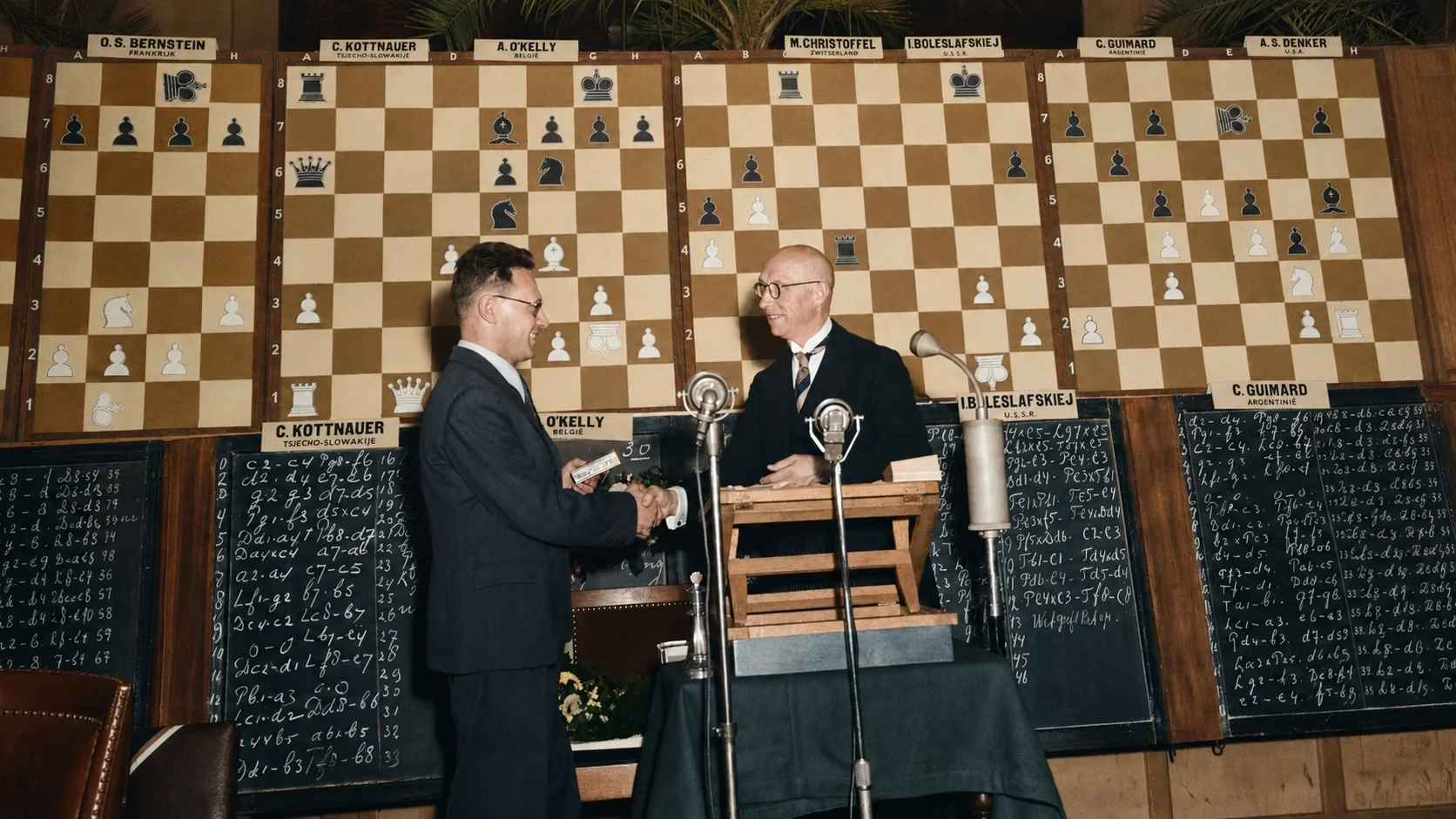
His career can be read in three interlocking ways. First, as a chess career, it was remarkable for durability and cyclical recovery: he rose from Soviet prodigy to world-class tournament winner in the 1930s, won the 1948 championship tournament after Alekhine’s death, defended or regained the title through repeated matches with Bronstein, Smyslov, Tal, and Petrosian, and remained a central reference point even after losing the crown for the last time in 1963. Second, as a Soviet cultural episode, Botvinnik became the model of the scientifically disciplined socialist intellectual, a public hero whose successes were leveraged in a wider ideological contest. Third, as a methodological legacy, he helped codify a training culture built on opening systems, opponent-specific preparation, physical regimen, and post-game analysis, then extended the same drive for formalization into electrical engineering and computer chess.
The caveat is that Botvinnik’s image has always been contested. Commemorative sources present him as the uncontested patriarch of Soviet chess; academic and historiographical work accepts his centrality but treats his career within a larger state system and notes unresolved controversies, chiefly the Paul Keres question and the advantage he derived from rematch rules. Even basic statistical labels can vary across official Russian sources, including whether he should be called a six-time or seven-time USSR champion. Those ambiguities do not diminish his stature, but they do complicate any hagiographic portrait.
Life and Intellectual Formation
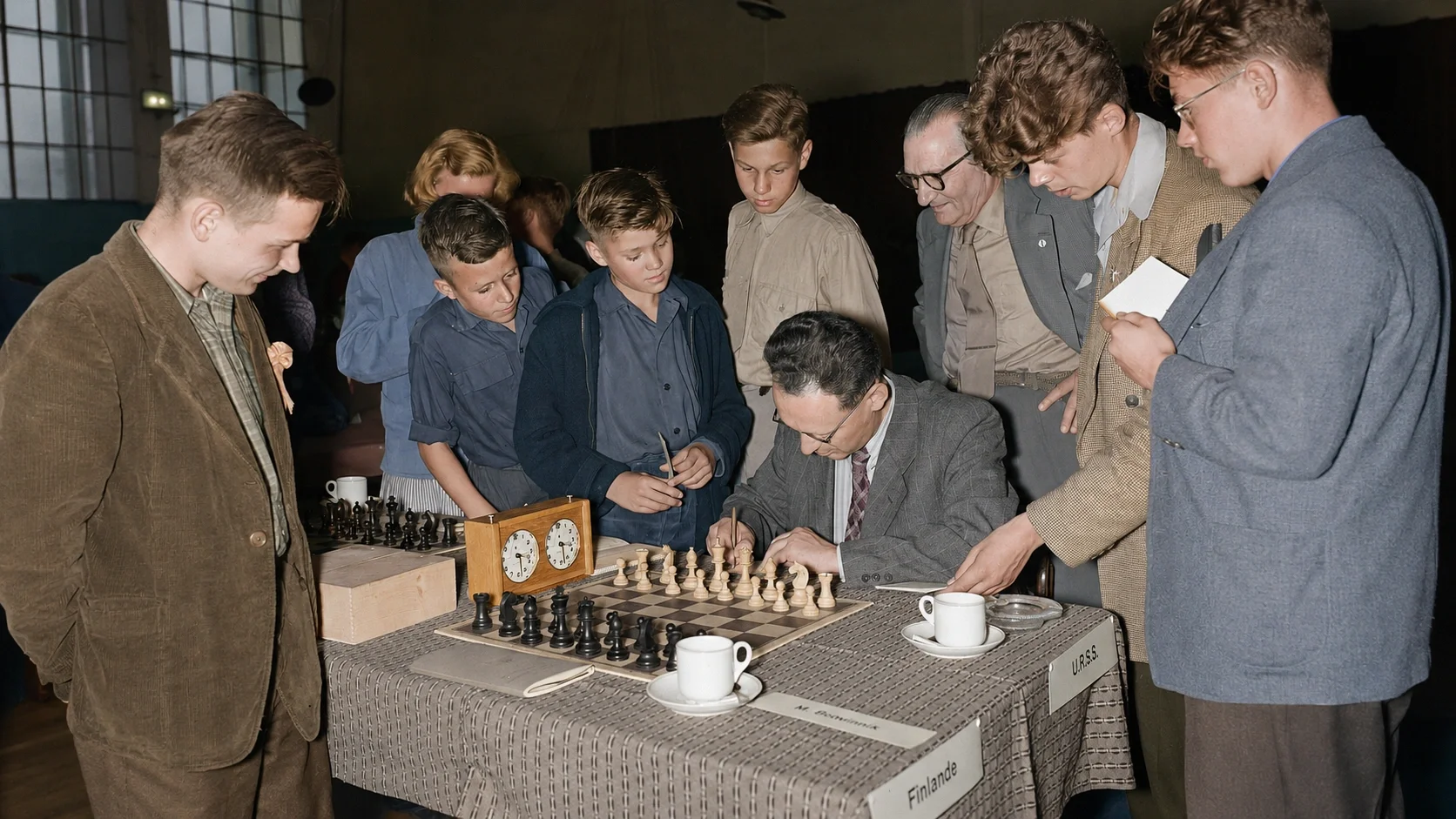
Botvinnik was born on August 17, 1911, in Kuokkala, then in the Grand Duchy of Finland within the Russian Empire, now Repino near Saint Petersburg. Official university and chess federation sources describe him as coming from a family of dental professionals. His mother became ill when he was young, his father left the household, and he grew up with an older brother, Isaak. He learned chess at twelve, during the Soviet chess boom of the mid-1920s, and very quickly advanced from club play to national prominence.
The family dimension of his adult life is unusually well preserved in Olga Fioshkina’s memoir, published by the Russian Chess Federation. She records that Botvinnik married Gayane Davidovna Ananova in 1935. She had trained at the famed Leningrad ballet school and later danced first with the Kirov, then with the Bolshoi after the war. Their daughter, Olga, was born in an evacuation in Perm, then called Molotov, in the spring of 1942. The memoir is filial and commemorative in tone, but it is valuable for domestic detail and for showing how closely Botvinnik’s intense chess life depended on a family structure that protected his working routine.
His education was serious and sustained. In September 1928, he entered Leningrad State University, and in January 1929, he transferred to the electromechanical faculty of the Leningrad Polytechnic. He trained in high-voltage engineering, worked on practical assignments related to the Dnieper Hydroelectric Station, graduated in August 1932 with the qualification of electrical engineer, entered postgraduate work the same year, and defended his candidate's dissertation in June 1937 on excitation-voltage oscillations in synchronous machines. Family and institutional sources indicate that he defended his doctoral dissertation in June 1951, shortly after the Bronstein match. Britannica confirms the engineering degree and his later association with the All-Union Scientific Research Institute of Electrical Energy.
This dual formation, chess and engineering, was not incidental. In a 1938 interview republished by the Russian Chess Federation, Botvinnik rejected the identity of “professional chess player” and instead described himself plainly as an electrical engineer who played chess in his spare time and took leave for tournaments. That self-description was partly ideological, given Soviet hostility to private professionalism, but it was also true to his own conception of work. His career thereafter was built on the claim that chess could be approached as a science of preparation without ceasing to be an art of decision.
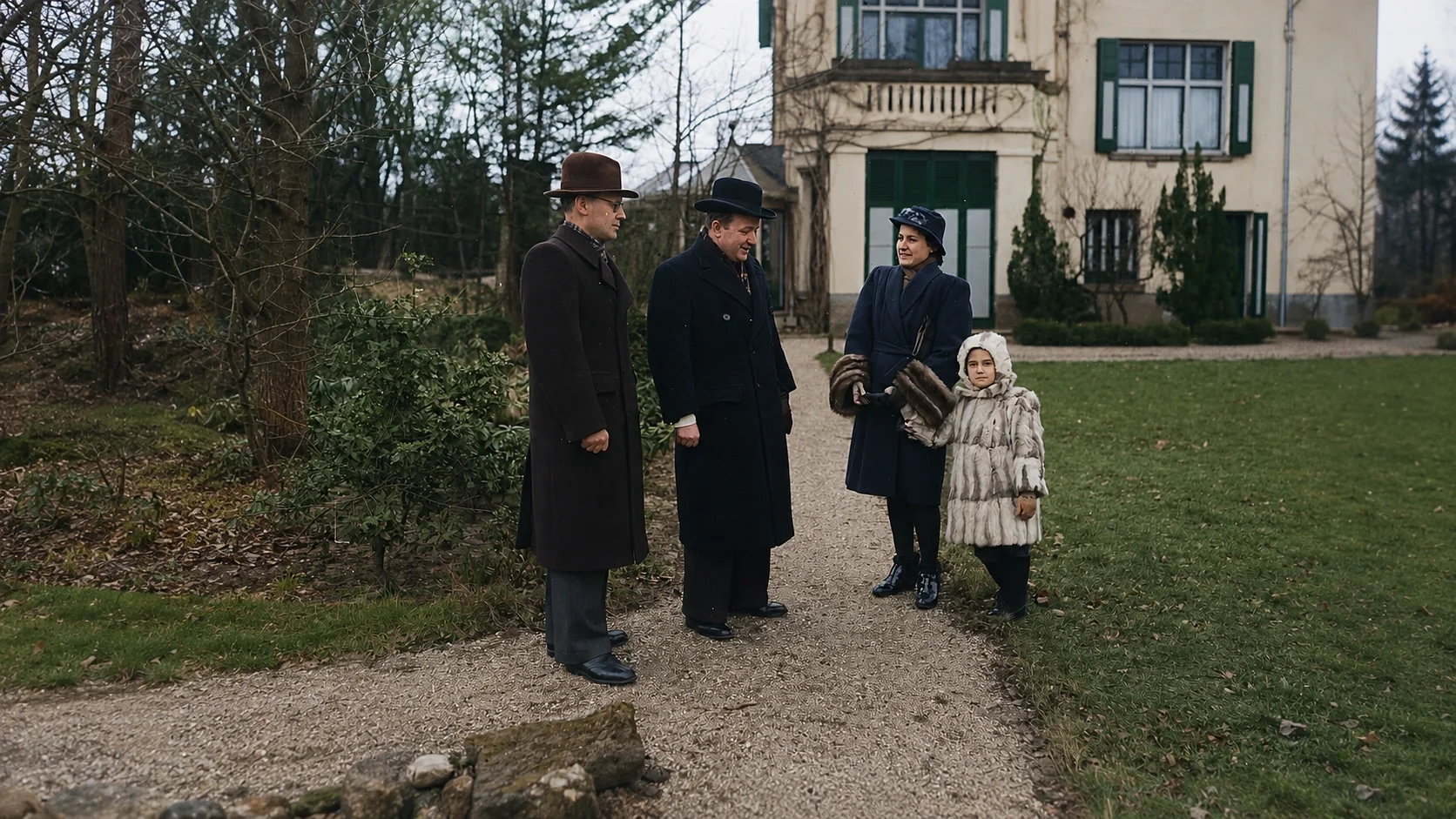
The war years deepened that fusion of public duty and disciplined routine. Sources from the Russian Chess Federation and Saint Petersburg Polytechnic state that he was not accepted for military service because of poor eyesight. He evacuated with his wife to Perm, worked on defense-related engineering tasks, continued analysis in the evenings, and gave simultaneous displays in hospitals. Those same sources also record the death of his brother Isaak in September 1941. The war, therefore, entered Botvinnik’s biography not as an interruption alone, but as a period in which technical service, family displacement, and chess labor were forced into the same frame.
Ascendancy and World Championship Career
Botvinnik’s ascent was unusually rapid. At fourteen, he defeated José Raúl Capablanca in a simultaneous exhibition, less than two years after learning the moves. At sixteen, he became a Soviet master. At twenty, he won the USSR Championship. From there, he moved into the world elite through a series of internationally legible results, most notably shared first at Moscow 1935 with Salo Flohr and shared first at Nottingham 1936 with Capablanca. Russian Chess Federation commemorations also emphasize AVRO 1938, after which a world championship match with Alekhine seemed possible before the war, only for Alekhine’s death to intervene.
These achievements were read politically inside the USSR. Ruchess records that, after Nottingham, Pravda celebrated him in a leading editorial and Sergo Ordzhonikidze rewarded him with a car. In Soviet symbolic terms, Botvinnik had become more than a strong master. He became a model Soviet intellectual athlete, a figure who could represent not aristocratic leisure but disciplined socialist modernity. A contemporaneous JSTOR review of “Cold War chess” later captured the broader ideological environment by describing chess in the mid-twentieth century as a weapon of prestige and noting the acceleration of Soviet chess development after Botvinnik’s 1948 title.
The 1948 World Championship tournament, organized after Alekhine’s death, made him the sixth World Champion and the first Soviet one. FIDE museum documents identify the five participants, record the split venue between The Hague and Moscow, and confirm Botvinnik’s winning score of 14/20, three points ahead of Smyslov. FIDE’s own protocol of May 18, 1948, formally declared that the title of World Chess Champion had been won by “Grandmaster M. M. Botvinnik (USSR).” In 1950, FIDE also included him among the original twenty-seven recipients of the International Grandmaster title.
His title career after 1948 was defined by repeated testing at the highest level. FIDE’s historical summaries state that he drew the 1951 match against David Bronstein and retained the title under the existing rules, then drew the 1954 match against Smyslov, with the 1954 score explicitly given as 12-12. Smyslov then defeated him 12.5-9.5 in Moscow in 1957, after which Botvinnik exercised the right of a rematch and regained the title 12.5-10.5 in 1958. Mikhail Tal defeated him 12.5-8.5 in 1960, but Botvinnik again reclaimed the title in the 1961 rematch by 13-8. In 1963, Tigran Petrosian dethroned him with a match score of +5 -2 =15, effectively 12.5-9.5. Russian Chess Federation sources note that by then the rematch privilege had been abolished, ending the cycle of automatic recovery that had twice served him so well.
If one asks what kind of champion he was, official and reference works emphasize rationality, structure, and preparation. Britannica calls his style methodical and rational; the World Chess Hall of Fame highlights his logic, discipline, and system-based play from the opening through the endgame; FIDE’s championship timeline describes him as a pioneer of deep opening preparation. This is a fair synthesis. Botvinnik was not a universal stylist in the casual sense. He was a constructor of long strategic arcs, a player who sought to reduce chance by designing the conditions under which later decisions would become favorable.
Tournament results reinforce that picture. The Russian Federation and official stat pages credit him with sustained international success from the 1930s through the postwar years, including Moscow 1935, Nottingham 1936, strong AVRO placement in 1938, and leading postwar results before the 1948 title event. The World Chess Hall of Fame also places him at the center of the early US-USSR rivalry, noting his role in radio match competition immediately after the war. He retired from competitive play in 1970, but not from chess.
Soviet Chess, Method, and Pedagogy
Botvinnik was not merely a beneficiary of Soviet chess institutions. He also helped shape them. Ruchess records that he served as chairman of the All-Union Chess and Checkers Section in 1938-1939. The same source describes him as publicly leading players, criticizing bureaucratic obstruction, inadequate club support, and the shortage of chess literature. This administrative episode is revealing because it shows him not only as a champion in formation but as a participant in the governance of Soviet chess.
His role in the postwar championship structure was even larger. Russian Chess Federation material explicitly credits him as the effective author of the modern world championship system, the one that shifted control of the title from private arrangements with the reigning champion into a FIDE-administered cycle. FIDE history supports the broader institutional sequence: the USSR joined FIDE in 1947, FIDE conducted the first championship tournament in 1948, and by 1951, the first three-year qualifying cycle had concluded with the Botvinnik-Bronstein match. Botvinnik, therefore, stands near the center of the institutionalization of modern world-championship legitimacy.
His theoretical contribution lay less in inventing isolated novelties than in constructing systems whose value would persist. Britannica’s survey of chess theory attributes to him highly complex work in the Queen’s Gambit Declined, the English Opening, the French Defense, and the Nimzo-Indian. Ruchess adds that he made durable contributions to the Slav and Grünfeld families and to rook endgame analysis. The same literature stresses that his opening preparation was designed for longevity. In a republished 1930s interview, Botvinnik described preparing for Flohr by studying about 100 recent games, not in search of a single trick, but to understand the opponent’s preferences and avoid prepared lines. That is a very early statement of opponent-specific, data-rich, repertoire-based preparation in recognizably modern form.
His training doctrine went further than chess analysis alone. FIDE’s museum describes him as perhaps the first elite player to think in terms of complex preparation, not only opening analysis but also sleep, regimen, and physical readiness. Russian sources preserve the details: he liked to walk thirty to forty minutes before a game, recommended brisk exercise after the game before eating, and regularly drank tea with lemon and sugar during play to restore energy under mental strain. These may sound anecdotal, but in historical context, they are central. Botvinnik treated competitive chess as a full performance system. Later generations took that normality for granted; in his time, it was unusual enough to become part of his legend.
The pedagogical legacy was enormous. Official Russian sources say that for many years he headed a youth school whose pupils at various times included Anatoly Karpov, Garry Kasparov, and Vladimir Kramnik, as well as many other strong Soviet and post-Soviet players. The World Chess Hall of Fame repeats the point with Kasparov as emblematic pupil. FIDE’s championship timeline separately identifies Kramnik as a product of the Botvinnik school. US Chess adds another layer by noting that Mark Dvoretsky taught at Botvinnik’s school for many years, which helps explain how Botvinnik’s emphasis on method, self-analysis, and structured training passed into the culture of later trainers. In this sense, the phrase “Botvinnik school” denotes both an actual institution and a lineage of study habits.
Engineering, Computer Chess, and Writing
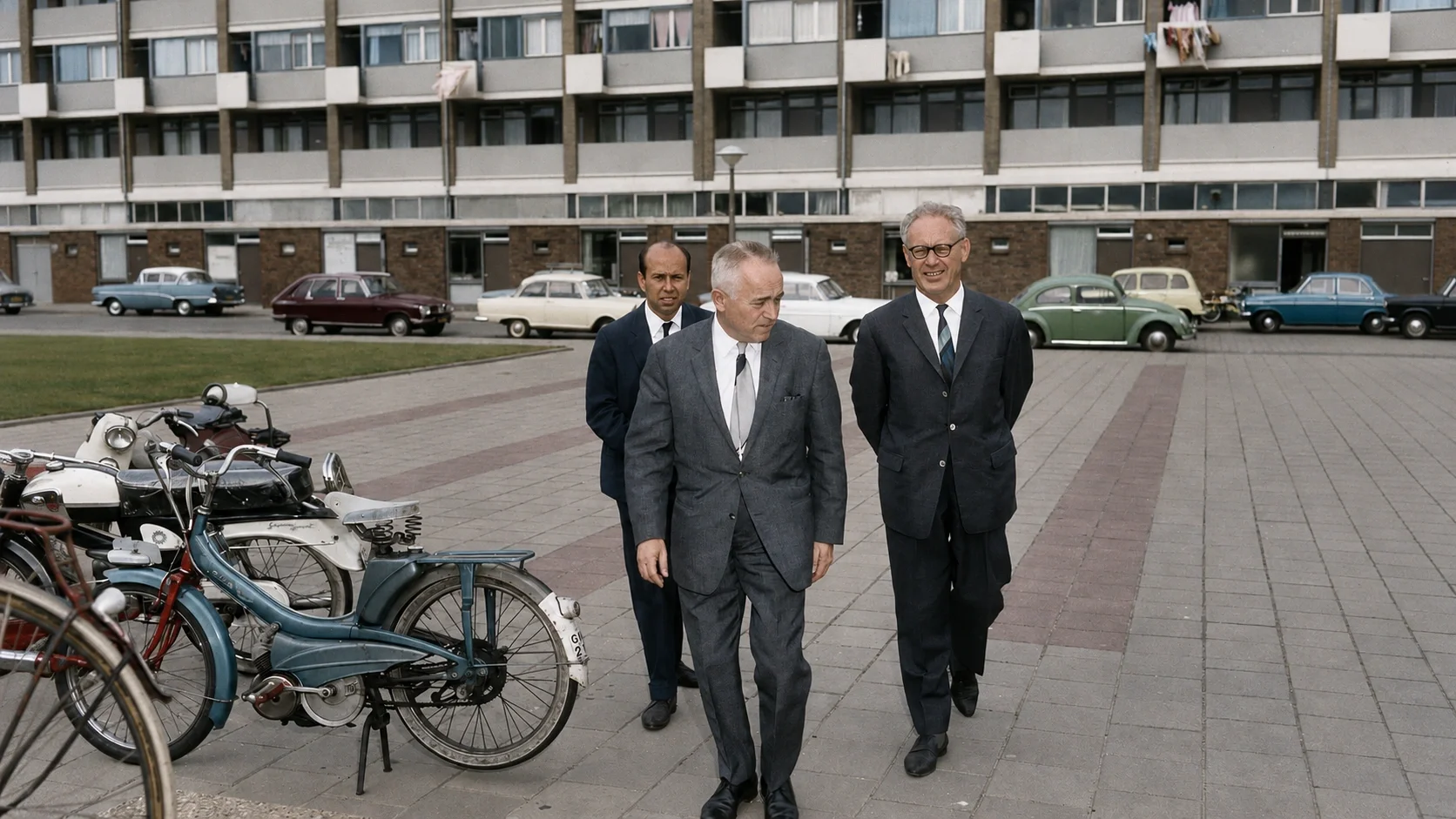
Botvinnik’s scientific career was substantial in its own right. Saint Petersburg Polytechnic presents him not as a celebrity graduate who happened to play chess, but as a serious technical researcher: a graduate in high-voltage engineering, later a candidate and then a doctor of technical sciences, head of a sector at the Institute of Electrical Energy, and the author of inventions patented in multiple countries. Britannica confirms his graduation from the Leningrad Polytechnic in 1932 and his later association with the All-Union Scientific Research Institute of Electrical Energy from 1955. Russian sources also credit him with developing a theory around the strong regulation of excitation in synchronous machines.
This engineering identity shaped his public self-understanding. The 1938 interview on Ruchess is especially useful because it predates the later mythology. There, he still presents himself first as an engineer and only second as a chess specialist. The war strengthened that pattern, and later Soviet commemorations repeatedly celebrated the fact that he combined elite chess with scientific research rather than exchanging one for the other. That combination helped make him an ideal Soviet exemplar, but it was also authentic to his habits of thought.
His turn to computer chess and artificial intelligence was therefore continuous with the rest of his life, not a retirement hobby. Botvinnik’s own 1961 essay, “Men and Machines at the Chessboard,” introduced him to English-language readers as a former world champion and electrical engineer reflecting on chess programming. His later books included Computers, Chess and Long-Range Planning, which was noticed in the AI literature and reviewed on JSTOR by Hans Berliner, indicating that his work was taken seriously within early computer-chess discourse, even when his approach remained controversial.
The most illuminating scholarly account is Olessia Kirtchik’s 2023 Cambridge article on the Soviet AI program. Kirtchik shows that Botvinnik’s project differed sharply from brute-force or combinatorial search. While programs such as Kaissa were classified as combinatorial rather than genuinely “AI” within Soviet debates, Botvinnik sought to formalize the thought process of a master as a three-level control system. He and his collaborators pursued this line for decades in the program known as Pioneer. The project never reached the level of a fully competitive chess engine, but it generated conceptual spillovers. By 1979, Botvinnik was already proposing to use the model for planning the repair of power-station equipment and, later, for long-horizon economic planning. In the history of computing, this places him less among the strongest engine builders than among those who treated chess as a laboratory for modeling expert cognition.
His chess writing was likewise an extension of his analytical ethos. Britannica singles out One Hundred Selected Games as a work tracing his development from a promising Soviet junior to a world-title contender. The World Chess Hall of Fame notes Half a Century of Chess, published in 1984. Russian commemorations add that his books on chess, electrical engineering, and cybernetics circulated in many languages. Even when later readers disagree with his conclusions, they usually concede the density of his self-analysis. Botvinnik wrote to extract a method from experience.
Legacy, Critique, and Gaps in the Record
Botvinnik’s legacy is as much institutional as it is biographical. The World Chess Hall of Fame inducted him in 2003. FIDE has named one of its principal trainer distinctions the Mikhail Botvinnik Award for achievement in open-section coaching, a sign that his name has become shorthand for rigorous elite preparation. Contemporary Russian chess culture continues to memorialize him in the naming of institutions and venues, including the Central House of Chessplayers in Moscow. He therefore survives not only in archives and books, but in the ongoing chess infrastructure.
His state honors reflect the breadth of his public standing. Russian institutional sources list the Order of Lenin, the Order of the October Revolution, the Order of the Red Banner of Labor, two Orders of the Badge of Honor, and the Medal for Labor Distinction, as well as honorary cultural and scientific titles. Such distinctions do not merely ornament his biography. They show how fully the Soviet state embraced him as a representative figure at the intersection of science, culture, and sport.
Historiographically, however, one needs to resist an overly smooth legend. Commemorative sources call him the “Patriarch,” or even the founder of the Soviet Chess School, and that language captures something real about his authority, his school, and the generations shaped by his method. Yet academic treatments of Soviet chess place him inside a larger state project that predated his world title and mobilized chess for prestige, education, and ideology. A JSTOR review from 1961 explicitly described chess as an ideological weapon in the Cold War, while Michael A. Hudson’s political history of Soviet chess presents Botvinnik as emblematic of the Soviet school rather than identical with the entire system. The honorific “founder,” then, is useful as a cultural label, but too compressed to serve as literal institutional history.
The chief controversies are familiar. One concerns the rematch privilege that allowed Botvinnik to regain the title from Smyslov and Tal without re-entering the full qualification cycle. FIDE museum records confirm that the defeated champion was indeed entitled to an automatic rematch in 1958 and 1961. Another concerns the long-running Keres-Botvinnik question around 1948. Hudson’s work notes that Botvinnik’s triumph was controversial and that the debate focused on his games with Paul Keres. Within the source set consulted here, that question remains unresolved with respect to personal agency. There is enough evidence to say that Soviet chess was politically managed and that Botvinnik stood close to its center; there is not enough in the accessible primary and official materials to confidently assert that he personally orchestrated coercion in the strongest versions, sometimes repeated in popular chess culture.
A smaller but revealing discrepancy concerns the USSR title count. Russian Chess Federation commemorations describe him as a seven-time USSR champion, while Saint Petersburg Polytechnic calls him a six-time champion. The most plausible explanation is differing counting conventions, especially around special Soviet championship formats and what qualifies as an “all-Union” title in retrospective summaries. This is not a major substantive problem, but it is a reminder that even official memory is not perfectly uniform.
The most balanced final judgment is that Botvinnik was both greater and less singular than legend sometimes suggests. Less singular, because Soviet chess supremacy was collective and institutional, not the work of one man. Greater, because very few champions have left deep marks on so many layers of a field at once: championship structure, tournament preparation, training culture, chess literature, and the attempt to translate expert thought into machine form. To study Botvinnik is therefore to study a style of modernity in chess, one that treated the game as art, science, and sport inside a highly charged political century.
