Vladimir Tukmakov
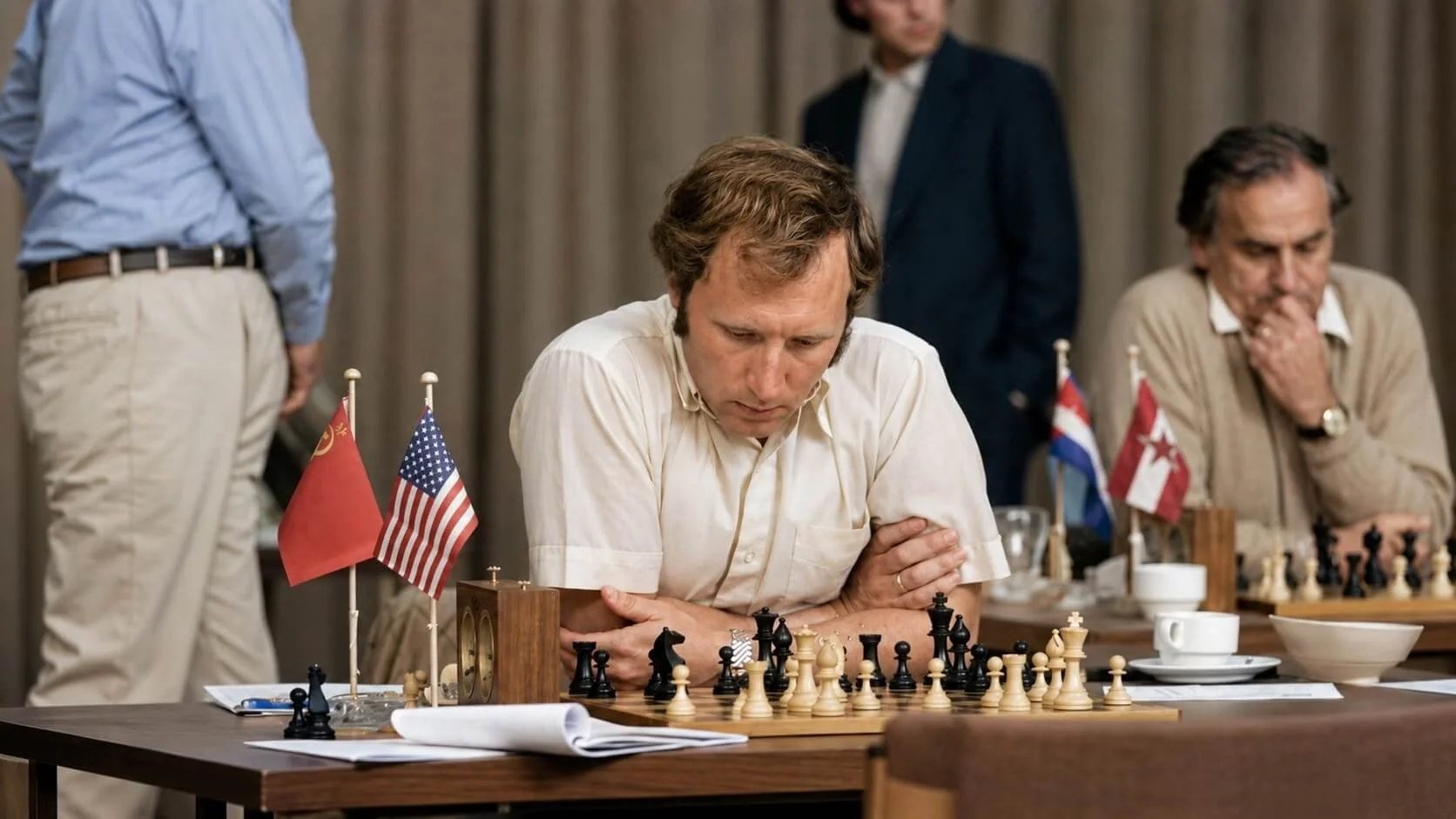
Tukmakov in play, Ivkov ponders his next move in the background. Hans Peters for Anefo, CC0, via Wikimedia Commons
Vladimir Borisovich Tukmakov (born 5 March 1946 in Odessa) is one of the most influential figures in Soviet and post‑Soviet chess. He rose to prominence as a member and captain of the Soviet student team in the late 1960s, later became a grandmaster (1972) and strong tournament competitor, and eventually built a second career as a coach, author, and team captain.
Early Life and Rise in Soviet Chess
Born in the port city of Odesa, Tukmakov grew up in a community that celebrated chess. The Chess Federation of Russia notes that Odesa’s rich chess traditions produced a strong generation of players and that young Tukmakov “made a successful debut in the juniors’ national championship” before being selected for the Soviet junior team’s friendly match against Yugoslavia. In that match, he scored five points out of six against talented opponents Planinc and Bojkovic.
The Soviet chess establishment quickly recognized him as a talented team player. Tukmakov led the Soviet students’ team to victory at six consecutive World Student Team Championships between 1966 and 1972. The Kasparov Chess Foundation adds that he “led the USSR to consecutive wins of the World Student Team Championship from 1966 to 1972, winning nine gold medals along the way”. This period laid the foundation for his later successes and demonstrated his aptitude for team competition.
Tournament Achievements and Team Success
Near‑Champion of the USSR and International Breakthrough
Tukmakov’s first appearance in the Soviet Championship (1969) ended poorly, but he rebounded the following year spectacularly. At the 1970 championship in Riga, he defeated Liberzon, Tseitlin, Platonov, Doroshkevich, and Viktor Korchnoi; although he could not catch Korchnoi in the final standings, his second-place finish was remarkable, and he finished 2½ points ahead of future world champion Anatoly Karpov. The Kasparov Chess Foundation notes that he came very close to the Soviet title three times—Riga 1970, Baku 1972, and Moscow 1983. At the 1972 championship in Baku, he again shared second place behind Mikhail Tal, and he repeated the feat at the 1983 championship, finishing half a point behind Karpov.
The 1970s also brought important international successes. At the Buenos Aires super‑tournament in 1970, he lost to Robert Fischer in the first round but recovered to secure second place ahead of Smyslov, Meking, Reshevsky, Najdorf, and other leading grandmasters. The following year, he tied for fourth–fifth in the Alekhine Memorial and again placed second in the 1972 Soviet championship. In 1973, Tukmakov finished second to Anatoly Karpov at the Madrid tournament. He continued to contest major tournaments through the 1970s and early 1980s, winning events at Decin 1977, Las Palmas 1978, Vilnius 1978, Malta 1980 and sharing first place at the IBM Amsterdam tournament in 1974; the Kiddle encyclopedia similarly lists these triumphs and notes that he won the Lugano Open 1985, the 30th Reggio Emilia tournament 1987/88, and shared first place at the Amsterdam OHRA‑B Open 1990. Such consistent performances earned him a reputation as a player who “only lost 1–2 games each year”.
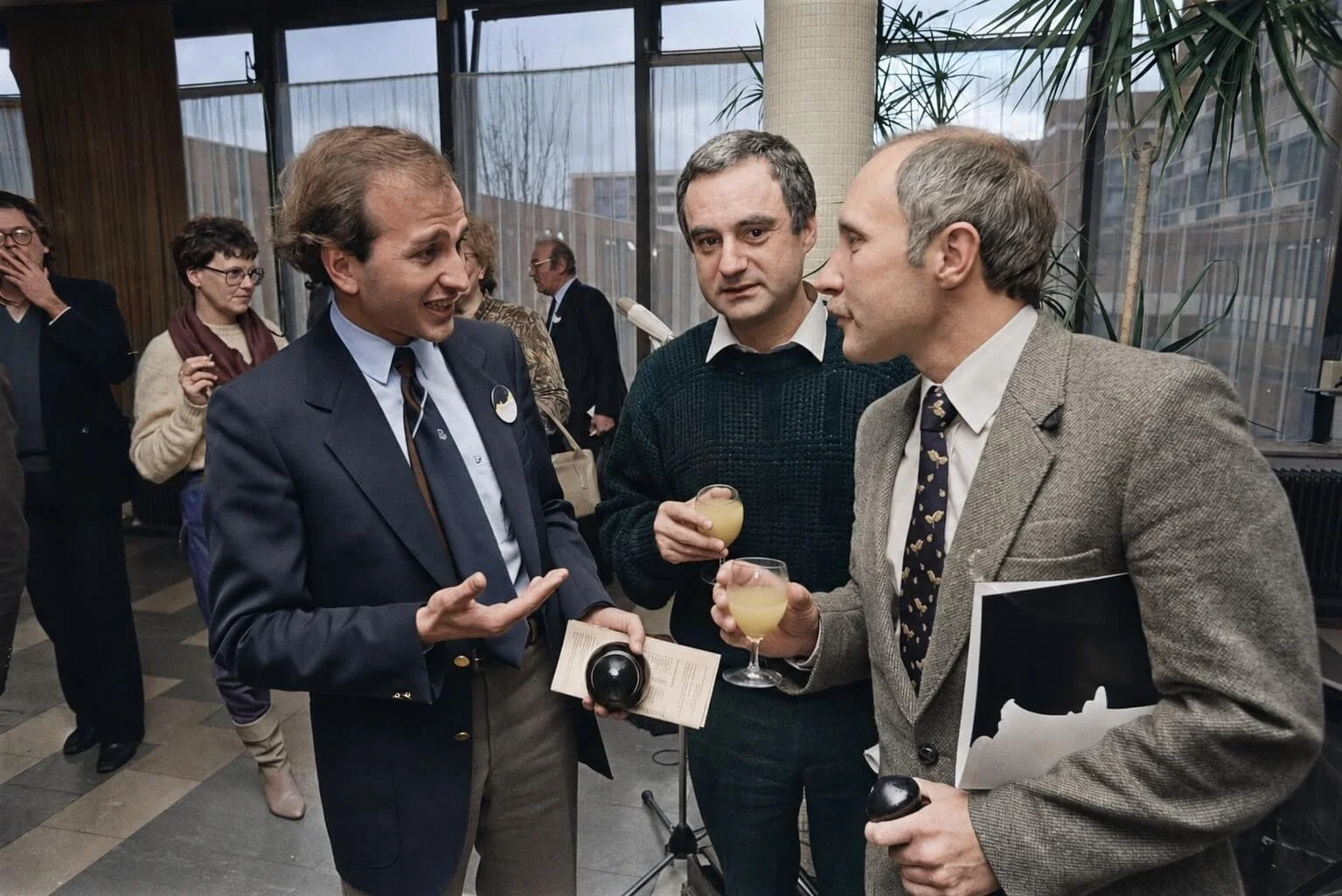
Beliavsky, Sosonko, Tukmakov. Rob Bogaerts / Anefo, CC0, via Wikimedia Commons
Team Competitions
Tukmakov’s strength shone brightest in team events. Besides the student championships mentioned above, he was a member of the Soviet national team that won gold at the 1973 European Team Championship and later participated in the 1983 and 1989 editions. In 1984, he played in his only Chess Olympiad, held in Thessaloniki, where the Soviet team captured gold; the Kiddle encyclopedia notes that he earned gold medals both as a team member and for his individual performance at European team events. During the USSR vs. World match in London 1984, he served as a reserve, stepping in for Smyslov and Polugaevsky; his plus score against Ljubojević and draws against Korchnoi provided the Soviets with valuable points.
Although he remained competitive into the late 1980s and early 1990s, Tukmakov’s playing activity diminished as he focused on other roles. He still achieved notable results, including victories at the Canadian Open Chess Championship in 1989 and 1994, and a tie for first at the Gijón rapid tournament in 1988. By the early 2000s, his playing career had largely given way to coaching and writing.
Coaching Career and Impact
Tukmakov’s transition from player to coach proved as successful as his playing career. The Chess Federation of Russia observes that a “new stage in the Odessite’s career began in 2004” when he was invited to head the Ukrainian national team. Under his leadership, the Ukrainian team won gold at the 2004 (Calvià) and 2010 (Khanty‑Mansiysk) Olympiads and earned bronze at the 2009 European Team Championship. The Kasparov Chess Foundation similarly emphasizes his coaching prowess, noting that the Ukrainian team “achieved Olympic glory in 2004 and 2010” and that his training brought medals in European and world team competitions. After leaving the Ukrainian team in 2011 following disagreements with the federation, he was recruited by the Azerbaijani team; his new squad won silver at the 2011 World Team Championship in Porto Carras, and his club “Sokar” captured the 2012 European Club Cup.
Tukmakov’s influence extends beyond team results. He holds the FIDE Senior Trainer title (2004) and was recognized as FIDE’s Best Trainer of 2010 and recipient of a trainer’s “Oscar”. Kasparov’s academy also notes his mentorship of prominent players, including Anatoly Karpov, Victor Korchnoi, and Anish Giri. The Chess Federation of Russia reports that he coached Anish Giri for several years and currently works with Wesley So, a top American grandmaster. Chess.com and Kiddle likewise mention his role as the non‑playing captain of Ukraine’s gold‑medal team at the 2004 Olympiad and his subsequent coaching of Giri.
Publications and Legacy
After retiring from full‑time competition, Tukmakov became a prolific author. The Chess Federation of Russia lists several of his books, including “Profession: Chess Player” (2010), “Modern Chess Preparation” (2012), “Risk and Bluff in Chess: The Art of Taking Calculated Risks” (2015), and “Modern Chess Formula” (2020). His 2019 memoir “Coaching the Chess Stars” recounts his experiences working with elite players; the publisher Thinkers Publishing notes that he “was one of the strongest Ukrainian grandmasters,” won the Ukrainian championship in 1970, and took second place in three Soviet championships (1970, 1972, 1983). Reviewers praise the book for its candid insight into high‑level coaching. Tukmakov has also written training manuals, such as “Modern Chess Preparation,” that address preparation in the digital age, and his writings continue to influence players and coaches.
Vladimir Tukmakov’s chess career spans more than half a century and bridges the eras of Soviet domination and modern professional chess. As a player, he excelled in both individual and team competitions, earning silver medals in three Soviet championships and winning numerous international tournaments while helping the Soviet Union secure student and team titles. As a coach, he guided Ukraine to an Olympiad gold medal, earned top honors as a trainer, and mentored some of the world’s leading grandmasters. His books and teachings continue to shape contemporary understanding of chess. In sum, Tukmakov’s legacy lies not only in his own games but also in the success of the players and teams he has guided.
