Vladimir Zak
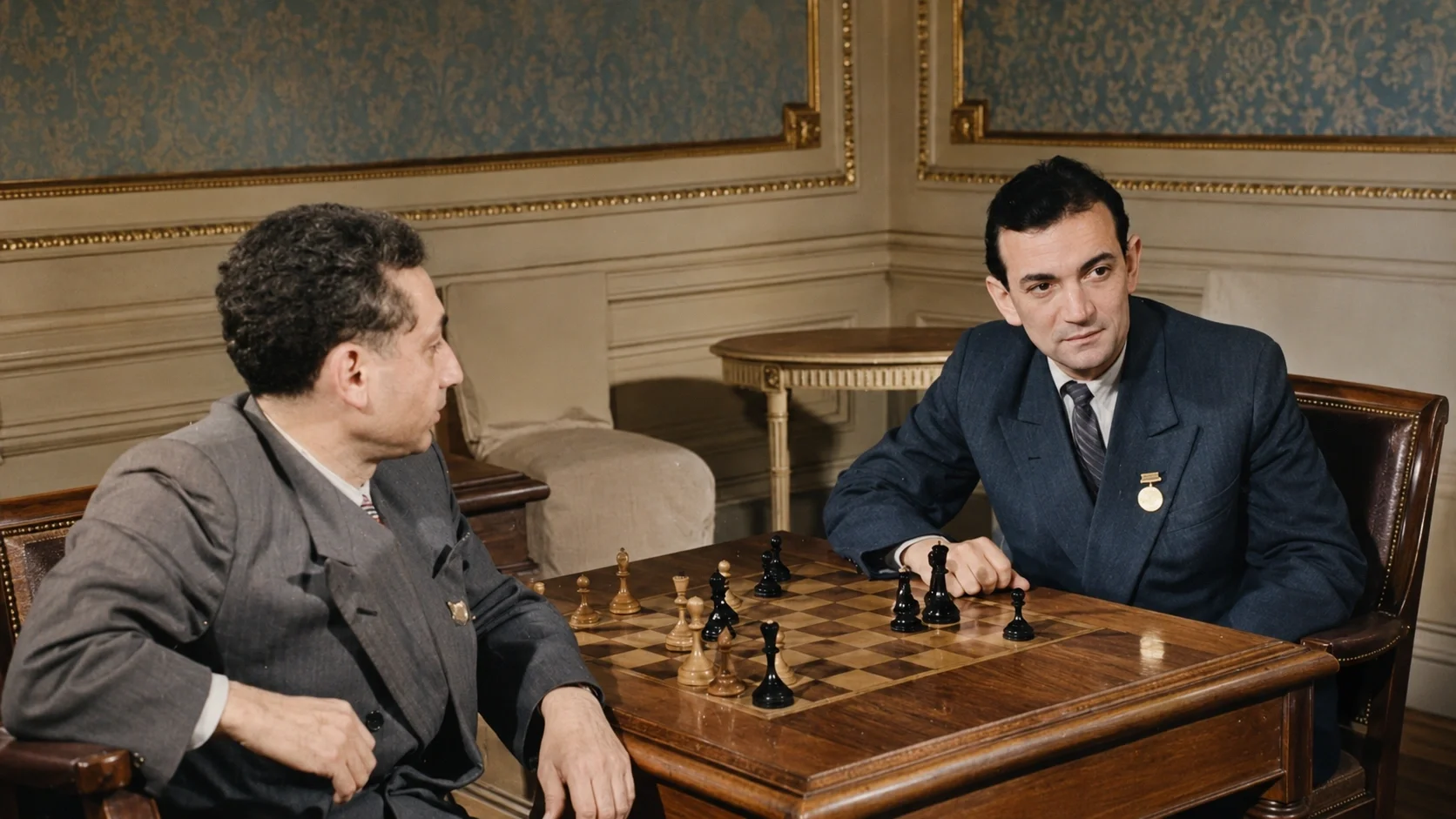
This profile concerns Vladimir Grigorievich Zak, the Soviet chess trainer and author associated with Leningrad, not other non-chess figures with the same surname. On the core biographical data, the source picture is unusually stable. The Russian Chess Federation, Kentler’s family-archive centenary essay, the memorial booklet assembled from pupils’ recollections, and the Jewish Petersburg encyclopedia all agree that he was born on 11 February 1913 in Berdichev and died on 25 November 1994 in Pavlovsk. They also identify him as a Soviet chess figure, specifically as a candidate master and later an honored trainer. Confidence on those points is high.
Kentler’s family-archive essay supplies the fullest early-life outline. Zak’s family moved from Berdichev to Petrograd in 1923. After finishing school, he worked from 1930 to 1934 as an optical worker at the State Optico-Mechanical Plant, later studied in Leningrad technical institutes, and qualified as an engineer. At the same time, chess was becoming his parallel vocation. Kentler documents that he was already teaching two groups at the Pioneers’ Palace from early 1938 until spring 1941, which is important because it shows that his pedagogical identity started before the war, not only after it.
The war years are central to understanding both his biography and the moral authority later pupils attributed to him. In May 1941 he was working as a research engineer at a defence factory and had draft exemption, but he volunteered for the people’s militia after the German invasion. Kentler states that he served from July 1941 until demobilization, first in the infantry and then in signals, while the Russian Chess Federation notes that he did not like speaking about the war afterward. After the war he returned to the Leningrad Pioneers’ Palace in June 1946 and remained there for roughly forty years. Kentler also shows that, after leaving the Palace in December 1986, he continued working at the University sports club youth school for more than seven years. He died in 1994 and was buried at the Smolensk cemetery in Saint Petersburg.
One technical point deserves an explicit note of uncertainty. The year in which Zak attained the Soviet candidate master rank is not perfectly consistent across sources. The Russian Chess Federation and the memorial booklet’s biographical summary give 1938, while a recollection by Larisa Volpert in the same memorial volume says he had been a candidate master “since 1937.” Because 1938 appears in the institutional summaries and in the bio header of the memorial booklet, it looks somewhat stronger, but the discrepancy should be acknowledged rather than hidden. I would rate 1938 as high-confidence and 1937 as a minority recollection-based alternative.
Playing career and institutional roles
Zak’s own competitive career was serious but not top tier. Official and memoir-based sources consistently describe him as a Soviet candidate master whose practical strength was around or near master level, not as a player who secured the master title. After the war he played two qualification matches for that title and lost to two formidable opponents, Viktor Vasilyev and Yuri Averbakh. Volpert’s retrospective assessment is revealing: she thought his playing strength approached master level, but also argued that this was not the real source of his success. The stronger explanation, in her view and Yuneev’s, was analytical power and pedagogical vocation.
The surviving record of his tournament activity is fragmentary in the sources reviewed, and that itself is a useful indicator of how posterity has ranked his career. The memorial booklet lists participation in the 1945 Leningrad Championship and in the semifinals of the 18th and 19th USSR Championships. ChessPro’s reconstruction of the Soviet championship cycle also records him in the 1952 semifinal structure, with a middling result in the Sochi group. These data points confirm that he was strong enough to compete in demanding Soviet events, but they also confirm something larger: by the early postwar period his enduring distinction was already shifting from player to trainer.
His institutional roles, by contrast, were extensive. The Pioneers’ Palace in Leningrad was the core of his life’s work, and the Russian Chess Federation credits him with four decades there after the war. Kentler adds two other important public functions: he coached the Mongolian team from 1962 to 1964, and after leaving the Palace he worked at the University sports club youth school, where a later pupil, Tatyana Kibrik, became runner-up in the USSR girls’ championship in 1989. Rustam Kamsky’s father also recalled that young Gata played in Zak-organized regional junior competitions in Leningrad before emerging onto the wider scene. These roles show Zak as more than a private coach. He was a builder of institutional pathways into serious chess.
Author, commentator, and theorist
Zak’s print legacy is unusually broad for a trainer who never became a formal chess master. The memorial booklet and the Russian Chess Federation profile attribute to him a substantial body of work: Lasker (1963), O malenkikh dlya bolshikh (1973), The King’s Gambit with Viktor Korchnoi in English translation for Batsford (1974), Ya igrayu v shakhmaty with Yakov Dlugolensky (1980), Puti sovershenstvovaniya (1981), Otdat’, chtoby nayti! with Dlugolensky (1988), and Liudi i shakhmaty, a history of Petersburg, Petrograd, and Leningrad chess written with Dlugolensky (1988). The Russian State Scientific Library records Liudi i shakhmaty as a 255-page book with a print run of 100,000, which signals more than niche circulation.
These books span several genres, and that range is part of Zak’s importance. Volpert described Lasker as an accomplished chess biography, Puti sovershenstvovaniya as a useful methodological work for trainers, and the children’s books as especially successful for beginners and parents. The same memorial source says Ya igrayu v shakhmaty became one of the early colorful game-based manuals for small children, went through multiple editions, and remained hard to find because of demand. In other words, Zak worked simultaneously on elite improvement, mass popularization, and historical memory, which is a rare combination even in Soviet chess literature.
The evidence for “editorial work” needs careful phrasing. The reviewed sources clearly document Zak as a contributor, commentator, and co-author in Soviet chess print culture. ChessPro reproduces a 1952Shakhmaty v SSSR passage co-authored by Lilienthal and Zak on a USSR championship semifinal, while the Russian State Scientific Library catalogue lists him among the contributors to the 1960 Chess Yearbook. At the same time, none of the institutional profiles reviewed here identifies him as holding a long-term formal editorial office. The safest academically defensible conclusion is that his public role in print was substantial, but it is better described as authorial and journalistic contribution rather than confirmed permanent editorship.
His theoretical contribution was real, though often indirect and embedded in teaching rather than branded in his own name. Alexey Yuneev’s recollection is the most precise description of Zak as analyst: he remembers thick notebooks of opening files, assembled by hand from journals, bulletins, and Zak’s own analysis, with special attention to dynamic and materially imbalanced systems such as the Rubinstein Sicilian, the Leningrad Variation of the Nimzo-Indian, and branches of the Botvinnik and Noteboom systems in the Queen’s Gambit Declined. Yuneev even claims that many of Zak’s opening analyses continued to be cited in handbooks and encyclopedias. Because that sentence is recollective rather than bibliometric, it should be treated with some caution. Still, independent evidence supports the broader point. A 1951 USSR championship book explicitly references Zak’s earlier 1940 analysis of a rook ending in Shakhmaty v SSSR, which shows that his work was already entering serious theoretical circulation before the war.
His influence on opening culture is clearest through Boris Spassky. ChessBase’s historical features on Spassky credit Zak with helping to transmit both the King’s Gambit enthusiasm that stayed with Spassky for life and an idea later associated with Spassky in the Nimzo-Indian Leningrad Variation. Here Zak’s theoretical legacy is best understood as subterranean rather than eponymous. He was less a creator of a famous “Zak System” than a generator and carrier of ideas that entered elite practice through pupils and publications. His co-authored English-language The King’s Gambit also shows that his analytical reach was not confined to internal Soviet readership.
Teacher and mentor
The strongest evidence for Zak’s historical stature lies in pedagogical testimony. Yuneev, himself a later trainer of distinction, emphasized that Zak’s success did not come chiefly from playing strength. He attributed it to sharp combinational vision, broad chess erudition, and an unusual art of analysis. Yuneev also stressed Zak’s insistence on active independent investigation before the computer era, recalling that his trainer not only knew opening theory but tried to re-analyze the most interesting lines himself. The image that emerges is of a teacher who wanted students to inherit method, not merely memorized conclusions.
Just as important, Zak’s students repeatedly describe him as an educator of the whole person. The Russian Chess Federation’s English profile, drawing on pupil testimony, says that he remembered students’ birthdays and family problems, appealed to party and state organizations when necessary, and gave himself away for promising children. The same profile recounts Volpert’s memory that in his home, despite a meagre salary and two small daughters of his own, there was always food for the fatherless young Spassky and Korchnoi. A later Spassky obituary adds that Zak secured a stipend that materially helped the Spassky family and took an active interest in the boy’s broader development.
Several major pupils describe the relationship in formative, even familial terms. Korchnoi said that because his father had died in the war, Zak to a large degree replaced him and helped shape him as a human being. Volpert, who worked with Zak from 1945 to 1958, called him the principal teacher of her chess life and linked him directly to her rise to the summit of Soviet women’s chess. These testimonies are especially significant because the two pupils were temperamentally and politically very different. Zak’s influence seems to have rested not on producing ideological conformity or stylistic duplication, but on creating seriousness, discipline, and commitment in very different personalities.
The pedagogical record is not free of criticism, and that is part of the historical picture. Volpert’s long essay says contemporaries sometimes faulted Zak for pedantry, rigidity, or attachment to favored schemes. Yet the same essay insists that the decisive fact is the outcome: he turned an ordinary Pioneers’ Palace circle into a legendary forge of chess stars. Volpert also underlines one of the most revealing features of his work, namely that players of very different styles emerged from his classroom. That point is analytically important. Teachers of doctrine often reproduce clones. Teachers of method produce diversity, and Zak seems to belong to the second category.
Influence on players and chess culture
The scale of Zak’s influence can be measured, imperfectly but convincingly, through the careers of his pupils. Kentler’s centenary article lists as grandmasters developed by Zak Boris Spassky, Viktor Korchnoi, Gata Kamsky, Valery Salov, Genna Sosonko, Mark Tseitlin, Alex Yermolinsky, Alexander Kochiev, and Alexander Fishbein. The Russian Chess Federation’s person-of-the-day pages on Volpert and Kochiev reinforce the same pattern, placing Zak at the center of a remarkably wide Leningrad lineage. FIDE’s 2026 veterans profile on Vadim Faibisovich adds yet another strong master shaped at the Leningrad Children’s Palace under Zak and Efim Stolyar. Even if not all of these players were with him for identical lengths of time, the cumulative pattern is unmistakable.
His cultural influence also depended on place. The Leningrad Pioneers’ Palace was one of the great training institutions of Soviet chess, and Zak helped define its ethos. Kamsky’s father remembered Zak-organized junior tournaments in the region as part of the route by which highly talented children entered serious competition. New in Chess, summarizing Genna Sosonko’s portrait of Zak, presents him as a strict classicist who demanded self-analysis and disciplined study. Those descriptions fit the broader Soviet ideal of structured chess education, but Zak’s case is distinctive because his pupils remember warmth and personal guardianship alongside rigor. That combination helps explain why his name survives not only in institutional profiles but in memoir literature.
One symbolic detail crystallizes his place in chess culture. Kentler records that at the 1999 memorial for Zak, Spassky and Korchnoi stood together by their teacher’s portrait. Given the later estrangement between many émigré stars and the Soviet system, that image is historically suggestive. It implies that Zak represented something more durable than institutional loyalty: a formative debt that outlived politics, geography, and rivalry. His authority was rooted in remembered teaching, not merely in Soviet officialdom.
Public standing, honors, and legacy
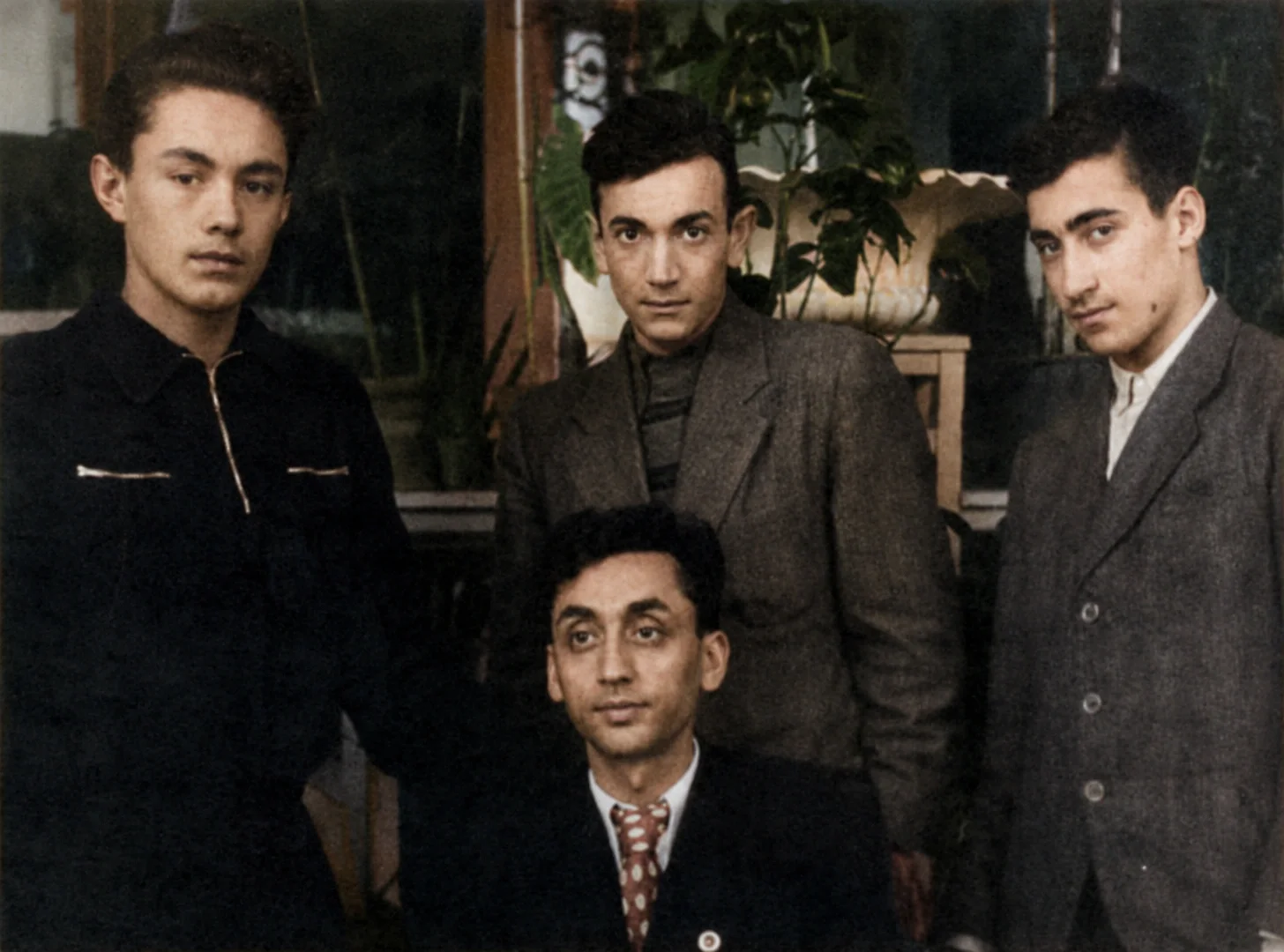
Zak’s public role was broad, but it should be described accurately. The reviewed institutional and commemorative sources present him above all as a trainer in state youth institutions, a coach of teams, a seminar reference point for other trainers, and a contributor to the chess press. Volpert notes that she was invited to speak at a republican seminar of Estonian trainers about her teachers, among them Zak, which indicates the standing of his methods within trainer culture. The Russian Chess Federation also preserves Yuneev’s memory that Zak appealed to party and state organizations on behalf of students when necessary. What the reviewed sources do not clearly substantiate is a major long-term federation office or permanent magazine editorship. On current evidence, any stronger institutional claim should be treated as unconfirmed.
His honors reflect both war service and civic-pedagogical recognition. The core chess distinction is clear: the title Honored Trainer of the USSR, awarded in 1958. Kentler’s family-archive article and the memorial booklet also list wartime distinctions including the Medal for Battle Merit, the Medal for the Defense of Leningrad, and the Order of the Patriotic War, Second Class, as well as a 1958 civilian labor medal whose English rendering varies across source traditions. These decorations do not explain his chess stature by themselves, but they deepen the picture of a man whose authority in postwar Leningrad was bound up with lived sacrifice, service, and endurance.
The fairest final assessment is that Zak belongs to chess history as a formative institution-builder. He had enough practical strength to analyze seriously, enough literary ability to publish enduring books, and enough emotional force to alter the life paths of gifted children. The strongest sources do not depict him as easy, fashionable, or universally loved. They depict him as exacting, serious, sometimes severe, and deeply committed. That combination helps explain why his pupils remembered him less as a benign mascot of Soviet youth chess than as an adult who changed what was possible for them. In the long view, Zak’s legacy is that of a trainer whose influence migrated outward through world champions, dissidents, émigrés, women’s champions, children’s books, opening files, and the enduring mythology of Leningrad chess.
