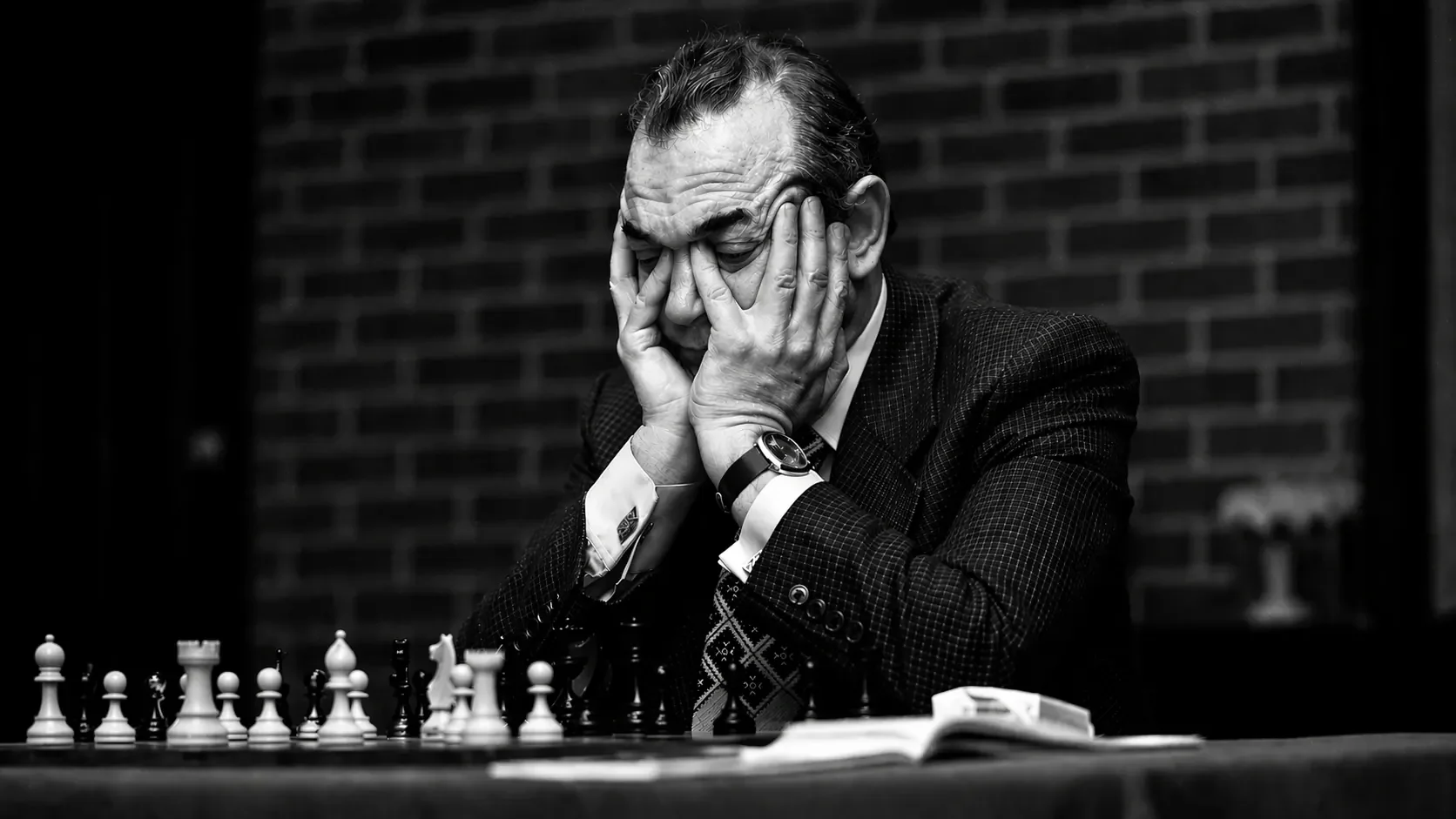
How the Early Soviet State Turned Chess Into a Tool
A look inside the origins of Soviet chess culture. These articles trace how early USSR institutions and political leaders transformed chess into a tool for education, discipline, and national development, setting the foundation for decades of dominance in world chess.
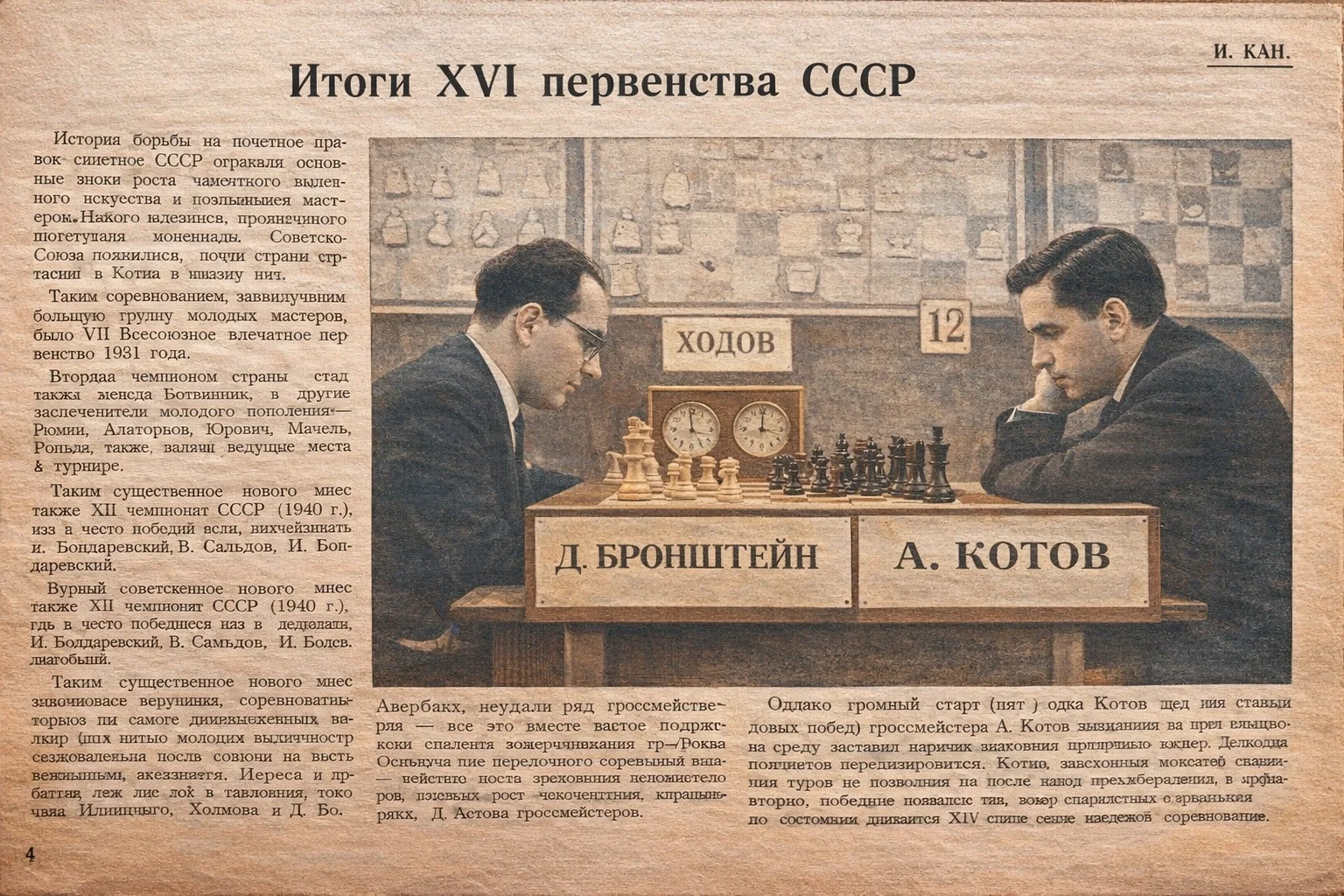
Results of the 16th USSR Championship
This article combines pages 4 through 7 of a Soviet report on the 16th USSR Championship, tracing Bronstein’s rise, Kotov’s shared victory, Furman’s breakthrough, Keres’s disappointment, and the broader institutional pressures inside Soviet chess.
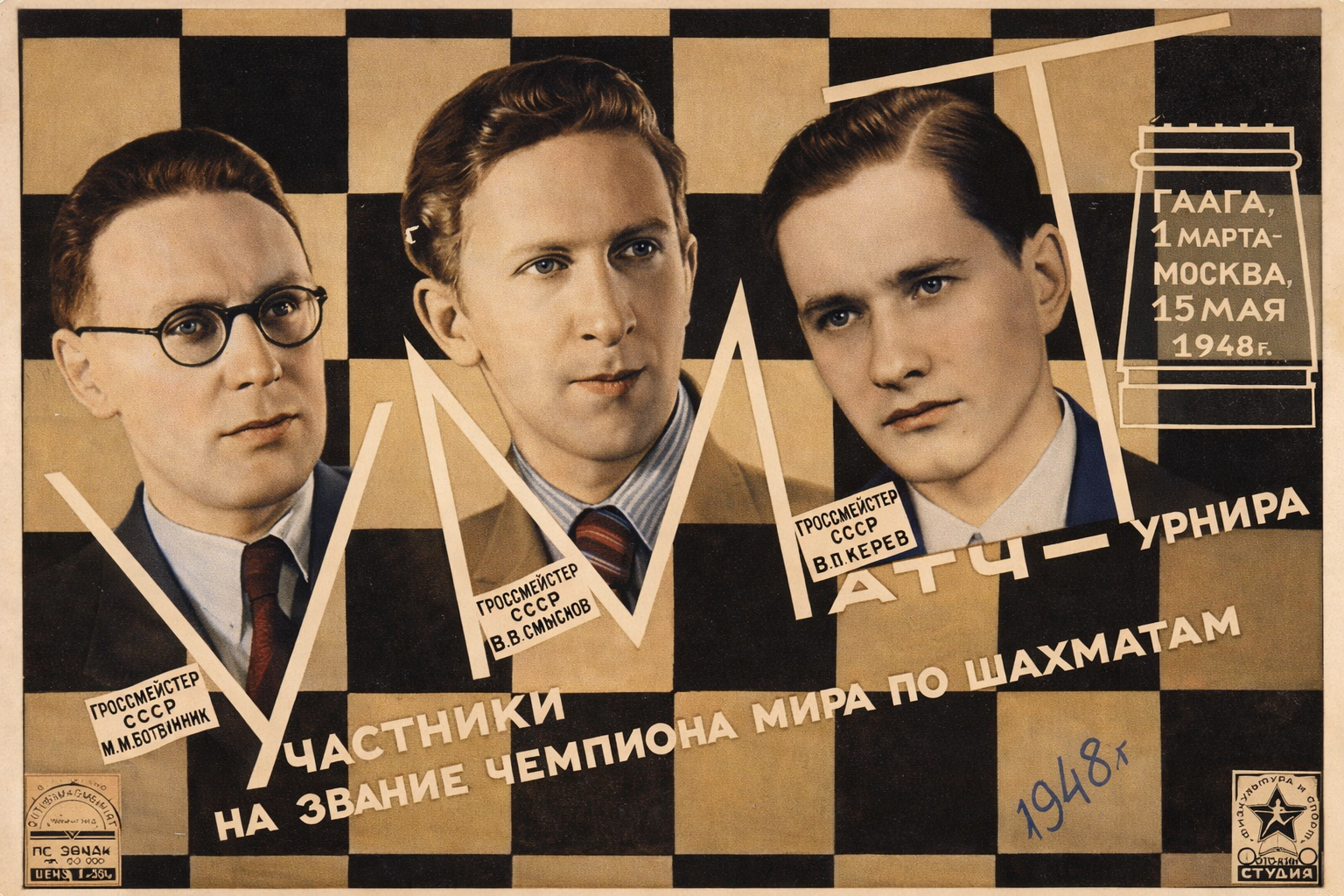
The 1948 World Chess Championship: From The Hague to Moscow
After Alexander Alekhine’s death, FIDE organised a five‑player match‑tournament in 1948 to decide the world chess champion. The event, held in The Hague and Moscow, featured Botvinnik, Vasily Smyslov, Paul Keres, Samuel Reshevsky, and Max Euwe, playing five rounds against each other. Botvinnik dominated with 14 points out of 20, becoming champion and initiating a new era of Soviet supremacy. The tournament also signaled FIDE’s assertion of authority over the organization of world championships and set the template for the modern cycle. Observers debated whether political pressure influenced Keres’s play, but the result cemented Botvinnik’s status as the first post‑war champion.