The 1976 Euwe Schaakvierkamp
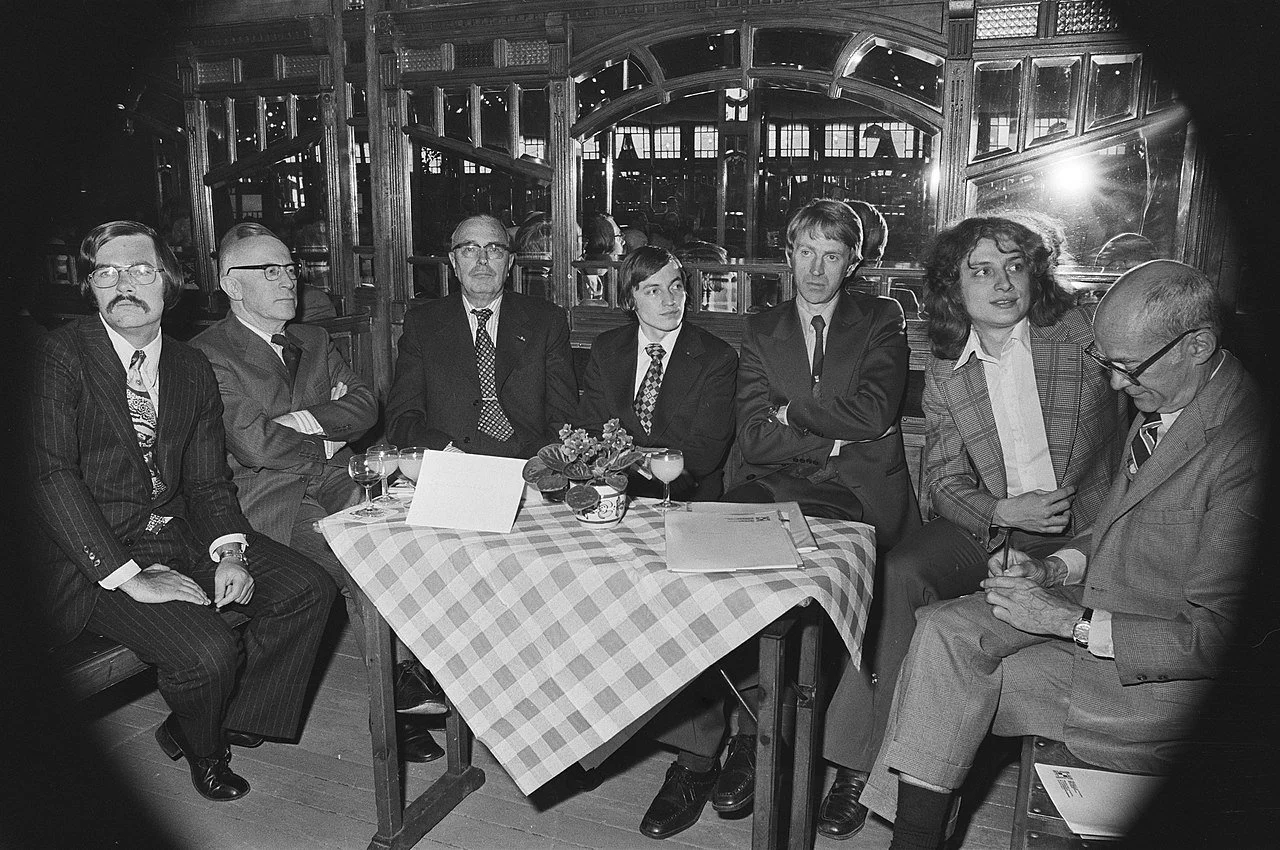
Hans Peters for Anefo
Introduction
The 1976 Euwe Schaakvierkamp, also described in contemporary and later references as the Dr. Euwe Jubilee tournament or Euwe-vierkamp, was a small event with unusually large symbolic weight. It was staged in Amsterdam in May 1976 to mark Max Euwe’s seventy-fifth birthday, but it was more than a ceremonial annex to a public celebration. By bringing together the reigning world champion Anatoly Karpov, the reigning U.S. champion Walter Browne, the leading Dutch hope Jan Timman, and Iceland’s Friðrik Ólafsson, the organizers turned a commemorative occasion into a compact test of international prestige. Karpov won clear first with 4/6, ahead of Browne on 3/6, with Timman and Ólafsson sharing third on 2.5/6.
The tournament deserves attention today because it sat at the intersection of several historical lines without being reducible to any one of them. It honored Euwe as the Netherlands’ only world champion and as FIDE president, it offered Dutch audiences a close view of the newly crowned Karpov, and it placed Timman, still early in his ascent, on stage with players who represented the strongest available non-Soviet opposition of the day. Later Dutch chess memory treated the event as the origin point of the Euwe four-player tradition that would eventually reappear in the VSB and Euwe Memorial series.
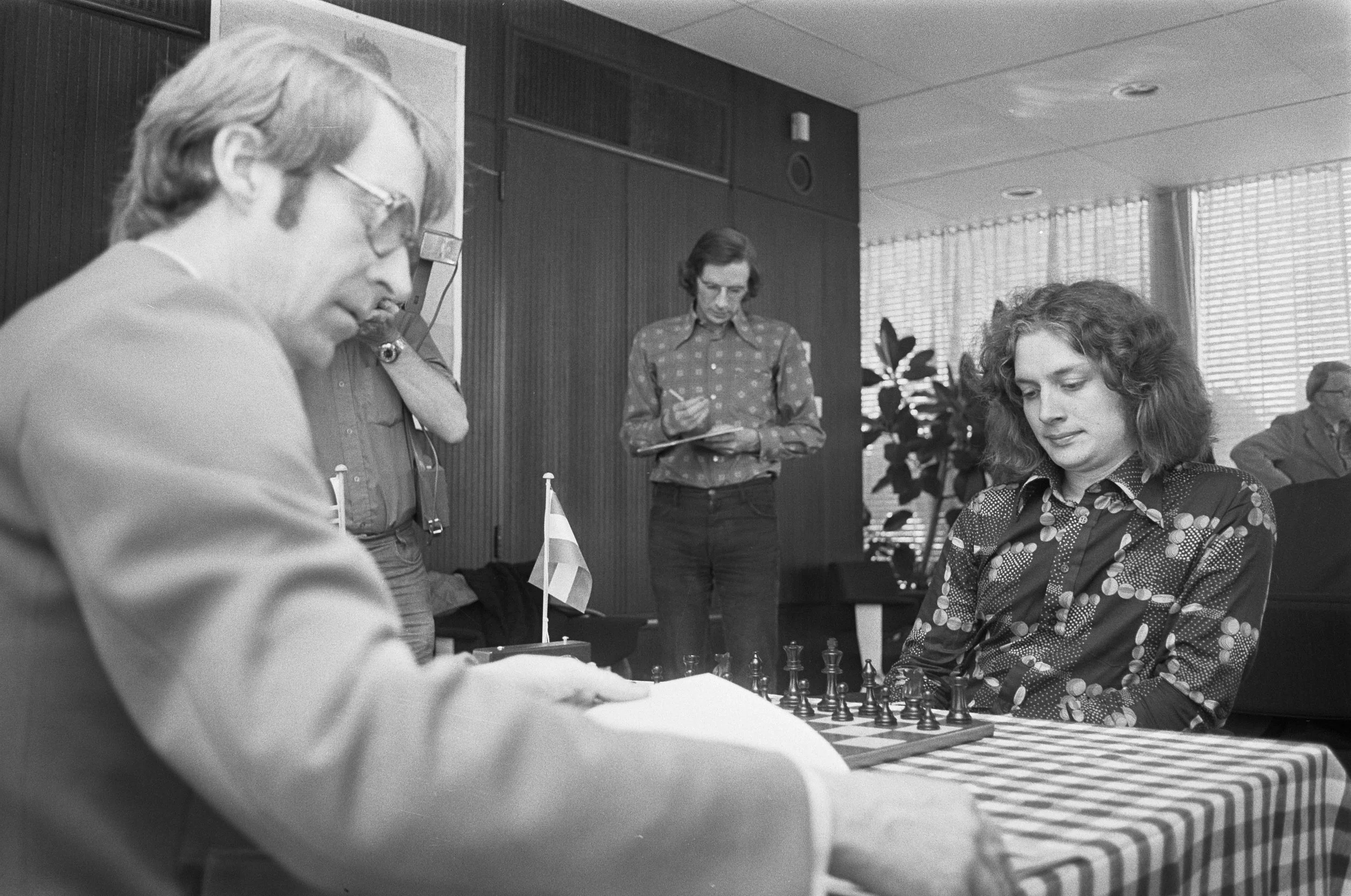
Rob Bogaerts
Historical Setting
The immediate historical setting of the tournament was essential to its meaning. Karpov had become world champion in 1975, and his early tournament schedule was watched closely because elite and public opinion still needed evidence that he could turn a formally acquired title into an unmistakable sporting one. Later Russian Chess Federation profiles explicitly grouped Amsterdam among the important international victories by which Karpov showed he had not become champion “by accident,” which is telling about how Soviet and post-Soviet institutional memory came to frame the event.
For Dutch chess culture, the jubilee was equally well chosen. Euwe was not merely a historical relic. He was still a major public figure, still FIDE president, and still the central symbolic link between Dutch chess respectability, international administration, and national memory. Dutch retrospective accounts of the festival stressed that Amsterdam staged a ten-day celebration around his birthday, with a deliberately public character on Museumplein and an atmosphere built around commemoration as much as competition. Jan Timman later recalled that an “Euwe March” was even revived to recreate a distinct 1930s mood, which suggests that the event was self-consciously historical in its presentation rather than simply festive in a vague sense.
That mix of reverence and competitive seriousness gave the four-player tournament its distinctive place. It was not a national championship, not a Candidates event, and not a routine invitational. It was a prestige compact, designed to honor Euwe while also testing the present chess order in miniature. The Dutch press and later Dutch chess writing consistently treated Karpov as the central attraction, which was itself part of the point. His appearance gave the jubilee a level of relevance that pure nostalgia could not have provided.

Walter Browne in play vs Jan Timman. Rob Bogaerts/Anefo
Organization, Format, and Field
The event belonged to a larger Amsterdam festival celebrating Euwe’s seventy-fifth birthday. Sources consulted for this article indicate several overlapping layers of organization. A later history of the Schaakbond Groot-Amsterdam states that the SGA marked Euwe’s birthday with a group of events, including the Euwe-vierkamp, a national blitz championship, and a bughouse championship. A tournament reference summary, drawing on archival tournament information, credits the wider affair to Literary Cafe on Tour, the Vincent van Gogh Museum, and the City of Amsterdam. Taken together, those sources suggest a hybrid civic, cultural, and chess-institutional effort rather than a narrow federation exercise.
The competitive centerpiece was a double round-robin four-player tournament. Contemporary and later accounts place the tournament games at the Van Gogh Museum, while associated festival activity occurred in a tent on Museumplein. Timman later remembered the venue as unusually situated in the Van Gogh Museum, with a mirror tent standing on Museum Square, and Dutch retrospective accounts similarly describe blitz, simultaneous exhibitions, and public events in a Museumplein tent with the four-player event as the highlight. Archival photographs strengthen the chronology and setting by documenting action from the second round on 15 May, the fourth round on 18 May, Euwe’s reception in a tent on Museumplein, and the last round on 21 May.
No formal qualification system appears in the sources located for this article. Contemporary and later tournament references describe the players as invited. That invitational character was appropriate to the event’s purpose. Rather than selecting the strongest available field by a qualifying ladder, the organizers assembled a representative and meaningful quartet: the reigning world champion, the reigning U.S. champion, the strongest young Dutch grandmaster, and a distinguished Nordic-Icelandic grandmaster of long standing who would later succeed Euwe as FIDE president.
The field was exceptionally well chosen. Karpov brought world title authority. Browne brought American status and fighting temperament, and contemporary reports referred to him explicitly as U.S. champion. Timman, already Dutch champion and grandmaster, represented the country’s future, not merely its present. Ólafsson, who had shared first at Reykjavík earlier in 1976 with Timman and was already one of Iceland’s most important chess figures, supplied senior international depth and another layer of FIDE symbolism. A field of only four could easily have seemed slight. This one did not.
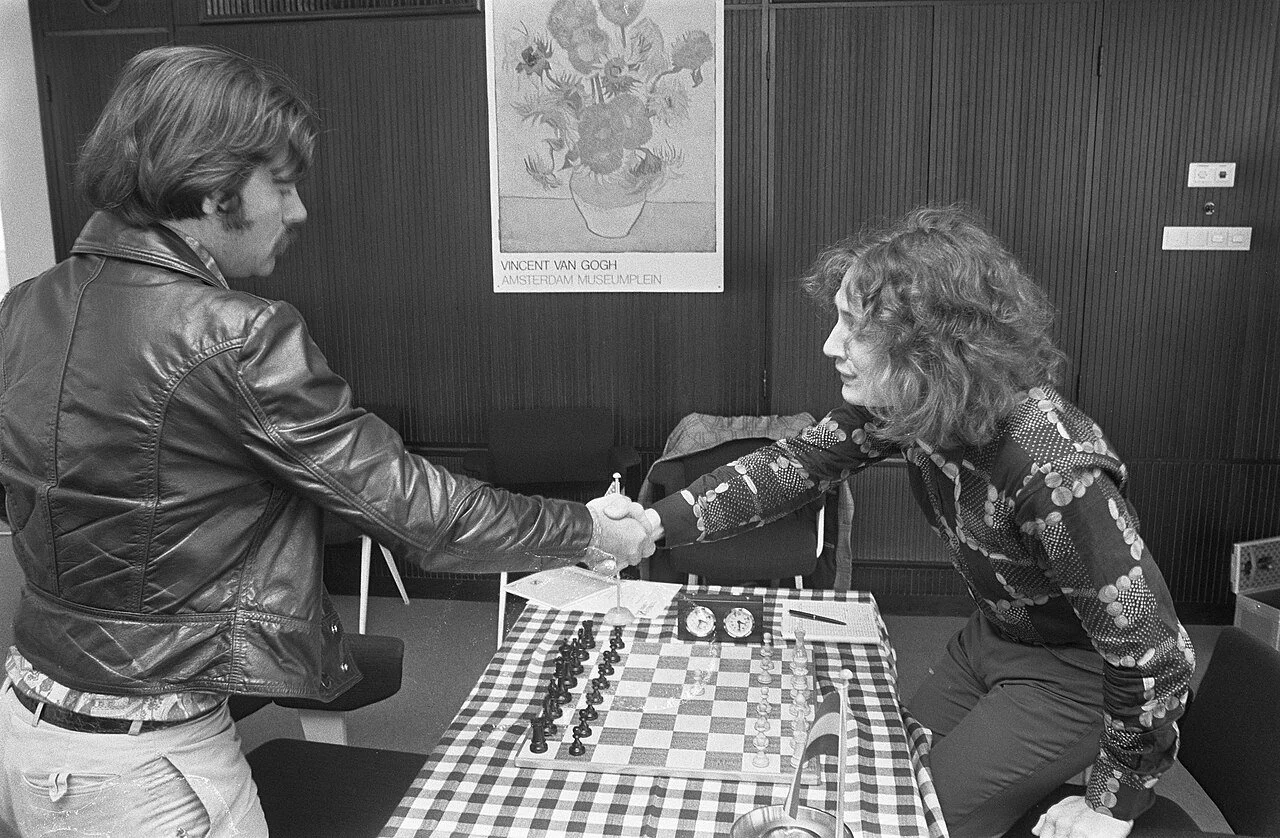
Rob Bogaerts for Anefo
Main Course of the Championship
Because the tournament had only six rounds, every result shaped the narrative immediately. Timman’s later recollection is especially useful here. He wrote that Karpov played cautiously, aware that in so short an event even a single mishap could damage his expected first place. That retrospective judgment fits the known course of play. Karpov did not dominate by a cascade of wins. He established himself early, preserved control through a sequence of draws, and converted at the end when the standings demanded it.
The opening round was already important. Timman later stated that Browne had achieved a drawable position against Karpov but lost in severe time pressure. That point is more than a game anecdote. In a four-player double round-robin, an early escape by the favorite can decide the entire character of the event. Had Karpov started with a draw instead of a win, the tactical economy of the tournament would have changed immediately. Instead, he banked a full point before the more precarious middle section of the event.
By the middle of the tournament, Ólafsson had become a genuine factor. A Dutch newspaper report of the fourth round notes that Browne and Ólafsson drew, while Karpov and Timman also drew. A later Australian press report, based on AAP dispatches from Amsterdam, stated that Ólafsson was sharing first with Karpov at the start of the fifth round. In other words, the tournament did not develop as a passive coronation. It contained a real, if limited, challenge from a player whose reputation is often remembered today more for administration than for board strength.
The decisive middle test was Timman against Karpov. Timman later identified that game as the moment when Karpov experienced his “most anxious moments” of the tournament. Contemporary reporting confirms the practical consequence: Karpov drew Timman in the fifth round while Browne defeated Ólafsson, a pair of results that restored Karpov’s sole lead. This is the one game from Amsterdam 1976 that later acquired a second life in chess literature. Timman chose it for inclusion in The Art of Chess Analysis, which is a strong sign that, in his own memory, the draw was not incidental but the point at which the tournament might have taken a different direction.
The last round completed the logic of Karpov’s tournament. Timman recalled that a win against Ólafsson secured first place, and contemporary Dutch press coverage reported exactly that, while Browne defeated Timman in the other game. That produced the final order of Karpov first, Browne second, Timman and Ólafsson tied behind. The broad narrative is therefore unusually clear: Karpov won the event by surviving the two moments that could have destabilized it, Browne’s first-round resistance and Timman’s fifth-round pressure, and then by taking the one final-round chance that clear first required.

Hans Peters for Anefo
Winner and Key Contenders
Karpov’s victory was convincing, though not flamboyant. He finished undefeated and won the tournament without needing to defeat every rival directly. That pattern was important to his public image in 1976. He did not need a theatrical sweep. He needed to look controlled, reliable, and superior over the whole structure of the event. Amsterdam gave him precisely that. Later summaries of his career, including those by Russian chess institutions, routinely list Amsterdam among the tournaments that helped establish the authority of his reign.
Browne was the most volatile contender and, in some respects, the most revealing one. A reigning U.S. champion, he embodied a post-Fischer American challenge that was combative rather than mythic. His loss to Karpov in round one, after achieving practical equality according to Timman’s later account, damaged his winning chances immediately. Yet Browne remained dangerous enough to beat Ólafsson in the penultimate phase and Timman in the last round, thereby securing sole second place. That sequence helped preserve the tournament’s competitive credibility, because it prevented the field from collapsing into a single Karpov-Timman story.
Timman’s significance was deeper than his final score. He did not finish second, but he emerged from the event with enhanced stature. Dutch readers saw their own leading young grandmaster hold Karpov to a critical draw in the game later remembered as the champion’s sternest trial. Given that Timman had only become the Netherlands’ third grandmaster in 1974 and was still in the early stage of his international rise, that was a substantial symbolic result even without a prize-winning finish. Later official obituaries and biographical notices continued to place 1976 near the start of his major ascent.
Ólafsson’s role is perhaps the easiest to overlook. Yet in tournament terms he was genuinely in the race deep into the event, and in institutional terms his presence was fitting for a Euwe jubilee. He shared the lead after the early rounds, he forced other contenders to continue taking risks, and he linked the festival to a broader FIDE culture that was still strongly personal and diplomatic in tone. The later fact that Ólafsson succeeded Euwe as FIDE president gives the field a retrospective symmetry that would have been invisible to many spectators at the time but is hard to miss now.
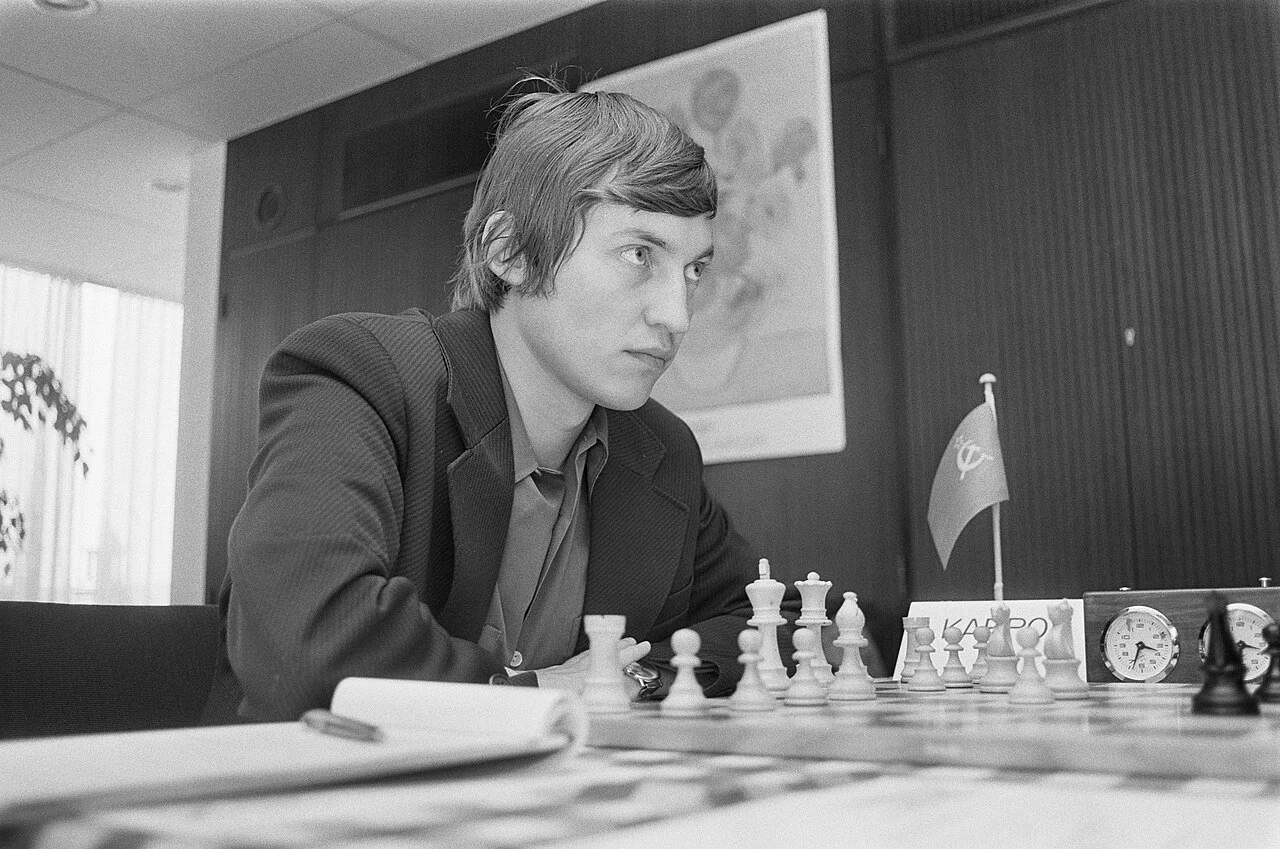
Rob Bogaerts
Contemporary Reception
Contemporary reception was shaped by two interlocking facts: Karpov drew attention, and Euwe gave the event civic dignity. Dutch and foreign newspaper coverage followed the standings closely despite the tournament’s small size. The AAP dispatch published in Australia treated the fifth-round position as front-page-worthy chess news, reporting Karpov’s draw with Timman and Browne’s win over Ólafsson as a live battle for the lead. Dutch regional press did the same with the fourth-round draws and the final standings. This sustained reporting indicates that the event was experienced not as a private exhibition but as a public contest whose shifts were worth following from day to day.
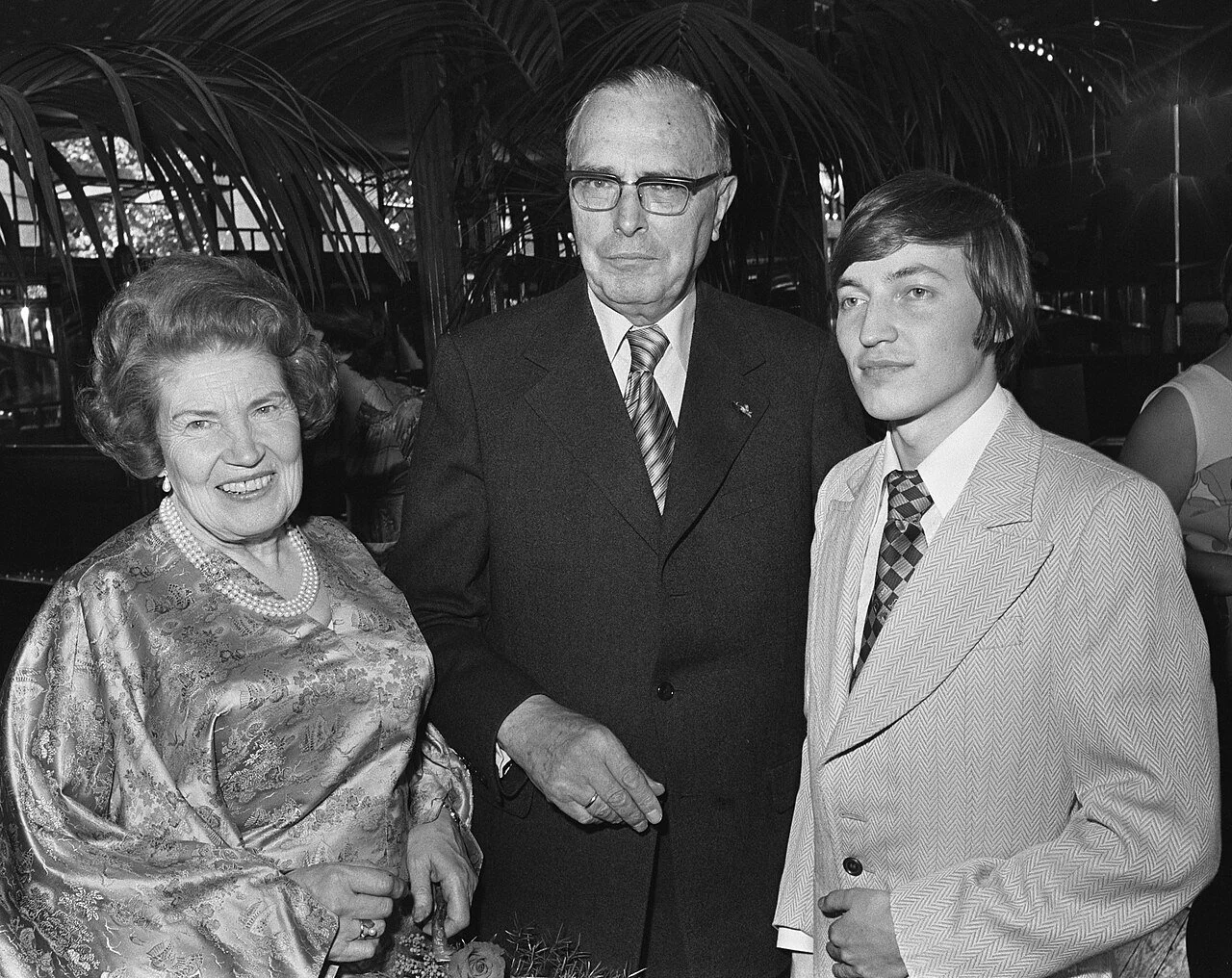
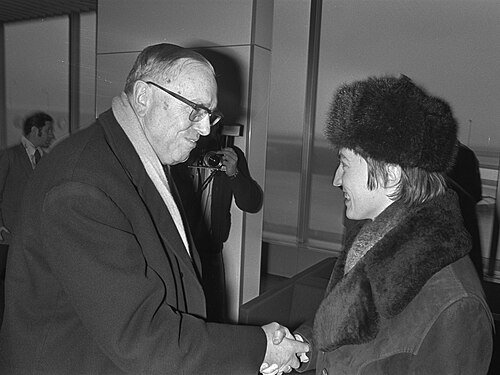
The visual record supports that impression. Nationaal Archief and Anefo photographs show play in progress, the final round, and a reception for Euwe in a tent on Museumplein with Karpov present. Those images reveal the event’s public texture. It took place inside Amsterdam’s most recognizable cultural quarter, and it was packaged as an urban festival, not hidden inside a club room. That mattered for Euwe’s standing in Dutch life. The commemoration presented him as both chess hero and civic figure, and Karpov’s presence validated the continuing international importance of that status.
One further point deserves notice. Later recollections of the jubilee repeatedly return to atmosphere: the Museumplein tent, the revived Euwe March, the Van Gogh setting, the sense that a historical Dutch chess identity was being staged for contemporary audiences. Those are retrospective testimonies, not direct transcripts of 1976 press language, but they are credible precisely because they converge across different kinds of sources. The tournament was not only watched. It was curated.
Bert Verhoeff
Legacy and Historical Assessment
The event’s clearest legacy lies in tournament tradition. Later Dutch reference works and summaries of the Max Euwe Memorial series treat the 1976 four-player jubilee as the forerunner, or prequel, to the Euwe Memorial and VSB tournaments that began in 1987. That later series turned the compact elite Amsterdam mini-tournament into a recognizable recurring format. In that sense, the 1976 Euwe Schaakvierkamp was not an isolated one-off. It established a model: a small field, a prestigious Amsterdam setting, and a blend of Dutch remembrance with international elite play.
Its legacy also lies in how it captures a particular moment in Karpov’s reign. The win was not one of his biggest by category or field size, but it was one of the events through which his championship persona solidified. He came to Amsterdam as the new world champion and left having done exactly what a champion was supposed to do in a delicate, high-visibility invitational: avoid collapse, withstand pressure, and finish clear first. Soviet and Russian institutional memory later folded Amsterdam into the chain of results that validated him. That is a strong indication of the tournament’s place in chess culture beyond the Netherlands.
For Dutch chess history, the tournament was an especially elegant transfer point between generations. Euwe, the great national predecessor, was honored in person. Timman, the country’s emerging modern standard-bearer, was placed under the brightest available light. Karpov, the new world center of gravity, supplied the test. Browne and Ólafsson ensured that the field had international breadth rather than bilateral symbolism. Few small tournaments have arranged their meanings so compactly.
The 1976 Euwe Schaakvierkamp deserves attention today because it shows how a short invitational can become historically revealing. It honored Max Euwe without lapsing into empty ceremony. It gave Amsterdam a public chess festival in one of the city’s most visible cultural spaces. It offered an early Dutch audience a serious encounter with Karpov’s championship style. It recorded Timman’s presence before he became “the Best of the West.” And it seeded a tournament tradition that later became one of the Netherlands’ most recognizable elite events. In miniature, it was both festival and verdict.
Rob Bogaerts for Anefo
Notes and Sources
This article is based first on contemporary reporting and archival records, and then on later historical and specialist sources. Particularly useful contemporary evidence came from Dutch newspapers and news agency reports that tracked the standings during and immediately after the event, including Het Parool, the Provinciale Zeeuwse Courant, and an AAP dispatch preserved via Trove. Archival photographs from the Dutch Nationaal Archief and Anefo fixed several dates and helped confirm the Museumplein and Van Gogh Museum setting.
For retrospective interpretation, Jan Timman’s later account of the tournament in The Art of Chess Analysis was indispensable, especially for atmosphere and for identifying Browne-Karpov, Timman-Karpov, and Karpov-Ólafsson as the event’s decisive practical turning points. For wider context on Euwe, Karpov, Timman, and Ólafsson, I relied primarily on FIDE notices, the Russian Chess Federation’s biographical summaries, the World Chess Hall of Fame profile of Karpov, and Dutch chess-historical writing on the Euwe-vierkamp’s later legacy. Tournament databases and reference sites were used only to confirm standings, pairings, and broad structural facts. Where organizational details remain slightly diffuse, I have said so by describing the event as a collaborative civic and chess festival rather than pretending that one single modern-style organizing body is firmly documented across all sources consulted.
