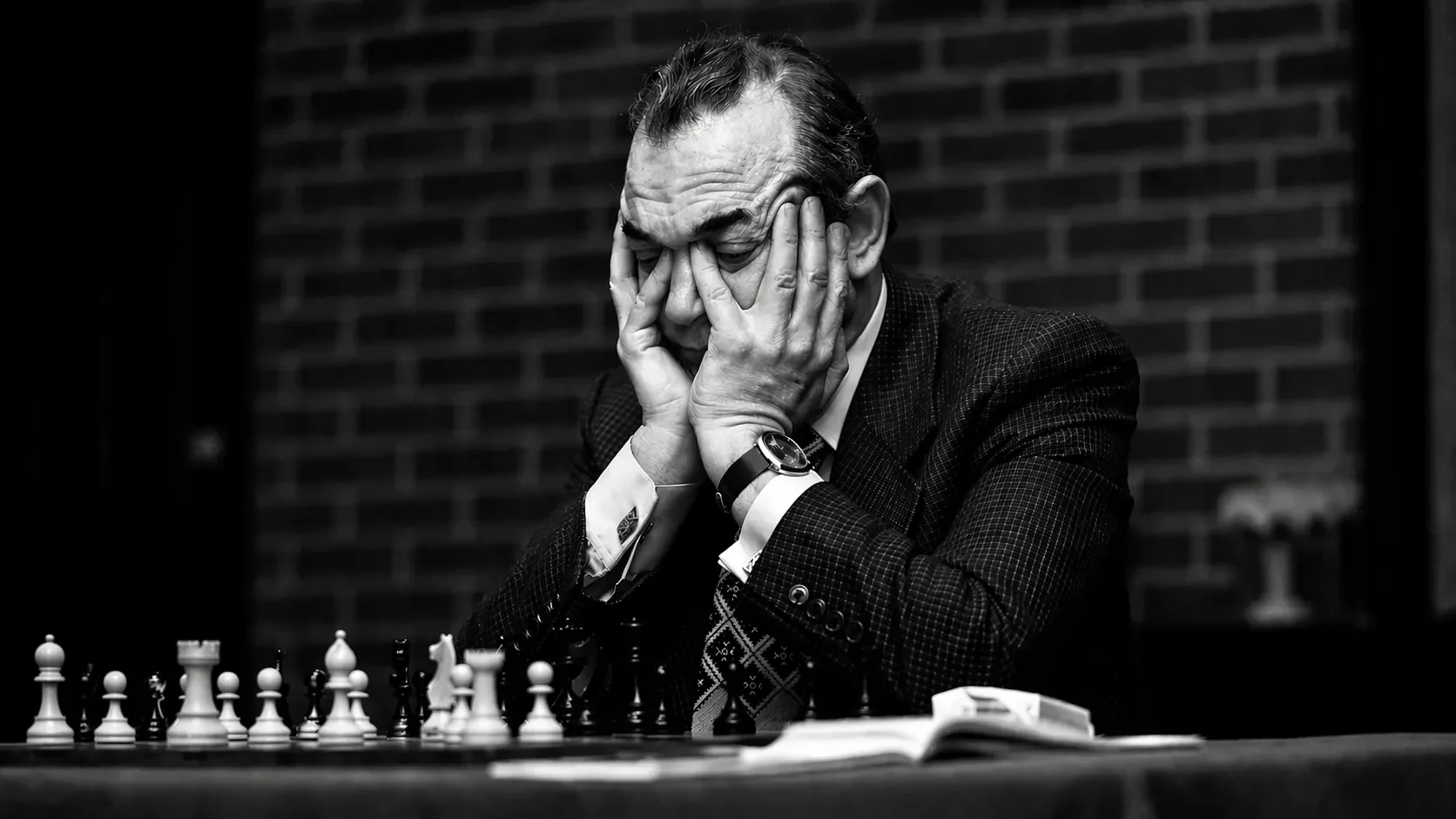
How the Early Soviet State Turned Chess Into a Tool
A look inside the origins of Soviet chess culture. These articles trace how early USSR institutions and political leaders transformed chess into a tool for education, discipline, and national development, setting the foundation for decades of dominance in world chess.

Igor Platonov
Igor Platonov reached five consecutive Soviet Championship finals and earned the title of USSR Grandmaster in 1969. This profile follows his tournament achievements, teaching, and contributions to Ukrainian chess, with a carefully sourced account of his murder in Kyiv in 1994.

Netherlands vs. USSR Friendly Team Match
The Netherlands vs. USSR Friendly Team Match stands as a revealing episode in postwar chess culture, bringing Dutch chess into direct contact with the Soviet school at a time when international team events carried both sporting and institutional weight. This article examines the match’s organization, format, leading participants, competitive course, press reception, and later historical significance.

Isaac Boleslavsky
Isaac Boleslavsky was one of Soviet chess’s great analytical minds. A 1950 candidate contender, Olympiad gold medalist, trainer, writer, and opening theorist, he helped shape modern ideas in the Sicilian Defense, the King’s Indian Defense, and the wider Soviet school of chess.