Valetta 1980
GFHund
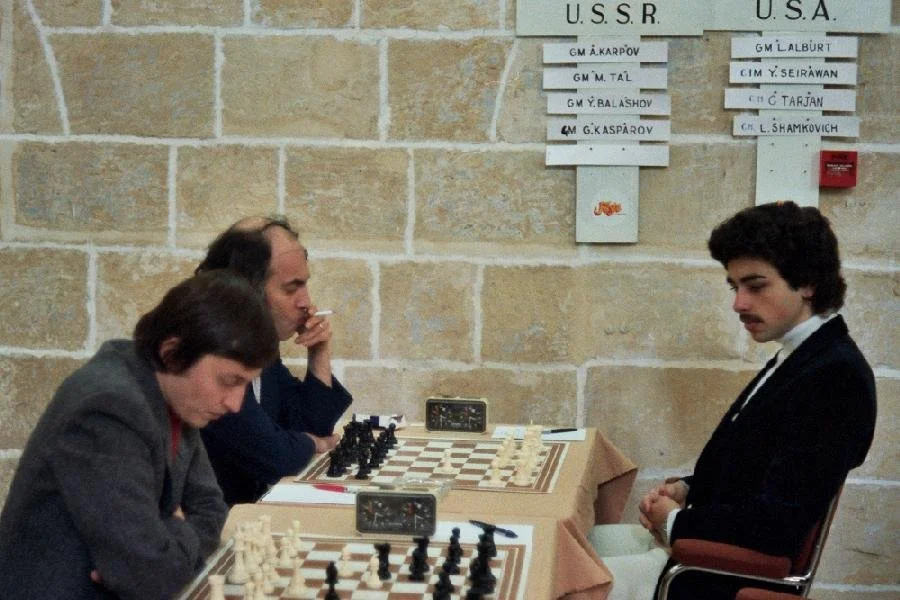
The 1980 Chess Olympiad in Malta, the 24th Chess Olympiad in the open series, ended with one of the closest gold-medal decisions in international team chess. The Soviet Union and defending champion Hungary each scored 39 game points after 14 rounds in Valletta. Their direct match had finished 2-2. The Soviet team received gold because its opponents accumulated 449.5 points, against Hungary's 448, under the Buchholz tiebreak. A margin produced across two weeks of play came down to 1.5 points in the results of other teams.
That finish is the best-known part of Malta 1980, and it is also the part most vulnerable to simplification. The open event was a contest between two unbeaten teams with distinct strengths. The Soviet roster combined the reigning world champion, established grandmasters, and 17-year-old Garry Kasparov. Hungary brought back the core of the side that had ended Soviet supremacy in 1978. The final tiebreak depended on every opponent each leader had faced, even though the last-round Scotland-Greece match became its dramatic focal point.
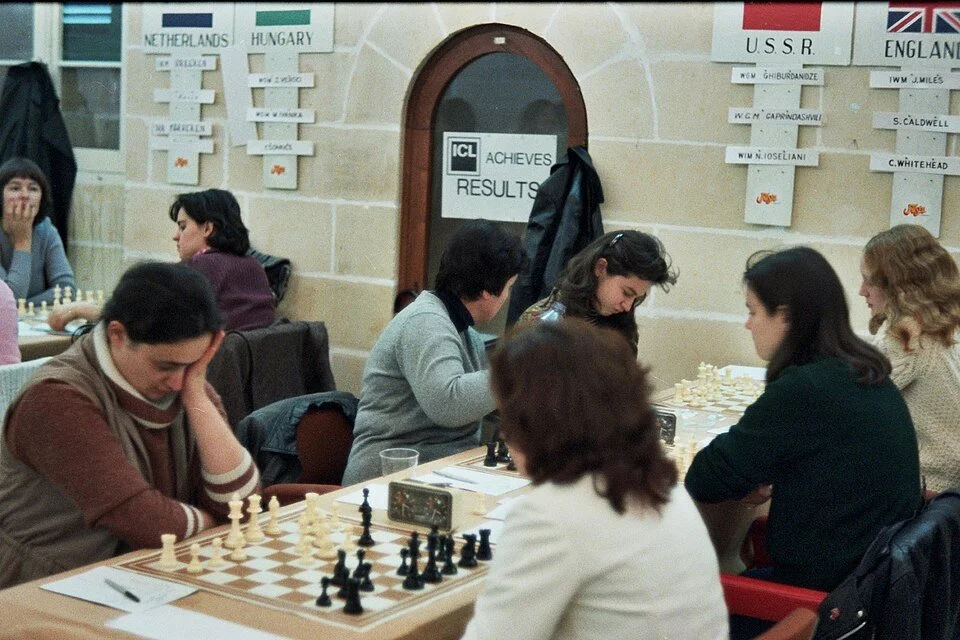
The event had equal historical weight beyond the open gold medal. Forty-two teams contested the 9th Women's Chess Olympiad, the first women's Olympiad held as one unified Swiss tournament. The Soviet women defeated Hungary by half a game point. Malta staged both competitions in a restored sixteenth-century hospital complex and held the 54th FIDE Congress in the same building. Those features made Valletta a meeting point for competitive chess, federation politics, and the rapid geographic expansion of the game.
From the 1976 split to Hungary's 1978 victory
MBIHund, CC BY 3.0
Malta arrived at a sensitive point in Olympiad history. From 1952 through 1974, the Soviet Union won every open Olympiad it entered. The sequence reflected extraordinary depth. World champions and leading challengers could appear on every board, and a reserve often ranked among the strongest players in the tournament.
The 1976 Olympiad in Haifa disrupted that pattern. The Soviet Union, its Eastern European allies, and Arab federations stayed away amid a political dispute over the Israeli venue. Forty-eight teams played in the official event, while a rival competition took place in Tripoli. The United States won in Haifa. OlimpBase records 38 Tripoli entries, including four observers, and 34 classified teams. The simultaneous events exposed a serious division inside world chess. 12
The full competitive field returned at Buenos Aires in 1978. Hungary then achieved the sporting breakthrough that gave Malta 1980 its central rivalry. Lajos Portisch, Zoltán Ribli, Gyula Sax, István Csom, András Adorján, and László Vadász scored 37 points, one more than the Soviet Union. It was the first Olympiad since the Soviet debut in 1952 in which the country entered and failed to win. The Soviet side did not include Anatoly Karpov, who had just completed his world championship match with Viktor Korchnoi, and Hungary converted a strong final round into a deserved title. 3
Malta's organizer Mario Serracino-Inglott later wrote that the country received the 1980 Olympiad partly in recognition of Maltese efforts to preserve FIDE unity after Haifa and Tripoli. He described shuttle contacts involving British official Harry Golombek and Libya. This is an organizer's retrospective explanation, and the surviving event page does not provide FIDE minutes that establish it as the sole reason for the award. It still captures how Maltese officials understood their role. In Valletta, Israeli and Libyan delegations attended the same event, as did the Soviet Union and China. 4
Two leading players were absent for a clear scheduling reason. Korchnoi and West Germany's Robert Hübner were preparing for their Candidates final in Merano, which began on December 20, two weeks after the Olympiad ended. Tigran Petrosian was also missing from the Soviet lineup. No reliable source reviewed for this article establishes the reason for his absence, so speculation adds nothing to the record. 4
GFHund
Malta as host: venue, field, and format
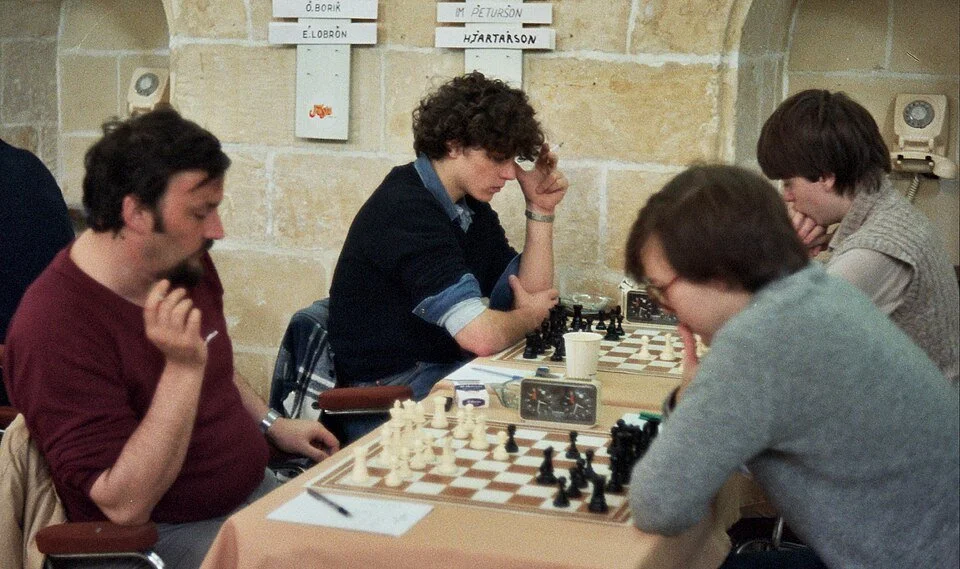
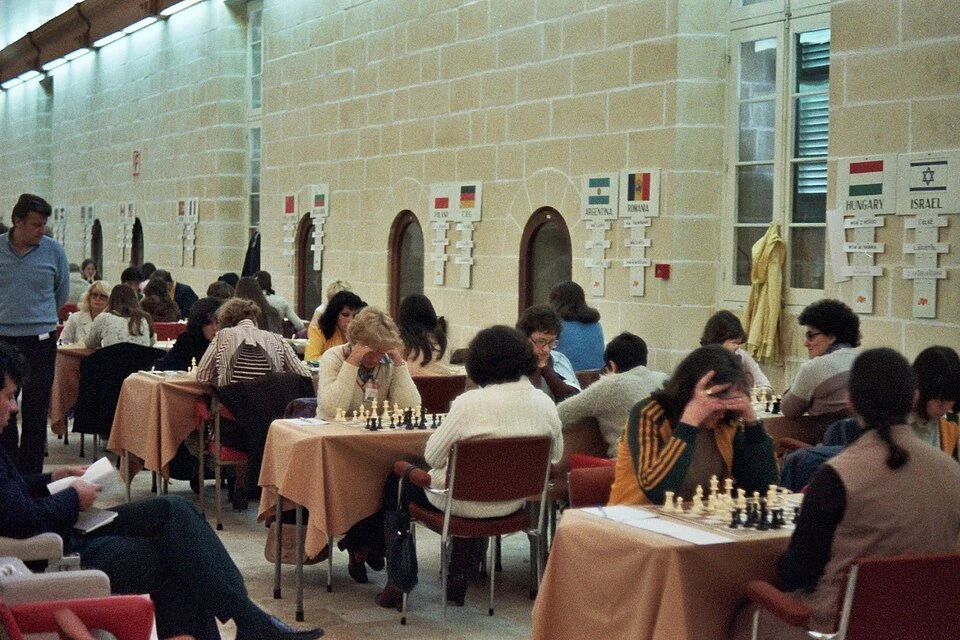
The competitions ran from November 20 through December 6, 1980, at the Mediterranean Conference Centre in Valletta. The building had opened in its new role in 1979 following a major restoration. It began in 1574 as the Sacra Infermeria, the hospital of the Order of St John. Its 161-metre Long Ward, created for hundreds of patients, became the playing hall for the open and women's Olympiads. The setting joined Malta's architectural history to a tournament that required an unusually large shared space. 56
The Malta Chess Federation led the project through an organizing committee headed by Joe Pisani Rossi and Serracino-Inglott. German International Arbiter Lothar Schmid served as chief arbiter. Serracino-Inglott credited Festa Ltd. with providing accommodation and meals, with additional support from Malta's tourist authorities, banks, and government. A contemporary Danish report by player Carsten Høi found the long playing hall well suited to the chess and recorded pressure on dining, transport, and analysis facilities. Taken together, the accounts show a small federation delivering the essential competitive setting amid the logistical strain of a record-sized gathering. 7
The open event contained 81 national federation teams. Malta supplied an additional B team to make 82 team entries, so Malta B competed without an official final placing. The main statistical archive consequently gives three figures that should remain distinct. There were 81 national entrants in the official open classification, 82 playing teams after Malta B was added, and an organizer's retrospective statement that 83 nations were represented. That last statement does not define its counting method. It may include a broader delegation or congress count, and it should not be presented as the number of open teams. The results support 81 federations and 82 entries. The open tournament involved 483 players, including 58 grandmasters and 75 international masters. 4
Each open team registered four playing boards and two reserves. Four individual games therefore produced the team score in every match. A win earned one game point, a draw one-half, and a loss zero. The final ranking used total game points first, Buchholz second, and match points third. A 3.5-0.5 victory added one point more to a team's primary score than a 2.5-1.5 victory, even though both counted as match wins. This scoring system rewarded teams for pressing advantages across all four boards.
The 14-round Swiss system paired teams with broadly comparable scores as the event progressed. It allowed a very large field to share one competition without requiring every nation to face every other. Buchholz added the final point totals of a team's 14 opponents as a measure of schedule strength. The method made sense for a Swiss event, since teams encountered different opposition. It also gave distant results real influence over the medal order. Malta would provide a textbook example of that sensitivity.
The time control was 40 moves in two and a half hours, followed by one hour for each additional 16 moves. Games that remained unfinished could be adjourned. A player sealed a move, the session stopped, and the position resumed later. Teams used the interval for analysis with captains, reserves, and other helpers, a normal part of elite chess before computers led organizers toward faster schedules. Adjournments shaped the daily work of an Olympiad delegation and the dispute attached to Malta's final round. 48
GFHund
The course of the 1980 Chess Olympiad in Malta
Hungary began its title defense with a 4-0 win over Scotland. The Soviet Union opened with a 2.5-1.5 victory over Venezuela. That difference set the early pattern. Hungary won each of its first six matches and accumulated large board-point totals. The Soviets had ground to recover, and Karpov's illness kept him out for two early rounds. 4
The Soviet board order is sometimes reproduced incorrectly. The official order was Karpov, Lev Polugaevsky, Mikhail Tal, Efim Geller, Yuri Balashov, and Kasparov. Tal played board three and Geller board four. Karpov returned in the fourth round and eventually scored 9/12 without a loss. Polugaevsky scored 3/7, Tal 3.5/6, Geller 6.5/9, Balashov 7.5/10, and Kasparov 9.5/12. The reserves supplied 17 points from 22 games, a major part of the Soviet recovery. Geller and Balashov were also unbeaten. 9
The roster concentrated several generations of elite experience. Karpov was the reigning world champion, and Tal had held the title two decades earlier. Tal, Polugaevsky, and Geller brought extensive Olympiad experience, and Balashov added proven Soviet team strength. Kasparov was a 17-year-old grandmaster making his Olympiad debut. The selection joined present authority, veteran depth, and the country's most prominent emerging player in one six-person team.
Hungary retained the lineup's competitive identity from 1978. Portisch led on board one and scored 9.5/13. Ribli made 8.5/13, Sax 7.5/12, Csom 7/9, Iván Faragó 2/4, and József Pintér 4.5/5. Csom won the board-four individual gold, and Pintér's 90 percent was the team's highest percentage. Hungary won ten matches and drew four. Its balance kept the defending champions unbeaten even as the Soviet totals accelerated. 10
Their direct meeting finished 2-2. This preserved Hungary's advantage at the time and removed any head-to-head resolution from the final standings. The Soviet Union also remained unbeaten, finishing with 11 match wins and three draws. By the end of the twelfth round, it had caught Hungary at 33 game points. Each side scored 2.5 in the penultimate round, leaving both on 35.5 before the final day. Hungary had led outright for most of the event and now shared first place with the pre-tournament favorite. 910
The Soviet campaign was a full-team recovery. Karpov's illness narrowed the margin for error, and the entire roster contributed to closing the gap. Karpov added six wins and six draws. Geller and Balashov delivered high scores on the lower boards. Kasparov supplied eight wins. The team increased its point production late enough to draw level, then relied on a tiebreak that reflected all 14 opponents.
Hungary's silver carries comparable weight. Its average rating was 2593 against the Soviet figure of 2666. An unbeaten 39-point campaign equaled the champion's primary score and confirmed that Buenos Aires had represented a durable team achievement. Malta separated the teams in the official order, with their competitive records remaining extremely close. 910
GFHund
The final round and the 1.5-point Buchholz margin
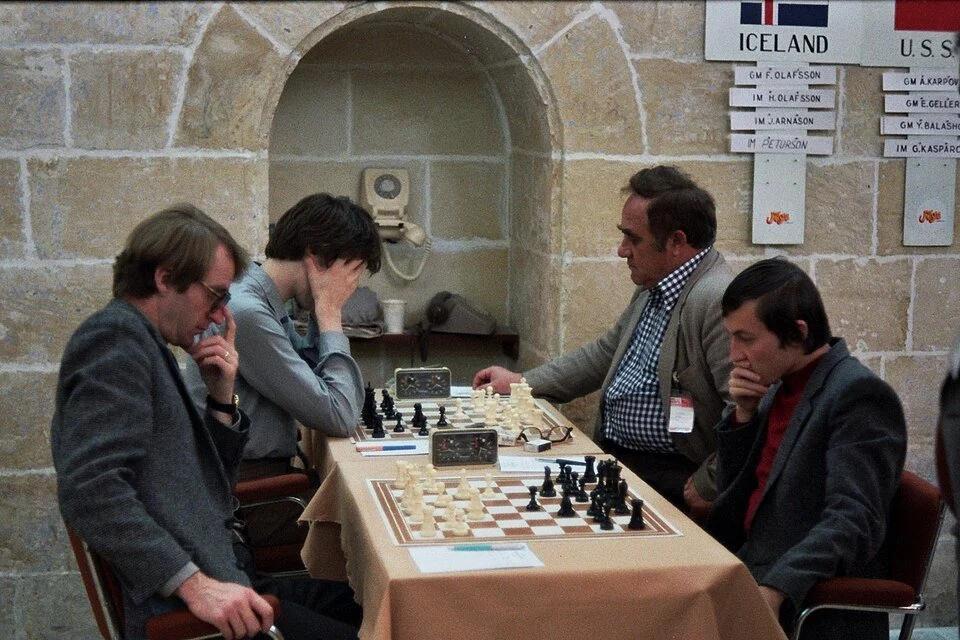
On December 6, the Soviet Union defeated Denmark 3.5-0.5. Karpov, Geller, and Balashov won; Kasparov drew Jacob Øst-Hansen. Hungary defeated Iceland by the same score. Portisch, Ribli, and Pintér won; Sax drew Margeir Pétursson. Both leaders finished on 39 game points. The official match-point totals were 25 for the Soviet Union and 24 for Hungary, a detail several later accounts have misstated. Match points served only as the third criterion, so Buchholz decided the title first. 1112
The Soviet opponents finished with a combined 449.5 game points. Hungary's opponents totaled 448. Many opponents were common to both schedules, including the other leader, Yugoslavia, the United States, England, Czechoslovakia, Romania, Bulgaria, the Netherlands, and Iceland. The different opponents produced the decisive gap. The five unique Soviet opponents totaled 152.5 points; Hungary's five unique opponents totaled 151.
Scotland and Greece drew attention because Hungary had defeated Scotland in the first round. The Soviet Union had defeated Greece in the second. Scotland and Greece met each other on the final day. Greece won 3.5-0.5 and finished on 30 points. Scotland finished on 27. Every Greek point raised the Soviet Buchholz total, and every Scottish point raised Hungary's. If Scotland had scored 1.5 in that match, with Greece scoring 2.5, the two-point relative swing would have placed Hungary half a Buchholz point ahead. A Scottish score of 1.0 would have reduced the Soviet margin to half a point. 13
The full calculation also included Denmark finishing one point ahead of Iceland, which helped the Soviet total because Denmark was its final opponent. Results involving Venezuela, Austria, Argentina, Norway, Sweden, Israel, and Finland contributed to the difference between the two schedules. Greece's large win became decisive because it moved a closely balanced sum across the line near the end of play.
Buchholz measured schedule strength through aggregate opponent scores. In a field with unequal schedules, that method rewarded the Soviet Union's slightly stronger total and made results involving other teams part of the title calculation. A tiny margin can make this dependency feel arbitrary. The responsible historical conclusion is simple: the Soviet Union won under the published order of criteria, by 449.5 to 448 after the teams tied on game points.
Eugenio Torre. Photo by Isabel Hund
Kasparov, the Greek analysis, and the limits of the evidence
The final-round controversy requires a strict separation between documented events, later recollections, and unsupported conclusions. The results themselves are settled. Greece beat Scotland 3.5-0.5. Stephen Swanson lost to Georgios Makropoulos on board one, Gerald Bonner lost another adjourned game, and the Soviet Union gained the Buchholz margin it needed.
The earliest traceable account located for this article establishes that Kasparov helped analyze for the Greek side during the adjournment break. Bonner, Scotland's captain, wrote in his post-event report in issue 61 of Scottish Chess that two games had been adjourned with Greece leading 1.5-0.5. He described Kasparov as an extra member of the Greek team whose help was valuable in adjournment analysis. Chess Scotland later republished the passage. Swanson also recalled that Kasparov sat in his chair as soon as the adjournment began and analyzed with Makropoulos. 13
Those statements are stronger evidence than a story assembled decades later. They identify the participants, the stage of the games, and the form of assistance. They place the help after the games were sealed and before play resumed. They do not describe communication with a player while a game clock was running.
The distinction is central to the rule question. Advice while games were in progress was the prohibited conduct relevant to the allegation. Bonner reported that, at the captains' meeting, Schmid warned captains against extended conversations with players because they might convey advice during active games. The same report places Kasparov's contribution after sealed moves ended the playing session. Adjourned-game analysis with teammates and seconds was standard practice in that era. Swanson also recalled analyzing another Malta adjournment with Yasser Seirawan and Pal Benko. No regulation located for this article barred an analyst from another delegation from joining an adjournment session. 813
Hungarian frustration is also part of the record. In a 2020 interview, Portisch told Magyar Nemzet that he had been occupied with his own game and had not seen the episode. He said teammates later told him Kasparov had advised the Greeks. This is a valuable participant perspective with a clear limitation: Portisch identified it as secondhand. The article added speculation about Kasparov's motive and Viktor Baturinsky's reaction, which should not be converted into established fact. 14
A January 1981 report in the Danish magazine Skakbladet offers near-contemporary support for one part of that surrounding story. Høi, who played Geller in the final-round Denmark-Soviet match, wrote that after Kasparov accepted Øst-Hansen's draw offer in an unclear position, he “apparently got a scolding” from Baturinsky and Polugaevsky. The qualifying word is important. Høi reported what appeared to have happened; he did not present a direct quotation or an official record. The article does not connect that reaction to a proven instruction to help Greece. 7
Later writer Tim Krabbé observed that Makropoulos's adjourned position was already highly favorable and judged that he would have won without Kasparov's help. Bonner's contemporary report similarly said Swanson's position was already lost at adjournment time. Such assessments reduce the case for assigning the result to outside analysis, though retrospective evaluations cannot reconstruct every practical possibility. 15
No source reviewed for this article identifies a formal protest filed in Malta, an arbiter's ruling that Kasparov violated the event regulations, or a disciplinary action. No located statement from Makropoulos, another Greek player, Schmid, the organizers, or a Soviet official answers the later allegation on its merits. This absence defines the available evidentiary boundary. The record supports a finding that Kasparov assisted Greece during an adjournment analysis session. It does not support presenting an official cheating violation as established history.
Kasparov later selected Swanson-Makropoulos when New in Chess asked him about the most exciting game he had watched. His stated reason was direct: Makropoulos's victory gave the Soviet Union the better Buchholz total and Kasparov his first team gold. That recollection acknowledges the game's importance without resolving every later argument about competitive etiquette. 13
Kasparov's Olympiad debut and the medal correction
Kasparov's competitive record in Malta was exceptional. At 17, he scored 9.5/12 on second reserve: eight wins, three draws, and one loss. His 79.2 percent ranked third on that board after the final statistics were corrected. Predrag Nikolić of Yugoslavia scored 6.5/8 for gold, and Malta B reserve Andrew Borg scored 8/10 for silver. Kasparov received bronze in the corrected ranking. 4
The correction occurred after the closing ceremony. Organizers had missed one of Borg's wins and initially presented Kasparov with silver. Once the score was fixed, Borg became the rightful silver medalist. A later presentation by Malta's sports minister recognized him on national television. Maltese newspaper coverage of Borg's 2004 national title confirms the 8/10 score and his board-six silver. The episode belongs in the record as an administrative scoring correction, with no effect on the team championship or Buchholz result. 16
Malta was Kasparov's Olympiad debut. In 1980, the future world champion was the youngest member of a roster led by Karpov. His score gave immediate evidence of the depth that would define his later team career.
GFHund
Yugoslavia, the United States, and a wider chess world
Yugoslavia took bronze with 35 points, four behind the leaders. Ljubomir Ljubojević led a roster that also included Borislav Ivkov, Bruno Parma, Bojan Kurajica, Slavoljub Marjanović, and Nikolić. The team lost only once, to the Soviet Union, and drew five matches. Nikolić's reserve-board gold supplied 6.5 points from eight games. Yugoslavia's clear third place confirmed its standing as the strongest challenger outside the two leaders. 12
The United States finished fourth on 34. Its board order reflected political movement within chess as well as generational change: Lev Alburt, Yasser Seirawan, Larry Christiansen, James Tarjan, Nick de Firmian, and Leonid Shamkovich. Alburt had left the Soviet Union in 1979 and settled in the United States. He scored 5.5/10 on board one. Seirawan, making his Olympiad debut, scored 8/11 and earned board-two silver. His victories included one over Tal during the American match with the Soviet Union. 1718
Czechoslovakia placed fifth, England sixth, Poland seventh, Israel eighth, Canada ninth, and the Netherlands tenth. The order shows how many established chess nations operated within a narrow band below the medalists. England possessed six internationally known players led by Tony Miles. Israel's presence carried institutional significance four years after the Haifa boycott.
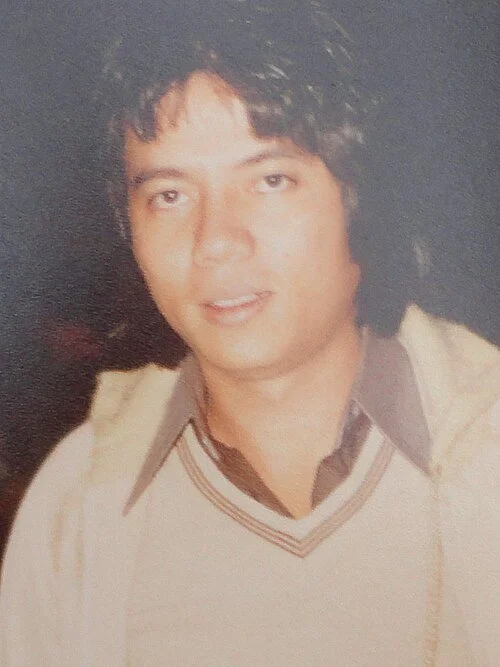
The individual prizes widened the story further. William Hook of the British Virgin Islands won first-board gold with 11.5/14. Kenya's Saifudin Kanani took silver, and Filipino grandmaster Eugenio Torre earned bronze with 11/14. The Philippines finished fifteenth. China, in its second open Olympiad, placed thirty-eighth and would make a much stronger impression in the women's event. The Olympiad served as a championship for the strongest national teams and as a global competition in which players from smaller federations could earn recognition on equal boards. 412
The 9th Women's Chess Olympiad
The women's competition deserves treatment as a second elite championship, especially because its finish was even closer in primary points. Forty-two teams and 162 players competed on three playing boards, with one reserve, over 14 rounds. The Soviet Union scored 32.5 points, Hungary 32, and Poland 26.5. The half-point margin determined gold directly. Hungary actually had the stronger Buchholz total, 332.5 to 331.5, and one more match point, 25 to 24. Those figures never came into use because game points were the first criterion. 19
This was the first Women's Chess Olympiad organized as one unified Swiss competition. Buenos Aires 1978 had used preliminary groups followed by separate final groups and contained 32 teams. Malta's switch to a 42-team Swiss expanded the shared field by ten and allowed every team to remain in the same overall ranking. The format aligned the women's event more closely with the open competition and reflected growing international participation. 20
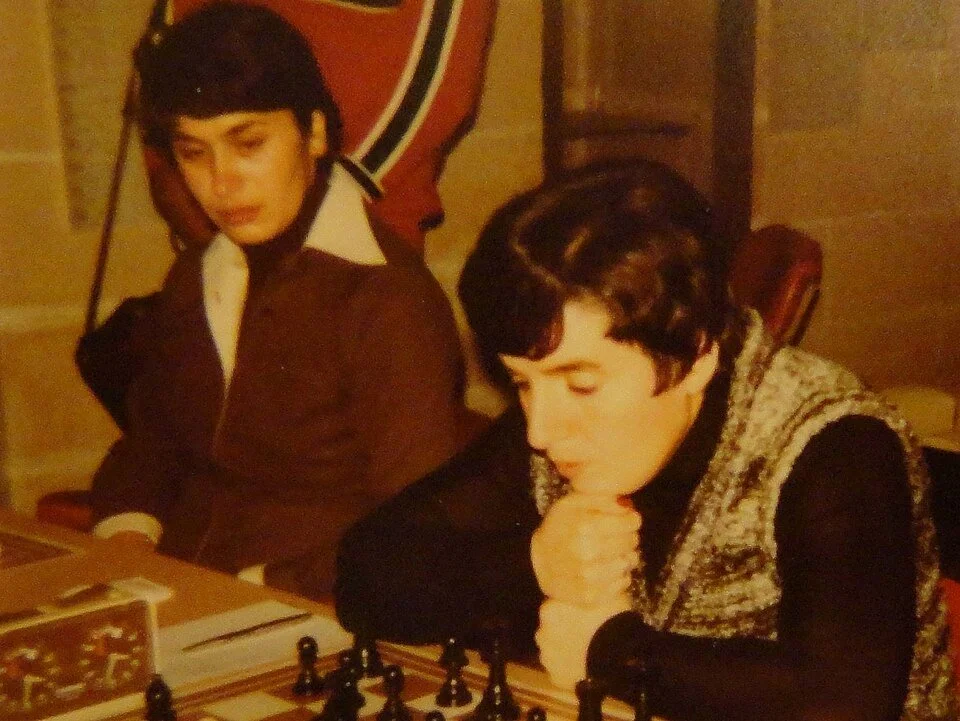
The Soviet lineup joined two generations of Georgian world champions. Maia Chiburdanidze, who had defeated Nona Gaprindashvili for the world title in 1978, scored 11.5/13 on board one. Gaprindashvili scored 9.5/12 on board two. Both won individual gold. Nana Alexandria contributed 4/8 on board three, and Nana Ioseliani scored 7.5/9 for reserve gold. Chiburdanidze's 88.5 percent was the strongest board-one result in the event. 2122
The team title required resilience. The Soviet Union lost 1-2 to Bulgaria in the third round, drew Hungary 1.5-1.5, and later drew China by the same score. Hungary completed the event without a match loss. Zsuzsa Verőci-Petronić scored 10/13, Mária Ivánka 11/14, Mária Porubszky-Angyalosine 8/11, and Tünde Csonkics 3/4. The first three won individual silver medals on their respective boards. Hungary's consistency produced more match points, while the Soviet top two and reserve produced the half game point that separated the teams.
Poland's bronze came through Hanna Ereńska-Radzewska, Grażyna Szmacińska, Małgorzata Wiese, and Agnieszka Brustman. Brustman scored 8/11 for reserve silver. Romania finished fourth, followed by West Germany and China. Israel placed seventh, and the United States finished thirteenth with 22 points. China's sixth place in a 42-team field gives a concrete measure of women's chess moving beyond its older European base. The larger field and Swiss format created a broader competitive structure across several regions. 1921
The simultaneous Soviet victories should therefore be understood separately. The open team won on Buchholz after tying Hungary on game points. The women's team won by half a game point, while Hungary held the better secondary figures. In both competitions, Hungarian teams finished unbeaten in match play and forced the Soviet squads to the final margin.
Malta's teams, organizers, and FIDE Congress
Malta entered two open teams and one women's team. Malta A fielded Wilfred Attard, Harry Camilleri, Adriano Gouder, and Claude Sollars, with Joe Gauci and Geoffrey Borg as reserves. It scored 25.5 points and placed sixty-first among the 81 officially ranked teams. Malta B consisted of Victor Cilia Vincenti, Walter Vella Gera, Mario Psaila, and Conrad Thake, with Andrew Borg and Raymond Vassallo in reserve. It also scored 25.5. Its status as the extra host team left it outside the official placing order. 6
For Malta, the organizational result exceeded the home teams' position. The same building accommodated hundreds of players, officials, spectators, commission meetings, and the FIDE Congress. Serracino-Inglott's retrospective stresses the financial challenge for a small island federation and the network of public and private support required to meet it. Høi's contemporary report recorded practical complaints and judged the playing conditions sound. Both perspectives are needed for a balanced assessment of the host.
The 54th FIDE Congress ran from December 4 to 7, with central committee and commission meetings held from November 25 through December 3. Serracino-Inglott reported 71 delegates. Antigua, Brunei, Egypt, Kenya, Senegal, and Zimbabwe were admitted, bringing FIDE membership to 114 federations. The Congress also recognized Serracino-Inglott as Malta's first International Arbiter. FIDE president Friðrik Ólafsson chaired the proceedings. 4
Those decisions connect the Olympiad's scale to institutional expansion. Malta hosted 81 open federations at the board and helped FIDE add members from the Caribbean, Africa, and Asia in the congress hall. International sport still carried political tensions, and the gathering demonstrated that a small federation could provide neutral ground for a wide range of delegations only four years after the divided events of Haifa and Tripoli.
MBIHund
Contemporary reception and lasting significance
Contemporary reporting recognized the finish as extraordinary. Høi's January 1981 account in Skakbladet framed the Soviet campaign as an attempt to recover the title lost in Buenos Aires. He recorded the suspense after both leaders won 3.5-0.5 and gave the final Buchholz totals. He also described strong applause for Hungary at the closing ceremony and a more restrained reception for the Soviet winners. That observation reflects one participant's view from the hall; it should not be enlarged into a universal public verdict. 7
The Soviet federation journal Shakhmaty v SSSR opened its chess coverage in February 1981 with an unsigned article titled A Difficult Victory in translation. It presented Malta as a double Soviet success after the open setback of 1978, emphasized the long pursuit of Hungary, and credited the broader field with a rising standard of play. The institutional perspective is clear: this was the Soviet federation's official journal, celebrating victory and acknowledging how hard it had been earned. 24
A 1981 combined issue of Magyar Sakkélet made Malta its central subject. Its contents opened with Our Chess Players Remain Among the World's Elite!, in translation, followed by reports on all 14 rounds, interviews and evaluations, and a proposal titled Corrected Buchholz for FIDE. The indexed titles capture pride in the two Hungarian silver medals and immediate scrutiny of the tiebreak system. The contents page does not establish the full arguments inside those articles, so it cannot support later claims of misconduct. It calls the open competition the men's Olympiad, the standard contemporary label preserved here only when identifying the source; modern narrative uses open event. 25
A Maltese publication supplied a different local record. Joseph Farrugia's 1981 postal diary documented the commemorative stamp set released on opening day and the temporary branch post office operated inside the Mediterranean Conference Centre for the duration of the Olympiad. This administrative coverage shows the event entering Malta's public institutions beyond the playing hall. 26
American coverage focused on a fourth-place team led by a recent Soviet émigré and a new grandmaster. Chess Life summarized Seirawan's medal-winning 8/11 and Alburt's work on board one. The Scottish chess press preserved the account that would become central to later discussion, recording Kasparov's role in the Greek adjournment analysis soon after the event. Maltese retrospectives placed greater emphasis on the venue, organizers, local teams, and FIDE Congress. Each national lens selected a different legacy from the same gathering. 2313
For tournament history, Malta is a vivid case study in scoring systems. Game points encouraged play on every board. Swiss pairings made a field of 82 teams possible. Buchholz addressed unequal schedules and transferred some control over the final order to results elsewhere. The Soviet Union's 1.5-point tiebreak win followed the stated regulations, and the Scotland-Greece match showed how difficult that outcome could feel to the team that lost gold. The victory restored Soviet open gold for the first time since Nice 1974 and began its return to the leading position in early 1980s team chess.
For chess culture, the final round belongs to the age of adjournments. Sealed moves created an interval in which team resources could affect a player's resumed game. The record shows Kasparov joining Greece's analysis. It also shows that collaborative adjournment work was an accepted feature of the period and that no formal violation has been established in the available sources. Modern retellings become more accurate when they preserve all three facts.
For women's chess, the first unified Swiss Olympiad and the rise from 32 to 42 teams marked a structural change. Chiburdanidze and Gaprindashvili gave the Soviet team exceptional strength, Hungary came within half a point, Poland won bronze, and China placed sixth. The tournament documented an expanding field while providing a championship every bit as close as the open event.
For Malta, the enduring achievement was scale. A recently restored historic building held two world team competitions and a major federation congress. Maltese players gained a rare home Olympiad, Andrew Borg earned an individual silver after the score correction, and Serracino-Inglott received the country's first International Arbiter title. The 1980 Chess Olympiad in Malta remains a story of two narrow Soviet victories, an exceptional Hungarian challenge, and a small host federation placing itself at the center of world chess.
Notes and Sources
OlimpBase: 22nd Chess Olympiad, Haifa 1976. Event data and tournament review for the official 1976 Olympiad.
OlimpBase: Against Chess Olympiad, Tripoli 1976. Entry count, results, and two historical reviews of the rival event.
OlimpBase: 23rd Chess Olympiad, Buenos Aires 1978. Official-format results archive and review of Hungary's victory.
OlimpBase: 24th Chess Olympiad, La Valletta 1980, information. Core event data, individual medals, Andrew Borg correction, and Mario Serracino-Inglott's organizer retrospective.
Mediterranean Conference Centre: About Us. Official venue history of the former Sacra Infermeria.
Conrad Thake, Commemorating the Malta Chess Olympiads 1980, Malta Chess Federation and Times of Malta, December 12, 2020. Venue, organizers, and Maltese rosters. Its Soviet board order and women's-margin descriptions were checked against the results archive and corrected in this article.
Carsten Høi, Guld til USSR: 24. skak-OL, Valetta på Malta, Skakbladet, no. 1, January 1981, especially pp. 1, 7-10, and 15. Contemporary Danish participant report. English renderings in this article are translations from Danish.
Edward Winter, Chess Seconds, ChessHistory.com. Documentary examples of seconds analyzing adjourned positions.
OlimpBase: Soviet Union at the 1980 Olympiad. Board order, individual scores, and match results.
OlimpBase: Hungary at the 1980 Olympiad. Board order, individual scores, and match results.
OlimpBase: La Valletta 1980, Round 14. Final-round pairings and board results.
OlimpBase: La Valletta 1980, final standings. Team points, Buchholz, match points, and opponent records.
Chess Scotland, Kasparov's Most Exciting Game. Includes Gerald Bonner's post-event report in Scottish Chess, no. 61, the chief arbiter's guidance reported from the captains' meeting, and later recollections by Stephen Swanson.
Novák Miklós, Kaszparov kereken 40 éve krampuszt adott a magyaroknak Mikulásra, Magyar Nemzet, December 6, 2020. Hungarian anniversary interview with Lajos Portisch. English summaries in this article are translations from Hungarian.
Tim Krabbé, Gyula Sax (1951-2014), A Devilish Tactician, Russell Enterprises, March 1, 2014. Later assessment of the adjourned position and the final-round episode.
Times of Malta, First national title for Borg, October 6, 2004. Confirms Andrew Borg's 8/10 silver-medal performance in 1980.
World Chess Hall of Fame, Lev Alburt. Biographical source for Alburt's 1979 defection and American career.
World Chess Hall of Fame, Global Moves: Americans in Chess Olympiads. Seirawan's 1980 debut, board-two silver, and medal provenance.
OlimpBase: 9th Women's Chess Olympiad, final standings. Team scores, Buchholz, match points, and round results.
OlimpBase: 8th Women's Chess Olympiad, Buenos Aires 1978. Field size and two-stage group format preceding Malta's Swiss event.
OlimpBase: 9th Women's Chess Olympiad, information and individual medals. Field data and board-prize scores.
FIDE Commission for Women's Chess, Maia Chiburdanidze: 6th Women's World Champion. World-title and Olympiad context.
Chess Life, February 1981, United States Chess Federation, p. 8. Contemporary American summary of the Malta results.
Editorial, Трудная победа (A Difficult Victory), Shakhmaty v SSSR, no. 2, February 1981, pp. 2-3. Contemporary Soviet federation-journal assessment of both team victories and the widening international field. The English title and summaries in this article are translations from Russian.
Csaba Meleghegyi, András Ozsváth, and János Tompa, Sakkozóink továbbra is a világ élvonalában!: IX. női és a XXIV. férfi olimpia után, Magyar Sakkélet, vol. 31, nos. 2-3, 1981, pp. 25-28. The same issue's indexed contents list round reports through pp. 28-53, András Ozsváth and Ferenc Elek's statements and evaluations on pp. 54-57, and their Buchholz proposal on p. 57. MATARKA provides bibliographic records, not the full articles. English title summaries in this article are translations from Hungarian.
Joseph Farrugia, Malta: A Diary, September-December 1980, The PSM Magazine, vol. 11, no. 1, Spring/Summer 1981, pp. 25-29. Contemporary Maltese record of the Olympiad stamp issue and temporary post office at the venue.
