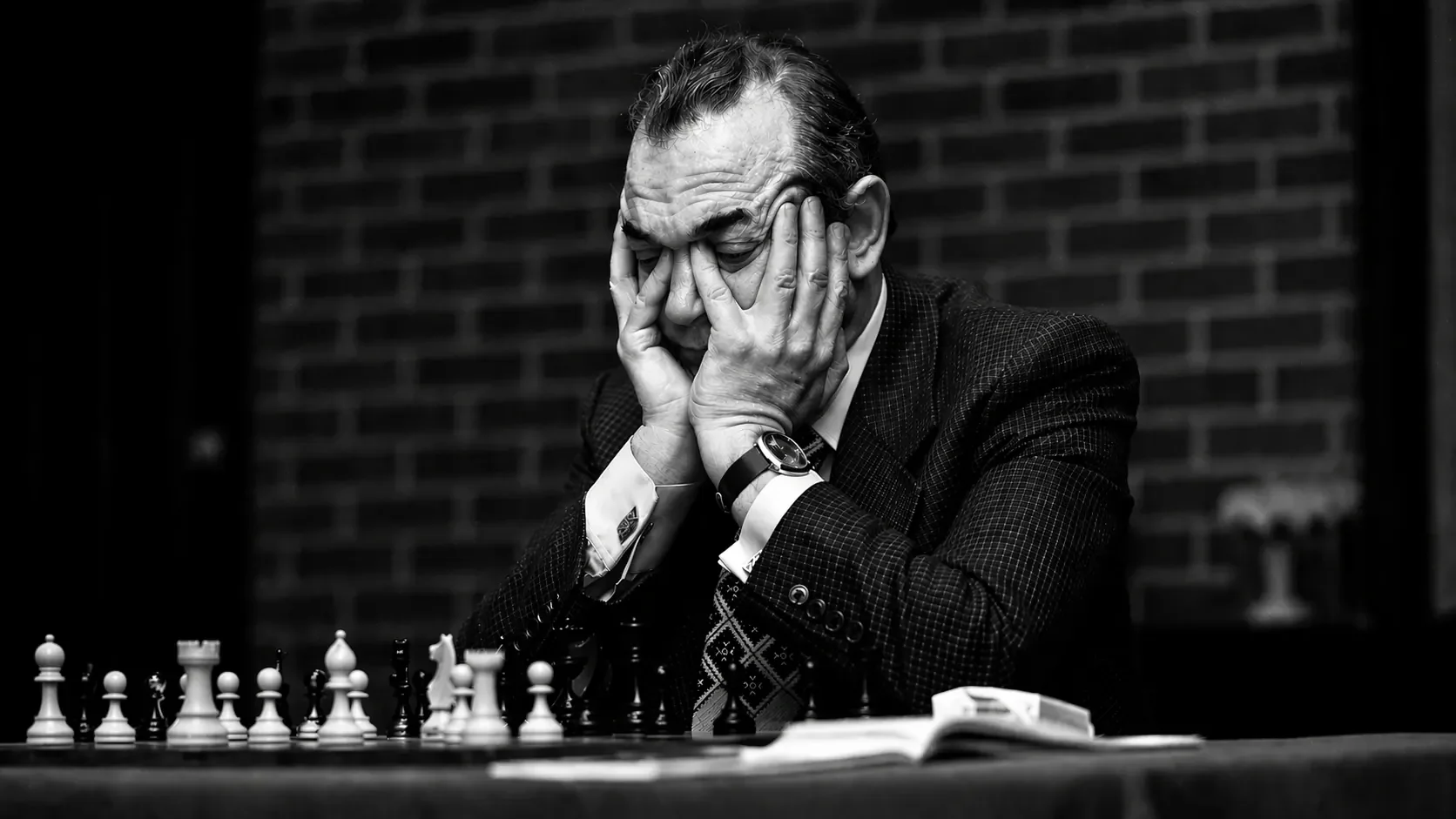
How the Early Soviet State Turned Chess Into a Tool
A look inside the origins of Soviet chess culture. These articles trace how early USSR institutions and political leaders transformed chess into a tool for education, discipline, and national development, setting the foundation for decades of dominance in world chess.
Valery Chekhov
Valery Chekhov rose to prominence by winning the 1975 World Junior Chess Championship before building a respected career as a Soviet grandmaster, team player, analyst, author, and educator. The first major pupil of Mark Dvoretsky, Chekhov later assisted Garry Kasparov and helped transform Soviet training experience into structured programs for a new generation of players.