Tilburg 1979
Koen Suyk / Anefo
Introduction
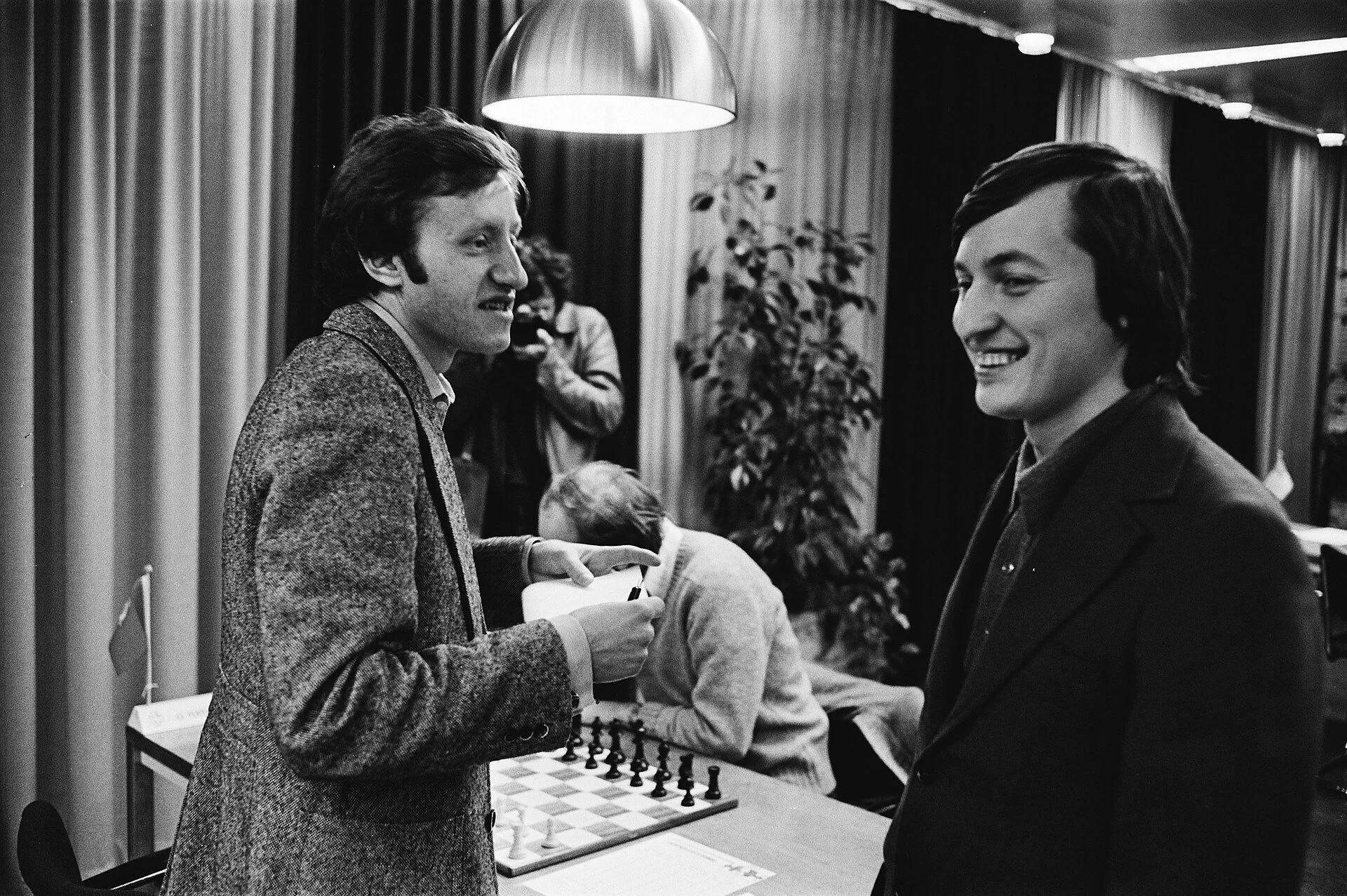
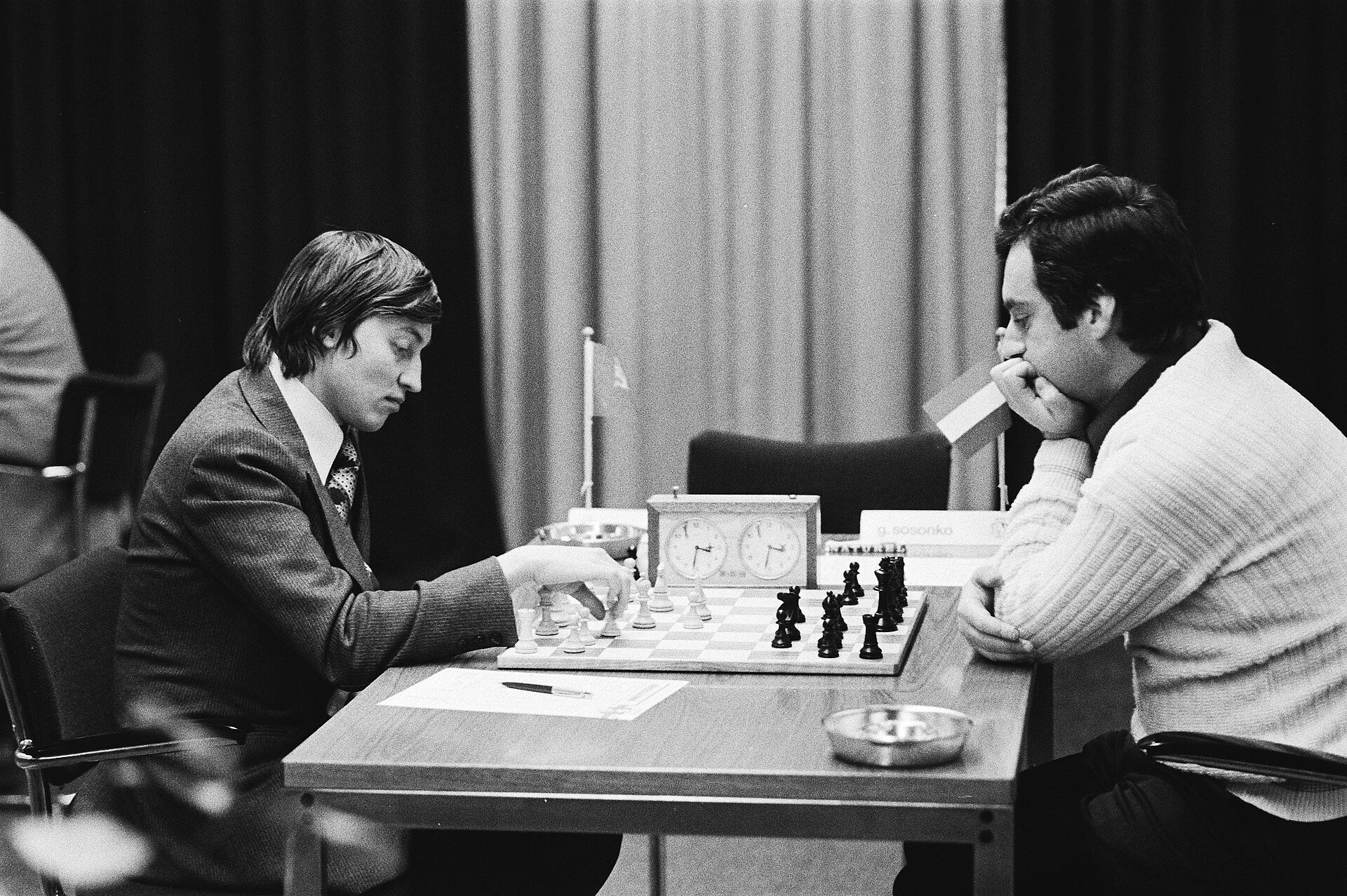
The third Interpolis chess tournament at Tilburg, held from November 2 to November 15, 1979, was a 12 player single round robin of Category XV strength, with an average Elo of 2606. The event ended with Anatoly Karpov first on 7.5/11, Oleg Romanishin second on 7/11, and Lajos Portisch third on 6.5/11. In bare statistical terms that already makes Tilburg 1979 an elite late 1970s invitational. In historical terms, it was more than that. It was the point at which the Tilburg series, only in its third edition, ceased to look merely promising and began to look entrenched as one of the fixed addresses of top class international chess.
For Soviet chess history, the tournament is especially revealing. The reigning world champion won it. A rising Soviet grandmaster, Romanishin, pressed him to the end. A former Soviet world champion, Vasily Smyslov, had an unexpectedly poor event. Boris Spassky and Genna Sosonko added further Soviet resonance from outside the official Soviet delegation, since both had deep Soviet backgrounds while no longer standing as Soviet representatives. Tilburg 1979, in other words, was one of those Western tournaments whose meaning cannot be understood without looking closely at Soviet personnel, Soviet prestige, and Soviet perceptions.
Koen Suyk / Anefo
Historical Setting
Tilburg 1979 belonged to a moment when international elite chess was organized less by a single permanent circuit than by a cluster of prestigious invitationals across Europe and North America. What made Tilburg distinctive was the speed with which it rose. The Andriessen volume on the event was explicitly titled 3e Interpolis schaaktoernooi 1979, which makes clear that this was only the third installment. Yet by 1979 the field had already reached Category XV, a notable increase on the first two editions.
The dates are recoverable not only from reference databases but also from Dutch photo archives. Anefo photographs place the first round on November 2, 1979, the sixth round on November 8, the later middle phase on November 12 and 13, and the final round on November 15. That sequence fits the standard rhythm of an 11 round single round robin with rest days. The same archival trail also confirms that the tournament was staged in Tilburg itself, while later local historical writing identifies the Interpolis headquarters in the De Reit district as the home of the famous Interpolis series from 1977 through 1994. Easily accessible web sources make the sponsor and site clear, even if they are less consistent about naming the exact room or the full formal composition of the organizing committee.
That sponsorship was central to the tournament’s identity. The event was not simply “Tilburg” in the abstract. It was the Interpolis tournament, and Interpolis itself issued a 64 page Toernooimagazine Interpolis Schaaktoernooi 1979. A separate event book, attributed in surviving antiquarian records to W. F. Andriessen, also circulated under the title 3e Interpolis schaaktoernooi 1979. Those publications are a useful reminder that Tilburg was promoted not just as a chess competition but as a branded cultural event, with documentation prepared for a serious readership.
Marcel Antonisse / Anefo
Organization, Format, and Field
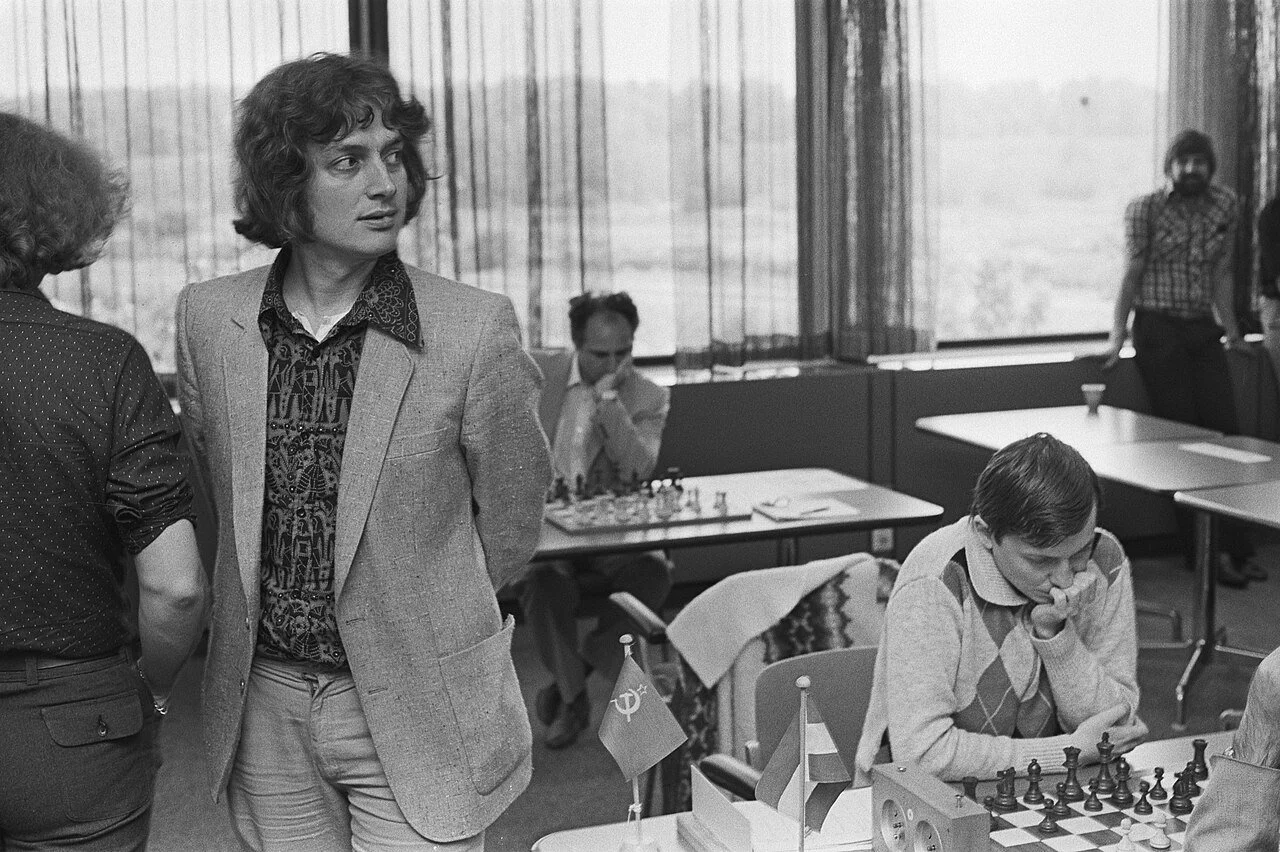
The format was simple and severe. Twelve grandmasters played a single round robin over 11 rounds and 66 games. There were no qualification tricks, no knockouts, no rapid tie breaks, and no protective seeding. The field was strong enough that even a perfectly respectable plus one or plus two result meant a fight for the top four rather than clear first.
The lineup was exceptionally rich in status and contrast. Karpov came as reigning world champion. Romanishin arrived as one of the USSR’s most creative and dangerous grandmasters. Portisch was a perennial world championship candidate. Sax was part of Hungary’s powerful grandmaster generation. Spassky and Smyslov brought the authority of former world champions. Timman was the leading Dutch hope and had already broken through to the interzonal level in 1979. Larsen, Hübner, Kavalek, Hort, and Sosonko completed a field with almost no soft pairings anywhere. In the final standings, after Karpov, Romanishin, and Portisch came Sax on 6, then a large cluster on 5.5 including Spassky, Timman, Larsen, and Sosonko, followed by Hort and Hübner on 5, Kavalek on 4.5, and Smyslov last on 2.5.
The Soviet presence was not merely numerical. It was layered. Karpov, Romanishin, and Smyslov were official Soviet representatives. Sosonko, though playing for the Netherlands after emigrating in 1972, remained a Soviet born figure whose later reputation as a chronicler of Soviet chess only heightens the historical irony of his presence here. Spassky, who emigrated to France in 1976 and became a French citizen in 1978, likewise carried unmistakable Soviet lineage into a non Soviet chess identity. If one wanted a single Western event in 1979 that displayed Soviet chess power both inside and outside official Soviet structures, Tilburg would serve very well.
Rob Croes for Anefo, CC0
The Soviet and International Context
Tilburg 1979 had special weight because it sat at the intersection of two developments. One was the continuing global authority of Soviet chess. The other was the growing capacity of Western Europe, and especially the Netherlands, to host elite events without Soviet control over the setting. That combination gave the tournament a double edge. For Soviet players it was an opportunity to demonstrate superiority abroad. For the Dutch public it was a chance to watch that superiority tested in a domestic setting, with Timman as the local standard bearer.
Karpov’s presence made the event especially important. He was not a ceremonial guest but the highest rated player in the field at 2705, and he justified that status by winning clear first. Because he also won Montreal and Waddinxveen in 1979, Tilburg formed part of a notably strong year in tournament play, one that contributed to his 1979 Chess Oscar. Even if one brackets those larger annual summaries, the point remains that Tilburg 1979 functioned as a major stage on which Karpov was expected to behave like the world champion, and he did.
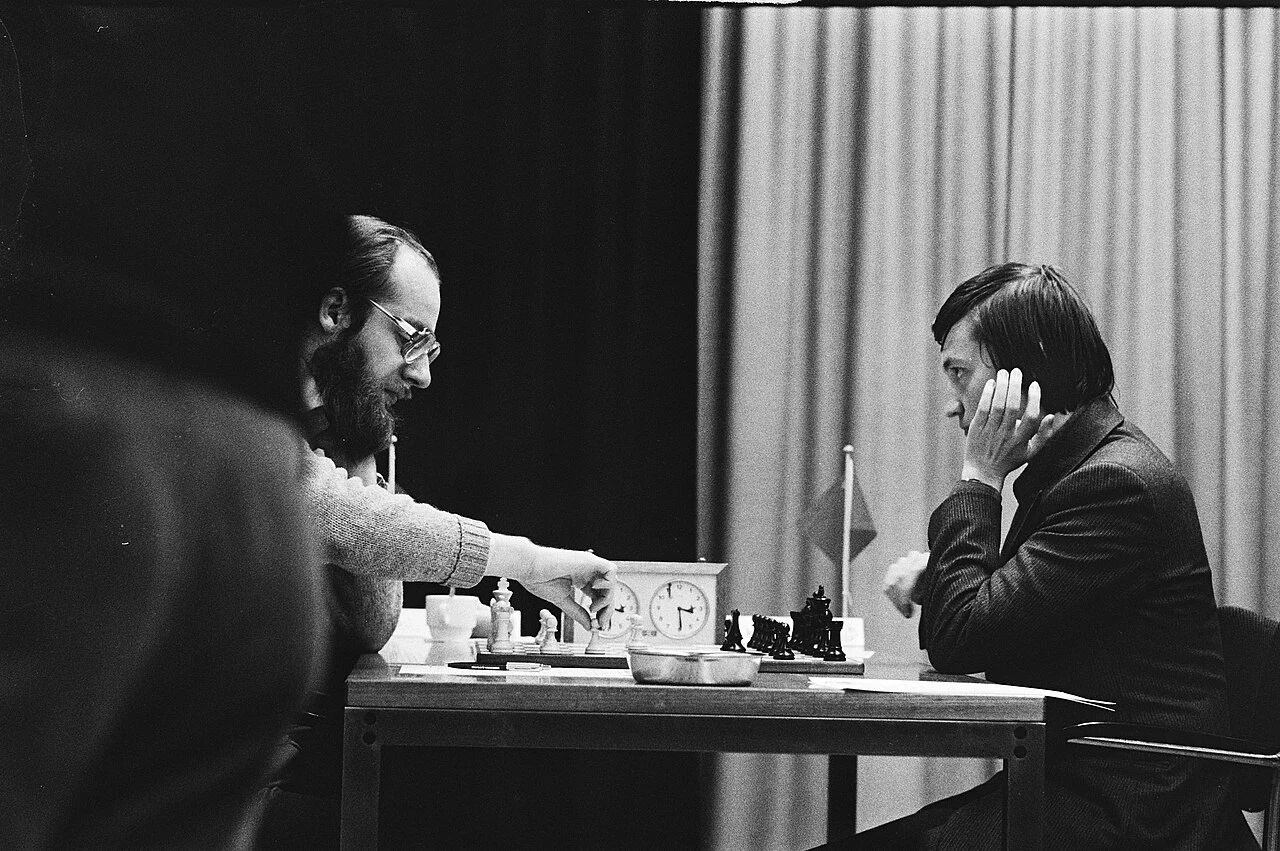
Romanishin’s role was nearly as instructive. His runner up finish was not decorative. He remained close enough to Karpov that the final round still had real sporting tension. His second place is often overlooked in brief tournament lists, but it deserves more notice because it showed a top Soviet grandmaster pressing the champion from within the same national chess culture while doing so on foreign ground. For a serious reader of Soviet chess history, that is a characteristic late Soviet pattern. The public face of Soviet supremacy was the world champion. The internal pressure on that supremacy often came from another Soviet grandmaster.
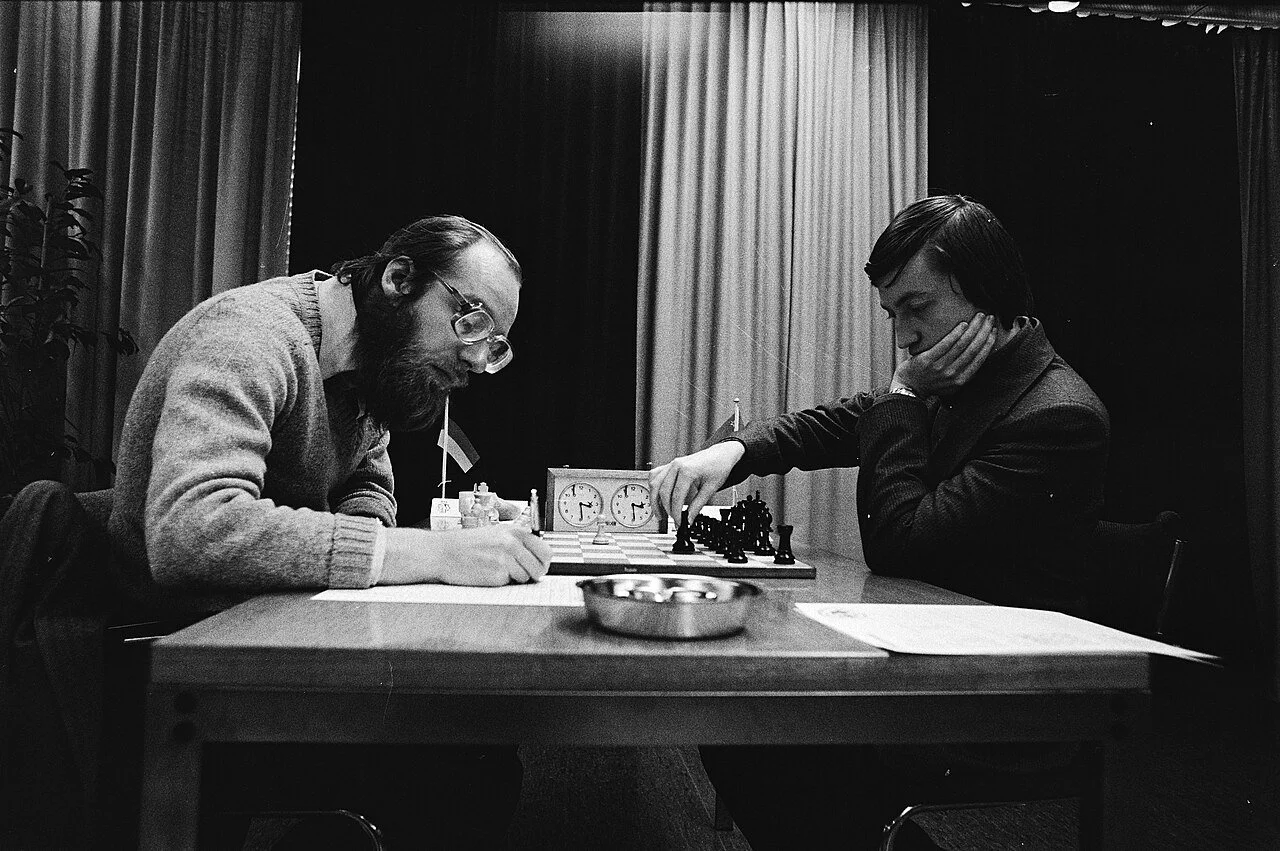
Rob Croes for Anefo
Main Course, Critical Games, and Contenders
The tournament did not require a round by round reconstruction to reveal its shape. It opened sharply. Karpov beat Sosonko in round one, while Timman, the main Dutch hope, lost immediately to Sax. Romanishin then defeated Timman in round two, which placed the Ukrainian Soviet grandmaster firmly among the early contenders. By round three, Karpov and Romanishin had drawn their direct game, an early sign that the eventual first and second might prove hard to separate.
Karpov’s tournament was built in the way many of his best events were built. He did not overwhelm the field with a flood of miniatures. He established control. Draws with Sax, Romanishin, Portisch, Hübner, Spassky, Kavalek, and Timman prevented damage against the main opposition, while his wins over Sosonko, Larsen, Hort, and Smyslov provided the margin that finally decided the event. Particularly revealing were the wins over Larsen in round five and Hort in round nine. Neither needs a move by move retelling here. Their historical use is simpler. They show Karpov scoring exactly where a champion of his type was expected to score, against elite but slightly less stable opposition, while avoiding losses altogether.
Romanishin stayed close by a different route. He beat Hort in round one and Timman in round two, drew Karpov in round three, lost an important game to Sosonko in round four, then rebuilt his event with steady results and a final round victory over Spassky. That pattern explains why he finished second rather than first. His ceiling was high enough to threaten the champion, but one loose result in the middle of the event proved expensive in a field of this density.
Portisch was the most durable non Soviet challenger and deserved his third place. He lost to Timman in round three, but otherwise kept enough stability to finish on 6.5/11, half a point behind Romanishin. Sax’s fourth place on 6/11 was also significant. He had already beaten Timman in the first round and held Romanishin to a draw, which helped shape the race above him. Timman himself recovered from the poor start well enough to share fifth on 5.5/11, though that was inevitably less than a home audience would have hoped for in a tournament staged on Dutch soil.
The clearest turning point before the finish came in round ten. Dutch newspaper coverage reported that after that round Karpov was alone in the lead. The same database record shows that his draw with Timman in round ten preserved that standing while Romanishin could do no better than a draw with Kavalek. That left the tournament delicately poised for the last day. Romanishin still had a mathematical chance. Karpov still had work to do.
The final round gave the tournament its enduring conjunction of games. Romanishin beat Spassky. Karpov beat Smyslov. Because Karpov had only a half point lead going into the round, Romanishin’s win meant that a draw by the champion would no longer secure clear first. Karpov’s victory therefore had real competitive content, even if later commentary in the Netherlands remained suspicious of how easily the decisive result was obtained. Trouw’s contemporary report captured both facts at once: Romanishin won his adjourned ending “in elegant fashion,” yet Karpov still finished first with 7.5, a half point ahead of him.
Smyslov’s last place is the other result that deserves emphasis. This was not an ordinary tail end finish by an ordinary veteran. It was a former world champion scoring only 2.5/11 in a tournament that included another former world champion, Spassky, who finished solidly in the middle. Smyslov did have flashes, including a round ten win over Larsen that later remained important enough to be republished with his own notes, but the overall result was plainly disappointing. That contrast, Karpov first and Smyslov last, sharpened the specifically Soviet reading of the event. It looked like generational succession written into the crosstable.
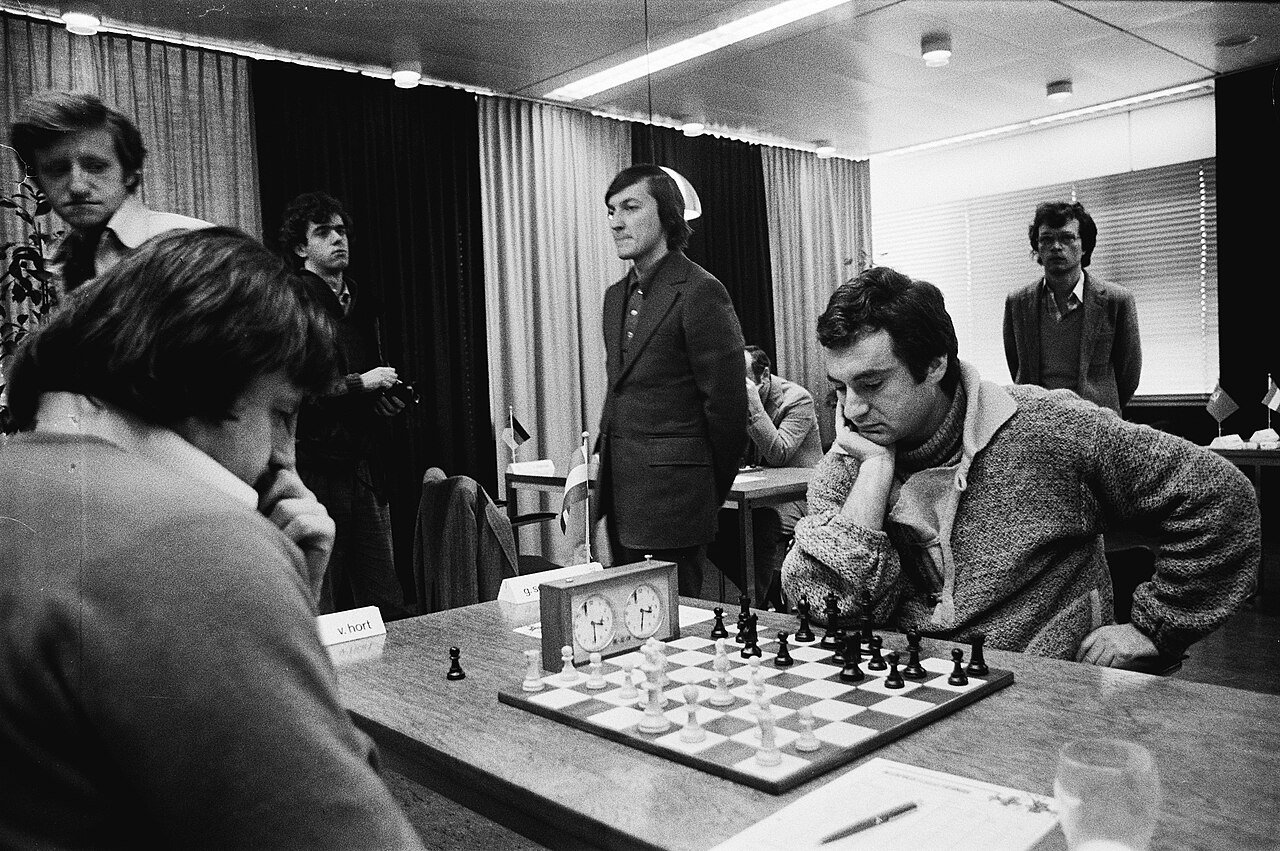
Fernando Pereira / Anefo
Contemporary Reception
The accessible contemporary Dutch press shows that the event was followed closely enough for lead changes and adjourned endings to receive prompt notice. Limburgsch Dagblad reported after round ten that Karpov had taken sole possession of first place. Trouw, in its post tournament report, highlighted Romanishin’s elegant final round conversion and summarized the leading scores in prose, with Karpov first, Romanishin second, and Portisch third. This is not the language of an obscure specialist bulletin. It is the language of newspaper sports coverage treating the tournament as a recognizable public event.
The tournament also generated something harder to classify and historically more interesting: unease about the last round among Dutch observers. A year later, in previewing the 1980 edition, the Leeuwarder Courant referred back to the previous year and remarked that Karpov had had an easy task against Smyslov in a duel “surrounded by mysteries.” That is not documentary proof of any arranged result, and it should not be inflated into one. It is, however, clear evidence that the final round Karpov versus Smyslov game entered Dutch memory as a suspicious object. Factually careful history should preserve that distinction. The suspicion is historically real. The allegation is not proven by the sources cited here.

Rob Croes for Anefo
Legacy and Historical Assessment
Tilburg 1979 deserves attention today for three reasons. First, it confirmed that the Interpolis series had entered the highest echelon of invitational chess very quickly. The third edition was already a Category XV event with a world champion, two former world champions, major Western contenders, and a serious Dutch hope. Later Tilburg would become even more famous, especially in the 1980s and early 1990s, but 1979 was one of the editions that built that reputation rather than merely inheriting it.
Second, it distilled a specific late 1970s Soviet story. Karpov’s clear first place showed the champion’s habit of controlling elite fields without theatrical excess. Romanishin’s second showed the depth of Soviet strength below the headline figure. Smyslov’s collapse showed that old prestige no longer guaranteed competitive parity even for a former champion. Spassky and Sosonko, both shaped by Soviet chess but no longer standing inside the Soviet state, completed the picture from the margins. Few tournaments of the period present quite so compact a map of Soviet chess power, transition, and diaspora.
Third, the event had a lasting afterlife in chess memory because it combined excellence with ambiguity. Karpov’s victory was clean in the formal record and deserved on the broader course of the tournament. Yet the final round, especially his win over Smyslov, left enough discomfort to remain part of Dutch commentary afterward. That tension between obvious sporting quality and lingering political or cultural suspicion is itself characteristic of top level chess in the Cold War era. Tilburg 1979 was not just a strong tournament. It was a strong tournament that exposed how the strongest events of the age were interpreted through Soviet lenses even when they were held in the Netherlands.
In concise historical terms, Tilburg 1979 deserves attention because it was the edition in which the Interpolis series announced its full seriousness, Karpov underlined his authority as world champion, Romanishin produced one of the best non winning performances of his career, and the tournament acquired the mixture of prestige and aftertaste that keeps it alive in chess history.

Portisch Lajos. Image by Koen Suyk / Anefo
Notes and Sources
This article rests primarily on contemporary Dutch newspaper coverage from Delpher, especially reports from Limburgsch dagblad on November 14, 1979, and Trouw on November 17, 1979, together with Dutch photo archive material from the Nationaal Archief and related mirrored metadata on Wikimedia Commons and PICRYL, which help establish the tournament’s chronology from first round to finish. Those sources were checked against modern reference databases for standings, pairings, and ratings.
For archival and bibliographical context, I also used records for the 1979 tournament magazine and the Andriessen tournament book, plus local Tilburg historical material identifying the Interpolis headquarters in De Reit as the long term home of the classic series. For Soviet connected biographies and status changes, I relied on FIDE’s Boris Spassky memorial note, a biographical note on Genna Sosonko, and recent obituary material on Jan Timman. One limitation should be stated plainly: the accessible web sources make the sponsor, general venue, format, dates, participants, and results clear, but they are less explicit about the full formal composition of the 1979 organizing committee and the exact room designation inside the Interpolis complex.
